
KI-Begleitroboter werden zu einem wichtigen Bestandteil von Smart Homes, im Bildungswesen, im Gesundheitswesen und in der Dienstleistungsbranche. Im Gegensatz zu herkömmlichen elektronischen Geräten müssen KI-Roboter folgende Funktionen unterstützen: kontinuierliche Interaktion, intelligentes Rechnen, Bewegung, Sensoren, Kameras und drahtlose Kommunikation, was höhere Anforderungen an ihre Stromversorgungssysteme stellt.
Bei der Auswahl des richtigen Akkus geht es nicht nur um die Kapazität. Ein geeigneter Akku für einen KI-Roboter muss ein Gleichgewicht schaffen zwischen Betriebsdauer, Sicherheit, Gewicht, Ladezeit, Zyklenlebensdauer und intelligentes Batteriemanagement.
Also, wie wählt man die Der richtige Akku für einen KI-Begleitroboter?
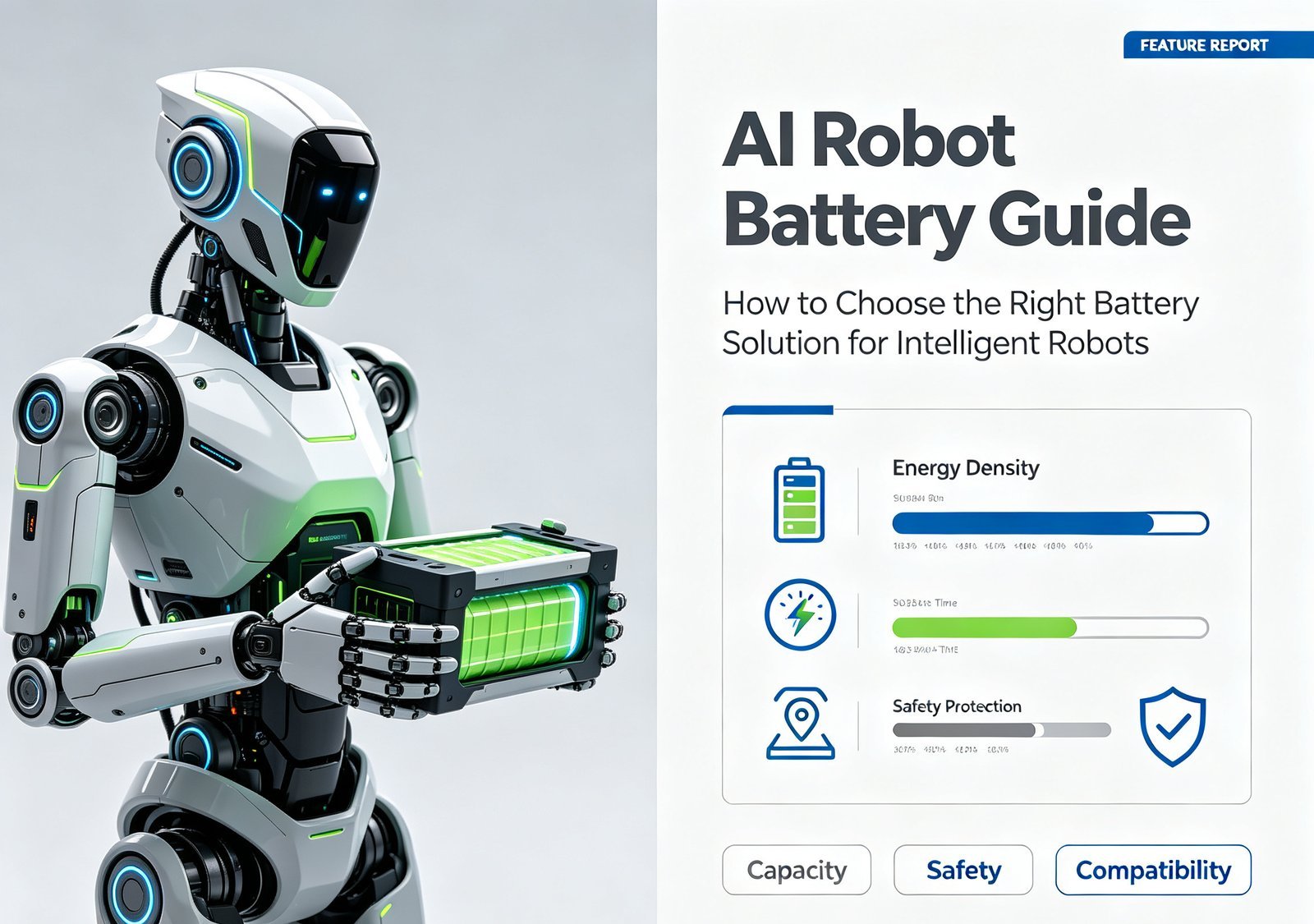
Teil 1. Die Stromanforderungen von KI-Begleitrobotern verstehen
Vor der Auswahl eines Akkus müssen die Hersteller den tatsächlichen Stromverbrauch des Roboters ermitteln.
Ein KI-Begleitroboter umfasst in der Regel:
- KI-Verarbeitungsmodule
- Kameras und Sensoren
- Motoren und Stellantriebe
- Touchscreens oder Displays
- Lautsprecher und Mikrofone
- WLAN-/Bluetooth-/4G-Kommunikationsmodule
Unterschiedliche Funktionen führen zu unterschiedlichem Energiebedarf.
Zum Beispiel:
| Anmeldung | Anforderungen an die Batterie |
|---|---|
| Begleitroboter für zu Hause | Geringes Gewicht, lange Betriebsdauer, leiser Betrieb |
| Lernroboter | Sichere, häufige Ladezyklen |
| Pflege-Roboter | Hohe Zuverlässigkeit, stabile Leistung |
| Serviceroboter | Hohe Kapazität, Dauerbetrieb |
Eine Batterielösung sollte entsprechend der Arbeitsumgebung des Roboters ausgelegt werden, anstatt einfach nur die größte Kapazität zu wählen.
Teil 2. Auswahl der Lithium-Batteriechemie
Bei KI-Begleitrobotern kommen Lithium-Batterien aufgrund ihrer Energiedichte und ihrer flexiblen Bauweise häufig zum Einsatz.
Lithium-Ionen-Akku (Li-Ion)
Geeignet für:
- Kompakte Verbraucherroboter
- Tragbare KI-Geräte
- Haushaltsroboter
Vorteile:
- Hohe Energiedichte
- Leichte Konstruktion
- Flexible Formanpassung
- Gute Leistungsfähigkeit
LiFePO4-Akku
Geeignet für:
- Serviceroboter
- Roboter im Gesundheitswesen
- Kommerzielle KI-Roboter, die eine lange Lebensdauer erfordern
Vorteile:
- Ausgezeichnete thermische Stabilität
- Längere Lebensdauer des Zyklus
- Höhere Sicherheitsleistung
- Stabile Entladungseigenschaften
Für Roboter, die täglich viele Stunden im Einsatz sind, bieten LiFePO4-Akkus eine zuverlässige Stromversorgung.
Teil 3. Akkukapazität: Wie viel Energie benötigt Ihr Roboter?
Die Akkukapazität bestimmt, wie lange ein KI-Roboter betrieben werden kann.
Die grundlegende Berechnung:
Batterieenergie (Wh) = Spannung (V) × Kapazität (Ah)
Beispiel:
Eine 24-V-Batterie mit 10 Ah:
24 V × 10 Ah = 240 Wh
Wenn der Roboter 40 W verbraucht:
240 Wh ÷ 40 W ≈ 6 Stunden Laufzeit
In der Praxis sollte jedoch Folgendes berücksichtigt werden:
- Anlaufstrom des Motors
- Rechenaufwand für KI
- Funktionsweise des Sensors
- Kommunikationsmodule
- Batteriealterung
Bei der professionellen Entwicklung von Akkus wird in der Regel eine Sicherheitsmarge einkalkuliert, um unerwartete Abschaltungen zu vermeiden.
Teil 4. Gewicht und Größe: Jedes Gramm zählt
KI-Begleitroboter erfordern häufig:
- Zwischenmenschliche Interaktion
- Bewegung auf dem Handy
- Kompakte Bauweise
- Reibungsloser Betrieb
Eine überdimensionierte Batterie kann Folgendes erhöhen:
- Gewicht des Roboters
- Motorische Belastung
- Energieverbrauch
- Herstellungskosten
Maßgeschneiderte Akkupacks ermöglichen es Herstellern, Folgendes zu optimieren:
- Form der Batterie
- Zellanordnung
- Spannung
- Kapazität
- Einbaulage
Zum Beispiel:
- Zylindrische Zellen für flexible Anordnungen
- Beutelzellen für ultradünne Konstruktionen
- Maßgeschneiderte Batteriegehäuse für Roboterkonstruktionen
Teil 5. Ein intelligentes BMS ist für KI-Roboter unverzichtbar
Das Batteriemanagementsystem (BMS) ist das “Gehirn” des Akkupakets.
Ein intelligentes BMS kann Folgendes bieten:
✅ Überladeschutz
✅ Tiefentladungsschutz
✅ Überstromschutz
✅ Temperaturüberwachung
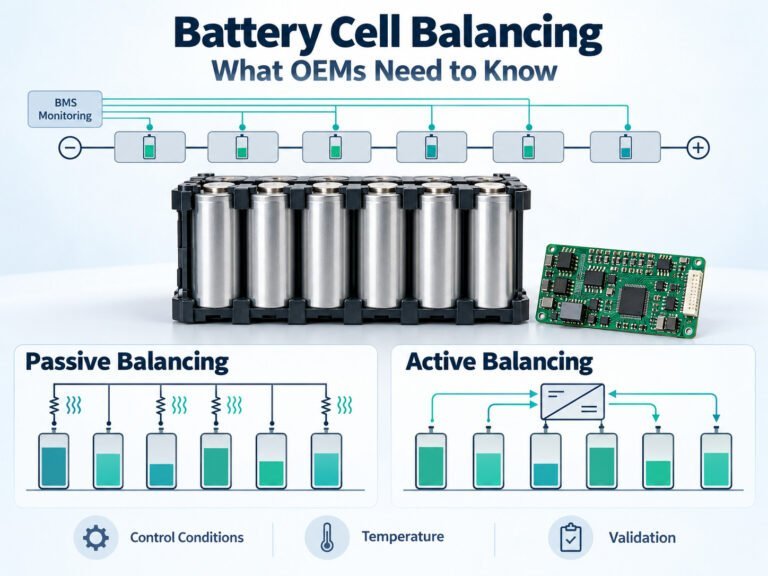
✅ Zellausgleich
✅ Überwachung des Akkustatus
Bei intelligenten Robotern können fortschrittliche BMS-Lösungen zudem folgende Funktionen unterstützen:
- CAN-Kommunikation
- RS485-Kommunikation
- UART-Kommunikation
- Fernüberwachung der Batterie
Dadurch kann das Robotersteuerungssystem den Batteriestatus in Echtzeit überwachen.
Teil 6. Sicherheitsanforderungen für Batterien von KI-Robotern
Da KI-Roboter häufig in der Nähe von Menschen eingesetzt werden, ist die Sicherheit der Batterien von entscheidender Bedeutung.
Ein zuverlässiger Roboterakku sollte folgende Eigenschaften aufweisen:
- Hochwertige Lithium-Zellen
- Stabile Batteriestruktur
- Mehrere Schutzmechanismen
- Konzeption des Wärmemanagements
- Strenge Sicherheitsprüfungen
Zu den empfohlenen Zertifizierungen gehören:
- UN38.3
- IEC 62133
- CE
- UL-Normen
- RoHS
Für globale Märkte ist auch die Einhaltung regionaler Batterievorschriften von Bedeutung.
Teil 7. Ladegeschwindigkeit und Akkulaufzeit
KI-Roboter, die in gewerblichen Umgebungen eingesetzt werden, benötigen eine effiziente Ladeinfrastruktur.
Zu den wichtigen Faktoren zählen:
Schnellladefunktion
Reduziert Ausfallzeiten und steigert die Produktivität.
Zyklus Leben
Eine Batterie mit längerer Lebensdauer bedeutet:
- Weniger Ersatzbeschaffungen
- Niedrigere Wartungskosten
- Höhere langfristige Zuverlässigkeit
Bei häufig eingesetzten Robotern kann die Wahl eines Akkus, der für Tausende von Ladezyklen ausgelegt ist, die Betriebseffizienz erheblich verbessern.
Teil 8. Maßgeschneiderte Batterielösungen für KI-Begleitroboter
Jeder KI-Roboter hat andere Anforderungen.
Ein professioneller Hersteller von Lithium-Batterien kann Folgendes anbieten:
- Aufbau der Batterie
- Zellauswahl
- BMS-Entwicklung
- Prototypenfertigung
- Sicherheitsprüfung
- Unterstützung bei der Massenproduktion
Typische benutzerdefinierte Parameter:
- Spannung: 12 V / 24 V / 36 V / 48 V
- Kapazität: individuell an die Laufzeitanforderungen angepasst
- Kommunikation: CAN / RS485 / UART
- Schutzart: Ausführungen mit IP-Schutzklasse erhältlich
Warum sollten Sie sich bei Batterielösungen für KI-Roboter für Yizhan Electronics entscheiden?
Dongguan Yizhan Electronics Technology Co, Ltd. ist auf maßgeschneiderte Lithium-Akku-Lösungen für Robotik, Industrieanlagen und intelligente Geräte spezialisiert.
Aufgrund seiner Erfahrung in der Entwicklung von OEM-/ODM-Akkus bietet Yizhan Folgendes an:
- Maßgeschneiderte Lithium-Batterie-Konstruktion
- Intelligente BMS-Lösungen
- Li-Ionen- und LiFePO₄-Akkus
- Entwicklung von Prototypen
- Unterstützung bei der Sicherheitszertifizierung
- Massenproduktionsfähigkeit
Vom Konzeptentwurf für Batterien bis zur Serienfertigung unterstützt Yizhan Roboterhersteller bei der Entwicklung zuverlässiger und intelligenter Energielösungen.
FAQ
Welcher Akkutyp eignet sich am besten für KI-Begleitroboter?
Lithium-Ionen-Akkus werden häufig für kompakte KI-Roboter verwendet, während LiFePO4-Akkus für Roboter geeignet sind, die eine längere Lebensdauer und höhere Sicherheit erfordern.
Wie lange hält der Akku eines KI-Roboters?
Die Betriebsdauer hängt von der Akkukapazität und dem Stromverbrauch des Roboters ab. Maßgeschneiderte Akkupacks können entsprechend den jeweiligen Betriebszeiten konzipiert werden.
Können die Akkus von KI-Robotern die Kommunikation mit dem Robotersystem unterstützen?
Ja. Intelligente BMS-Lösungen unterstützen die Kommunikation über CAN, RS485 und UART für die Echtzeitüberwachung.
Können Akkupacks an unterschiedliche Roboterkonstruktionen angepasst werden?
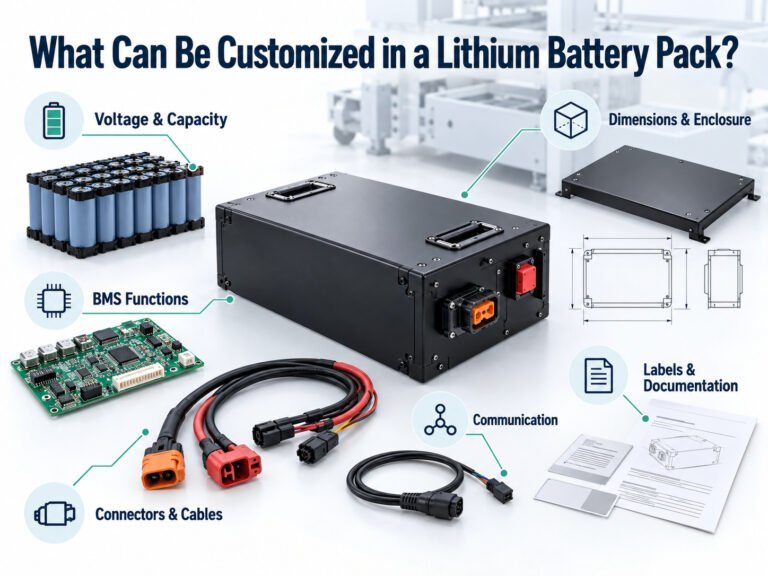
Ja. Batteriehersteller können Spannung, Kapazität, Abmessungen, Anschlüsse und Kommunikationsfunktionen individuell anpassen.
 English
  Chinese
  Japanese
  German
  French
  Korean
