
Industrial robotics is evolving rapidly, driven by automation, AI, and smart logistics systems. However, one of the most critical but often overlooked transformations is happening inside the power system.
In 2026, lithium robot batteries are replacing traditional lead-acid batteries as the dominant energy source for AGVs, AMRs, and industrial robots.
This shift is not just about performance—it directly impacts uptime, efficiency, and total operating cost.
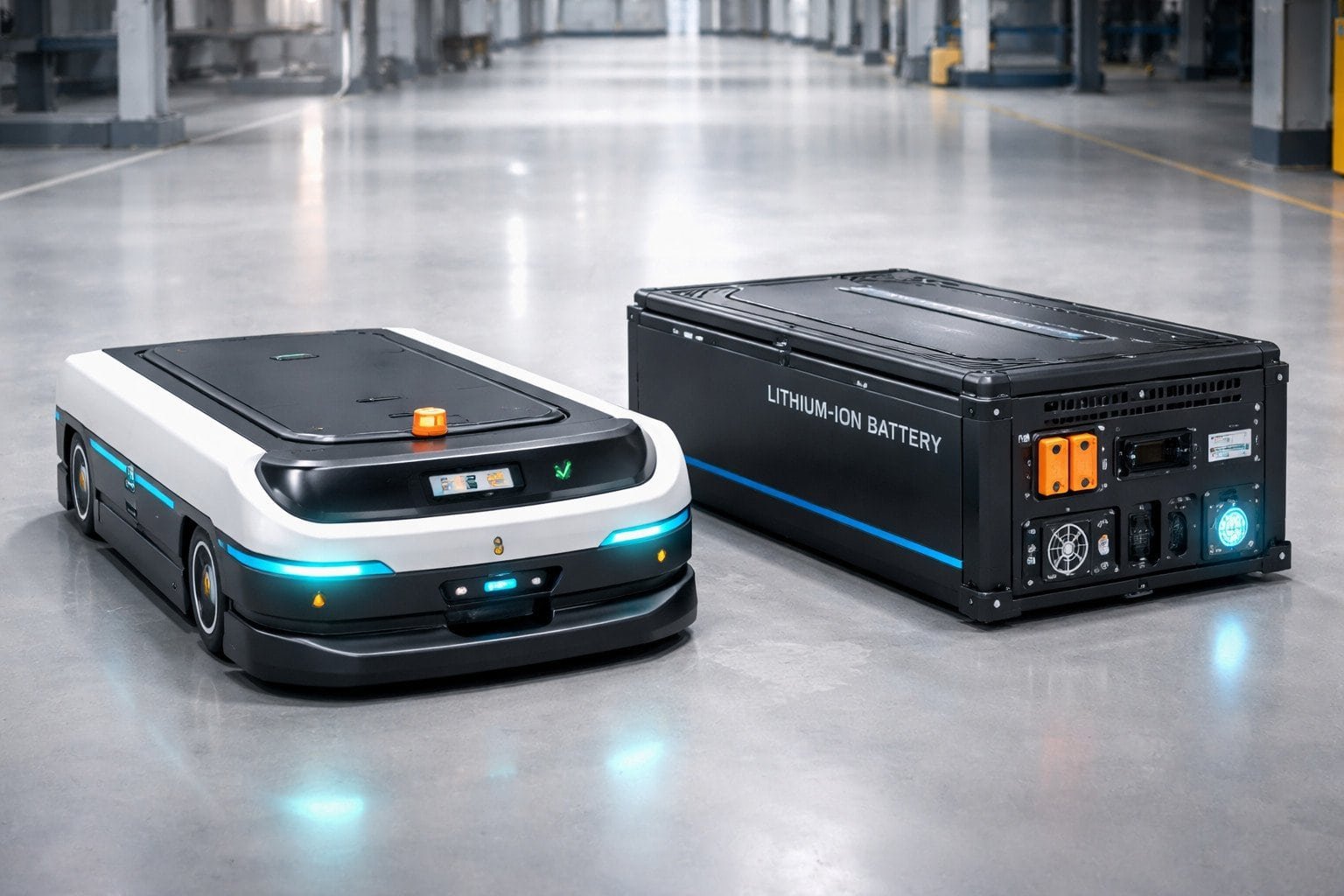
Part 1.Why Lead-Acid Batteries Can No Longer Support Modern Robotics
1. High Downtime Costs
Lead-acid batteries require long charging cycles and frequent maintenance, reducing robot availability in 24/7 operations.
2. Limited Cycle Life
Typical lead-acid systems degrade quickly under frequent charge-discharge cycles, increasing replacement frequency.
3. Inefficient Energy Output
Voltage drop under load leads to unstable robot performance and system interruptions.
4. Maintenance Burden
Water refilling, equalization charging, and routine checks increase operational complexity.
Part 2.Why Lithium Batteries Are Becoming the Industry Standard
1. Longer Cycle Life for Industrial Use
Lithium iron phosphate (LiFePO₄) systems offer 2,000–5,000 cycles, significantly reducing total cost of ownership.
2. Fast Charging & Opportunity Charging
Lithium batteries support partial and rapid charging, allowing robots to stay operational throughout the day.
3. Stable Voltage Output
Consistent discharge ensures stable robot performance even under heavy load conditions.
4. Lightweight and High Energy Density
Improves mobility efficiency and reduces mechanical stress on robotic systems.
5. Maintenance-Free Operation
No water refilling or electrolyte management required.
Part 3.Smart BMS — The Core of Modern Robot Battery Systems
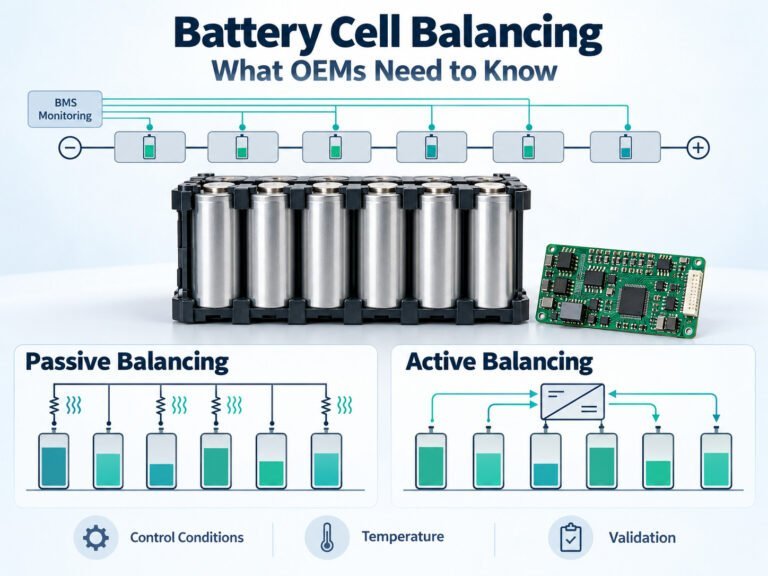
Modern lithium robot batteries are not just energy storage units—they are intelligent systems.
Key Smart BMS functions include:
- Real-time voltage, current, and temperature monitoring
- SOC / SOH (State of Charge & Health) estimation
- Überladungs-, Überentladungs- und Kurzschlussschutz
- CAN / RS485 / Modbus communication with robots
- Predictive maintenance and fault detection
This enables robots to operate more safely and efficiently with reduced downtime risk.
Part 4.Industrial Applications Driving Lithium Adoption
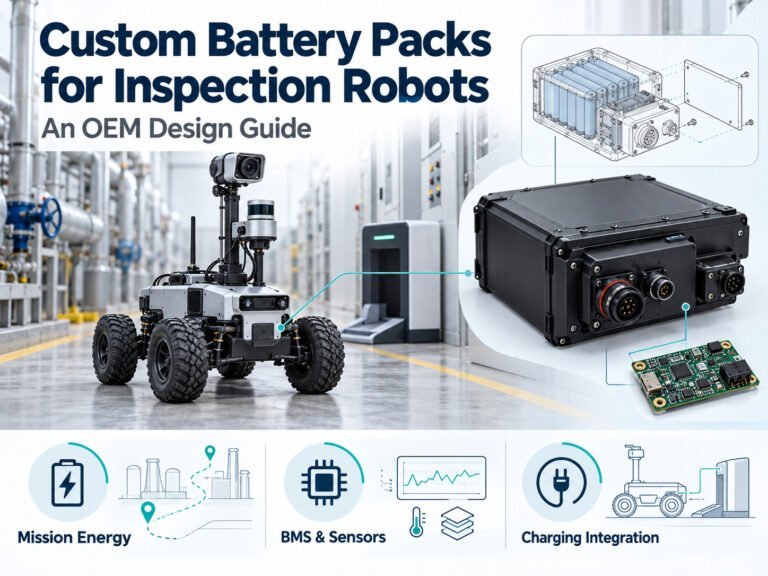
Lithium robot batteries are widely used in:
- AGVs (Automated Guided Vehicles)
- AMRs (autonome mobile Roboter)
- Smart warehouse logistics systems
- Factory automation lines
- Industrial cleaning robots
- Material handling systems
These applications require continuous uptime and high operational reliability.
Part 5.Downtime Reduction: The Key Business Driver
In industrial automation, downtime directly impacts productivity and cost.
Lithium battery systems reduce downtime through:
- Faster charging cycles
- Höhere Energieeffizienz
- Predictable discharge behavior
- Reduced maintenance interruptions
- Smart diagnostics via BMS
As a result, operational continuity improves significantly.
Part 6.2026 Trend — From Power Supply to Energy Intelligence
The evolution of robot batteries is moving beyond chemistry.
The 2026 trend focuses on energy intelligence systems, where batteries:
- Communicate with fleet management systems
- Optimize energy usage in real time
- Predict failure before it occurs
- Support autonomous charging strategies
- Improve overall fleet efficiency
Robots are no longer just powered—they are energy-aware.
Part 7. Customized Lithium Robot Battery Solutions
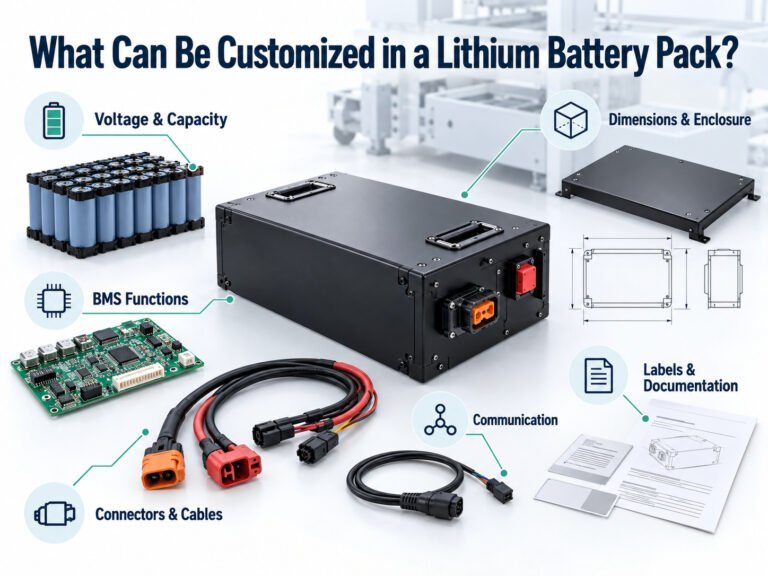
Dongguan Yizhan Electronics Technology Co, Ltd. provides customized lithium battery solutions for industrial robotics applications.
Zu den Funktionen gehören:
- LiFePO₄ / lithium-ion battery pack design
- 24V / 48V / 60V / 72V customized systems
- High-cycle industrial-grade battery architecture
- Smart BMS with CAN / RS485 / Modbus communication
- IP-rated enclosure design for harsh environments
- OEM / ODM full customization support
- 100% aging and performance testing before shipment
Conclusion — The Future of Robotics Depends on Energy Systems
The transition from lead-acid to lithium batteries is no longer optional—it is the foundation of modern industrial automation.
Companies that upgrade their robot energy systems gain:
- Lower downtime
- Höhere Effizienz
- Reduced maintenance cost
- Improved fleet intelligence
In 2026, the real competition in robotics is not just about machines—but about the energy systems that keep them alive.
If you are upgrading your AGV, AMR, or industrial robot systems, choosing the right battery architecture is critical for reducing downtime and improving efficiency.
We provide fully customized lithium robot battery solutions designed for industrial automation environments.
👉 Kontakt for OEM/ODM battery solutions and technical consultation.
FAQ
Q1: Why are lithium batteries replacing lead-acid in robots?
Because they offer longer life, faster charging, stable output, and lower maintenance costs.
Q2: What is the lifespan of a lithium robot battery?
Typically 2,000–5,000 cycles depending on chemistry and usage conditions.
Q3: Are lithium batteries safer for industrial robots?
Yes. With Smart BMS protection, lithium systems offer higher thermal and electrical safety control.
Q4: What robots use lithium batteries?
AGVs, AMRs, warehouse robots, cleaning robots, and industrial automation systems.
Q5: Can lithium batteries reduce robot downtime?
Yes. Faster charging, stable output, and predictive BMS reduce unexpected shutdowns significantly.
 English
  Chinese
  Japanese
  German
  French
  Korean
