
La robotique industrielle évolue rapidement, portée par l'automatisation, l'intelligence artificielle et les systèmes logistiques intelligents. Cependant, l'une des transformations les plus cruciales, mais souvent négligée, se produit au sein même du système d'alimentation électrique.
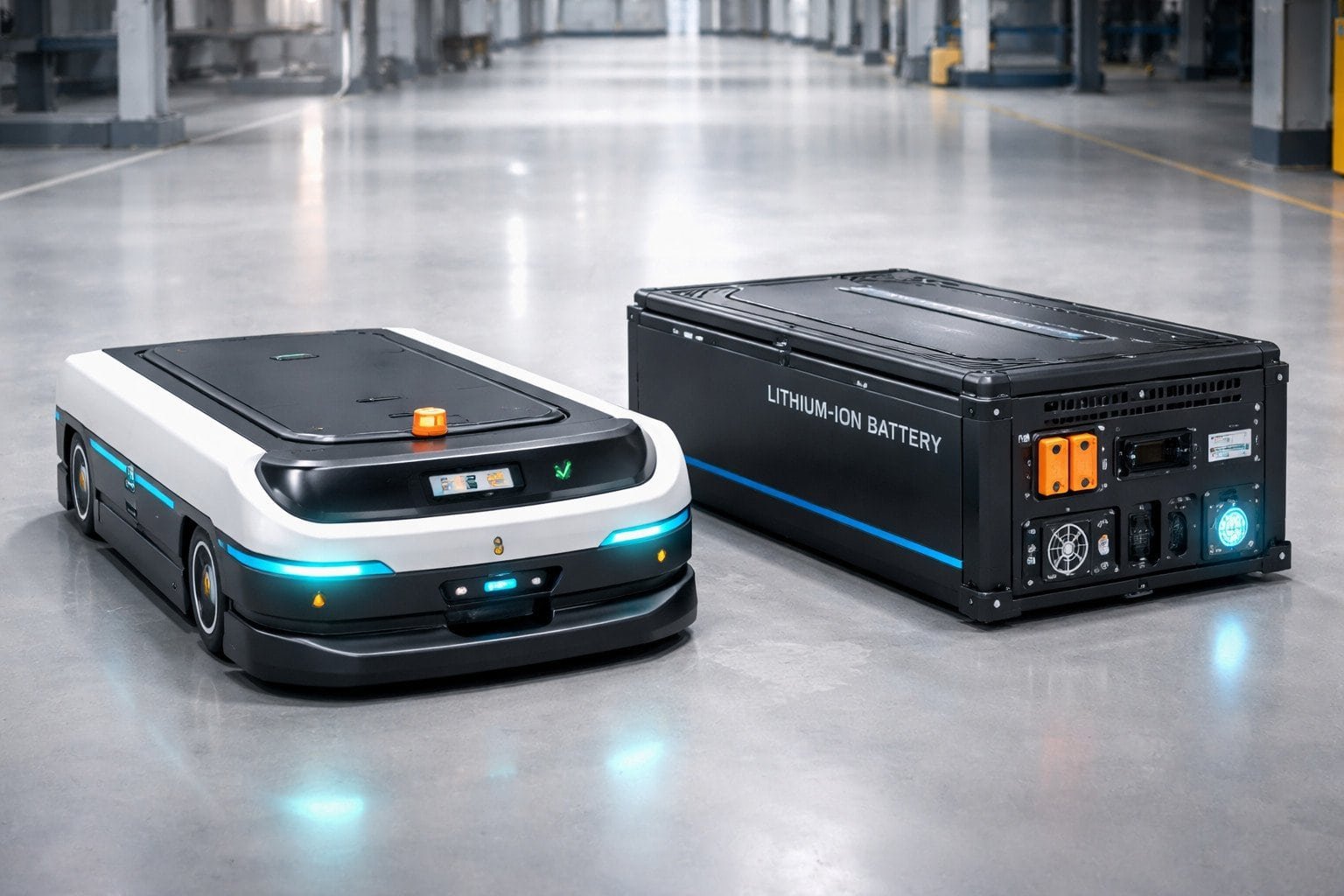
En 2026, le lithium batteries pour robots remplacent les batteries plomb-acide traditionnelles en tant que source d'énergie principale pour les AGV, les AMR et les robots industriels.
Cette évolution ne concerne pas uniquement les performances : elle a un impact direct sur la disponibilité, l'efficacité et le coût total d'exploitation.
1re partie : Pourquoi les batteries au plomb ne sont plus adaptées à la robotique moderne
1. Coûts élevés liés aux temps d'arrêt
Les batteries au plomb nécessitent de longs cycles de charge et un entretien fréquent, ce qui réduit la disponibilité des robots dans le cadre d'une exploitation 24 heures sur 24, 7 jours sur 7.
2. Durée de vie limitée
Les systèmes au plomb-acide classiques se détériorent rapidement sous l'effet de cycles fréquents de charge-décharge, ce qui augmente la fréquence de remplacement.
3. Rendement énergétique insuffisant
Une chute de tension sous charge entraîne une instabilité du fonctionnement du robot et des interruptions du système.
4. Charge liée à la maintenance
Le remplissage d'eau, la charge d'égalisation et les contrôles de routine augmentent la complexité opérationnelle.
2e partie : Pourquoi les batteries au lithium s'imposent comme la norme dans le secteur
1. Durée de vie prolongée pour une utilisation industrielle
Les systèmes au phosphate de fer lithié (LiFePO₄) offrent une durée de vie comprise entre 2 000 et 5 000 cycles, ce qui réduit considérablement le coût total de possession.
2. Recharge rapide et recharge d’appoint
Les batteries au lithium permettent une recharge partielle et rapide, ce qui permet aux robots de rester opérationnels tout au long de la journée.
3. Tension de sortie stable
Une décharge régulière garantit des performances stables du robot, même dans des conditions de forte charge.
4. Légèreté et haute densité énergétique
Améliore l'efficacité des mouvements et réduit les contraintes mécaniques exercées sur les systèmes robotiques.
5. Fonctionnement sans entretien
Aucun appoint d'eau ni gestion des électrolytes n'est nécessaire.
3e partie. Les BMS intelligents : le cœur des systèmes de batteries pour robots modernes
Les batteries au lithium modernes utilisées dans les robots ne sont pas de simples dispositifs de stockage d'énergie : ce sont des systèmes intelligents.
Les principales fonctions du système Key Smart BMS sont les suivantes :
- Surveillance en temps réel de la tension, du courant et de la température
- Estimation du SOC / SOH (état de charge et état de santé)
- Protection contre les surcharges, les décharges excessives et les courts-circuits
- Communication CAN / RS485 / Modbus avec des robots
- Maintenance prédictive et détection des défaillances
Cela permet aux robots de fonctionner de manière plus sûre et plus efficace, tout en réduisant le risque de temps d'arrêt.
4e partie : Les applications industrielles, moteurs de l'adoption du lithium
Les batteries au lithium pour robots sont largement utilisées dans :
- Véhicules à guidage automatique (AGV)
- AMR (robots mobiles autonomes)
- Systèmes logistiques intelligents pour entrepôts
- Lignes d'automatisation industrielle
- Robots de nettoyage industriels
- Systèmes de manutention
Ces applications exigent une disponibilité permanente et une grande fiabilité opérationnelle.
Partie 5. Réduction des temps d'arrêt : un facteur clé de la performance de l'entreprise
Dans le domaine de l'automatisation industrielle, les temps d'arrêt ont un impact direct sur la productivité et les coûts.
Les systèmes de batteries au lithium permettent de réduire les temps d'arrêt grâce à :
- Des cycles de recharge plus rapides
- Une meilleure efficacité énergétique
- Comportement de décharge prévisible
- Réduction des interruptions liées à la maintenance
- Diagnostics intelligents via le BMS
De ce fait, la continuité opérationnelle s'en trouve considérablement améliorée.
Partie 6.2026 : Tendances — De l'alimentation électrique à l'intelligence énergétique
L'évolution des batteries pour robots ne se limite plus à la chimie.
La tendance pour 2026 met l'accent sur systèmes d'intelligence énergétique, où les piles :
- Communiquer avec les systèmes de gestion de flotte
- Optimiser la consommation d'énergie en temps réel
- Anticiper les défaillances avant qu’elles ne surviennent
- Prise en charge de stratégies de recharge autonomes
- Améliorer l'efficacité globale de la flotte
Les robots ne se contentent plus d'être alimentés : ils gèrent désormais leur consommation d'énergie.
Partie 7. Solutions sur mesure de batteries au lithium pour robots
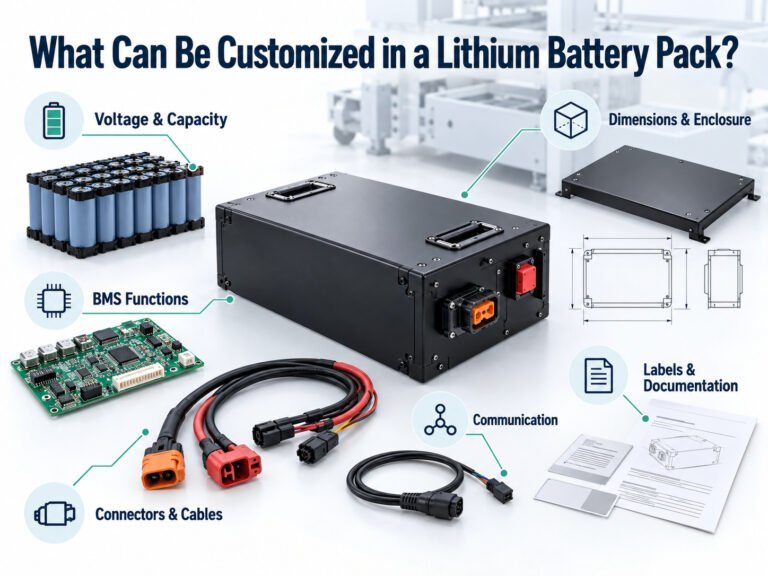
Dongguan Yizhan Electronics Technology Co. Ltd. propose des solutions sur mesure en matière de batteries au lithium pour les applications de robotique industrielle.
Parmi les fonctionnalités, on trouve :
- Conception d'un bloc-batterie LiFePO₄ / lithium-ion
- Systèmes sur mesure 24 V / 48 V / 60 V / 72 V
- Architecture de batterie de qualité industrielle à haut nombre de cycles
- Système de gestion de batterie intelligent (BMS) avec communication CAN / RS485 / Modbus
- Conception de boîtiers conformes à la norme IP pour les environnements difficiles
- Prise en charge complète de la personnalisation OEM / ODM
- Tests de vieillissement et de performance du modèle 100% avant expédition
Conclusion — L'avenir de la robotique dépend des systèmes énergétiques
Le passage des batteries au plomb-acide aux batteries au lithium n'est plus une option : c'est le fondement même de l'automatisation industrielle moderne.
Les entreprises qui modernisent les systèmes énergétiques de leurs robots bénéficient des avantages suivants :
- Réduction des temps d'arrêt
- Efficacité accrue
- Coût d'entretien réduit
- Amélioration de la gestion de la flotte
En 2026, la véritable concurrence dans le domaine de la robotique ne portera pas seulement sur les machines, mais aussi sur les systèmes énergétiques qui les font fonctionner.
Si vous procédez à la mise à niveau de vos systèmes AGV, AMR ou de robots industriels, il est essentiel de choisir la bonne architecture de batterie afin de réduire les temps d'arrêt et d'améliorer le rendement.
Nous proposons des solutions de batteries au lithium pour robots entièrement sur mesure, conçues pour les environnements d'automatisation industrielle.
👉 Contactez nous pour des solutions de batteries OEM/ODM et des conseils techniques.
FAQ
Q1 : Pourquoi les batteries au lithium remplacent-elles les batteries au plomb dans les robots ?
En effet, elles offrent une durée de vie plus longue, une recharge plus rapide, un rendement stable et des coûts d'entretien réduits.
Q2 : Quelle est la durée de vie d'une batterie au lithium pour robot ?
En général, entre 2 000 et 5 000 cycles, selon la composition chimique et les conditions d'utilisation.
Q3 : Les batteries au lithium sont-elles plus sûres pour les robots industriels ?
Oui. Grâce à la protection offerte par le système Smart BMS, les systèmes au lithium garantissent un meilleur contrôle de la sécurité thermique et électrique.
Q4 : Quels robots utilisent des batteries au lithium ?
Véhicules à guidage automatique (AGV), robots mobiles autonomes (AMR), robots d'entrepôt, robots de nettoyage et systèmes d'automatisation industrielle.
Q5 : Les batteries au lithium permettent-elles de réduire les temps d'arrêt des robots ?
Oui. Une recharge plus rapide, une sortie stable et un système de gestion de batterie (BMS) prédictif réduisent considérablement les arrêts imprévus.
 English
  Chinese
  Japanese
  German
  French
  Korean
