
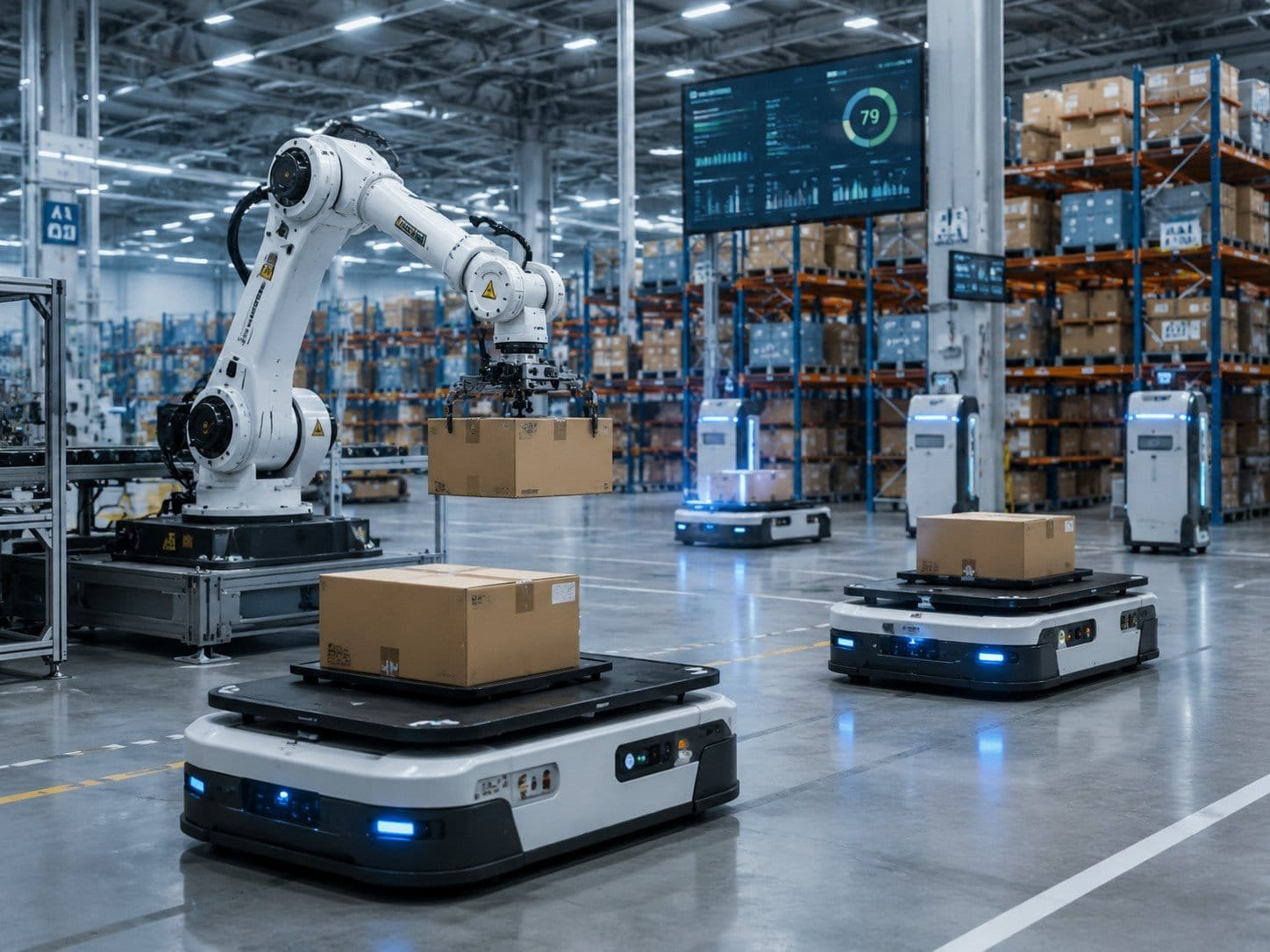
Warehouse automation is rapidly changing the way goods are stored, transported, and delivered. Automated Guided Vehicles (AGVs), Autonomous Mobile Robots (AMRs), robotic forklifts, and smart material handling systems are becoming essential equipment for modern logistics operations.
At the center of every automated system is the battery pack.
A reliable battery solution directly affects:
- Operating uptime
- 充电效率
- Robot availability
- 维护费用
- Warehouse productivity
Traditional lead-acid batteries were once widely used in industrial vehicles. However, as warehouses require longer operating hours, faster charging, and lower maintenance, LiFePO4 battery packs are becoming the preferred power solution for AGV and robotics applications.
Combined with 机会收费, LFP battery systems allow robots to operate continuously with minimal downtime.
1. Why Battery Selection Matters for AGV and Robotics Systems
AGVs and AMRs operate differently from traditional vehicles.
Unlike forklifts that may run in fixed shifts, autonomous robots often work:
- 24/7 warehouse environments
- Multiple operation cycles per day
- Dynamic routes
- High-frequency acceleration and braking
- Automated charging schedules
A poor battery choice can cause:
- Unexpected shutdowns
- Reduced robot efficiency
- Increased labor costs
- Shorter equipment lifespan
For warehouse automation, batteries need to provide:
| Requirement | Battery Performance Needed |
|---|---|
| Long operation time | 高能量密度 |
| Frequent charging | High cycle life |
| Safe indoor operation | Stable chemistry |
| 连续运行 | 快充功能 |
| 智能管理 | Intelligent BMS communication |
This is why lithium battery technology has become a key component of warehouse automation.
2. Why LiFePO4 Batteries Are Preferred for AGV and Robotics
Among different lithium battery chemistries, LiFePO4 has become one of the most widely adopted solutions for industrial robots and AGV systems.
2.1 Long Cycle Life Reduces Replacement Costs
AGVs frequently charge and discharge throughout the day.
A typical LFP battery pack can provide:
- 3,000–8,000+ charge cycles depending on design and operating conditions
- 稳定的容量保持
- 使用寿命长
Compared with lead-acid batteries, LFP batteries reduce battery replacement frequency and improve total cost efficiency.
2.2 High Safety Performance for Indoor Applications
Safety is a critical factor in warehouses.
LiFePO4 chemistry provides:
- Stable thermal characteristics
- Low risk of thermal runaway
- Reliable performance under continuous operation
For warehouses where hundreds of robots may operate simultaneously, battery safety is a key consideration.
2.3 Higher Usable Energy Capacity
Traditional lead-acid batteries usually cannot use their full rated capacity without affecting lifespan.
LiFePO4 battery packs offer:
- Higher usable capacity
- 更稳定的电压输出
- 提高能源利用率
This allows AGVs and robots to maintain consistent performance during long working cycles.
2.4 Lightweight Design Improves Robot Efficiency
Battery weight directly affects:
- Robot payload capacity
- 能源消耗
- Movement efficiency
Compared with lead-acid alternatives, lithium battery packs can reduce system weight while maintaining equivalent or higher energy output.
This provides more design flexibility for:
- AMR
- Mobile robots
- Robotic arms
- 自动叉车
3. Opportunity Charging: The Key to 24/7 Warehouse Automation
What Is Opportunity Charging?
Opportunity charging means robots recharge their batteries during short breaks instead of waiting for a full charging session.
例如
- Robot finishes a delivery task
- Robot automatically returns to charging station
- Battery receives a short charging boost
- Robot immediately returns to operation
This charging method supports continuous warehouse operation.
4. Why Opportunity Charging Works Better With LFP Battery Packs
Opportunity charging requires batteries that can handle frequent charging cycles.
LiFePO4 batteries provide several advantages:
High Charging Acceptance
LFP batteries can accept higher charging currents compared with traditional batteries.
This enables:
- Short charging windows
- Faster energy recovery
- 减少停机时间
Excellent Partial State of Charge Performance
Many warehouse robots rarely discharge completely.
They often operate between:
- 20%–80% state of charge
- Multiple short charging cycles
LFP batteries perform well under partial charging conditions.
Intelligent BMS Control
Modern AGV battery packs use smart Battery Management Systems (BMS).
A smart BMS can monitor:
- 电压
- 当前
- 温度
- 充电状态 (SOC)
- 健康状况(SOH)
Communication options include:
- CAN总线
- RS485
- UART
- Modbus
This allows robots and warehouse management systems to optimize charging schedules.
5. Key Design Requirements for AGV Battery Packs
A professional AGV battery pack is more than simply connecting battery cells together.
It requires:
5.1 High-Quality Battery Cells
Common choices include:
- LiFePO4 cylindrical cells
- LiFePO4 prismatic cells
Cell matching is important:
- 电压一致性
- 内部电阻匹配
- Capacity balance
5.2 Customized Battery Structure
AGV battery packs often require customized designs according to:
- Robot dimensions
- 安装空间
- 电压要求
- 通信协议
常见配置:
- 24V AGV battery pack
- 36V robot battery pack
- 48V AGV battery system
- 51.2V industrial battery pack
- 72V heavy-duty robot battery
5.3 Industrial Protection Design
Warehouse environments require durable battery systems.
Typical features include:
- IP65/IP67 protection
- Vibration resistance
- 温度保护
- 短路保护
- 过充电保护
- 过放电保护
6. AGV and Robotics Battery Market Opportunities
The growth of warehouse automation is creating increasing demand for customized lithium battery solutions.
Main Application Areas
自动导引车 (AGV)
用途:
- Material transportation
- Manufacturing logistics
- Warehouse movement
自主移动机器人(AMR)
用途:
- Picking
- Sorting
- Delivery
- 库存管理
Robotic Forklifts
用途:
- Pallet transportation
- Automated storage systems
- Heavy-duty material handling
Industrial Robots
Battery systems support:
- Mobile robotic platforms
- 检测机器人
- 服务机器人
7. Future Trends of AGV Battery Technology
智能电池管理
Future AGV batteries will integrate more intelligence:
- 远程监控
- 预测性维护
- Cloud-based battery analytics
更高的能量密度
Battery manufacturers continue improving:
- Cell chemistry
- Pack structure
- 热管理
Battery Standardization
More automation companies are looking for:
- Modular battery packs
- Quick replacement systems
- Standard communication interfaces
Sustainable Warehouse Operations
Lithium battery solutions support greener warehouses through:
- 维护要求较低
- 使用寿命更长
- 更高的能源效率
8. How to Choose an AGV Battery Pack Supplier
When selecting a battery partner, companies should evaluate:
Manufacturing Capability
Look for suppliers with:
- 自动化生产线
- 细胞分拣系统
- 激光焊接技术
- Aging test facilities
质量认证
Important certifications include:
- UN38.3
- IEC 62133
- CE
- RoHS
- UL认证
- ISO quality management systems
Custom Engineering Support
可靠的供应商应提供
- Battery design support
- BMS 定制
- 原型开发
- Testing services
FAQ: AGV & Robotics Battery Pack
Q1: Why are LiFePO4 batteries used in AGVs?
LiFePO4 batteries provide long cycle life, stable performance, safety advantages, and support frequent charging, making them suitable for continuous warehouse operations.
Q2: Can AGV batteries support opportunity charging?
Yes. LiFePO4 battery packs are designed to handle frequent short charging cycles, making them suitable for opportunity charging systems.
Q3: How long does an AGV lithium battery last?
A properly designed LiFePO4 AGV battery pack can typically operate for several years depending on usage conditions, charging strategy, and maintenance.
Q4: What voltage batteries are commonly used in AGV robots?
Common AGV battery voltages include:
- 24V
- 36V
- 48V
- 51.2V
- 72V
Q5: Can AGV batteries be customized?
是的。电池制造商可以提供定制服务:
- 电压
- 容量
- 尺寸
- 通信协议
- BMS 功能
- 连接器设计
Conclusion: LFP Battery Packs Enable the Future of Warehouse Automation
As warehouses move toward higher levels of automation, battery technology becomes a critical factor in system reliability.
LiFePO4 battery packs combined with opportunity charging provide AGV and robotics systems with:
- 更长的运营时间
- 减少停机时间
- Improved safety
- 维护要求较低
- Better operational efficiency
For companies developing AGVs, AMRs, robotic forklifts, or automated warehouse equipment, choosing the right lithium battery partner is an important step toward building reliable automation solutions.
Customized AGV & Robotics LiFePO4 Battery Solutions
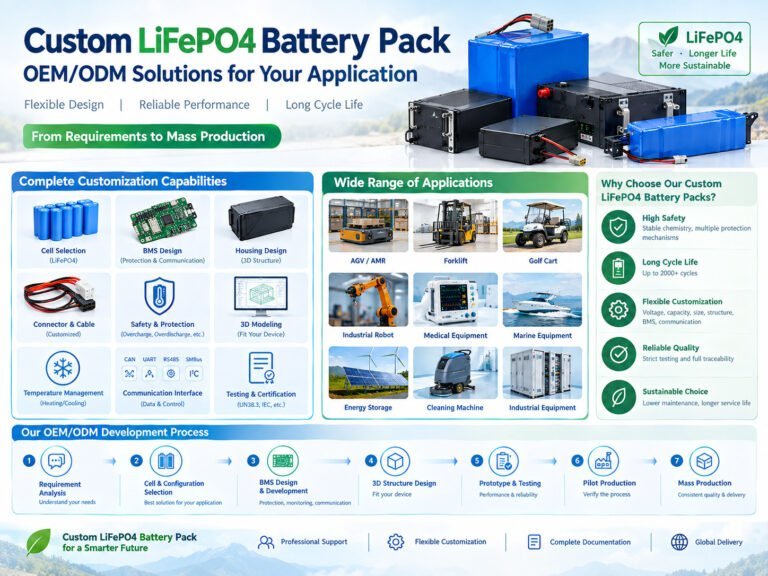
Dongguan Yizhan Electronics Technology Co., Ltd. provides customized lithium battery packs for AGV, AMR, robotics, forklifts, and industrial equipment.
With expertise in LiFePO4 battery design, smart BMS integration, OEM/ODM manufacturing, and quality testing, we help global customers develop reliable power solutions for warehouse automation.
 English
  Chinese
  Japanese
  German
  French
  Korean
