2026년 전기 화물 배터리 선택 방법: 완벽한 구매 가이드

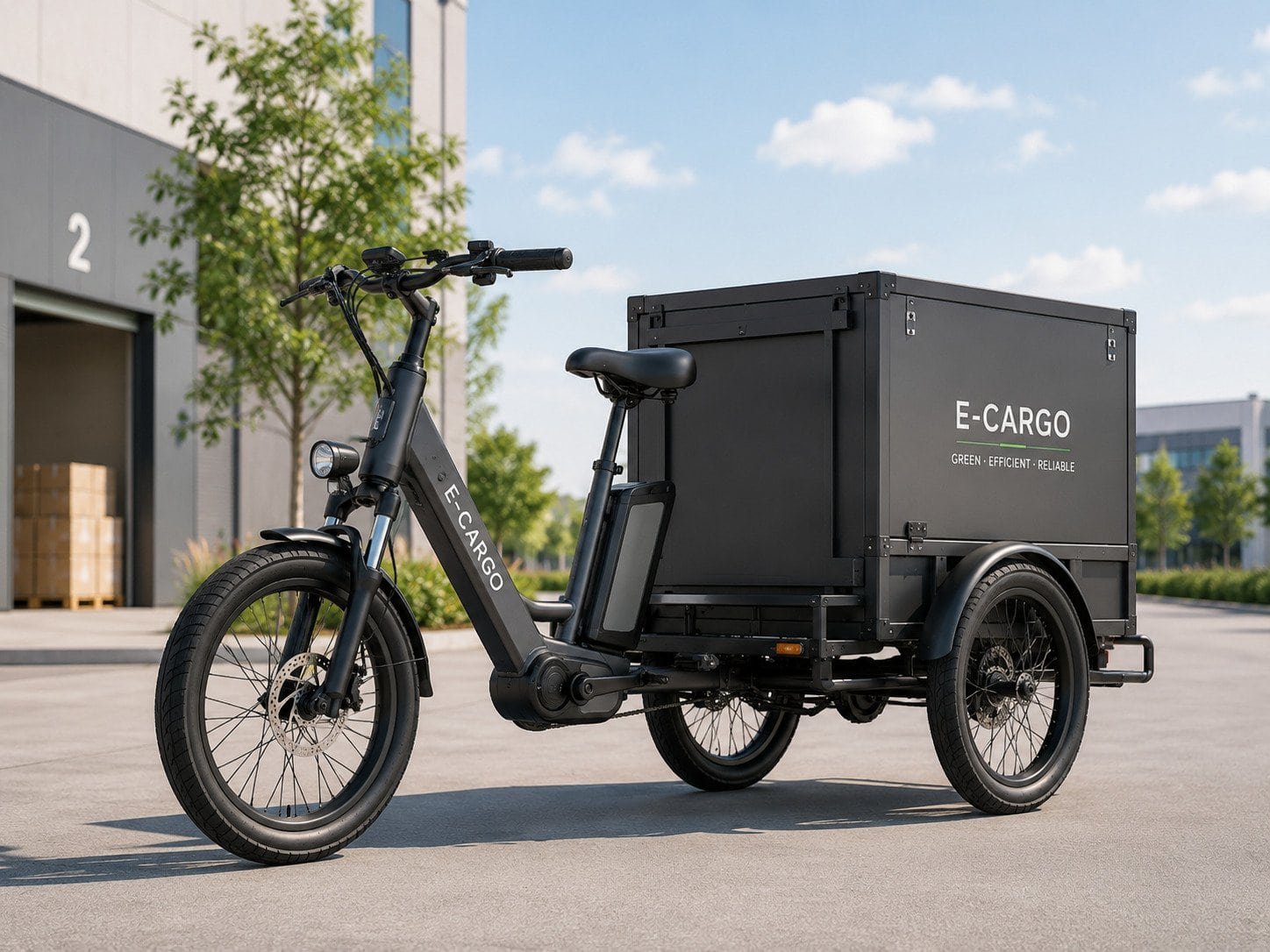
As urban delivery services, last-mile logistics, and commercial transportation continue to grow, E-Cargo bikes are becoming the preferred solution for businesses and individual operators alike. As the “power heart” of the vehicle, the battery directly impacts range, payload capacity, operating costs, and overall safety.

So, how do you choose the right E-Cargo battery?

E-Cargo Battery

Part 1. Choose the Right Voltage Based on Your Application

The most common E-Cargo battery voltages on the market include:

전압 Typical Application
36V Light-duty transportation and short-distance delivery
48V Mainstream cargo e-bikes
52V High-performance and heavy-load cargo bikes
72V Specialized logistics vehicles

For most cargo bike projects, 48V remains the most popular and widely compatible choice, offering an excellent balance between power, efficiency, and system compatibility.

Part 2. Select Battery Capacity Based on Range Requirements

Battery capacity is usually measured in Ampere-hours (Ah).

Common E-Cargo battery capacities include:

  • 48V 15Ah
  • 48V 20Ah
  • 48V 25Ah
  • 48V 30Ah
  • 48V 40Ah

Generally, the larger the capacity, the longer the riding range.

Typical Battery Energy

Battery Specification 에너지
48V 20Ah 960Wh
48V 30Ah 1440Wh
48V 40Ah 1920Wh

Recommended Capacity by Application

Urban Delivery

20Ah-30Ah

Courier & Logistics Operations

30Ah–40Ah

Long-Distance Transportation

40Ah and above

Part 3. Focus on Battery Energy (Wh), Not Just Ah

Many buyers focus only on Ah ratings, but the actual indicator of range is battery energy measured in Watt-hours (Wh).

Formula

Wh=V×AhWh=V\times Ah

Examples

  • 48V × 30Ah = 1440Wh
  • 48V × 40Ah = 1920Wh

The higher the Wh value, the longer the potential operating range.

Part 4. How to Choose an E-Cargo Battery Manufacturer

A battery’s safety, durability, and reliability depend heavily on the capabilities of its manufacturer.

When evaluating an E-Cargo battery supplier, it is important to assess multiple aspects, including:

  • R&D capabilities
  • Manufacturing strength
  • Quality control systems
  • Testing facilities
  • 프로젝트 경험

1.Why Choosing the Manufacturer Matters More Than Choosing the Battery

Many buyers compare:

  • 전압
  • 용량
  • Cell brand
  • Price

However, even batteries built with the same cells can differ significantly in quality depending on the manufacturer.

Key factors that determine final battery performance include:

  • Battery structural design
  • BMS development capability
  • PACK manufacturing process
  • Welding quality
  • Consistency control
  • Inspection procedures

For this reason, evaluating the manufacturer’s capabilities is often more important than comparing specifications alone.

2. Evaluate the R&D Team

For E-Cargo projects, R&D capability determines the upper limit of product performance.

Particularly in the European market, customers increasingly demand:

  • Long-range solutions
  • Dual-battery systems
  • Smart communication functions
  • 향상된 방수 성능
  • International safety certifications

Manufacturers without strong R&D teams are often limited to standard products and may struggle to meet custom project requirements.

3. Assess the Size and Expertise of the Engineering Team

Leading battery manufacturers typically employ:

  • Mechanical design engineers
  • BMS software engineers
  • Hardware engineers
  • Testing engineers
  • Project engineers

These teams support the entire development process from concept design to mass production.

For E-Cargo batteries, strong R&D capabilities are reflected in:

  • E-Cargo battery-related patents
  • Proprietary BMS development
  • High-capacity long-range battery technology
  • Intelligent dual-battery switching systems
  • IP67 waterproof structural design
  • Heavy-load and high-cycle optimization technologies
  • Customized battery solutions for logistics applications

As Europe’s urban logistics sector continues to expand, manufacturers with continuous innovation capabilities can deliver more competitive products with higher energy density, improved safety, and longer cycle life.

4. R&D Laboratory and Testing Equipment

Professional E-Cargo battery manufacturers typically operate dedicated testing laboratories equipped with advanced validation systems.

Key testing equipment may include:

  • Battery cycle life testing systems
  • BMS functional testing platforms
  • High and low temperature chambers
  • Waterproof testing equipment
  • Vibration testing equipment
  • Drop testing equipment
  • Electrical safety testing equipment
  • Battery performance analysis systems

Because E-Cargo batteries are frequently used in demanding commercial environments, they require more rigorous testing than standard e-bike batteries.

Comprehensive testing capabilities help ensure compliance with international standards such as:

  • UL2271
  • EN50604-1
  • UN38.3

These certifications are often critical for entering European and North American markets.

 5. Rich E-Cargo Project Experience

Beyond engineering teams and testing facilities, project experience is another important evaluation factor.

Manufacturers with experience in commercial mobility applications often have expertise in:

  • E-Cargo Bikes
  • Cargo Trikes
  • Last-Mile Delivery Vehicles
  • Postal Delivery Fleets
  • Supermarket Delivery Vehicles
  • Shared Logistics Platforms
  • Commercial Fleet Operations

Experienced engineering teams better understand real-world challenges such as:

  • Continuous discharge requirements
  • Frequent charging cycles
  • Heavy-load climbing conditions
  • Rain and snow operation
  • Fleet management requirements

This experience allows manufacturers to continuously optimize battery structures, BMS algorithms, waterproofing, and thermal management systems.

Part 5. Evaluate Manufacturing Capability

Manufacturing capability directly determines whether a supplier can consistently deliver products and support future business growth.

As demand for E-Cargo solutions grows rapidly worldwide, scalable production capacity becomes increasingly important.

1 .Overall Production Capacity

A qualified E-Cargo battery manufacturer should support:

  • Prototype development
  • Small-batch production
  • Pilot production
  • Mass manufacturing

As E-Cargo brands expand, battery demand may quickly increase from hundreds of units to thousands or even tens of thousands.

Key evaluation indicators include:

  • Monthly production capacity
  • Lead times
  • On-time delivery rate
  • Capacity expansion capability
  • Raw material supply stability

A mature supplier can support both early-stage validation and large-scale commercial deployment.

2. Automation and Production Equipment

E-Cargo batteries typically feature larger capacities and higher power outputs than consumer batteries, making manufacturing consistency especially important.

Modern battery factories often utilize:

Automatic Cell Sorting Systems

Ensuring consistency in:

  • 전압
  • 내부 저항
  • 용량

High-Precision Laser Welding Equipment

Compared with manual welding, laser welding provides:

  • Higher weld strength
  • Better conductivity
  • Greater consistency

This is particularly important for high-capacity E-Cargo battery packs.

Fully Automated PACK Assembly Lines

Supporting:

  • Automated cell arrangement
  • Automated welding
  • 자동화된 조립
  • Automated testing

Automation reduces human error while improving consistency and efficiency.

Intelligent Online Inspection Systems

Real-time monitoring helps detect abnormalities during production and reduces defect rates.

3 .In-House Development of Core Components

Manufacturers with strong vertical integration capabilities often provide:

  • Battery pack design
  • BMS development
  • Charger development
  • Communication protocol development
  • Dual-battery controller development

Compared with companies relying heavily on third-party suppliers, vertically integrated manufacturers offer:

Better System Compatibility

Battery, BMS, and vehicle systems work together more efficiently.

Improved Quality Control

Quality can be managed throughout the entire production process.

Faster Development Cycles

Product upgrades and custom projects can be completed more quickly.

Stronger Supply Chain Stability

Reduced dependence on external suppliers lowers supply chain risks.

4. Mass Production and Delivery Capability

Typical E-Cargo customers include:

  • Urban logistics operators
  • Courier companies
  • Commercial fleets
  • Vehicle brands and OEMs

These customers often require long-term, large-volume supply.

주요 고려 사항은 다음과 같습니다:

  • 생산 라인 수
  • Expansion capability
  • Standardized production systems
  • Supply chain management systems

A mature manufacturer should seamlessly support the transition from prototypes to large-scale production.

5. Manufacturing Strength Determines Project Success

For E-Cargo brands, innovation depends on R&D, while successful market deployment depends on manufacturing capability.

A reliable long-term battery partner should offer:

✅ Stable large-scale production capacity

✅ Advanced automated manufacturing equipment

✅ In-house core technology development

✅ Strong supply chain management

✅ Fast response to high-volume orders

These capabilities help ensure consistent product quality, reliable delivery, and long-term project success.

Part 6. Review the Product Testing System

Testing capability directly impacts battery reliability.

Professional manufacturers typically operate independent testing laboratories.

Cell Testing

Including:

  • Voltage testing
  • Internal resistance testing
  • 용량 테스트

Ensuring every cell meets quality standards.

BMS Functional Testing

Including:

  • 과충전 방지
  • 과방전 방지
  • 과전류 보호
  • 단락 보호
  • 온도 보호

Ensuring safe battery operation.

Finished Product Testing

Including:

  • Charge and discharge testing
  • 용량 테스트
  • 에이징 테스트
  • Cycle life tests

Validating overall battery performance.

Part 7. Pay Close Attention to Safety Testing

E-Cargo batteries are frequently exposed to:

  • Frequent charge/discharge cycles
  • Long operating hours
  • Harsh environmental conditions

Comprehensive safety testing is therefore essential.

진동 테스트

Simulates transportation and riding conditions.

Drop Testing

Verifies structural integrity.

Waterproof Testing

Recommended protection levels include:

  • IP65
  • IP66
  • IP67

European logistics operators increasingly require high-level waterproof performance.

High and Low Temperature Testing

Ensures stable operation during:

  • Hot summer conditions
  • Cold winter starts

Choose High-Quality Battery Cells

Battery cells play a major role in determining lifespan, reliability, and overall performance.

Widely recognized cell manufacturers include:

  • 삼성SDI
  • LG 에너지 솔루션
  • Panasonic
  • EVE 에너지

Premium cells typically offer:

✅ Longer cycle life

✅ Better consistency

✅ Lower failure rates

✅ More stable power output

Prioritize International Safety Certifications

Because E-Cargo batteries often operate under heavy loads for extended periods, certification is a critical consideration.

Key certifications include:

  • UL2271
  • UL2849
  • EN50604-1
  • CE
  • UN38.3
  • IEC62133

For products entering European and North American markets, these certifications are often mandatory.

결론

When selecting an E-Cargo battery, focus on the following five key factors:

🔋 Battery capacity and range requirements

⚡ Voltage compatibility with the motor system

🛡️ International safety certifications

🌧️ Waterproof protection level

🏭 Manufacturer R&D and customization capability

For most logistics and cargo bike applications, a 48V 30Ah–40Ah lithium battery equipped with an intelligent BMS, IP67 protection, and international certifications offers an excellent balance between range, safety, reliability, and overall operating cost.

By partnering with an experienced E-Cargo battery manufacturer that combines strong R&D capabilities, advanced manufacturing systems, and comprehensive quality control, businesses can build safer, more competitive, and more reliable cargo mobility solutions for the future.

전압 선택, 용량, 주행 거리 계산(Wh), 제조 표준, 안전 테스트 및 인증을 포함한 모든 주제를 다루는 포괄적인 2026 전기 화물 자전거 배터리 구매 가이드입니다. 이 가이드를 통해 물류 유통, 택배 서비스 및 상업용 차량 애플리케이션을 위한 신뢰할 수 있는 전기화물차 배터리를 선택하는 과정을 마스터할 수 있습니다.
2026-05-27
+
2026년 중국에서 올바른 리튬 배터리 제조업체를 선택하기 위한 핵심 요소를 알아보세요. 전기 자전거, AGV, 로봇 공학, 에너지 저장 시스템 및 산업용 애플리케이션을 위한 리튬 배터리 제조에 대한 동관 이잔 전자 기술 유한회사의 전문 지식에 대해 알아보세요.
2026-05-25
+
2026년 최고의 리튬 배터리 팩 제조업체를 선택하는 방법을 알아보세요. 동관 이잔 전자 기술 유한회사의 인증, BMS 기술, 생산 능력, 배터리 안전성 및 맞춤형 리튬 배터리 솔루션을 비롯한 주요 요소를 살펴보세요.
2026-05-21
+
UL2271 인증을 받은 배터리 제조업체를 찾고 계신가요? 전기 자전거, 스쿠터 및 산업용 배터리를 위한 신뢰할 수 있는 공급업체를 선택하는 방법을 알아보세요. 동관 이잔 일렉트로닉스는 고품질 UL 인증 배터리를 제공합니다.
2026-05-20
+