China AGV, AMR and Agricultural Robot Lithium Battery Manufacturer

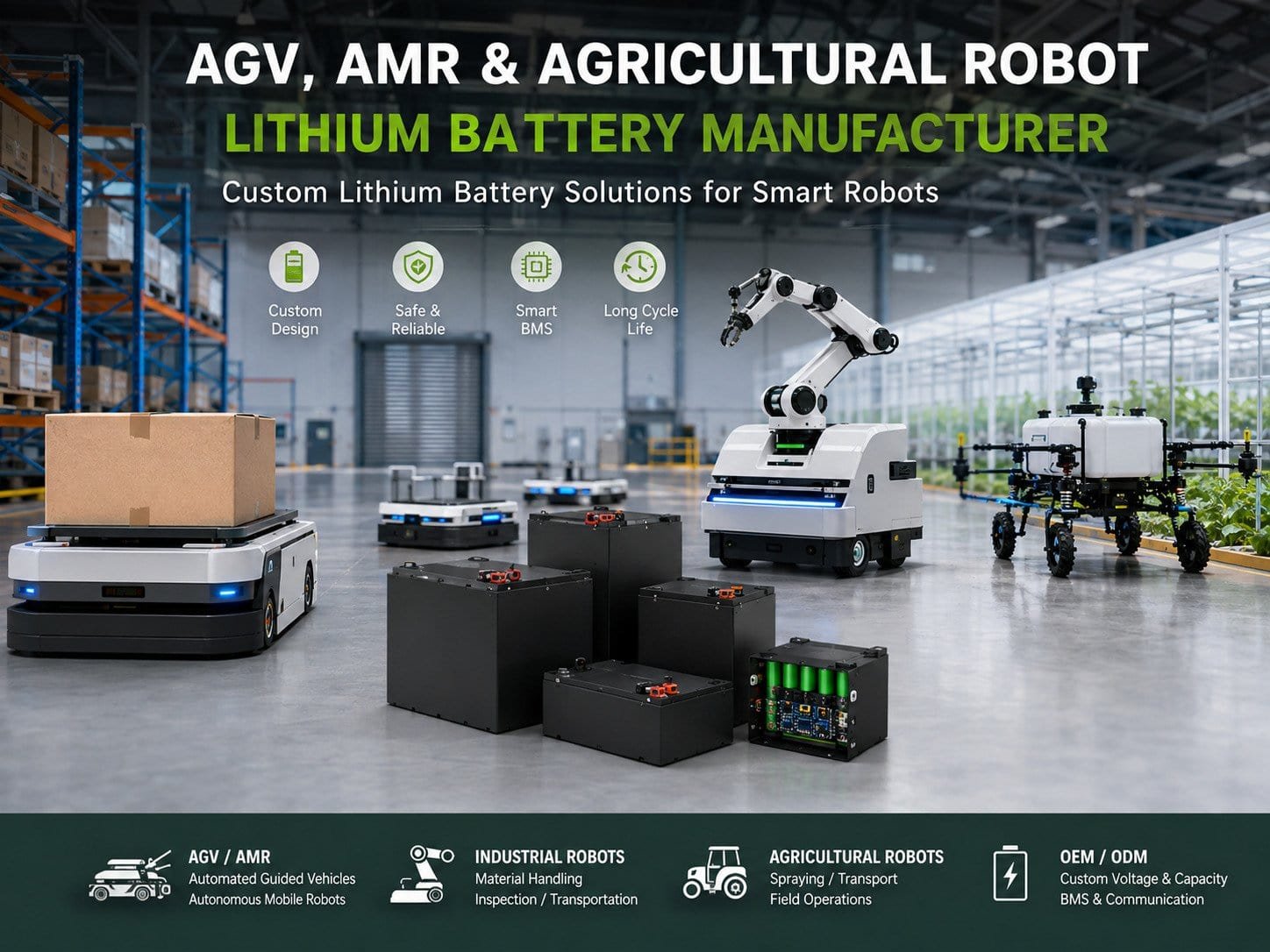
동관 이잔 전자 기술 유한 공사(동관 이잔 전자 기술 유한 공사) provides customized lithium battery packs for AGV, AMR, warehouse robots, and agricultural robots. Battery solutions can be developed according to equipment voltage, capacity, discharge current, installation space, operating environment, BMS requirements, and communication protocols.

As automated equipment becomes more common in warehouses, factories, logistics facilities, and agricultural operations, battery performance has become an important consideration in mobile robot design. Different robotic platforms have different power requirements, making battery configuration and system integration important parts of the development process.

AGV lithium battery manufacturer

Lithium Battery Solutions for AGV and AMR

AGVs (Automated Guided Vehicles) and AMRs (Autonomous Mobile Robots) are widely used for material transportation and automated handling.

AGV and AMR battery requirements can vary based on payload, motor power, operating hours, travel distance, charging frequency, and working environment.

A customized AGV or AMR lithium battery pack may include:

  • Customized voltage and capacity
  • LiFePO4 or lithium-ion battery cells
  • 스마트 배터리 관리 시스템(BMS)
  • CAN, RS485, UART, or other communication interfaces
  • Customized connectors and wiring
  • Battery enclosure design
  • 온도 모니터링
  • 과충전 및 과방전 방지
  • 과전류 및 단락 보호
  • Customized dimensions and mounting structure

For robots that operate through multiple charging and discharging cycles, LiFePO4 battery technology can be evaluated according to the equipment’s power requirements and operating conditions.

Lithium Batteries for Agricultural Robots

Agricultural robots operate in environments that can differ significantly from indoor industrial robots. Outdoor equipment may encounter dust, moisture, vibration, temperature changes, and extended operating periods.

Agricultural robot battery design may therefore consider:

  • Operating time and energy consumption
  • Motor power and peak current
  • Battery installation space
  • 작동 온도
  • Dust and water protection requirements
  • 충전 방법
  • BMS monitoring and protection
  • Mechanical vibration
  • Battery weight and system balance

Battery packs can be configured for agricultural transport robots, field inspection robots, spraying robots, autonomous agricultural vehicles, and other mobile agricultural equipment.

The battery specification should be determined according to the actual electrical, mechanical, and environmental requirements of the robot.

Custom AGV and AMR Battery Pack Development

Choosing a robot battery involves more than selecting a voltage and capacity.

The battery pack needs to work with the robot’s motor, controller, charger, BMS, and other electrical components. During the design stage, battery engineers may evaluate the following factors:

배터리 셀 선택

Cell chemistry and cell specifications affect the battery’s voltage, capacity, current capability, weight, and operating characteristics.

LiFePO4 and other lithium-ion chemistries can be selected according to the application requirements.

Battery Configuration

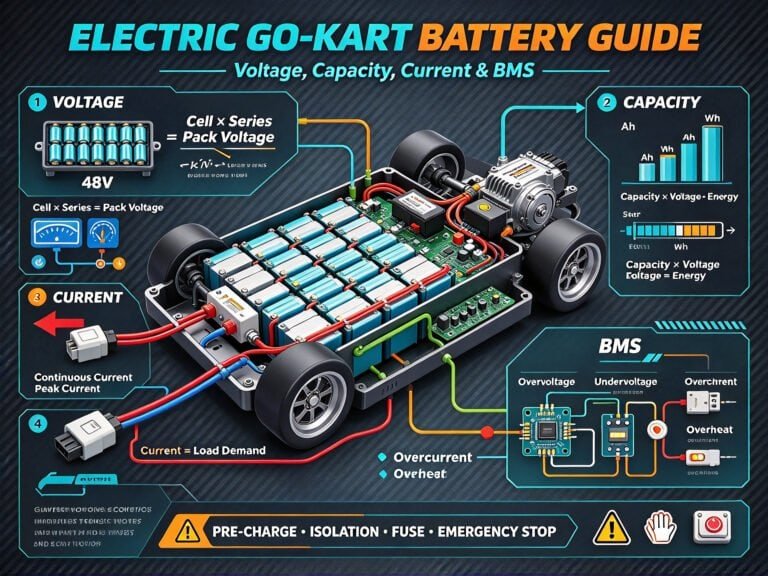
The number of cells connected in series and parallel determines the battery pack’s nominal voltage and capacity.

The configuration should also take into account continuous discharge current, peak current, available installation space, and expected operating time.

BMS Configuration

The BMS monitors battery operating conditions and provides protection functions.

Depending on the application, BMS functions may include:

  • Cell voltage monitoring
  • Pack voltage monitoring
  • Current monitoring
  • 온도 모니터링
  • 과충전 방지
  • 과방전 방지
  • 과전류 보호
  • 단락 보호
  • 통신 기능

For AGV and AMR applications, communication between the battery and vehicle control system may also be required.

Battery Communication for Mobile Robots

Some AGV and AMR systems require battery status information to be transmitted to the vehicle controller.

Depending on the equipment architecture, communication protocols may include CAN, CANFD, RS485, UART, or Modbus-RTU.

Battery communication can provide information such as:

  • 충전 상태(SOC)
  • 배터리 전압
  • 현재
  • 온도
  • Battery status
  • Fault information
  • Charging status

The communication protocol and data structure should be matched with the robot control system during the battery development stage.

Battery Testing and Quality Control

Lithium battery pack manufacturing involves several stages, including cell inspection, cell sorting, pack assembly, welding, BMS installation, electrical testing, aging, and final inspection.

For AGV, AMR, and agricultural robot batteries, testing can include:

  • 전압 테스트
  • 용량 테스트
  • Charging and discharging testing
  • BMS protection testing
  • 온도 모니터링
  • 통신 테스트
  • 절연 시험
  • 에이징 테스트
  • Appearance and assembly inspection

The specific testing procedures depend on the battery design, application, customer requirements, and applicable standards.

Lithium Battery Certifications for Robot Applications

When lithium batteries are supplied for international markets, applicable transportation and product requirements should be considered during the development stage.

Depending on the battery type, application, and destination market, manufacturers may need to consider standards and certifications such as:

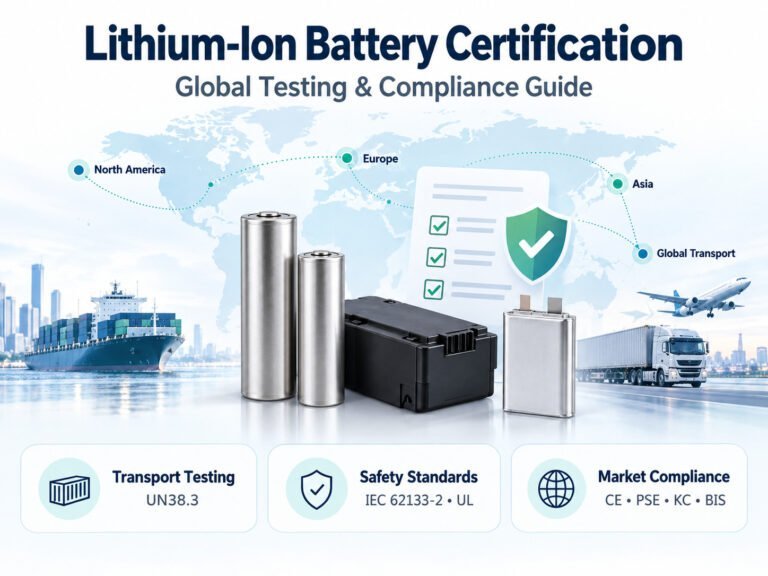
  • UN38.3
  • IEC 62133-2
  • CE
  • RoHS
  • UL-related requirements
  • EU Battery Regulation requirements

Certification requirements can vary by product category and market. Therefore, certification planning should be considered together with battery design rather than being treated as a final production step.

OEM and ODM Lithium Battery Manufacturing

Robot manufacturers may have different requirements for battery dimensions, voltage, capacity, connectors, communication interfaces, and installation methods.

OEM and ODM battery development can support customized requirements such as:

  • 배터리 전압
  • Battery capacity
  • 배터리 치수
  • Battery enclosure
  • 셀 구성
  • BMS 기능
  • 통신 프로토콜
  • Connectors
  • Wiring harness
  • Charging interface
  • 작동 온도 범위

This approach allows the battery pack to be developed around the robot’s existing electrical and mechanical system.

Applications of Robot Lithium Battery Packs

Customized lithium battery packs can be used in various robotic and automated equipment, including:

  • AGV automated guided vehicles
  • AMR autonomous mobile robots
  • Warehouse robots
  • 자재 운반 로봇
  • 검사 로봇
  • Autonomous transport vehicles
  • Agricultural robots
  • Agricultural spraying robots
  • Field inspection equipment
  • Autonomous agricultural vehicles

Each application has different power consumption, operating time, environmental, and installation requirements.

How to Choose an AGV or AMR Battery Manufacturer?

When evaluating an AGV, AMR, or agricultural robot battery manufacturer, equipment companies can consider several factors:

1. Battery development capability

Check whether the manufacturer can develop battery packs according to electrical and mechanical requirements.

2. BMS and communication capability

For intelligent mobile robots, BMS communication may be an important part of system integration.

3. Cell selection and battery configuration

The manufacturer should be able to select suitable cells and configure the battery according to voltage, capacity, current, and operating conditions.

4. Testing and quality control

Review the manufacturer’s battery testing process, aging procedures, and quality management system.

5. Certification support

Confirm which certifications and testing documents are available for the target market and application.

6. OEM/ODM capability

For equipment manufacturers, customization capability can be important when standard battery packs do not fit the robot’s installation space or electrical system.

동관 이잔 전자 기술 유한 회사 소개

Dongguan Yizhan Electronics Technology Co., Ltd. specializes in customized lithium battery pack development and manufacturing.

The company’s battery solutions cover AGV, AMR, robots, agricultural equipment, industrial equipment, electric vehicles, medical equipment, and other applications.

The company provides OEM and ODM battery services, with customization options covering voltage, capacity, battery structure, BMS, connectors, communication protocols, and other battery pack specifications.

For AGV, AMR, and agricultural robot manufacturers, battery selection should be based on the actual requirements of the complete equipment system. Evaluating battery cells, electrical parameters, BMS functions, mechanical structure, operating environment, testing, and certification requirements during the development stage can help establish a suitable battery solution.

Frequently Asked Questions

What type of battery is suitable for AGVs and AMRs?

LiFePO4 and other lithium-ion battery technologies can be used for AGV and AMR applications. The appropriate battery chemistry depends on factors such as voltage, capacity, discharge current, operating temperature, cycle requirements, weight, and installation space.

Can AGV and AMR batteries be customized?

Yes. Battery packs can be customized according to voltage, capacity, dimensions, connectors, BMS functions, communication protocols, and installation requirements.

What BMS communication protocols can be used for robot batteries?

Depending on the battery and robot control system, communication options may include CAN, CANFD, RS485, UART, and Modbus-RTU.

What certifications are required for lithium batteries?

Requirements depend on the battery application and destination market. UN38.3 is commonly relevant to lithium battery transportation, while other product and market requirements may include IEC, UL, CE, RoHS, and EU Battery Regulation requirements.

What information is needed to customize an AGV or AMR battery?

Useful information includes required voltage, capacity, continuous and peak current, operating time, charging method, battery dimensions, installation position, connector type, communication protocol, operating temperature, and other equipment requirements.

결론

AGV, AMR, and agricultural robots have different power requirements depending on their operating environment and functions. A suitable lithium battery pack needs to consider not only voltage and capacity, but also cell selection, BMS configuration, communication, mechanical design, thermal conditions, testing, and applicable certification requirements.

For robot manufacturers and system integrators, working with a battery manufacturer that can support customized battery development can help align the battery pack with the overall equipment design.

Custom lithium battery packs for AGV, AMR and agricultural robots. OEM/ODM battery solutions with LiFePO4 and lithium-ion cells, smart BMS, customized voltage, capacity and communication.
2026-08-15
+
Learn how to customize a lithium battery for an electric forklift, including voltage, capacity, cell selection, BMS, dimensions, connectors, charging, communication, and safety requirements.
2026-08-14
+
Learn how to extend AGV battery life in 24/7 warehouse operations through LiFePO4 battery selection, proper charging, BMS protection, temperature management, and battery maintenance.
2026-08-14
+
Learn how to select the right lithium battery pack for your equipment by evaluating voltage, capacity, current, battery chemistry, size, BMS, operating environment, and certification requirements.
2026-08-13
+