
Choosing a forklift battery is not simply a matter of selecting the highest capacity or matching the voltage shown on the forklift.
A suitable battery needs to match the forklift’s electrical system, available installation space, load requirements, operating hours, charging method, working environment, and communication system.
For companies replacing lead-acid batteries with lithium batteries, the selection process also involves battery chemistry, BMS configuration, charger compatibility, thermal management, and safety requirements.
This forklift battery guide explains how to evaluate the main battery specifications and select a configuration based on the forklift type and actual operating conditions.
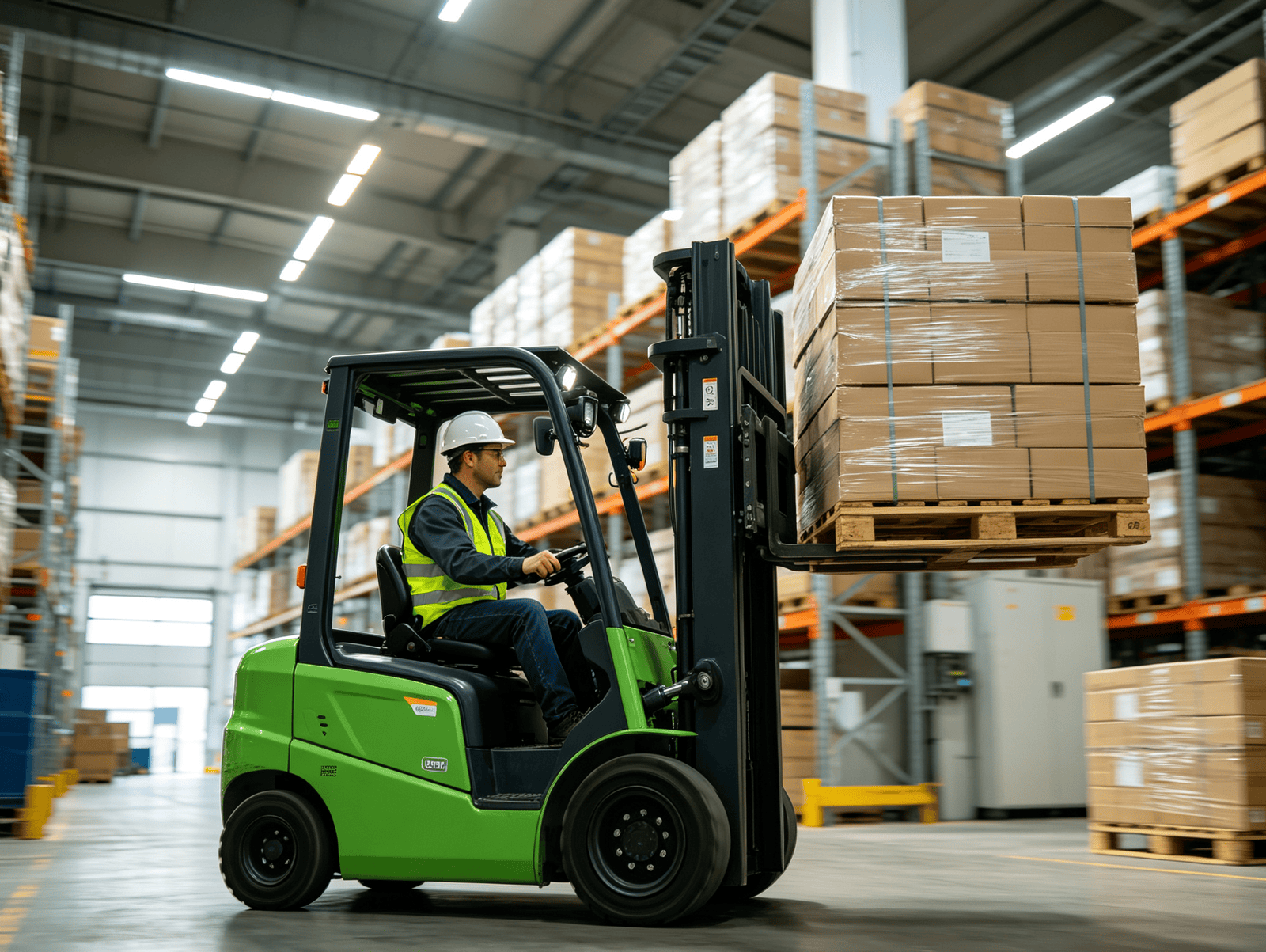
1. Why Forklift Battery Specifications Matter
A forklift battery is both an energy source and an important part of the vehicle’s electrical system.
If the battery specification does not match the forklift, several problems may occur, such as:
- Insufficient operating time
- Voltage-related faults
- Excessive battery temperature
- Charging problems
- Communication errors
- バッテリー性能の低下
- Installation difficulties
- Premature battery degradation
For this reason, battery selection should begin with the forklift manufacturer’s requirements rather than the battery capacity alone.
A useful starting point is to collect the following information:
- フォークリフトの型式
- 定格電圧
- 電池ケースの寸法
- Required battery capacity
- Maximum load
- Average operating load
- 毎日の営業時間
- シフト数
- 充電方法
- 動作温度
- Indoor or outdoor use
- Required communication protocol
- Battery connector
- 充電器の仕様
This information provides the foundation for battery sizing.
2. Start With the Forklift Voltage
Voltage is one of the first specifications that needs to be confirmed.
Common electric forklift battery systems include:
- 24V
- 36V
- 48V
- 72V
- 80V
However, the actual voltage requirement depends on the forklift’s electrical architecture.
For example, a small warehouse pallet truck may use a lower-voltage battery, while a larger electric counterbalance forklift may require a higher-voltage system.
The battery should not be selected based only on physical compatibility.
The nominal voltage, charging voltage, BMS protection parameters, motor controller, charger, and other electrical components need to be compatible.
Important point
A battery labeled “48V” should not automatically be considered interchangeable with every 48V forklift.
The complete electrical system needs to be evaluated.
3. How to Calculate the Required Battery Capacity
バッテリーの容量は、通常、アンペア時(Ah)で表されます。.
A simple energy calculation can help estimate the required battery size:
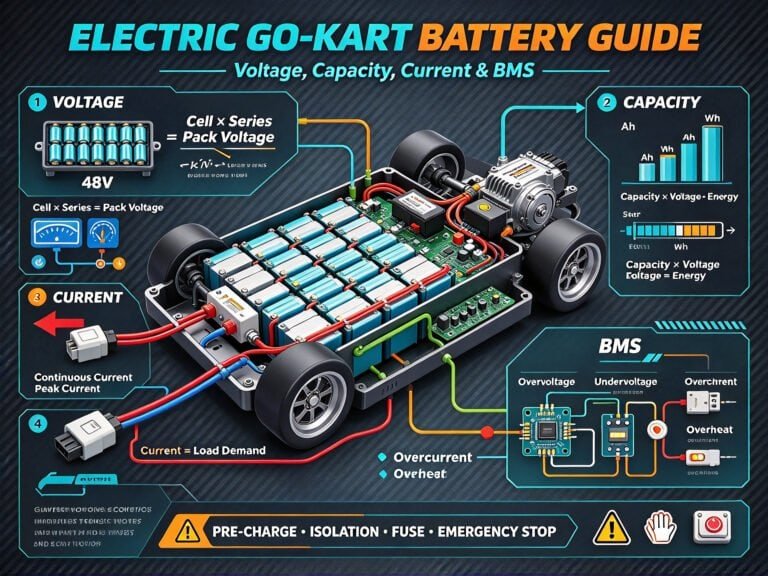
エネルギー(Wh)=電圧(V)×容量(Ah)
例えば、こうだ:
A 48V 400Ah battery has a nominal energy of approximately:
48V × 400Ah = 19,200Wh
or approximately:
19.2 kWh
This is a nominal energy calculation, not a guarantee of actual operating time.
Actual forklift operating time depends on many factors, including:
- 積載重量
- 走行速度
- Acceleration frequency
- リフトの頻度
- Hydraulic system demand
- Operator behavior
- Warehouse layout
- 周囲温度
- Battery usable energy
- BMS limits
Therefore, capacity should be selected using actual operating data whenever possible.
4. Choose Battery Capacity Based on the Working Pattern
The same forklift may require different battery capacities depending on how it is used.
Single-Shift Operation
A forklift operating for several hours per day may have sufficient time for charging between work periods.
In this situation, the battery capacity can be selected based on the daily energy requirement and charging schedule.
Multi-Shift Operation
Forklifts operating across two or three shifts may require a different strategy.
Possible approaches include:
- Higher-capacity battery
- チャンスチャージ
- Multiple battery packs
- バッテリー交換
- Fast charging where supported by the battery design
The correct solution depends on the fleet’s operating schedule.
High-Utilization Warehouses
For applications with frequent lifting, acceleration, and stopping, the battery needs to support the actual power demand rather than simply provide a large Ah rating.
This is where discharge current becomes an important specification.
5. Capacity Is Not the Same as Power
A common mistake is to compare forklift batteries only by Ah.
Capacity describes how much energy the battery can store under specified conditions.
Power capability describes how quickly the battery can deliver energy.
A forklift may require high current during:
- 加速
- Lifting heavy loads
- Hydraulic operation
- Incline operation
- 頻繁な始動・停止の繰り返し
Therefore, battery specifications should include both:
Energy requirement + Power requirement
When evaluating a lithium forklift battery, ask the battery manufacturer about:
- 連続放電電流
- ピーク放電電流
- ピーク電流の持続時間
- BMS current limits
- Cell discharge capability
This is particularly important for heavy-duty forklifts.
6. Select the Right Battery Chemistry
Lithium-ion batteries are available in several chemistries.
For industrial forklift applications, lithium iron phosphate, commonly called LiFePO4 or LFP, is widely considered for applications where thermal stability, cycle performance, and safety characteristics are important.
Other lithium-ion chemistries may also be appropriate depending on the application.
The battery chemistry should be evaluated based on:
- エネルギー要件
- 電源要件
- 動作温度
- サイクル要件
- 重量
- 空きスペース
- 充電戦略
- コスト
- 安全要件
There is no single battery chemistry that is suitable for every forklift application.
7. Consider the Weight of the Battery
Battery weight can be an important part of forklift design.
Traditional lead-acid batteries are relatively heavy, and their weight can contribute to the counterbalance function of some forklifts.
Lithium batteries can provide similar usable energy with a different weight distribution.
Therefore, replacing a lead-acid battery with a lithium battery should not be treated as a simple “remove and replace” process.
The forklift manufacturer should confirm whether the new battery meets the required:
- Minimum battery weight
- 重量配分
- Center of gravity
- Battery compartment requirements
- Vehicle stability requirements
This is particularly important for counterbalance forklifts.
8. Check Battery Dimensions Before Ordering
A battery can have the correct voltage and capacity and still fail to fit the forklift.
Before ordering, measure or confirm:
- 長さ
- 幅
- 高さ
- 電池ケース
- 取り付け位置
- Cable position
- コネクタの位置
- Access space
- Battery removal method
For OEM lithium battery projects, the PACK enclosure can be designed around the available installation space.
A custom battery may also include a different connector position, mounting structure, display, heating system, or communication interface.
9. BMS Specifications Should Match the Application
The Battery Management System is one of the most important components of a lithium forklift battery.
A BMS can monitor and manage parameters such as:
- 細胞電位
- パック電圧
- 現在
- 温度
- SOC
- SOH
- 過電流
- Overvoltage
- Undervoltage
- ショート
- Thermal conditions
For intelligent material handling equipment, communication may also be required.
Common interfaces include:
- CAN
- CAN FD
- RS485
- UART
The communication protocol should be compatible with the forklift’s controller or energy management system where required.
A battery with the correct voltage but an incompatible communication system may not function correctly with the vehicle.
10. Charger Compatibility Is Part of Battery Selection
The charger should be selected together with the battery.
For lithium forklift batteries, confirm:
- 充電電圧
- 充電電流
- 充電プロファイル
- コネクタ
- 通信要件
- Temperature restrictions
- BMSとの互換性
A common mistake is to purchase the battery first and then attempt to adapt an existing charger afterward.
For a new forklift battery project, the battery, BMS, and charger should ideally be evaluated as one system.
11. Consider the Operating Environment
The same battery configuration may not work equally well in every environment.
Standard Warehouse
A conventional lithium battery configuration may be suitable when the warehouse has moderate temperatures and regular charging conditions.
Cold Storage
Cold-storage applications require additional attention to:
- Low-temperature discharge
- 低温充電
- Battery heating
- BMS temperature protection
- Charger control
Some lithium batteries require controlled charging at low temperatures.
Outdoor Applications
Outdoor forklifts may experience:
- 雨
- ダスト
- 温度変動
- 振動
- Direct sunlight
In these applications, enclosure design and protection requirements should be evaluated.
High-Temperature Environments
For high-temperature applications, thermal management and BMS temperature monitoring become particularly important.
12. Battery Protection and IP Rating
The required protection level depends on the forklift’s operating environment.
An industrial battery enclosure may need protection against dust and water ingress.
Depending on the design and application, lithium battery packs may be developed with protection levels such as IP65, IP67, or higher.
However, an IP rating should not be selected simply because a higher number sounds better.
The appropriate protection level should be based on the actual environment and the battery enclosure design.
The manufacturer should also ensure that connectors, cable exits, seals, and enclosure interfaces are consistent with the intended protection level.
13. How Forklift Type Affects Battery Selection
Different forklift types have different energy and installation requirements.
Electric Counterbalance Forklift
These forklifts may require relatively high power output, especially when handling heavier loads.
Battery selection should consider:
- 定格電圧
- ピーク電流
- バッテリー重量
- Counterbalance requirements
- 電池ケース
- 毎日の営業時間
Reach Truck
Reach trucks are commonly used in warehouse environments where operating time, compact dimensions, and charging efficiency can be important.
Battery dimensions and energy capacity should be matched to the specific truck.
Electric Pallet Truck
Pallet trucks may use smaller battery systems.
Key considerations can include:
- コンパクトなサイズ
- 重量
- 電圧
- 定員
- 充電方法
- コネクタ
Electric Stacker
Stackers can have different power requirements depending on lifting height and load capacity.
Battery selection should consider both driving and lifting energy demand.
AGVとAMR
Automated vehicles may have more specific battery requirements.
In addition to voltage and capacity, the battery may need:
- CAN通信
- RS485
- SOC報告
- 遠隔監視
- Automatic charging compatibility
- 低温動作
- 頻繁な充電
For AGV and AMR applications, communication between the battery and vehicle control system can be an important part of the battery design.
14. How to Select a Forklift Battery for Multi-Shift Operations
Multi-shift operation requires a different approach to battery sizing.
Instead of asking:
“How many Ah do we need?”
fleet managers should ask:
“How much energy does the forklift consume during each shift, and when can the battery be charged?”
For example, consider:
- Shift duration
- Average load
- ピーク負荷
- Number of lifting cycles
- 移動距離
- Charging periods
- Charger power
- Opportunity charging availability
This operating data can provide a more realistic basis for battery sizing.
15. What Information Should You Provide to a Battery Manufacturer?
When requesting a quotation for a custom forklift battery, providing detailed information can improve the accuracy of the proposed configuration.
役立つ情報には、次のようなものがあります:
Forklift Information
- Forklift manufacturer
- モデル
- Rated load
- バッテリー電圧
- 既存のバッテリー仕様
Operating Information
- 1日あたりの労働時間
- シフト数
- Average load
- ピーク負荷
- 職場環境
- 周囲温度
Battery Information
- 必要電圧
- 必要容量
- バッテリー寸法
- コネクタ
- 通信プロトコル
- Charger specification
Application Requirements
- チャンスチャージ
- バッテリー交換
- 急速充電
- 自動充電
- 遠隔監視
- Heating function
The more complete the technical information, the easier it is to evaluate whether a standard battery or a customized PACK is appropriate.
16. A Practical Forklift Battery Selection Process
A structured selection process can help reduce compatibility problems.
Step 1: Identify the Forklift
Confirm the manufacturer, model, voltage, load rating, and battery compartment.
Step 2: Analyze the Working Pattern
Record daily operating hours, number of shifts, average load, lifting frequency, and charging opportunities.
Step 3: Calculate the Energy Requirement
Use voltage and capacity as a starting point, then adjust the battery configuration based on actual operating conditions.
Step 4: Evaluate Power Requirements
Check continuous and peak current requirements, particularly for heavy loads and frequent lifting.
Step 5: Select Battery Chemistry
Compare LiFePO4 and other suitable chemistries according to the application’s energy, power, temperature, cycle, and safety requirements.
Step 6: Confirm BMS and Communication
Make sure the BMS functions and communication protocol match the forklift or vehicle control system.
Step 7: Confirm Charger Compatibility
Verify charging voltage, current, connector, charging profile, and communication requirements.
Step 8: Verify Mechanical Compatibility
Check dimensions, mounting, weight, center of gravity, and connector position.
Step 9: Review Testing and Compliance Requirements
Depending on the market and application, evaluate applicable standards and transportation requirements.
Step 10: Build a Prototype
For custom projects, prototype testing can help verify electrical, mechanical, thermal, and communication compatibility before mass production.
17. Common Forklift Battery Selection Mistakes
Choosing Only by Voltage
Voltage is important, but it is only one specification.
Choosing Only by Ah
A larger capacity does not automatically mean a better solution if the battery cannot meet the forklift’s power requirements or physical constraints.
Ignoring Battery Weight
Battery weight can affect forklift balance and mechanical compatibility.
Ignoring the Charger
Battery and charger compatibility should be confirmed together.
Ignoring Communication
For smart forklifts, AGVs, and AMRs, communication between the battery and vehicle may be required.
Using One Battery Configuration for Every Application
Different forklifts and operating environments may require different battery configurations.
Treating Certification as an Afterthought
Certification and compliance requirements should be considered during product development, particularly for export projects.
18. Why Battery Customization Can Be Useful for OEM Forklift Projects
Standard battery packs may work for some forklift applications, but OEM equipment often has specific requirements.
A customized lithium battery PACK can be designed around:
- 電圧
- 定員
- セルの構成
- ビーエムエス
- コミュニケーション
- 寸法
- コネクタ
- 取付構造
- 充電システム
- 温度管理
- 保護要件
For example, an AGV battery may require a compact enclosure and CAN communication, while a warehouse forklift may prioritize capacity, charging strategy, and operating time.
The battery should therefore be designed around the equipment and operating conditions rather than treated as a standalone component.
19. FAQ: Forklift Battery Selection
What voltage battery does a forklift need?
Common electric forklift battery voltages include 24V, 36V, 48V, 72V, and 80V. The correct voltage must be confirmed from the forklift manufacturer’s specifications.
How do I calculate forklift battery capacity?
基本的な計算式は次のとおりです:
エネルギー(Wh)=電圧(V)×容量(Ah)
Actual battery sizing should also consider load, operating hours, charging strategy, temperature, and power requirements.
Is LiFePO4 suitable for forklifts?
LiFePO4 is one lithium-ion chemistry used in industrial battery applications. Its suitability depends on the forklift, operating conditions, required power, temperature range, charging strategy, and system design.
Can I replace a lead-acid forklift battery with lithium?
A replacement should be evaluated as a system rather than assuming direct compatibility. Voltage, dimensions, weight, BMS, charger, connector, communication, and forklift requirements should all be checked.
How long should a forklift battery last?
Battery service life depends on chemistry, cell quality, operating conditions, depth of discharge, charging practices, temperature, and battery management. A manufacturer should provide expected cycle-life data under specified test conditions.
Should I choose a higher-capacity forklift battery?
Not necessarily. Battery capacity should be matched to actual energy demand, available charging time, battery compartment, weight requirements, and operating conditions.
結論
Choosing the right forklift battery specification requires more than matching voltage and capacity.
The forklift type, load, operating hours, number of shifts, charging strategy, environment, battery weight, installation dimensions, BMS, communication system, and charger all influence the final battery configuration.
For companies transitioning from lead-acid to lithium batteries, the selection process should begin with actual operating data.
A practical approach is:
Forklift → Application → Energy Demand → Power Demand → Battery Chemistry → BMS → Charger → Mechanical Design → Testing
For standard applications, an existing battery configuration may be sufficient. For OEM forklifts, AGVs, AMRs, and equipment with specific space, communication, temperature, or charging requirements, a customized lithium battery PACK may be more appropriate.
The goal is not simply to select a battery with a larger capacity. The goal is to select a battery configuration that is electrically compatible, mechanically suitable, operationally appropriate, and aligned with the requirements of the target market.
 English
  Chinese
  Japanese
  German
  French
  Korean
