
选择叉车电池,并非仅仅是选择容量最大的电池,或是选择与叉车上标注的电压相匹配的电池。.
合适的电池需要与叉车的电气系统、可用的安装空间、载荷要求、工作时间、充电方式、工作环境以及通信系统相匹配。.
对于将铅酸电池更换为锂电池的企业而言,选型过程还涉及电池化学体系、BMS配置、充电器兼容性、热管理以及安全要求。.
本叉车电池指南介绍了如何评估主要电池规格,并根据叉车类型和实际工作条件选择合适的配置。.
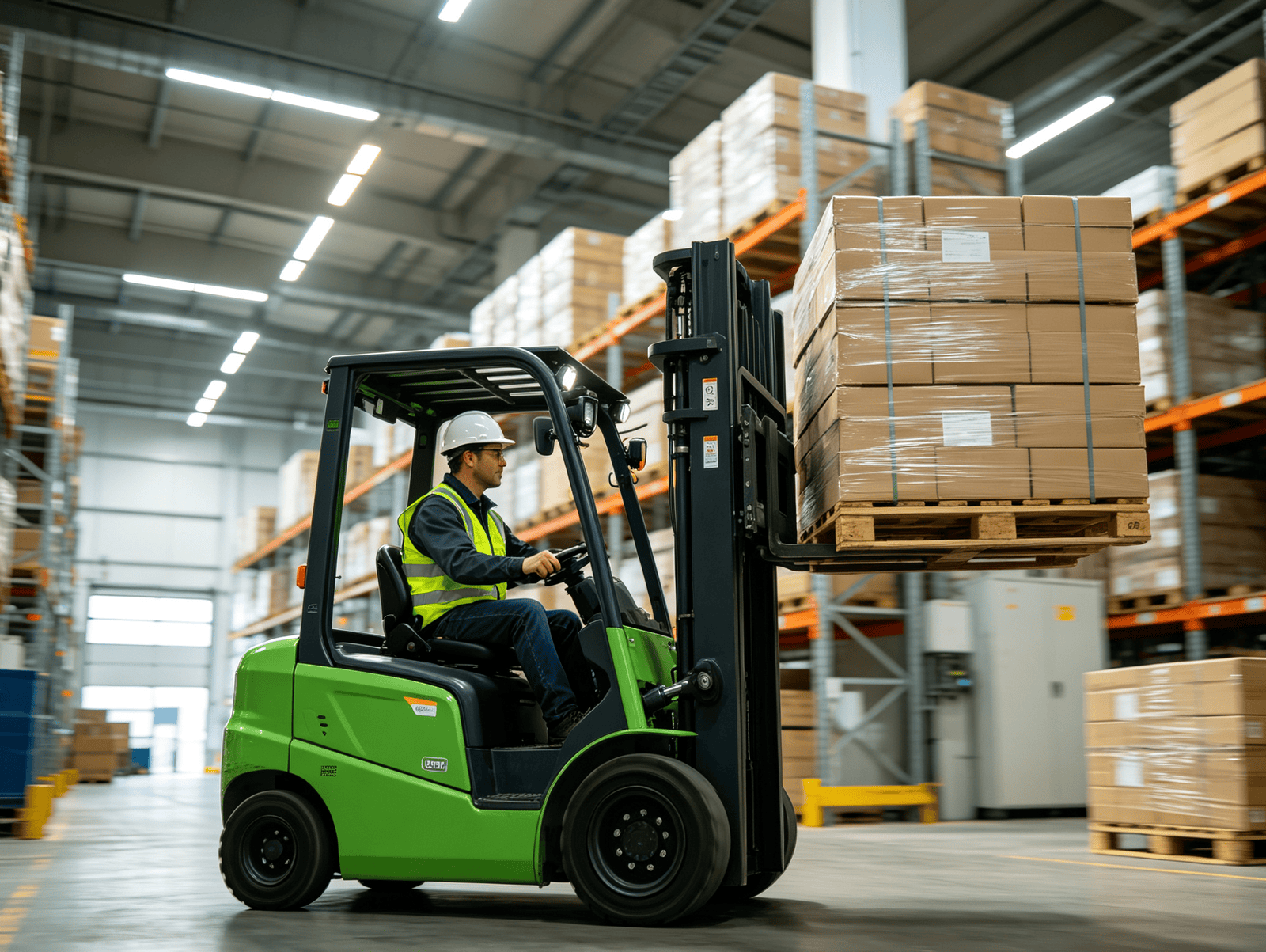
1. 为什么叉车电池的规格很重要
叉车电池既是能源,也是车辆电气系统的重要组成部分。.
如果电池规格与叉车不匹配,可能会出现以下问题:
- 运行时间不足
- 与电压相关的故障
- 电池温度过高
- 充电问题
- 通信错误
- 电池性能下降
- 安装困难
- 电池过早退化
因此,选择电池时应首先依据叉车制造商的要求,而不能仅考虑电池容量。.
一个有用的起点是收集以下信息:
- 叉车型号
- 额定电压
- 电池仓尺寸
- 所需电池容量
- 最大载荷
- 平均运行负荷
- 每日营业时间
- 班次数量
- 充电方式
- 工作温度
- 室内或室外使用
- 必需的通信协议
- 电池连接器
- 充电器规格
这些信息为电池选型提供了依据。.
2. 从叉车电压开始
电压是需要首先确认的规格之一。.
常见的电动叉车电池系统包括:
- 24V
- 36V
- 48V
- 72V
- 80V
不过,实际的电压要求取决于叉车的电气架构。.
例如,小型仓库托盘搬运车可能使用低电压电池,而较大的电动平衡重式叉车则可能需要更高电压的系统。.
不应仅根据物理兼容性来选择电池。.
额定电压、充电电压、BMS保护参数、电机控制器、充电器及其他电气组件必须相互兼容。.
要点
标有“48V”字样的电池,不应自动被视为可与所有48V叉车互换使用。.
需要对整个电气系统进行评估。.
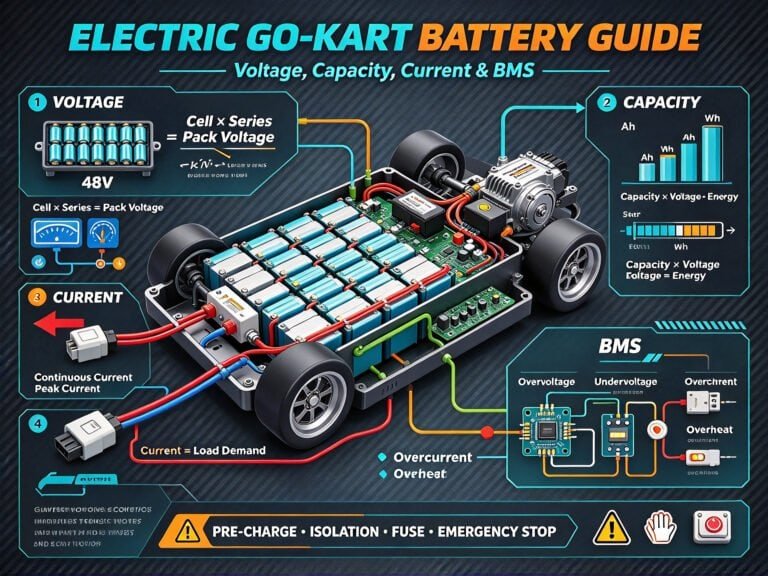
3. 如何计算所需的电池容量
电池容量通常以安时(Ah)为单位表示。.
通过简单的能量计算,可以估算所需的电池容量:
能量 (Wh) = 电压 (V) × 容量 (Ah)
例如
一块 48V 400Ah 的电池,其标称能量约为:
48V × 400Ah = 19,200Wh
或者大致为:
19.2 千瓦时
这只是名义上的能耗计算,并不保证实际运行时间。.
叉车的实际运行时间取决于许多因素,包括:
- 载重
- 行驶速度
- 加速度频率
- 起重频率
- 液压系统需求
- 运算符的行为
- 仓库布局
- 环境温度
- 电池可用能量
- BMS限制
因此,应尽可能根据实际运行数据来选择容量。.
4. 根据工作模式选择电池容量
同一台叉车可能需要不同容量的电池,具体取决于其使用方式。.
单班制
每天运行数小时的叉车,在两个工作时段之间可能有足够的时间进行充电。.
在这种情况下,可以根据日常能源需求和充电计划来选择电池容量。.
多班次作业
对于实行两班或三班制运行的叉车,可能需要采取不同的策略。.
可能的方法包括:
- 大容量电池
- 机会收费
- 多个电池组
- 电池交换
- 在电池设计支持的情况下,可进行快充
正确的解决方案取决于车队的运营计划。.
高利用率仓库
对于需要频繁提升、加速和停止的应用,电池需要能够满足实际的功率需求,而不仅仅是提供较大的安时(Ah)额定容量。.
此时,放电电流就成为一项重要的技术参数。.
5. 容量不等于功率
一个常见的错误是仅根据安时(Ah)来比较叉车电池。.
容量指电池在指定条件下能够储存的能量大小。.
功率能力指电池释放能量的速度。.
在以下情况下,叉车可能需要大电流:
- 加速度
- 搬运重物
- 液压操作
- 斜坡运行
- 频繁的启停循环
因此,电池规格应同时包括以下两项:
能量需求 + 功率需求
在评估锂电池叉车电池时,请向电池制造商咨询以下问题:
- 连续放电电流
- 峰值放电电流
- 峰值电流持续时间
- BMS 电流限制
- 电池放电能力
对于重型叉车而言,这一点尤为重要。.
6. 选择合适的电池化学体系
锂离子电池有多种化学体系可供选择。.
在工业叉车应用领域,磷酸铁锂(通常称为 LiFePO4 或 LFP)因其在热稳定性、循环性能和安全性方面的优异表现,被广泛视为理想选择。.
根据具体应用场景的不同,其他类型的锂离子电池化学体系也可能适用。.
应根据以下方面对电池化学体系进行评估:
- 能源需求
- 电源要求
- 工作温度
- 周期要求
- 重量
- 可用空间
- 充电策略
- 费用
- 安全要求
没有一种电池化学体系能适用于所有的叉车应用场景。.
7. 考虑电池的重量
电池重量可能是叉车设计中的一个重要因素。.
传统的铅酸蓄电池相对较重,其重量可为某些叉车提供配重功能。.
锂电池可以在重量分布不同的情况下提供相似的可用能量。.
因此,用锂电池替换铅酸电池不应被视为一个简单的“拆下并更换”过程。.
叉车制造商应确认新电池是否符合以下要求:
- 电池最小重量
- 重量分布
- 重心
- 电池仓要求
- 车辆稳定性要求
这一点对于平衡重式叉车而言尤为重要。.
8. 订购前请确认电池尺寸
即使电池的电压和容量都符合要求,也可能无法安装到叉车上。.
下单前,请测量或确认:
- 长度
- 宽度
- 高度
- 电池仓
- 安装点
- 电缆位置
- 连接器位置
- 访问空间
- 电池拆卸方法
对于OEM锂电池项目,PACK外壳的设计可根据可用的安装空间进行调整。.
定制电池还可能采用不同的连接器位置、安装结构、显示屏、加热系统或通信接口。.
9. 电池管理系统(BMS)的规格应与应用场景相匹配
电池管理系统是锂电叉车电池中最重要的组件之一。.
BMS 可以监控和管理以下参数:
- 细胞电位
- 电池组电压
- 当前
- 温度
- SOC
- SOH
- 过电流
- 过电压
- 欠压
- 短路
- 热工条件
对于智能物料搬运设备,可能还需要通信功能。.
常见的接口包括:
- CAN
- CAN FD
- RS485
- UART
通信协议应与叉车控制器或能源管理系统兼容(如有需要)。.
电压正确但通信系统不兼容的蓄电池可能无法与车辆正常配合使用。.
10. 充电器兼容性是选择电池时需要考虑的因素之一
充电器应与电池一同选购。.
对于锂电池叉车,请确认:
- 充电电压
- 充电电流
- 充电配置文件
- 连接器
- 通信要求
- 温度限制
- BMS兼容性
一个常见的错误是先购买电池,然后才试图让现有的充电器与之兼容。.
对于一个新的叉车电池项目,电池、BMS和充电器最好作为一个整体系统进行评估。.
11. 考虑运行环境
同一款电池配置在不同环境下的表现可能不尽相同。.
标准仓库
如果仓库温度适中且充电条件稳定,则传统锂电池配置可能是合适的选择。.
冷库
在冷藏应用中,需要特别注意以下方面:
- 低温放电
- 低温充电
- 电池加热
- BMS温度保护
- 充电器控制
某些锂电池在低温下需要进行受控充电。.
户外应用
户外叉车可能会出现以下情况:
- 雨
- 灰尘
- 温度波动
- 振动
- 直射阳光
在这些应用中,应评估外壳设计和防护要求。.
高温环境
对于高温应用,热管理以及BMS温度监测显得尤为重要。.
12. Battery Protection and IP Rating
The required protection level depends on the forklift’s operating environment.
An industrial battery enclosure may need protection against dust and water ingress.
Depending on the design and application, lithium battery packs may be developed with protection levels such as IP65, IP67, or higher.
However, an IP rating should not be selected simply because a higher number sounds better.
The appropriate protection level should be based on the actual environment and the battery enclosure design.
The manufacturer should also ensure that connectors, cable exits, seals, and enclosure interfaces are consistent with the intended protection level.
13. How Forklift Type Affects Battery Selection
Different forklift types have different energy and installation requirements.
Electric Counterbalance Forklift
These forklifts may require relatively high power output, especially when handling heavier loads.
Battery selection should consider:
- 额定电压
- 峰值电流
- 电池重量
- Counterbalance requirements
- 电池仓
- 每日营业时间
Reach Truck
Reach trucks are commonly used in warehouse environments where operating time, compact dimensions, and charging efficiency can be important.
Battery dimensions and energy capacity should be matched to the specific truck.
Electric Pallet Truck
Pallet trucks may use smaller battery systems.
Key considerations can include:
- Compact dimensions
- 重量
- 电压
- 容量
- 充电方式
- 连接器
Electric Stacker
Stackers can have different power requirements depending on lifting height and load capacity.
Battery selection should consider both driving and lifting energy demand.
AGV and AMR
Automated vehicles may have more specific battery requirements.
In addition to voltage and capacity, the battery may need:
- CAN 通信
- RS485
- SOC报告
- 远程监控
- Automatic charging compatibility
- 低温运行
- Frequent charging
For AGV and AMR applications, communication between the battery and vehicle control system can be an important part of the battery design.
14. How to Select a Forklift Battery for Multi-Shift Operations
Multi-shift operation requires a different approach to battery sizing.
Instead of asking:
“How many Ah do we need?”
fleet managers should ask:
“How much energy does the forklift consume during each shift, and when can the battery be charged?”
For example, consider:
- Shift duration
- Average load
- 峰值负荷
- Number of lifting cycles
- 旅行距离
- Charging periods
- Charger power
- Opportunity charging availability
This operating data can provide a more realistic basis for battery sizing.
15. What Information Should You Provide to a Battery Manufacturer?
When requesting a quotation for a custom forklift battery, providing detailed information can improve the accuracy of the proposed configuration.
Useful information includes:
Forklift Information
- Forklift manufacturer
- 模型
- Rated load
- 电池电压
- Existing battery specification
Operating Information
- Working hours per day
- 班次数量
- Average load
- 峰值负荷
- 工作环境
- 环境温度
Battery Information
- Required voltage
- 所需容量
- 电池尺寸
- 连接器
- 通信协议
- Charger specification
Application Requirements
- 机会收费
- 电池交换
- 快速充电
- 自动充电
- 远程监控
- 加热功能
The more complete the technical information, the easier it is to evaluate whether a standard battery or a customized PACK is appropriate.
16. A Practical Forklift Battery Selection Process
A structured selection process can help reduce compatibility problems.
Step 1: Identify the Forklift
Confirm the manufacturer, model, voltage, load rating, and battery compartment.
Step 2: Analyze the Working Pattern
Record daily operating hours, number of shifts, average load, lifting frequency, and charging opportunities.
Step 3: Calculate the Energy Requirement
Use voltage and capacity as a starting point, then adjust the battery configuration based on actual operating conditions.
Step 4: Evaluate Power Requirements
Check continuous and peak current requirements, particularly for heavy loads and frequent lifting.
Step 5: Select Battery Chemistry
Compare LiFePO4 and other suitable chemistries according to the application’s energy, power, temperature, cycle, and safety requirements.
Step 6: Confirm BMS and Communication
Make sure the BMS functions and communication protocol match the forklift or vehicle control system.
Step 7: Confirm Charger Compatibility
Verify charging voltage, current, connector, charging profile, and communication requirements.
Step 8: Verify Mechanical Compatibility
Check dimensions, mounting, weight, center of gravity, and connector position.
Step 9: Review Testing and Compliance Requirements
Depending on the market and application, evaluate applicable standards and transportation requirements.
Step 10: Build a Prototype
For custom projects, prototype testing can help verify electrical, mechanical, thermal, and communication compatibility before mass production.
17. Common Forklift Battery Selection Mistakes
Choosing Only by Voltage
Voltage is important, but it is only one specification.
Choosing Only by Ah
A larger capacity does not automatically mean a better solution if the battery cannot meet the forklift’s power requirements or physical constraints.
Ignoring Battery Weight
Battery weight can affect forklift balance and mechanical compatibility.
Ignoring the Charger
Battery and charger compatibility should be confirmed together.
Ignoring Communication
For smart forklifts, AGVs, and AMRs, communication between the battery and vehicle may be required.
Using One Battery Configuration for Every Application
Different forklifts and operating environments may require different battery configurations.
Treating Certification as an Afterthought
Certification and compliance requirements should be considered during product development, particularly for export projects.
18. Why Battery Customization Can Be Useful for OEM Forklift Projects
Standard battery packs may work for some forklift applications, but OEM equipment often has specific requirements.
A customized lithium battery PACK can be designed around:
- 电压
- 容量
- 单元配置
- BMS
- 交流
- 尺寸
- 连接器
- 安装结构
- 充电系统
- 温度管理
- 防护要求
For example, an AGV battery may require a compact enclosure and CAN communication, while a warehouse forklift may prioritize capacity, charging strategy, and operating time.
The battery should therefore be designed around the equipment and operating conditions rather than treated as a standalone component.
19. FAQ: Forklift Battery Selection
What voltage battery does a forklift need?
Common electric forklift battery voltages include 24V, 36V, 48V, 72V, and 80V. The correct voltage must be confirmed from the forklift manufacturer’s specifications.
How do I calculate forklift battery capacity?
一个基本的计算方法是:
能量 (Wh) = 电压 (V) × 容量 (Ah)
Actual battery sizing should also consider load, operating hours, charging strategy, temperature, and power requirements.
Is LiFePO4 suitable for forklifts?
LiFePO4 is one lithium-ion chemistry used in industrial battery applications. Its suitability depends on the forklift, operating conditions, required power, temperature range, charging strategy, and system design.
Can I replace a lead-acid forklift battery with lithium?
A replacement should be evaluated as a system rather than assuming direct compatibility. Voltage, dimensions, weight, BMS, charger, connector, communication, and forklift requirements should all be checked.
How long should a forklift battery last?
Battery service life depends on chemistry, cell quality, operating conditions, depth of discharge, charging practices, temperature, and battery management. A manufacturer should provide expected cycle-life data under specified test conditions.
Should I choose a higher-capacity forklift battery?
Not necessarily. Battery capacity should be matched to actual energy demand, available charging time, battery compartment, weight requirements, and operating conditions.
结论
Choosing the right forklift battery specification requires more than matching voltage and capacity.
The forklift type, load, operating hours, number of shifts, charging strategy, environment, battery weight, installation dimensions, BMS, communication system, and charger all influence the final battery configuration.
For companies transitioning from lead-acid to lithium batteries, the selection process should begin with actual operating data.
A practical approach is:
Forklift → Application → Energy Demand → Power Demand → Battery Chemistry → BMS → Charger → Mechanical Design → Testing
For standard applications, an existing battery configuration may be sufficient. For OEM forklifts, AGVs, AMRs, and equipment with specific space, communication, temperature, or charging requirements, a customized lithium battery PACK may be more appropriate.
The goal is not simply to select a battery with a larger capacity. The goal is to select a battery configuration that is electrically compatible, mechanically suitable, operationally appropriate, and aligned with the requirements of the target market.
 English
  Chinese
  Japanese
  German
  French
  Korean
