
電気自動車、AGV/AMRロボット、エネルギー貯蔵システム、電動工具、医療機器、スマート機器などの分野における電化の急速な進展に伴い、ますます多くの企業が OEM向けバッテリーパック専門メーカー 通常の電池を購入する代わりに。.
信頼できるOEM用バッテリーサプライヤーは、単にバッテリーセルを提供するだけでは不十分です。次のような能力を備えている必要があります。 バッテリーソリューションの設計、BMSの開発、構造設計、認証試験、量産、およびアフターサービス.
世界中のバイヤーにとって、バッテリーサプライヤーを誤って選んでしまうと、プロジェクトの遅延、認証取得の失敗、品質問題、さらにはサプライチェーン上のリスクにつながる可能性があります。.
このガイドでは、以下の内容について説明します:
- OEMバッテリーパックの製造とは
- 適切なバッテリーサプライヤーの選び方
- カスタムバッテリーの開発プロセス
- 評価すべき主要な技術仕様
- 電池セル、BMS、および構造設計の要件
- 国際的な認証要件
- OEMバッテリー工場の評価方法
1. OEMバッテリーパックメーカーとは何ですか?
OEM(Original Equipment Manufacturer)のバッテリーパックメーカーは、顧客の要件に応じて、カスタマイズされたバッテリーソリューションを設計・製造しています。.
一般的なバッテリーサプライヤーとは異なり、OEMバッテリーの製造には以下の内容が含まれます:
✅ 電池セルの選定
✅ バッテリーパックの設計
✅ バッテリー管理システム(BMS)の開発
✅ 保護回路の設計
✅ 筐体および機械設計
✅ コネクタのカスタマイズ
✅ 通信プロトコルの開発
✅ 安全性試験
✅ 量産
例を挙げよう:
- AGVロボットには、24V/48V/72Vの高サイクルバッテリーシステムが必要です
- 電動自転車には、UL2271認証を取得したリチウム電池が必要です
- エネルギー貯蔵システムには、51.2VのLiFePO4バッテリーパックが必要です。
- 医療機器には、信頼性が高くコンパクトなバッテリーソリューションが求められます
こうした用途では、通常、既製品ではなく、カスタマイズされたバッテリーパックが必要となります。.
2. なぜOEMバッテリーパックの製造を選ぶべきなのか?
2.1 限られたスペースに合わせたオーダーメイド設計
デバイスによって内部構造は異なります。.
OEMバッテリーメーカーは、以下の基準に基づいてバッテリーパックを設計することができます:
- 長さ
- 幅
- 高さ
- 設置方法
- コネクタの位置
例えば、ロボットのバッテリーには、次のような要件が求められる場合があります:
- スリムなデザイン
- 迅速な交換構造
- 耐衝撃性
- IP65/IP67の防水性能
2.2 特定の性能要件への適合
一般的な電池では、業務用機器の要件を満たせない場合があります。.
OEMソリューションでは、以下のカスタマイズが可能です:
電圧オプション
一般的な構成:
- 12V
- 24V
- 36V
- 48V
- 51.2V
- 72V
容量の選択肢
例を挙げよう:
- 10Ah
- 20Ah
- 50Ah
- 100Ah以上
放電性能
用途の要件に合わせて設計されています:
- 標準的な排出
- 高レート放電
- 高いピーク電流出力を実現
2.3 製品の競争力の向上
機器メーカーにとって、カスタマイズされたバッテリーソリューションは以下のメリットをもたらします:
- 製品の差別化
- より安定したサプライチェーン
- ユーザー体験の向上
- 製品の価値向上
3. OEMバッテリーパックを購入する前に必要な情報
OEM用バッテリーのサプライヤーに連絡する前に、詳細な見積依頼書(RFQ)を作成しておいてください。.
バッテリーの基本仕様
| 項目 | 例 |
|---|---|
| バッテリータイプ | リチウムイオン/LiFePO4/NMC |
| 公称電圧 | 48V |
| 定員 | 20Ah |
| エネルギー | 960Wh |
| 動作温度 | -20℃~60℃ |
| 充電方法 | CC/CV |
| サイクル・ライフ | 2000回以上 |
応募情報
サプライヤーは以下の点を理解しておく必要があります:
導入事例
例を挙げよう:
- AGVロボット
- AMRロボット
- Eバイク
- フォークリフト
- ゴルフカート
- エネルギー貯蔵システム
職場環境
考えてみてください:
- 屋内または屋外での運用
- 高温環境
- 低温環境
- 湿度
- 振動環境
電気的要件
重要なパラメータには、次のようなものがあります:
- 最大連続電流
- ピーク放電電流
- 充電電流
- 放電率
- 通信プロトコル
高度なBMSシステムでは、以下の機能をサポートしている場合があります:
- CAN
- RS485
- UART
- Modbus
4. 適切なOEMバッテリーサプライヤーの選び方とは?
バッテリーメーカーを選定する際には、価格だけを判断基準にしてはなりません。包括的な評価が必要です。.
4.1 工場の生産能力の評価
プロのOEMバッテリー工場には、以下の要件が求められるべきです:
電池セルの試験能力
含む:
- 電圧試験
- 内部抵抗試験
- キャパシティ・テスト
- 細胞のマッチングと選別
高品質なバッテリーパックには、以下の要件が必要です:
- 一定の電圧
- 一定の内抵抗
- バランスのとれた容量
バッテリーパックの生産能力
その工場に以下のものが備わっているか確認してください:
- 自動組立ライン
- レーザー溶接装置
- スポット溶接装置
- 経年劣化試験室
- 高温・低温試験装置
- 防水試験装置
品質マネジメントシステム
おすすめの資格:
- ISO9001
- ISO14001
- IATF16949(自動車用途)
- 品質検査手順の全工程
4.2 研究開発能力の確認
真のOEMバッテリーメーカーには、専門のエンジニアリングチームが不可欠です。.
電気工学チーム
担当業務:
- 回路設計
- BMS開発
- パラメータの調整
機械工学チーム
担当業務:
- CAD設計
- バッテリーハウジングの設計
- 防水構造の設計
テストチーム
担当業務:
- 性能検証
- 安全性試験
- 信頼性試験
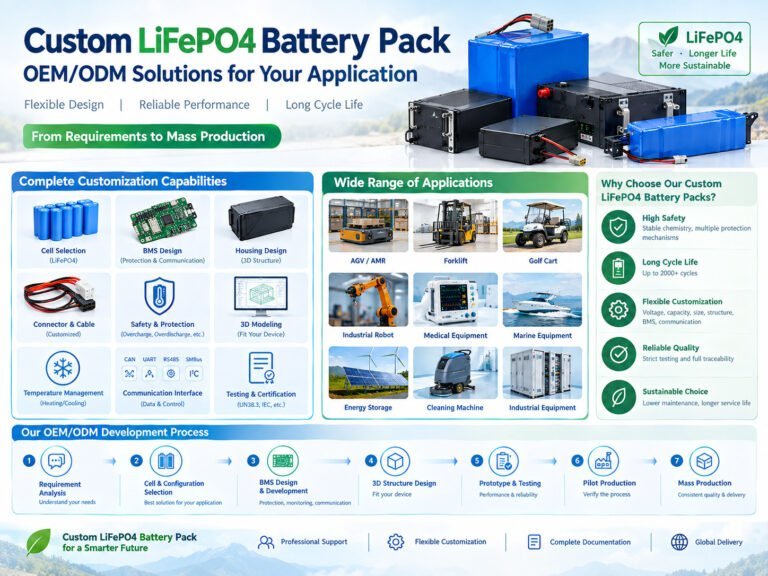
5. OEM用バッテリーの開発プロセス
通常、開発プロセス全体には以下の要素が含まれます:
ステップ1:要件の確認
お客様からご提供いただくもの:
- 応募の詳細
- バッテリー仕様
- サイズの制限
- 認証要件
ステップ2:バッテリーソリューションの設計
エンジニアは以下を決定する:
- 電池セルモデル
- 直列接続と並列接続
- BMSソリューション
- 住宅の構造
例
48V 20Ah バッテリーパック:
13シリーズのリチウム電池:
13S × 3.7V ≈ 48V
ステップ3:試作の製作
プロトタイプサンプルは、以下の目的で作成されます:
- 技術検証
- 機能テスト
テストの内容は以下の通りです:
- 電圧
- 定員
- 放電性能
- 通信機能
ステップ4:信頼性試験
電気的性能試験
含む:
- 充放電試験
- サイクル寿命試験
- キャパシティ・テスト
安全試験
含む:
- 過充電保護
- 過放電保護
- 短絡保護
- 温度上昇試験
ステップ5:量産
製造工程:
細胞選別
↓
細胞の集合体
↓
溶接
↓
BMS設置
↓
バッテリーパックアセンブリ
↓
エージングテスト
↓
最終検査
↓
出荷
6. OEMバッテリーパックの3つの主要構成要素
6.1 電池セルの選定
一般的な電池の化学組成:
LiFePO4 バッテリーセル
メリット
- 高い安全性
- 長いサイクル寿命
- 優れた熱安定性
対象:
- AGV
- エネルギー貯蔵
- フォークリフト
- 産業用ロボット
NMCリチウム電池セル
メリット
- より高いエネルギー密度
- コンパクトなサイズ
- 軽量設計
対象:
- 電気自動車
- 電動工具
- 携帯用機器
6.2 バッテリー管理システム(BMS)
BMSは、バッテリーパックのインテリジェント制御システムです。.
主な機能:
保護機能
含む:
- 過充電保護
- 過放電保護
- 過電流保護
- 短絡保護
- 温度保護
スマートコミュニケーション
高度なBMSは以下をサポートしています:
- CAN通信
- RS485
- Bluetoothアプリ
使用箇所:
- AGV
- AMR
- 産業機器
6.3 電池構造の設計
プロフェッショナルなバッテリー設計においては、以下の点を考慮すべきです:
- 放熱
- 防水性能
- 耐衝撃性
- メンテナンスのしやすさ
一般的な保護等級:
- IP65
- IP67
- IP68
7. OEM用バッテリーの認証要件
市場によって求められる認証は異なります。.
一般的な資格には以下のようなものがある:
| 認証 | 目的 |
|---|---|
| UN38.3 | リチウム電池の輸送における安全性 |
| IEC62133 | バッテリーの安全基準 |
| CE | 欧州市場におけるコンプライアンス |
| UL2054 | 北米におけるバッテリーの安全性 |
| UL2271 | 軽電気自動車用バッテリー |
| RoHS | 環境コンプライアンス |
| MSDS | 製品安全データシート |
UN38.3は輸送時の安全性試験に重点を置いており、一方、IEC 62133はバッテリーの安全性性能に重点を置いています。OEMのバイヤーは、対象市場に応じて認証要件を確認する必要があります。.
8. 用途に応じたOEMバッテリーの選び方とは?
AGV/AMR用ロボットバッテリー
おすすめ:
LiFePO4電池技術
主な要件
- 長いサイクル寿命
- 急速充電機能
- 高い安全性
- CAN通信
代表的な電圧:
24V / 48V / 72V
電動自転車のバッテリー
重要な要素:
- 軽量設計
- 防水プロテクション
- 長距離
- UL認証
一般的なシステム:
36V
48V
52V
蓄電用バッテリー
おすすめ:
LiFePO4
重要な要素:
- 長寿命
- 高い安全性
- 大容量
例
51.2V 100Ah
産業用機器用バッテリー
要件:
- 高い信頼性
- 広範囲の動作温度
- 耐衝撃性
アプリケーション
- フォークリフト
- 洗浄機
- 産業用ロボット
9. OEMバッテリーパックを購入する際のよくある間違い
間違いその1:価格だけを比較すること
低コストの電池には、次のようなものが考えられます:
- 低品質のセル
- 簡易型BMS
- 検査手順の簡略化
間違いその2:バッテリーセルのブランドだけに注目してしまうこと
有名なバッテリーセルブランドだからといって、必ずしも高品質なバッテリーパックが保証されるわけではありません。.
PACKの品質は、以下の要因にも左右されます:
- エンジニアリング・デザイン
- 溶接技術
- BMSマッチング
- 品質管理プロセス
間違いその3:資格を軽視すること
適切な認証がない場合、製品には次のような問題が生じる可能性があります:
- 通関上の問題
- 市場の規制
- 顧客からの苦情
10. OEM用バッテリーサプライヤー評価チェックリスト
サプライヤーを選定する前に、以下の点を確認してください:
✅ 同社には独立したバッテリーの研究開発チームがありますか?
✅ 試作品を提供してもらえますか?
✅ 完全な試験報告書は提供されていますか?
✅ 国際的な認証に対応していますか?
✅ 輸出の経験はありますか?
✅ 長期的な供給は可能ですか?
✅ 納品後の技術サポートはありますか?
よくあるご質問
Q1: OEM用バッテリーの開発にはどのくらいの時間がかかりますか?
一般的なスケジュール:
- ソリューションの設計:3~7日
- 試作開発:2~6週間
- 量産:注文数量による
Q2:カスタマイズされたバッテリーパックの最小注文数量(MOQ)はどれくらいですか?
最小注文数量(MOQ)は、以下の要因によって異なります:
- バッテリーの型番
- 構造の複雑さ
- 細胞の供給状況
一部のメーカーでは、量産に先立ち、小ロットの試作テストに対応しています。.
Q3:顧客はバッテリーセルのブランドを指定できますか?
そうだ。.
一般的なオプションには、次のようなものがあります:
- イーブ
- サムスンSDI
- LGエナジー・ソリューション
- パナソニック
- 2月
Q4:OEM用バッテリーパックは世界中に輸出できますか?
はい、ただし購入者は以下の点を確認する必要があります:
- UN38.3
- MSDS
- 輸送書類
- 対象市場における認証
結論
正しい選択 OEMバッテリーパックメーカー つまり、長期的な技術パートナーを選定することです。.
プロのOEMサプライヤーが提供するものは、バッテリーだけにとどまりません。彼らは以下を提供しています:
⚡ バッテリーソリューションの設計
⚡ 製品の安全性確保
⚡ 安定した量産能力
⚡ グローバル認証のサポート
AGVロボット、電気自動車、エネルギー貯蔵システム、および産業用機器を開発する企業にとって、信頼性の高いOEM向けバッテリーソリューションは、開発リスクを低減し、製品の市場投入を加速させることができます。.
東莞易展電子技術有限公司は、リチウム電池パックのOEM/ODMソリューションを専門としており、AGV、AMRロボット、電気自動車、エネルギー貯蔵システム、産業用機器向けに、18650、21700、LiFePO4、NMC電池のカスタマイズソリューションを提供しています。 当社は、24V~72Vのカスタマイズバッテリー開発、スマートBMS通信、防水設計、およびグローバル認証サービスをサポートしています。.
 English
  Chinese
  Japanese
  German
  French
  Korean
