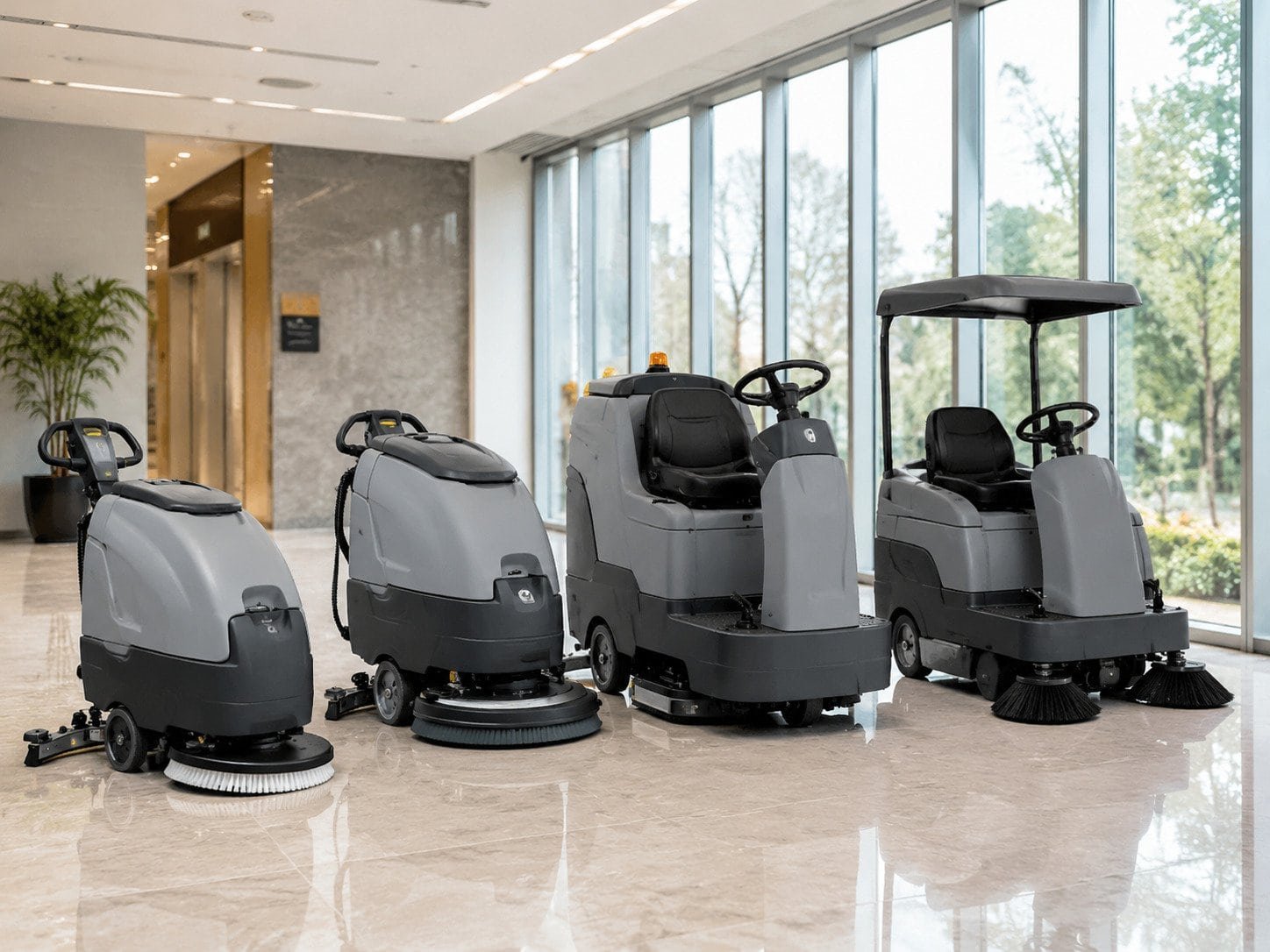
床清掃機器のバッテリーアップグレードガイド:鉛蓄電池からリチウムイオンバッテリーへの移行(2026年)

As industrial cleaning demands continue to rise, more floor cleaning machines such as scrubbers, sweepers, and industrial floor cleaners are transitioning from traditional lead-acid batteries to advanced lithium battery systems.

This shift is not just a battery replacement—it is a full energy system upgrade.

Battery Upgrade Guide for Floor Cleaning Equipment: Lead Acid to Lithium Battery Transition (2026)

Part 1.Why the Floor Cleaning Industry Is Switching from Lead Acid to Lithium Batteries

Lead-acid batteries have been widely used in cleaning equipment for decades, but their limitations are becoming more obvious in modern applications.

Key Limitations of Lead-Acid Batteries

  • サイクル寿命が短い(300~500サイクル)
  • Long charging time (6–10 hours)
  • Heavy weight, reducing machine maneuverability
  • Voltage drop during discharge, reducing cleaning performance
  • High maintenance requirements (water refilling, balancing)

Advantages of Lithium Batteries (LiFePO4)

Lithium battery systems provide significant performance improvements:

  • Long lifespan (2000–4000 cycles)
  • Fast charging (1–3 hours)
  • Stable voltage output throughout discharge
  • 30%–60% weight reduction
  • メンテナンスフリー
  • Integrated smart Battery Management System (BMS)

Part 2.Lead-Acid vs Lithium Battery Performance Comparison

特徴 Lead-Acid Battery Lithium Battery (LiFePO4)
サイクル・ライフ 300~500サイクル 2000–4000 cycles
充電時間 6–10 hours 1–3 hours
重量 重い 軽量
Energy Efficiency ~70% >95%
メンテナンス Frequent 最小限
Voltage Stability Drops during use Stable output

👉 Conclusion: Lithium batteries significantly reduce total cost of ownership (TCO) while improving operational efficiency.

Part 3.Key Technical Considerations for Lithium Battery Upgrade

1. Power System Matching (Voltage & Load)

Common voltage systems in floor cleaning equipment include:

  • 24V compact scrubbers
  • 36V mid-size machines
  • 48V industrial sweepers

Proper discharge rate and capacity design are critical for stable operation.

2. Smart Battery Management System (BMS)

A high-quality lithium battery system must include a smart BMS:

  • 過充電保護
  • 過放電保護
  • 温度モニタリング
  • Current balancing
  • Communication protocols (CAN / RS485 / UART)

👉 BMS is the core of system safety and performance stability.

3. Structural Integration

Upgrading from lead-acid to lithium often requires:

  • Battery compartment redesign or adaptation
  • Weight distribution optimization
  • Anti-vibration mounting structure

4. Charging System Upgrade

Lead-acid chargers are not compatible with lithium batteries.

Recommended solutions:

  • Dedicated lithium battery chargers
  • Fast charging support
  • Smart charging management systems

Part 4.Real Benefits After Lithium Battery Upgrade

After switching to lithium battery systems, floor cleaning equipment typically achieves:

  • 📈 20%–40% longer runtime per cycle
  • ⚡ 60%–80% faster charging time
  • 💰 30%–50% reduction in total operating cost over 3 years
  • 🧽 Stable cleaning performance without power drop
  • 🔧 Significantly reduced maintenance cost

Part 5.Application Scenarios of Lithium Batteries in Floor Cleaning Industry

Lithium battery systems are widely used in:

  • Commercial floor scrubbers
  • Hospital sanitation equipment
  • Airport cleaning machines
  • Warehouse cleaning systems
  • Industrial sweeping vehicles

Part 6.Common Mistakes in Battery Transition Projects

Replacing only the battery without system upgrade

Without proper BMS matching, machines may show incorrect battery levels or shut down unexpectedly.

Ignoring discharge requirements

Floor cleaning machines require high peak current during operation.

Using lead-acid chargers for lithium batteries

This can damage battery life and cause safety risks.

Part 6.Recommended Upgrade Path for Floor Cleaning Equipment

Step 1: Equipment Evaluation

  • Voltage system (24V / 36V / 48V)
  • Working hours requirement
  • Peak power demand

Step 2: Lithium Battery System Design

  • Customized LiFePO4 battery pack
  • スマートBMSの統合

Step 3: Mechanical Integration

  • Battery compartment adaptation
  • Shockproof and thermal design optimization

Step 4: Charging System Upgrade

  • Dedicated lithium charger
  • Fast charging strategy

Part 7.Why Lithium Battery Is the Future of Floor Cleaning Equipment

The industry is shifting toward a clear direction:

Competition in floor cleaning equipment is no longer just about machinery—it is about energy system performance.

Lithium battery systems are becoming the industry standard rather than an optional upgrade.

よくあるご質問

Q1: Can I directly replace a lead-acid battery with lithium?

Yes, but the BMS and charging system must be properly matched to ensure stable performance.

Q2: Are lithium batteries suitable for heavy-duty cleaning machines?

Yes. LiFePO4 batteries support high discharge rates suitable for industrial applications.

Q3: Are lithium batteries safe for cleaning equipment?

LiFePO4 chemistry is highly stable, and with a proper BMS, it provides excellent safety performance.

Q4: Is lithium battery upgrade expensive?

Initial cost is higher, but total lifecycle cost is significantly lower.

Get a Custom Lithium Battery Solution for Floor Cleaning Equipment

We provide tailored lithium battery solutions for floor cleaning applications, including:

  • 電圧と容量のカスタム設計
  • Smart BMS integration (CAN / RS485 / UART)
  • UL / CE / UN38.3 certified solutions
  • OEM/ODM mass production support

👉 Contact us to get a customized lithium battery upgrade solution for your equipment.

床清掃機器の電源を鉛蓄電池からリチウムイオン電池システムにアップグレードする方法をご紹介します。LiFePO4バッテリーソリューションを活用することで、効率の向上、メンテナンスコストの削減、そして耐用年数の延長を実現できます。.
2026-06-27
+
リチウム電池が、AGVやAMRの性能をどのように向上させるかをご紹介します。具体的には、稼働時間の延長、充電時間の短縮、効率の向上、そして最新の倉庫自動化に向けたよりスマートなBMS統合などが挙げられます。.
2026-06-26
+
EU、米国、中国、日本、韓国における2026年のLEV用リチウム電池規制に関する完全ガイド。EN 50604-1、UL 2271、UN38.3などの認証基準や、KC/PSEの要件について学びましょう。.
2026-06-25
+
現代の倉庫において、フォークリフト、AGV、物流機器向けにリチウムイオン電池が急速に導入されている理由を探ります。そのメリット、コスト削減効果、安全性の向上、および自動化との互換性についてご紹介します。.
2026-06-24
+