
Angesichts des rasanten Wachstums in den Bereichen Smart Home, gewerbliche Reinigungsgeräte und autonome Serviceroboter werden Reinigungsroboter zu einem wichtigen Bestandteil des modernen Alltags und der industriellen Umgebung. Hinter jedem effizienten Reinigungsroboter steht ein zuverlässiges Batteriesystem, das die Betriebsdauer, die Leistung, die Sicherheit und das Benutzererlebnis bestimmt.
Bei der Auswahl des richtigen Akkus für einen Reinigungsroboter geht es nicht einfach nur darum, einen Akku mit höherer Kapazität zu wählen. Die Chemische Zusammensetzung des Akkus, seine Größe, die Ladeeffizienz, die Zyklenlebensdauer, die Sicherheitsmerkmale und die Anpassungsmöglichkeiten spielen alle eine wichtige Rolle.
Als professioneller Hersteller von Lithium-Batterien bietet Yizhan Electronics maßgeschneiderte Lithium-Batterielösungen für Reinigungsroboter, Staubsaugerroboter und intelligente Reinigungsgeräte an und unterstützt seine Kunden dabei, die Leistung und Zuverlässigkeit ihrer Produkte zu verbessern.
In dieser Anleitung wird erklärt, 6 wichtige Faktoren, die bei der Auswahl eines Akku des Reinigungsroboters.
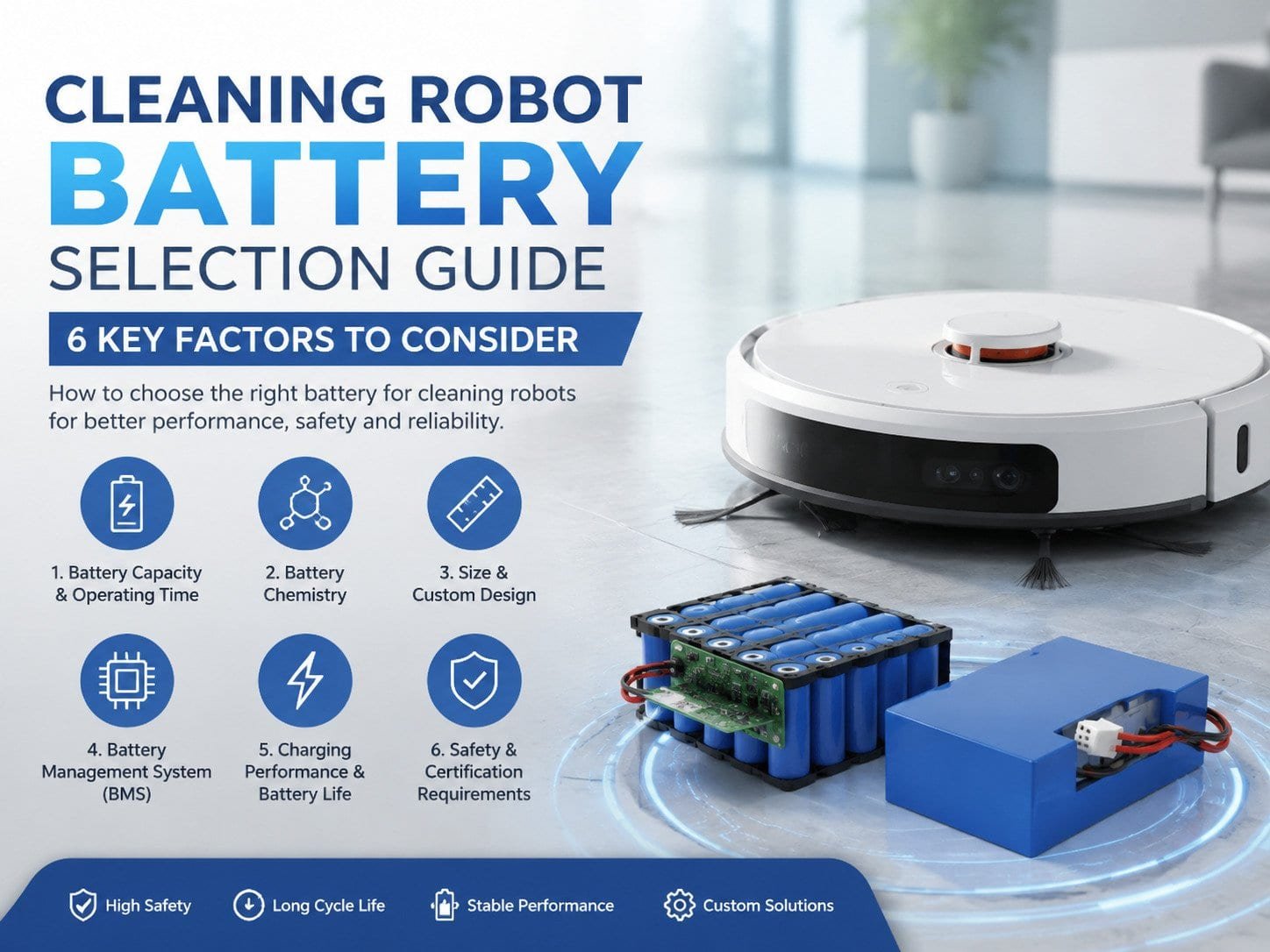
Teil 1. Akkukapazität und Betriebsdauer
Die Akkukapazität hat direkten Einfluss darauf, wie lange ein Reinigungsroboter vor dem Aufladen in Betrieb bleiben kann.
Die Kapazität wird in der Regel gemessen in:
- Ah (Ampere-Stunde)
- Wh (Wattstunde)
Ein Akku mit höherer Kapazität ermöglicht zwar eine längere Betriebszeit, erhöht jedoch auch die Größe und das Gewicht des Akkus.
Bei der Auswahl der Batteriekapazität sollten Hersteller Folgendes berücksichtigen:
- Leistung des Robotermotors
- Reinigungsbereich
- Arbeitsumfeld
- Reinigungshäufigkeit
- Erforderliche Betriebsstunden
Zum Beispiel:
- Haushaltsreinigungsroboter benötigen in der Regel kompakte Akkus mit mäßiger Kapazität.
- Gewerbliche Reinigungsroboter benötigen Akkus mit höherer Kapazität, um einen längeren Betrieb zu ermöglichen.
Ein professioneller Batterielieferant kann dabei helfen, Kapazität, Größe und Leistung so aufeinander abzustimmen, dass spezifische Produktanforderungen erfüllt werden.
Teil 2. Auswahl der Batteriechemie
Die Chemie der Batterie bestimmt Leistung, Sicherheit und Lebensdauer.
Zu den gängigen Akkutypen, die in Reinigungsrobotern zum Einsatz kommen, gehören:
Lithium-Ionen-Akku
Lithium-Ionen-Akkus finden in Reinigungsrobotern aufgrund folgender Eigenschaften breite Anwendung:
- Hohe Energiedichte
- Leichte Konstruktion
- Langer Lebenszyklus
- Schnellladefunktion
Sie ermöglichen es Herstellern, kleinere und effizientere Roboterprodukte zu entwickeln.
Lithium-Polymer-Akku (LiPo)
LiPo-Akkus bieten:
- Flexible Formgestaltung
- Leichtbauweise
- Hohe Energiedichte
Sie eignen sich für kompakte Roboter, bei denen der Platz begrenzt ist.
LiFePO4-Akku
LiFePO₄-Akkus sind bekannt für:
- Ausgezeichnete thermische Stabilität
- Hohe Sicherheitsleistung
- Langer Lebenszyklus
- Zuverlässiger Betrieb
Sie eignen sich für gewerbliche Reinigungsroboter und Anwendungen, bei denen eine lange Lebensdauer erforderlich ist.
Teil 3. Batteriegröße und kundenspezifische Auslegung
Reinigungsroboter verfügen oft nur über begrenzten Platz im Inneren, weshalb die Abmessungen der Akkus eine wichtige Rolle spielen.
Eine Standardbatterie passt möglicherweise nicht immer in die Roboterkonstruktion.
Maßgeschneiderte Batterielösungen bieten folgende Vorteile:
- Individuelle Batterieabmessungen
- Batteriepacks in Sonderformen
- Maßgeschneiderte Steckverbinder
- Flexible Installationsmöglichkeiten
- Optimierte Gewichtsverteilung
Für Roboterhersteller kann ein maßgeschneiderter Akku den verfügbaren Platz optimal ausnutzen und das Gesamtdesign des Produkts verbessern.
Yizhan Electronics bietet die individuelle Anpassung von Akkus nach Kundenwunsch im Rahmen von OEM-/ODM-Projekten an, einschließlich der Konstruktion der Akkustruktur, der Konfiguration des BMS und der Leistungsoptimierung.
Teil 4. Batteriemanagementsystem (BMS)
Das Batteriemanagementsystem (BMS) ist die intelligente Steuerzentrale eines Lithium-Akkupakets.
Ein zuverlässiges BMS unterstützt die Überwachung und den Schutz der Batterie durch die Steuerung folgender Funktionen:
- Spannung
- Aktuell
- Temperatur
- Ladezustand
- Verbleibende Kapazität (SOC)
- Zustand der Batterie (SOH)
Zu den Sicherheitsfunktionen gehören:
- Schutz vor Überladung
- Schutz vor Überentladung
- Kurzschlussschutz
- Überstromschutz
- Temperaturschutz
Bei intelligenten Reinigungsrobotern kann die fortschrittliche BMS-Kommunikation zudem folgende Funktionen unterstützen:
- CAN-Kommunikation
- RS485-Kommunikation
- Fernüberwachung
- Verwaltung von Akkudaten
Ein gut konzipiertes Batteriemanagementsystem (BMS) erhöht die Zuverlässigkeit der Batterie und verlängert deren Lebensdauer.
Teil 5. Ladeleistung und Akkulaufzeit
Die Ladeeffizienz wirkt sich direkt auf das Benutzererlebnis bei Reinigungsrobotern aus.
Eine hochwertige Batterie sollte folgende Eigenschaften aufweisen:
- Stabile Ladeleistung
- Kürzere Ladezeit
- Geringer Energieverlust
- Konstante Ausgangsleistung
Die Lebensdauer der Batterie ist ein weiterer wichtiger Faktor.
Typische Lebensdauer einer Lithium-Batterie:
| Akku-Typ | Zyklus Leben |
|---|---|
| Standard-Lithium-Ionen-Akku | Etwa 500–1.000 Zyklen |
| Hochwertiger Lithium-Akku | Etwa 1.000–2.000+ Zyklen |
| LiFePO4-Akku | Etwa 3.000–5.000 Zyklen |
Eine längere Lebensdauer bedeutet weniger Batteriewechsel und geringere Wartungskosten über den gesamten Produktlebenszyklus hinweg.
Teil 6. Sicherheits- und Zertifizierungsanforderungen
Sicherheit ist bei intelligenten Reinigungsgeräten von entscheidender Bedeutung, insbesondere bei Produkten, die in Privathaushalten, Büros und gewerblichen Umgebungen zum Einsatz kommen.
Ein zuverlässiger Akku für einen Reinigungsroboter sollte folgende Eigenschaften aufweisen:
- Stabile Batteriezellen
- Auslegung des Schutz-BMS
- Hochwertige Fertigungsverfahren
- Sicherheitsprüfungen und Zertifizierung
Zu den gängigen Zertifizierungen für Batterien gehören:
- UN38.3
- IEC 62133
- CE
- RoHS
- FCC
Für internationale Märkte sollten die Anforderungen an die Konformität von Batterien bereits in der Produktentwicklungsphase berücksichtigt werden.
Die Zusammenarbeit mit einem erfahrenen Batteriehersteller kann dazu beitragen, dass das Batteriesystem den Anforderungen des globalen Marktes gerecht wird.
FAQ
1. Welche Art von Akku wird üblicherweise in Reinigungsrobotern verwendet?
Die meisten Reinigungsroboter verwenden Lithium-Ionen-Akkus, da diese eine hohe Energiedichte, ein geringes Gewicht, eine lange Lebensdauer und eine stabile Leistung bieten. Je nach Anwendungsanforderungen können Reinigungsroboter auch Lithium-Polymer-Akkus (LiPo) oder LiFePO4-Akkus verwenden.
2. Wie lange hält der Akku eines Reinigungsroboters in der Regel?
Die Lebensdauer des Akkus eines Reinigungsroboters hängt von der Akkutypologie, der Nutzungshäufigkeit, den Ladegewohnheiten und den Betriebsbedingungen ab.
Typische Lebensdauer:
- Herkömmliche Lithium-Ionen-Akkus: etwa 500–1.000 Ladezyklen
- Hochwertige Lithium-Akkus: ca. 1.000–2.000+ Ladezyklen
- LiFePO4-Akkus: etwa 3.000–5.000 Ladezyklen
Ein richtig konzipiertes Batteriesystem kann die Lebensdauer von Reinigungsrobotern erheblich verlängern.
3. Wie wähle ich die richtige Kapazität für den Akku eines Reinigungsroboters aus?
Die richtige Batteriekapazität hängt ab von:
- Stromverbrauch des Roboters
- Erforderliche Reinigungszeit
- Motorleistung
- Arbeitsbereich
- Ladehäufigkeit
- Gewichtsbeschränkungen
Ein Akku mit höherer Kapazität sorgt für eine längere Betriebsdauer, kann jedoch zu einer Zunahme von Größe und Gewicht führen. Ein professioneller Akkuhersteller kann dabei helfen, das Gleichgewicht zwischen Laufzeit und Produktdesign zu optimieren.
4. Sind Lithium-Akkus für Reinigungsroboter besser geeignet als herkömmliche Batterien?
Ja. Lithium-Batterien bieten im Vergleich zu herkömmlichen Batterietechnologien mehrere Vorteile:
- Höhere Energiedichte
- Längere Lebensdauer des Zyklus
- Schnellere Ladegeschwindigkeit
- Geringerer Wartungsaufwand
- Stabilere Leistungsabgabe
- Leichteres Gewicht
Dank dieser Vorteile eignen sich Lithium-Akkus für moderne intelligente Reinigungsroboter und autonome Reinigungsgeräte.
5. Warum ist das BMS für die Reinigung von Roboterakkus wichtig?
Das Batteriemanagementsystem (BMS) spielt eine entscheidende Rolle für die Sicherheit und Leistung der Batterie.
Ein zuverlässiges BMS kann:
- Spannung und Strom überwachen
- Steuerung des Lade- und Entladevorgangs
- Verhindern Sie Überladung und Tiefentladung
- Schutz vor Überhitzung
- Informationen zum Akkustatus bereitstellen
Bei intelligenten Reinigungsrobotern kann die intelligente BMS-Kommunikation zudem Funktionen wie CAN, RS485 und die Fernüberwachung der Batterie unterstützen.
6. Können die Akkus von Reinigungsrobotern individuell angepasst werden?
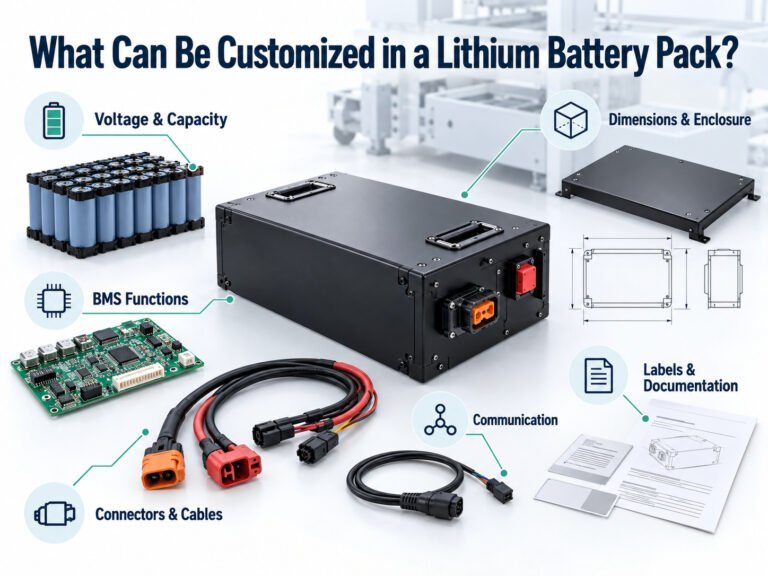
Ja. Oft sind maßgeschneiderte Akkulösungen erforderlich, da Reinigungsroboter unterschiedliche Bauweisen und Platzbeschränkungen aufweisen.
Batteriehersteller können folgende Anpassungen vornehmen:
- Abmessungen der Batterie
- Spannung und Kapazität
- Form der Batterie
- Steckverbinder
- BMS-Funktionen
- Kommunikationsprotokolle
- Ladelösungen
Maßgeschneiderte Akkus helfen Herstellern dabei, eine bessere Produktintegration und Leistung zu erzielen.
7. Welche Zertifizierungen sind für die Reinigung von Roboterbatterien erforderlich?
Je nach Zielmarkt können für Akkus von Reinigungsrobotern Zertifizierungen erforderlich sein, wie zum Beispiel:
- UN38.3
- IEC 62133-2
- CE
- RoHS
- FCC
Für den weltweiten Vertrieb kann die Auswahl eines Batterielieferanten mit Erfahrung im Bereich Zertifizierungen die Einhaltung der Produktvorschriften vereinfachen.
8. Wie lange dauert es, den Lithium-Akku eines Reinigungsroboters aufzuladen?
Die Ladezeit hängt ab von:
- Akkukapazität
- Leistung des Ladegeräts
- Batteriemanagementsystem
- Ladestrom
Die meisten Lithium-Akkus für Reinigungsroboter lassen sich innerhalb weniger Stunden vollständig aufladen. Schnellladelösungen können die Ausfallzeiten von gewerblichen Reinigungsrobotern weiter verkürzen.
9. Sind Lithium-Batterien für gewerbliche Reinigungsroboter geeignet?
Ja. Lithium-Batterielösungen finden breite Anwendung in:
- Gewerbliche Bodenreinigungsroboter
- Autonome Staubsaugerroboter
- Reinigungsroboter für Hotels
- Lagerreinigungsroboter
- Serviceroboter
Für gewerbliche Anwendungen werden in der Regel Batteriesysteme mit höherer Kapazität, längerer Lebensdauer und intelligenten Überwachungsfunktionen bevorzugt.
10. Wie unterstützt Yizhan Electronics Projekte im Bereich der Akkus für Reinigungsroboter?
Yizhan Electronics bietet maßgeschneiderte Lithium-Batterielösungen für Reinigungsroboter und intelligente Geräte an.
Zu unseren Dienstleistungen gehören:
- Design des Akkupacks
- Li-Ionen-, LiPo- und LiFePO₄-Lösungen
- Kundenspezifische BMS-Entwicklung
- Prototypentests
- OEM-/ODM-Fertigung
- Unterstützung bei der Zertifizierung
Wir unterstützen Roboterhersteller bei der Entwicklung zuverlässiger Batteriesysteme, die den unterschiedlichen Anwendungsanforderungen gerecht werden.
 English
  Chinese
  Japanese
  German
  French
  Korean
