
Modern warehouses are under increasing pressure to improve efficiency, reduce operating costs, and support around-the-clock operations. As automation, e-commerce, and material handling demands continue to grow, the limitations of traditional lead-acid batteries are becoming more apparent.
To meet these challenges, more warehouse operators are upgrading to lithium battery technology. From forklifts and pallet trucks to AGVs and AMRs, lithium batteries are rapidly becoming the preferred power solution for modern warehousing.
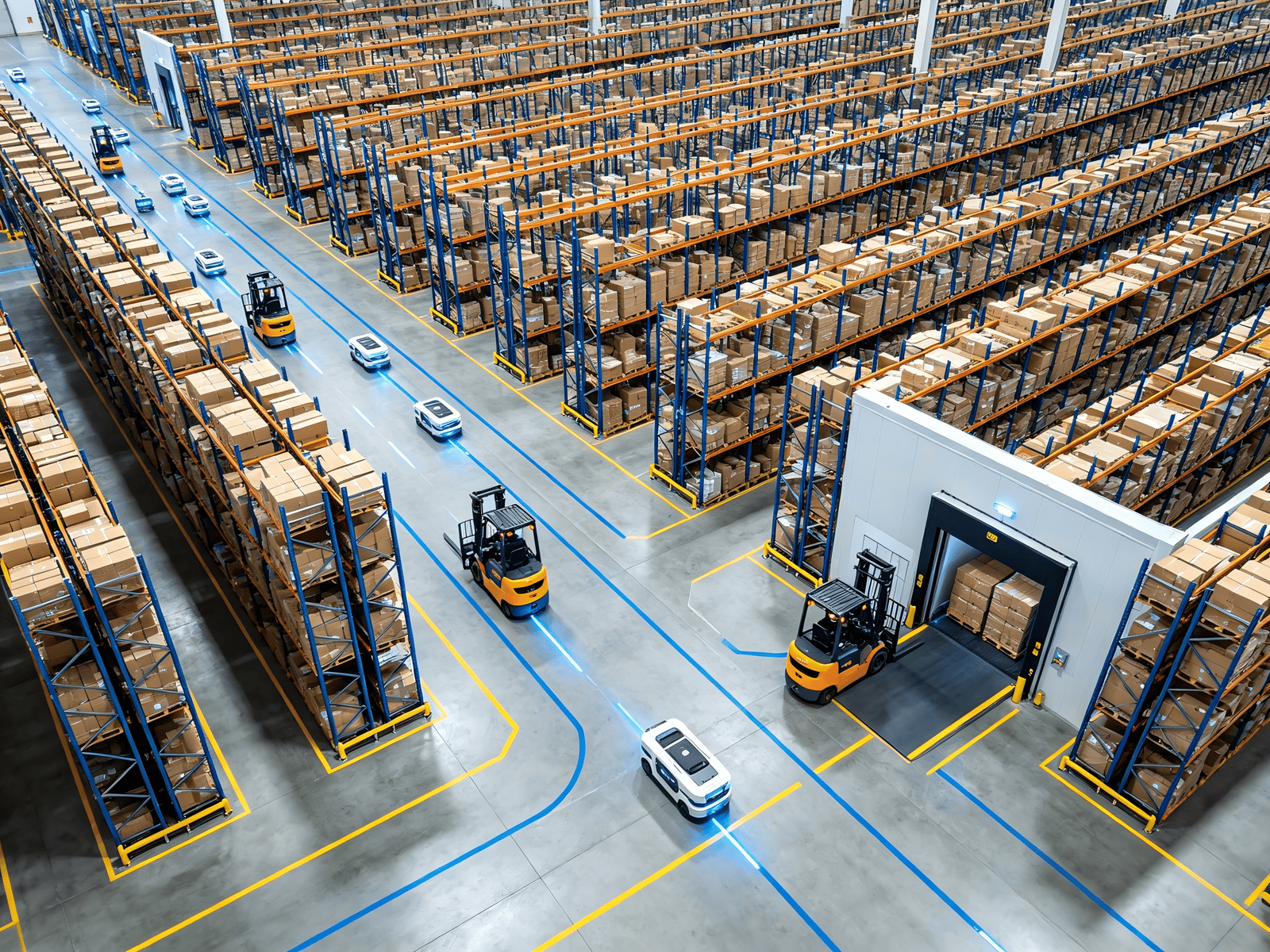
The Growing Demands of Modern Warehouses
Today’s warehouses operate in a highly competitive environment where every minute of downtime affects productivity and profitability.
Common challenges include:
- Multi-shift operations requiring continuous equipment availability
- Rising labor and maintenance costs
- Increased use of automated guided vehicles (AGVs)
- Growing focus on workplace safety
- Sustainability and carbon reduction goals
Traditional lead-acid batteries often struggle to meet these requirements due to lengthy charging times, regular maintenance needs, and performance degradation.
Lithium batteries offer a more efficient and reliable alternative.
Increase charging speed
One of the biggest advantages of lithium batteries is their fast charging capability.
Blei-Säure-Batterien benötigen in der Regel:
- 8-10 Stunden Ladezeit
- 6–8 hours of cooling time
- Dedicated battery changing rooms
In contrast, lithium batteries can often reach:
- 80% charge in approximately 1–2 hours
- Zwischenladen während der Pausen
- No cooling period required
This significantly reduces equipment downtime and improves fleet utilization.
For warehouses operating multiple shifts, the ability to charge equipment during lunch breaks or shift changes eliminates the need for spare battery inventories.
Wartungsfreier Betrieb
Blei-Säure-Batterien erfordern eine regelmäßige Wartung, darunter:
- Nachfüllen von Wasser
- Ausgleichsladung
- Reinigung des Terminals
- Corrosion inspections
Failure to perform these tasks can shorten battery life and reduce performance.
Lithium batteries are virtually maintenance-free.
Die Vorteile umfassen:
- Keine Bewässerung
- No acid spills
- No corrosion issues
- Geringere Arbeitskosten
- Simplified fleet management
Warehouse managers can focus on operations instead of battery maintenance.
Improve warehouse fleet efficiency
Energy efficiency directly impacts operating costs.
Lead-acid batteries generally operate at around 70–80% energy efficiency.
Lithium batteries can achieve efficiencies exceeding 95%.
Dies bedeutet:
- Geringerer Stromverbrauch
- Geringere Energieverschwendung
- Faster charging cycles
- Lower total operating costs
Over the lifetime of the battery, these energy savings can be substantial, especially for large warehouse fleets.
Extend service life
Battery replacement is one of the most significant long-term costs in warehouse operations.
Typische Lebensdauer:
| Akku-Typ | Zyklus Leben |
| Blei-Säure-Batterie | 500–1,500 Cycles |
| LiFePO4-Akku | 3,000–6,000+ Cycles |
Lithium iron phosphate (LiFePO4) batteries can last several times longer than traditional lead-acid batteries.
This reduces:
- Austauschhäufigkeit
- Instandhaltungskosten
- Equipment downtime
- Gesamtbetriebskosten
Improved Warehouse Safety
Safety is a major consideration for warehouse operators.
Lead-acid batteries present several risks:
- Säureaustritt
- Hydrogen gas generation during charging
- Korrosion
- Heavy manual battery handling
Lithium batteries eliminate many of these concerns.
Modern lithium battery packs include intelligent Battery Management Systems (BMS) that provide:
- Schutz vor Überladung
- Schutz vor Überentladung
- Kurzschlussschutz
- Überwachung der Temperatur
- Zellausgleich
LiFePO4 chemistry is also recognized as one of the safest lithium battery technologies available today.
Ideal for Automated Warehousing
Automation is transforming the warehousing industry.
AGVs, AMRs, autonomous forklifts, and robotic systems require batteries that can support:
- Dauerbetrieb
- Schnelles Laden
- Reliable communication
- Langer Lebenszyklus
Lithium batteries are particularly well suited for these applications.
Advanced battery systems can integrate:
- CAN Bus communication
- RS485-Kommunikation
- Smart battery monitoring
- Ferndiagnose
- Fleet management systems
These features help maximize operational efficiency in smart warehouses.
Reduced Space Requirements
Lead-acid battery systems often require:
- Dedicated charging rooms
- Ventilation systems
- Battery changing stations
- Spare battery storage
Lithium batteries eliminate many of these infrastructure requirements.
Warehouses can reclaim valuable floor space for:
- Additional inventory storage
- Production areas
- Automated equipment deployment
This creates a more efficient facility layout.
Supporting Sustainability Goals
Many companies are implementing ESG and sustainability initiatives.
Lithium batteries contribute to these goals by offering:
- Höhere Energieeffizienz
- Längere Nutzungsdauer
- Reduced waste generation
- Lower carbon emissions over their lifecycle
- Improved resource utilization
As environmental regulations continue to evolve, lithium battery adoption is expected to accelerate across the logistics and warehousing sectors.
The Future of Warehouse Power
Industry trends indicate that lithium battery technology will continue to gain market share in material handling equipment.
As battery costs decrease and performance improves, more warehouse operators are recognizing the long-term benefits of lithium-powered fleets.
Die Anwendungen umfassen:
- Elektro-Gabelstapler
- Reach trucks
- Pallet jacks
- Tow tractors
- AGVs
- AMRs
- Automated warehouse robots
Lithium batteries are no longer viewed as a premium upgrade. They are becoming the standard power solution for modern warehousing.
Schlussfolgerung
Modern warehouses require reliable, efficient, and cost-effective power solutions to remain competitive. Lithium batteries address many of the limitations associated with traditional lead-acid batteries by offering faster charging, longer lifespan, higher efficiency, reduced maintenance, and enhanced safety.
As warehouse automation and operational demands continue to grow, lithium batteries are becoming the preferred choice for businesses seeking improved productivity and lower total cost of ownership.
For warehouse operators planning future fleet upgrades, investing in lithium battery technology is increasingly becoming a strategic decision rather than simply an equipment upgrade.
FAQ
Why are warehouses switching from lead-acid batteries to lithium batteries?
Warehouses are switching to lithium batteries because they offer faster charging, longer lifespan, lower maintenance requirements, higher energy efficiency, and improved operational uptime compared to lead-acid batteries.
How long do lithium forklift batteries last?
Most LiFePO4 forklift batteries provide 3,000 to 6,000 or more charge cycles, significantly longer than traditional lead-acid batteries.
Are lithium batteries safer for warehouse applications?
Yes. Modern lithium batteries include advanced Battery Management Systems (BMS) and LiFePO4 chemistry, which provide enhanced safety, thermal stability, and protection against overcharging and short circuits.
Can lithium batteries be used in AGVs and warehouse robots?
Absolutely. Lithium batteries are widely used in AGVs, AMRs, warehouse robots, and automated material handling equipment because of their fast charging capability, long cycle life, and smart communication features.
Do lithium batteries reduce warehouse operating costs?
Yes. Although the initial investment may be higher, lithium batteries typically lower total ownership costs through reduced maintenance, lower energy consumption, longer service life, and increased equipment productivity.
 English
  Chinese
  Japanese
  German
  French
  Korean
