
Underwater robots are becoming increasingly important in marine exploration, offshore inspection, underwater engineering, scientific research, and industrial applications.
에서 ROV (Remotely Operated Vehicle) used for underwater inspection to AUV (Autonomous Underwater Vehicle) used for autonomous ocean exploration, the battery system is one of the most critical components that directly affects:
- 운영 시간
- Mission distance
- 안전 성능
- Equipment reliability
- Maintenance cost
Unlike standard industrial equipment, underwater robots operate in challenging environments with:
- High water pressure
- Low temperature
- Saltwater corrosion
- 제한된 유지 관리 액세스
- Long operating cycles
Therefore, selecting the right battery requires more than simply choosing a high-capacity battery. Engineers need to consider the operating environment, robot type, mission requirements, fleet operation requirements, and long-term cost.
Part 1. Understand the Underwater Robot Application Before Selecting a Battery
The first step in battery selection is understanding how the underwater robot will be used.
애플리케이션마다 다른 배터리 특성이 필요합니다.
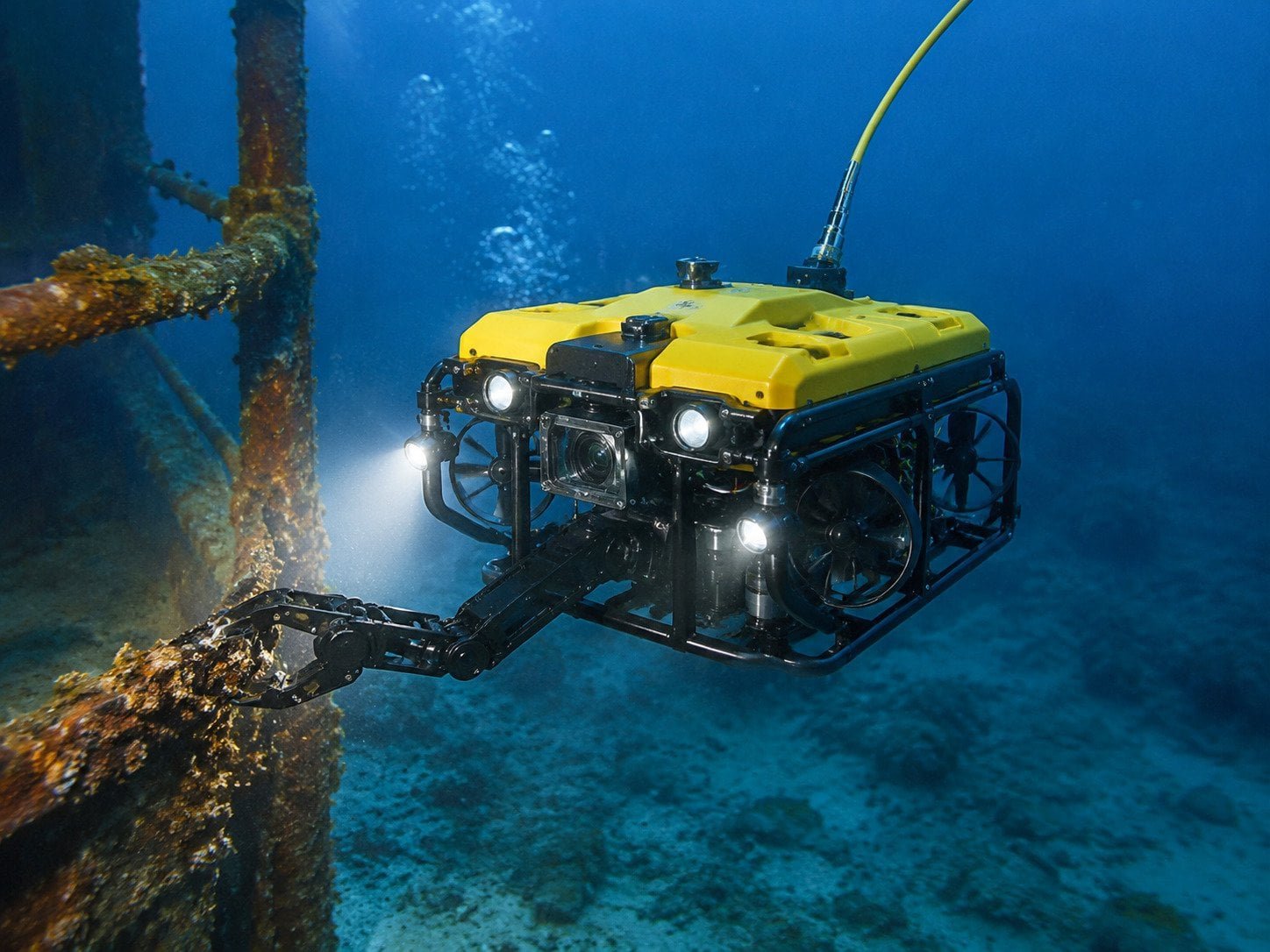
ROV (Remotely Operated Vehicle) Battery Requirements
ROVs are remotely controlled underwater robots usually connected to a surface control system through a cable.
대표적인 용도:
- Ship inspection
- Offshore platform inspection
- Pipeline inspection
- Aquaculture monitoring
- Underwater maintenance
ROV battery requirements:
- 안정적인 출력
- 높은 방전 성능
- 믿을 수 있는 안전 성능
- 방수 보호
- 긴 수명
For inspection ROVs, the battery system needs to support:
- Thrusters
- Cameras
- Lighting systems
- Sonar equipment
- Sensors
- 통신 시스템
AUV (Autonomous Underwater Vehicle) Battery Requirements
AUVs operate independently without cables.
They are widely used for:
- Ocean mapping
- Marine research
- Deep-sea exploration
- Environmental monitoring
Since AUVs rely entirely on onboard batteries, energy density becomes extremely important.
Key battery requirements:
- 높은 에너지 밀도
- 경량 설계
- Long endurance
- Reliable battery management system
- Accurate power monitoring
For long-range missions, battery capacity directly determines the underwater robot’s working distance.
Part 2. Select Battery According to Underwater Operating Environment
The underwater environment is one of the biggest challenges for battery systems.
1. Water Depth and Pressure Requirements
Water pressure increases with depth.
Approximately:
- 10 meters depth ≈ 1 bar additional pressure
- 100 meters depth ≈ 10 bar
- 1000 meters depth ≈ 100 bar
Deep-sea robots require special battery designs to handle extreme pressure.
Important considerations:
- Pressure-resistant housing
- Sealed battery enclosure
- Pressure compensation system
- Reliable connectors
For shallow-water robots:
- IP67/IP68 waterproof design may be sufficient
For deep-sea applications:
- Custom pressure-resistant battery modules are required
2. Temperature Conditions
Underwater environments often have lower temperatures than land environments.
Low temperature affects:
- 배터리 용량
- 충전 효율
- 내부 저항
- 방전 성능
A suitable underwater battery should consider:
- Low-temperature cells
- 온도 모니터링
- Heating systems if required
Recommended operating temperature:
- Standard: -20°C to 55°C
- Special applications: -40°C customized solutions
3. Saltwater Corrosion Protection
Marine environments contain salt and moisture, which can damage electronic components.
Battery design should include:
- Anti-corrosion enclosure
- 방수 커넥터
- Sealed terminals
- Marine-grade materials
Part 3. Choose the Right Battery Chemistry
Different lithium battery chemistries provide different advantages.
LiFePO4 Battery for Underwater Robots
Lithium iron phosphate (LiFePO4) is widely used in industrial marine applications.
장점:
High Safety
LiFePO4 has excellent thermal stability.
다음에 적합합니다:
- Long-term underwater operation
- Unmanned equipment
- Industrial inspection robots
긴 수명
일반적인 수명:
| 배터리 유형 | 주기 수명 |
|---|---|
| Lead Acid | 300-500 cycles |
| NMC 리튬 배터리 | 1000-2000 cycles |
| LiFePO4 배터리 | 2,000~5,000회 |
For commercial underwater robot fleets, longer cycle life helps reduce replacement costs.
NMC Lithium Battery for AUV Applications
Nickel manganese cobalt (NMC) batteries provide higher energy density.
장점:
- More energy in smaller size
- 경량 설계
- 더 긴 작동 거리
다음에 적합합니다:
- Long endurance AUV
- Research underwater vehicles
- Space-limited designs
Part 4. Calculate Battery Capacity Based on Mission Requirements
Battery capacity should match the robot’s workload.
Basic formula:
Battery Energy (Wh) = Voltage (V) × Capacity (Ah)
예시:
An underwater robot requires:
- 전압: 48V
- Average current: 15A
- Operating time: 6 hours
필요한 에너지:
48V × 15A × 6h = 4320Wh
배터리 용량:
4320Wh ÷ 48V = 90Ah
Recommended solution:
48V 100Ah lithium battery pack
Additional capacity should be reserved for:
- Thruster startup current
- 온도 변화
- 배터리 노화
- Mission uncertainty
Part 5. Consider Fleet Operation Requirements
For companies operating multiple underwater robots, battery selection should focus on fleet management.
A reliable battery system should provide:
1. Consistent Battery Performance
For a robot fleet:
- Same voltage platform
- Same communication protocol
- Same charging system
혜택:
- Easier maintenance
- Lower inventory cost
- Faster replacement
2. Fast Charging Capability
Commercial underwater robot fleets require efficient operation.
중요한 요소:
- 충전 속도
- Charger compatibility
- Battery temperature monitoring
A good battery solution can reduce downtime between missions.
3. Smart Battery Management System
A professional underwater robot battery should include an intelligent BMS.
Functions include:
안전 보호
- 과충전 방지
- 과방전 방지
- 과전류 보호
- 단락 보호
- 온도 보호
커뮤니케이션
Support:
- CAN
- RS485
- UART
- Modbus
Real-time monitoring:
- SOC (충전 상태)
- SOH (건강 상태)
- 전압
- 현재
- 온도
Part 6. Waterproof Battery Pack Design for Underwater Robots
A battery pack is not only about cells.
A complete underwater battery solution includes:
세포 선택
Options:
- 18650 lithium cells
- 21700 lithium cells
- LiFePO4 직사각형 셀
Battery Structure Design
포함:
- Waterproof housing
- Shock protection
- 열 관리
- Marine-grade materials
Electrical Design
포함:
- BMS integration
- Fuse protection
- 충전 인터페이스
- 통신 시스템
Part 7. Recommended Battery Solutions for Different Underwater Robots
| 애플리케이션 | 권장 배터리 |
|---|---|
| Small ROV | 12V/24V Li-ion Battery |
| Inspection ROV | 24V/48V LiFePO4 Battery |
| Industrial Marine Robot | 48V LiFePO4 Battery Pack |
| Long-range AUV | High-energy NMC Lithium Battery |
| Deep-sea Robot | Custom Pressure-resistant Battery System |
Part 8. How to Choose a Reliable Underwater Robot Battery Manufacturer?
A professional battery manufacturer should provide:
Battery Pack Engineering
- 세포 선택
- Electrical design
- 기계 설계
- BMS 개발
Testing Capability
포함:
- 충전 및 방전 테스트
- 온도 시험
- 진동 테스트
- 방수 테스트
- 안전 시험
Custom OEM/ODM Capability
Different underwater robots have different requirements.
A customized battery solution can optimize:
- 배터리 용량
- 무게
- 용량
- 커뮤니케이션
- Installation structure
Conclusion: Choosing the Right Battery for Underwater Robots
The best battery for an underwater robot depends on multiple factors:
✔ Operating depth
✔ Water environment
✔ Mission duration
✔ Robot type
✔ Energy requirements
✔ Fleet operation needs
✔ Safety requirements
For most industrial underwater robots, a LiFePO4 battery pack with intelligent BMS, waterproof design, and customized structure provides a reliable solution.
For long-range AUV applications, high-energy-density lithium battery systems can help extend mission duration and improve operational efficiency.
Choosing the right underwater robot battery is not just selecting a battery cell. It is creating a complete power system designed for the challenges of the underwater world.
자주 묻는 질문
Q1: What is the best battery for underwater robots?
LiFePO4 batteries are commonly used for industrial underwater robots because of their safety, long cycle life, and stable performance. NMC lithium batteries are suitable for applications requiring higher energy density.
Q2: Can lithium batteries be used underwater?
Yes. Lithium batteries can be used in underwater robots when they are installed in properly designed waterproof and pressure-resistant battery packs.
Q3: How long can an underwater robot battery last?
Battery runtime depends on capacity, robot power consumption, and mission requirements. Typical systems can operate from several hours to more than 24 hours with customized designs.
Q4: What voltage battery is used for ROV and AUV?
Common underwater robot battery voltages include:
- 12V
- 24V
- 36V
- 48V
- Custom voltage systems
Q5: Why use LiFePO4 batteries for underwater robots?
LiFePO4 batteries provide:
- 높은 안전성
- 긴 주기 수명
- 안정적인 방전 성능
- 유지 관리가 거의 필요 없음
Making them suitable for commercial and industrial underwater applications.
 English
  Chinese
  Japanese
  German
  French
  Korean
