
Warehouse operations depend on reliable material-handling equipment to move pallets, transport goods, replenish inventory, and support daily logistics activities. Electric forklifts, pallet trucks, stackers, reach trucks, tow tractors, AGVs, AMRs, and floor cleaning machines all rely on batteries as a key power source.
For warehouse operators, however, the battery purchase price is only one part of the overall cost.
A battery that appears inexpensive at the time of purchase may create additional expenses through maintenance, charging, battery replacement, labor, downtime, and energy consumption. In contrast, a lithium battery system may require a higher initial investment while offering operational characteristics that can reduce certain long-term costs.
This is why Total Cost of Ownership (TCO) is an important consideration when selecting batteries for warehouse equipment.
Instead of asking only, “How much does the battery cost?”, warehouse managers should also ask:
How much will this battery cost to operate throughout its service life?
This article explains how lithium batteries can contribute to lower warehouse equipment TCO, which costs should be included in the calculation, and how to select a battery system according to actual warehouse operating conditions.
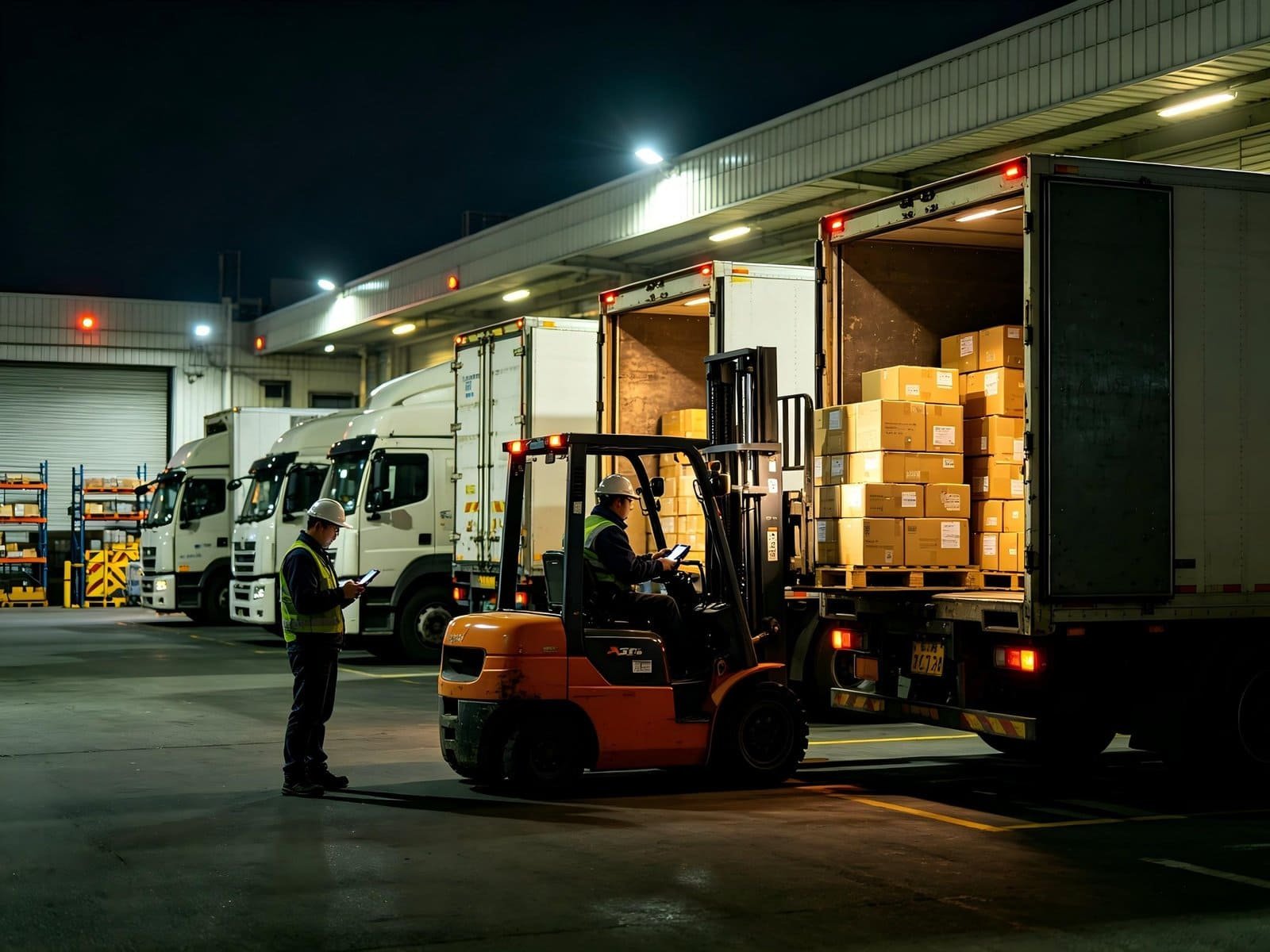
What Is Total Cost of Ownership for Warehouse Batteries?
Total Cost of Ownership is the combined cost associated with purchasing, operating, maintaining, and replacing a battery throughout its useful service period.
For warehouse equipment, a simplified TCO calculation can include:
TCO = Initial Battery Cost + Energy Cost + Maintenance Cost + Labor Cost + Downtime Cost + Replacement Cost
Depending on the application, other factors may also be included, such as:
- Battery charging infrastructure
- Battery room requirements
- Ventilation requirements
- Spare battery inventory
- Battery handling equipment
- Charger replacement
- Equipment utilization
- End-of-life battery management
- BMS and monitoring systems
The exact calculation depends on the warehouse environment, equipment type, operating schedule, battery capacity, electricity rates, labor costs, and expected battery service life.
Therefore, there is no single TCO result that applies to every warehouse.
A proper comparison should be based on actual operating data.
Why Battery Purchase Price Does Not Tell the Whole Story
Lead-acid batteries have been widely used in warehouse equipment for decades. They remain suitable for many applications and can provide a cost-effective solution when properly selected and maintained.
However, traditional lead-acid battery systems may require additional operational processes.
For example, a warehouse using lead-acid batteries may need to consider:
- Regular battery maintenance
- Electrolyte water replenishment
- Dedicated charging areas
- Battery cooling time
- Battery changing operations
- Spare batteries for multi-shift operation
- Battery handling equipment
- Ventilation requirements
- Charging-related downtime
Lithium batteries use a different operating model.
Many lithium battery systems are designed with integrated BMS protection, maintenance-free operation, opportunity charging capability, and battery monitoring functions.
These characteristics can change how the battery contributes to the overall cost of warehouse operations.
1. Reduced Routine Battery Maintenance
One of the potential cost advantages of lithium batteries is reduced routine maintenance.
Traditional flooded lead-acid batteries require regular water replenishment because electrolyte water is consumed during operation and charging.
Warehouse personnel may therefore need to:
- Check electrolyte levels.
- Add distilled water.
- Inspect battery condition.
- Clean battery terminals.
- Monitor charging conditions.
- Perform periodic maintenance.
These tasks require both labor and management time.
Many lithium-ion batteries, including LiFePO4 battery systems, do not require electrolyte water replenishment during normal operation.
This can reduce routine battery maintenance work.
For warehouses operating a large number of electric vehicles, eliminating repetitive battery maintenance tasks can have a measurable impact on operating costs.
However, lithium batteries are not completely maintenance-free in the broad sense. Operators should still follow the manufacturer’s requirements for:
- 충전
- 온도 관리
- Electrical connections
- Inspection
- BMS monitoring
- 저장
- Safety procedures
2. Opportunity Charging Can Improve Equipment Utilization
Charging strategy has a direct relationship with warehouse productivity.
A conventional lead-acid battery may require a relatively long charging period followed by cooling before another operating cycle.
This can make battery replacement necessary for multi-shift operations.
Lithium batteries can generally support opportunity charging, depending on the battery design, BMS, charger, and manufacturer’s specifications.
For example, an electric pallet truck may be connected to the charger during:
- Break periods
- Shift changes
- Lunch periods
- Low-demand periods
- Scheduled equipment idle time
Instead of waiting for the battery to reach a low state of charge before charging, the operator can use short charging periods during planned downtime.
This operating model can reduce dependence on spare batteries.
예시
Consider a warehouse operating electric pallet trucks across multiple shifts.
With a battery-swapping strategy, the warehouse may need:
Equipment → Battery A → Battery B → Charging station → Battery handling
With an opportunity-charging strategy, the operating model can become:
Equipment → Charger during planned idle periods → Equipment
The second model can potentially reduce battery handling and improve equipment availability.
Actual results depend on battery capacity, charging power, operating load, shift duration, and equipment utilization.
3. Lower Labor Requirements for Battery Handling
Battery handling can represent an overlooked warehouse operating cost.
Large industrial batteries can be heavy and may require dedicated equipment or procedures for removal and installation.
A warehouse may need employees to:
- Remove depleted batteries
- Transport batteries
- Install charged batteries
- Connect battery terminals
- Move batteries to charging areas
- Monitor charging
- Return charged batteries to equipment
With lithium battery systems designed for opportunity charging, these processes can often be reduced.
This does not mean that battery handling disappears in every application.
Instead, the battery architecture and charging strategy can reduce the frequency of manual battery replacement.
For high-utilization warehouses, reducing repetitive battery handling can contribute to lower labor costs and simpler workflows.
4. Charging Efficiency Can Affect Energy Costs
Energy consumption is another component of battery TCO.
Battery efficiency depends on chemistry, battery design, charger efficiency, operating temperature, load, charging profile, and other system parameters.
Lithium-ion batteries generally have different charge and discharge characteristics from lead-acid batteries.
A properly designed lithium battery system can reduce energy losses during charging and operation.
The actual energy savings should be calculated using measured system data rather than assumed percentages.
A useful calculation is:
Annual Energy Cost = Energy Used per Charging Cycle × Charging Cycles per Year × Electricity Price
For a more complete comparison, warehouse operators should measure:
- 배터리 용량
- Charger input power
- 충전 효율
- 운영 시간
- Number of charging cycles
- Electricity price
- Average equipment load
This provides a more realistic estimate of the energy component of TCO.
5. Longer Service Life Can Reduce Battery Replacement Frequency
Battery replacement is one of the major long-term costs in warehouse equipment.
The actual service life of a lithium battery depends on:
- 세포 화학
- Cell quality
- 방전 깊이
- Charge and discharge current
- 작동 온도
- 충전 전략
- BMS settings
- 기계 설계
- 보관 조건
- 유지 관리
- Application profile
LiFePO4 batteries are commonly considered for industrial applications because of their cycle-life characteristics and thermal properties.
However, manufacturers should not promise a fixed service life for every application.
For example, a battery used in:
- One shift per day
will experience a very different workload from a battery used in:
- Three shifts per day
- 고부하 운전
- 빈번한 가속
- Continuous opportunity charging
Therefore, battery life should be evaluated according to the actual duty cycle.
Reducing the frequency of battery replacement can lower long-term TCO because the warehouse does not need to purchase and install replacement batteries as frequently.
6. Integrated BMS Helps Manage Battery Operation
A Battery Management System, or BMS, is an important component of a lithium battery pack.
The BMS can monitor parameters such as:
- 세포 전위
- 패키지 전압
- 현재
- 온도
- 충전 상태
- 충전 상태
- Discharging status
- Protection status
Depending on the design, a smart BMS can also communicate with external equipment through protocols such as:
- CAN
- UART
- RS485
This information can help equipment manufacturers and operators monitor battery status.
A properly configured BMS can provide protection against conditions such as:
- 과충전
- 과방전
- 과전류
- 단락 회로
- Overtemperature
- Undertemperature
The BMS does not eliminate all battery risks, but it provides an important control layer within a properly engineered battery system.
7. Reduced Downtime Can Have a Significant Economic Impact
Downtime is often difficult to calculate because its cost is not always visible on an invoice.
When a warehouse vehicle cannot operate because its battery is unavailable, the consequences may include:
- Delayed pallet movement
- Reduced equipment availability
- Additional labor
- Delayed orders
- Production interruptions
- Increased use of backup equipment
For example, suppose an electric forklift is responsible for moving materials between a storage area and production line.
If the forklift remains unavailable for an extended period, the warehouse may need another vehicle or additional workers to complete the same task.
Therefore, battery selection should consider not only battery cost but also equipment availability.
Lithium battery systems can support opportunity charging and battery monitoring strategies that may help reduce battery-related downtime.
8. Lithium Batteries Can Reduce the Need for Spare Batteries
Multi-shift warehouse operations often require multiple batteries for a single vehicle.
예를 들어
One vehicle + multiple shifts → multiple batteries
One battery is operating while another is charging or cooling.
With a lithium battery system designed for opportunity charging, the same equipment may be able to operate with fewer spare batteries.
This can reduce:
- Spare battery inventory
- Battery storage space
- Battery handling equipment
- Battery replacement labor
- Charging infrastructure requirements
The actual number of batteries required should be determined based on:
- Shift length
- 매일 운영 시간
- 배터리 용량
- Charging power
- Charging opportunities
- Equipment load
- 안전 요건
9. Warehouse Space Can Also Be Part of TCO
Warehouse space has an economic value.
A traditional battery room may require space for:
- Battery storage
- Charging equipment
- 환기
- Battery handling
- 유지 관리
- Safety management
When battery systems can be charged directly on equipment, the warehouse may be able to reduce some of the space dedicated to battery handling and storage.
The exact requirements depend on local regulations, battery technology, charger configuration, and facility design.
Therefore, facility managers should evaluate battery infrastructure together with the equipment fleet rather than treating the battery as an isolated component.
Lithium Battery Chemistry Selection for Warehouse Equipment
Lithium-ion is a broad category rather than a single battery chemistry.
Different warehouse applications may require different cell chemistries and battery designs.
LiFePO4 배터리
Lithium iron phosphate, commonly called LiFePO4 or LFP, is frequently considered for industrial equipment.
Potential characteristics include:
- 안정적인 열적 특성
- Long cycle-life potential
- Good continuous-duty performance
- Suitable for frequent charging
- No routine electrolyte water replenishment
- Compatibility with smart BMS systems
LFP can be considered for:
- 전동 지게차
- 팔레트 트럭
- 스태커스
- AGV
- AMR
- 견인 트랙터
- 청소 기계
The final battery chemistry should be selected according to voltage, current, operating temperature, required cycle life, available space, weight requirements, and certification requirements.
How to Calculate Warehouse Lithium Battery TCO
A practical TCO calculation can be divided into several categories.
Initial Investment
Include:
- 배터리 팩
- 충전기
- BMS
- 통신 시스템
- Installation
- Battery mounting
- Charging infrastructure
Energy Cost
Calculate:
Annual Energy Cost = Annual Energy Consumption × Electricity Price
Use measured charging energy whenever possible.
Maintenance Cost
다음과 같이 생각해 보십시오:
- Routine inspection
- 청소
- Maintenance labor
- Battery service
- Charger maintenance
Labor Cost
Consider the labor associated with:
- Battery replacement
- Battery transportation
- Battery charging
- Battery inspection
- Battery maintenance
Downtime Cost
Estimate the cost of equipment downtime based on:
- Lost operating hours
- Additional labor
- Production delays
- Alternative equipment requirements
Replacement Cost
Calculate:
Replacement Cost = Battery Purchase Price × Number of Replacements
The number of replacements depends on the actual battery service life and operating conditions.
Example of a Simplified TCO Comparison
Suppose a warehouse needs batteries for a fleet of electric pallet trucks.
The purchasing team compares two battery systems.
Instead of looking only at the purchase price, the company evaluates:
| Cost Category | System A | System B |
|---|---|---|
| Initial battery cost | ✓ | ✓ |
| Charger cost | ✓ | ✓ |
| Electricity consumption | ✓ | ✓ |
| Routine maintenance | ✓ | ✓ |
| Battery handling labor | ✓ | ✓ |
| Spare batteries | ✓ | ✓ |
| 다운타임 | ✓ | ✓ |
| 교체 주기 | ✓ | ✓ |
| Battery room requirements | ✓ | ✓ |
| End-of-life management | ✓ | ✓ |
The final decision should be based on the total lifecycle cost, rather than the battery purchase price alone.
This approach also helps avoid selecting a battery based only on nominal voltage and Ah capacity.
Battery Specifications That Matter for Warehouse Applications
Selecting a lithium battery for warehouse equipment requires more than choosing a voltage.
주요 사양은 다음과 같습니다:
1. Nominal Voltage
Common industrial battery systems include:
- 24V
- 36V
- 48V
- 51.2V
- 72V
The battery voltage must match the equipment’s electrical system.
2. Capacity
Battery capacity is usually expressed in Ah or kWh.
예를 들어
Energy ≈ Voltage × Capacity
A 51.2V 100Ah battery has a nominal energy of approximately:
51.2 × 100 = 5.12 kWh
Actual usable energy depends on battery configuration and BMS settings.
3. Continuous Discharge Current
The battery must provide enough current for the equipment’s normal operating load.
4. Peak Current
Forklifts and other electric vehicles may require short-duration peak current during:
- 가속
- 리프팅
- 시작
- 등반
- Heavy-load operation
The battery design should account for these conditions.
5. Charging Current
The charging current affects charging time.
A higher charging current is not automatically suitable. The battery cells, BMS, charger, thermal system, and wiring must be designed to work together.
6. Operating Temperature
Warehouses may operate in:
- Ambient-temperature environments
- Cold storage
- Freezers
- Hot industrial facilities
Cold-storage applications may require additional battery heating or thermal management.
Why Battery PACK Design Matters
A lithium battery is not simply a group of cells connected together.
A complete industrial battery PACK may include:
- 리튬 전지
- BMS
- 버스바
- 퓨즈
- 접촉기
- 커넥터
- 온도 센서
- 통신 인터페이스
- 첨부 파일
- 장착 구조
- 충전 인터페이스
The PACK design determines how the battery integrates with the equipment.
For warehouse applications, mechanical design is particularly important because the battery may experience:
- 진동
- Impact
- Repeated charging
- Frequent installation
- 먼지
- 수분
- 온도 변화
A properly designed enclosure and connection system can help the battery withstand its intended operating environment.
Certification and Compliance Should Be Considered Early
For warehouse equipment sold internationally, certification and regulatory requirements should be considered during battery development.
Depending on the target market and application, requirements may involve standards or regulations such as:
- UN 38.3
- IEC 62133-2
- UL 표준
- CE 관련 요구사항
- EU 배터리 규정
- EMC requirements
- Local transportation requirements
The exact certification pathway depends on the battery design, equipment category, market, and intended use.
Certification should therefore be planned during the design stage rather than added after the battery has already been finalized.
How a Custom Lithium Battery Manufacturer Can Help Reduce TCO
A custom battery manufacturer can evaluate the battery together with the equipment instead of supplying a standard battery without considering the application.
For example, a battery development process can include:
Step 1: Equipment Analysis
평가:
- Equipment voltage
- 모터 출력
- 컨트롤러 사양
- 운영 시간
- Daily energy consumption
- 피크 전류
- 설치 공간
2단계: 셀 선택
Select cells according to:
- 화학
- 용량
- 방전율
- Cycle-life requirements
- 온도 범위
- 셀 일관성
Step 3: Battery Configuration
Determine:
- Series connection
- Parallel connection
- Total voltage
- 용량
- 에너지
- 현재 역량
Step 4: BMS Design
Configure:
- Overvoltage protection
- Undervoltage protection
- 과전류 보호
- 온도 보호
- SOC 추정
- 커뮤니케이션
Step 5: Mechanical Design
다음과 같이 생각해 보십시오:
- 배터리 치수
- 장착 방법
- 커넥터 위치
- Handle design
- Protection level
- 충격 및 진동 내성
Step 6: Testing
테스트에는 다음이 포함될 수 있습니다:
- 용량 테스트
- 충전/방전 시험
- BMS 테스트
- 온도 시험
- 에이징 테스트
- 진동 테스트
- Waterproof testing where applicable
- 통신 테스트
This engineering approach helps align the battery with the equipment’s actual operating requirements.
When Does a Lithium Battery Make Economic Sense?
Lithium batteries can be particularly worth evaluating when a warehouse has:
- Multiple operating shifts
- High equipment utilization
- Frequent battery changes
- High labor costs
- Limited battery storage space
- Regular opportunity charging periods
- High battery maintenance requirements
- AGV or AMR fleets
- Automated warehouse operations
- Requirements for battery monitoring
For a low-utilization application with limited daily operating hours, the economic advantage may be less significant.
This is why TCO analysis should be performed according to the actual operating environment.
Lithium Battery TCO Is an Engineering and Operations Decision
Choosing a warehouse battery should not be based solely on battery chemistry or purchase price.
A practical evaluation should consider the complete system:
Battery + Charger + BMS + Equipment + Labor + Energy + Maintenance + Downtime + Replacement
A lithium battery may provide opportunities to reduce several of these cost categories through reduced maintenance, opportunity charging, battery monitoring, and reduced battery handling.
However, the final economic result depends on the specific application.
For warehouse operators, the right question is therefore not:
“Is lithium more expensive than lead acid?”
A better question is:
“Which battery system provides the appropriate lifecycle cost for our operating conditions?”
결론
Lithium battery technology is becoming an important option for warehouse material-handling equipment.
Its value should be evaluated from a total cost of ownership perspective rather than through the initial battery price alone.
Reduced routine maintenance, opportunity charging, battery monitoring, reduced battery handling, and potentially longer service life can all influence the economics of warehouse operations.
For electric forklifts, pallet trucks, stackers, AGVs, AMRs, tow tractors, and other industrial equipment, a properly engineered lithium battery PACK can be designed around the equipment’s voltage, current, operating schedule, installation space, charging strategy, and environmental conditions.
For equipment manufacturers and warehouse operators, the most practical approach is to collect actual operating data and compare the complete lifecycle costs of different battery solutions.
The goal is not simply to purchase a lithium battery. The goal is to build a battery system that fits the equipment and operating model while keeping lifecycle costs under control.
동관 이잔 전자 기술 유한 회사 소개
동관 이잔 전자 기술 유한 공사(동관 이잔 전자 기술 유한 공사) specializes in custom lithium battery PACK development and manufacturing for industrial and commercial applications.
The company provides OEM/ODM battery solutions covering:
- 배터리 셀 선정
- Lithium battery PACK design
- LiFePO4 battery systems
- BMS 개발
- 스마트 BMS 통신
- Battery charger solutions
- 프로토타입 개발
- 배터리 테스트
- 인증 지원
- 대량 생산
Battery solutions can be developed for electric forklifts, pallet trucks, AGVs, AMRs, tow tractors, cleaning machines, logistics equipment, and other industrial applications.
For warehouse equipment manufacturers, battery customization can be based on the equipment’s electrical specifications, operating environment, installation dimensions, charging requirements, and communication protocol.
 English
  Chinese
  Japanese
  German
  French
  Korean
