4 Qualities OEM Manufacturers Should Look for When Choosing a Lithium Battery Supplier

As industries such as electric mobility, robotics, material handling, medical devices, and energy storage continue to grow, lithium batteries have become one of the most critical components in modern equipment. For OEM manufacturers, choosing the right lithium battery supplier is no longer just a purchasing decision. It directly impacts product performance, safety, production schedules, customer satisfaction, and brand reputation.

While pricing is often an important consideration, the lowest-cost supplier may not provide the long-term value your business needs. A reliable lithium battery partner should contribute technical expertise, consistent quality, dependable delivery, and ongoing support throughout the product lifecycle.

So, what should OEM manufacturers look for when evaluating potential suppliers? Here are four essential qualities that distinguish outstanding lithium battery manufacturers from ordinary vendors.

Lithium Battery Supplier

1. Strong Engineering Expertise and Customization Capability

Every OEM project has unique requirements. Battery size, voltage, communication protocols, mounting methods, and environmental conditions vary significantly across applications. A supplier that only offers standard battery packs may not be able to meet your product’s performance goals.

An experienced lithium battery manufacturer should provide comprehensive engineering support from concept to mass production.

Look for suppliers that offer:

  • 맞춤형 배터리 팩 설계
  • OEM and ODM manufacturing
  • Flexible battery dimensions and enclosure designs
  • Custom wiring harnesses and connectors
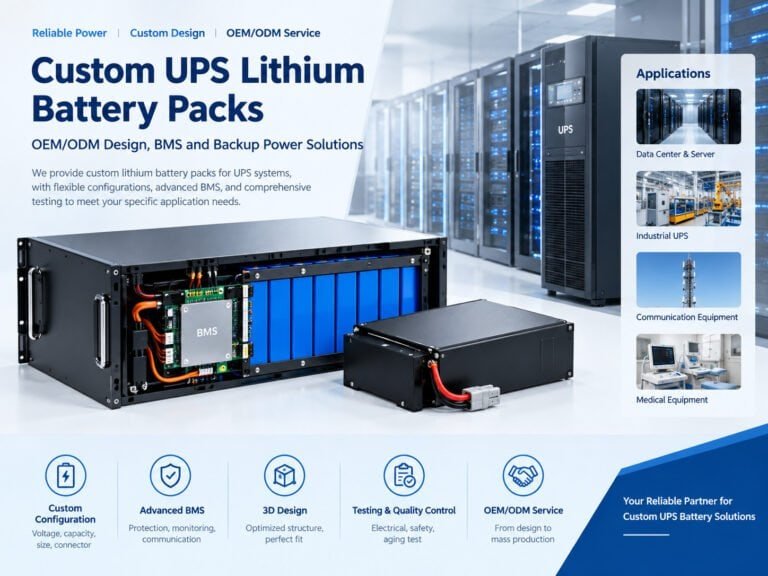
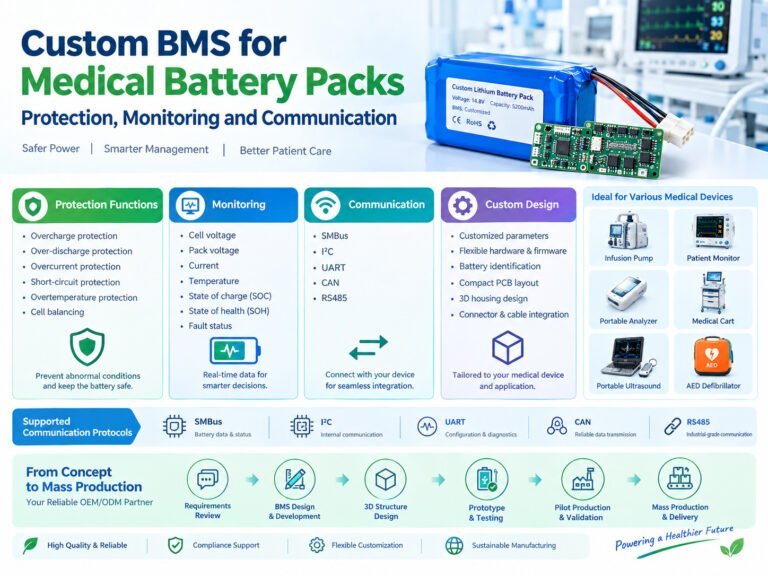
  • Smart Battery Management System (BMS) development
  • CAN Bus, RS485, UART, or Bluetooth communication
  • Rapid prototyping and design optimization

Beyond manufacturing batteries, a professional engineering team helps optimize energy density, reduce weight, improve thermal management, and extend battery life based on your application.

For example, a warehouse robot requires high cycle life and fast charging, while a medical device demands compact size, quiet operation, and exceptional reliability. A supplier with strong R&D capabilities can tailor battery solutions for these specific needs.

Why it matters:
A supplier with engineering expertise becomes a technology partner rather than simply a component provider.

2. Strict Quality Control and International Certifications

Lithium batteries are safety-critical products. Inconsistent manufacturing or poor-quality components can lead to premature failures, increased warranty claims, or even safety incidents.

Reliable suppliers maintain strict quality control throughout every stage of production.

A robust quality management system should include:

  • Incoming cell inspection
  • Automated cell sorting by voltage and internal resistance
  • Precision laser welding
  • Battery pack assembly verification
  • 100% 기능 테스트
  • 용량 테스트
  • 에이징 테스트
  • Vibration and drop testing
  • 배송 전 최종 검사

Consistency is equally important. Every battery pack should deliver the same level of performance, not just laboratory samples.

International certifications also demonstrate compliance with global safety standards.

일반적인 인증은 다음과 같습니다:

  • UL2271
  • IEC 62133-2
  • 3
  • CE
  • RoHS
  • EN 50604
  • FCC (when applicable)

In addition, suppliers operating under ISO 9001 or IATF 16949 quality systems typically have stronger manufacturing processes and traceability.

Why it matters:
High-quality manufacturing reduces warranty costs, improves product reliability, and protects your brand reputation.

3. Stable Production Capacity and Supply Chain Reliability

A well-designed battery is only valuable if it can be delivered on time. Production delays can disrupt your manufacturing schedule, delay product launches, and increase operational costs.

When evaluating suppliers, consider not only their current production capacity but also their ability to support future growth.

Important factors include:

  • Modern automated production lines
  • Stable monthly production capacity
  • Reliable raw material sourcing
  • Long-term partnerships with reputable cell manufacturers
  • 재고 관리
  • Flexible production scheduling
  • Short lead times
  • International shipping experience

A mature supplier should also have contingency plans for raw material shortages and fluctuations in market demand.

As your business grows, your battery supplier should be able to scale production without compromising quality or delivery performance.

Why it matters:
Reliable production capacity minimizes supply chain risks and helps OEM manufacturers maintain consistent product availability.

4. Responsive Technical Support and Long-Term Partnership

The relationship between an OEM and its battery supplier does not end after delivery. Product updates, firmware optimization, troubleshooting, and future upgrades all require ongoing collaboration.

Excellent suppliers provide technical support throughout the entire product lifecycle.

Before production:

  • Battery selection consultation
  • System compatibility evaluation
  • Performance simulations
  • Prototype recommendations

During development:

  • Engineering communication
  • Prototype testing support
  • Design modifications
  • Certification assistance

After delivery:

  • Fast technical response
  • Failure analysis
  • BMS firmware updates
  • Warranty support
  • Continuous product improvements

Many successful OEM manufacturers prefer long-term battery partners who understand their products and business goals instead of changing suppliers frequently.

Long-term cooperation also shortens development cycles for future projects because both teams already understand each other’s technical standards and workflows.

Why it matters:
Responsive technical support helps reduce downtime, accelerate product development, and strengthen long-term competitiveness.

Questions OEM Buyers Should Ask Before Choosing a Lithium Battery Supplier

Before making a final decision, consider asking these questions:

  • Can you customize battery packs based on our product requirements?
  • Which international certifications do your batteries comply with?
  • How do you ensure quality consistency during production?
  • Do you perform 100% aging and functional testing?
  • What is your average production lead time?
  • Can you support both prototype and mass production?
  • Which communication protocols are available?
  • How do you handle warranty claims and technical support?
  • Can you provide battery optimization recommendations?
  • Have you supplied batteries for similar applications?

These questions help identify suppliers that offer long-term value rather than simply competitive pricing.

결론

Selecting a lithium battery supplier is about much more than comparing prices. The right partner should combine engineering expertise, rigorous quality control, dependable manufacturing capacity, and responsive technical support to help your products succeed in the marketplace.

For OEM manufacturers, a trusted battery supplier becomes an extension of the product development team, contributing not only reliable battery packs but also valuable technical knowledge and continuous innovation.

As demand for lithium battery-powered equipment continues to rise across industries, partnering with an experienced and dependable manufacturer can improve product performance, reduce warranty risks, shorten development cycles, and create lasting competitive advantages.

When evaluating potential suppliers, focus on long-term partnership value rather than short-term cost savings. The right choice today can support your business growth for years to come.

Looking for a Reliable Custom Lithium Battery Partner?

Whether you’re developing electric vehicles, industrial equipment, robots, medical devices, or other battery-powered products, choosing the right battery partner can make all the difference.

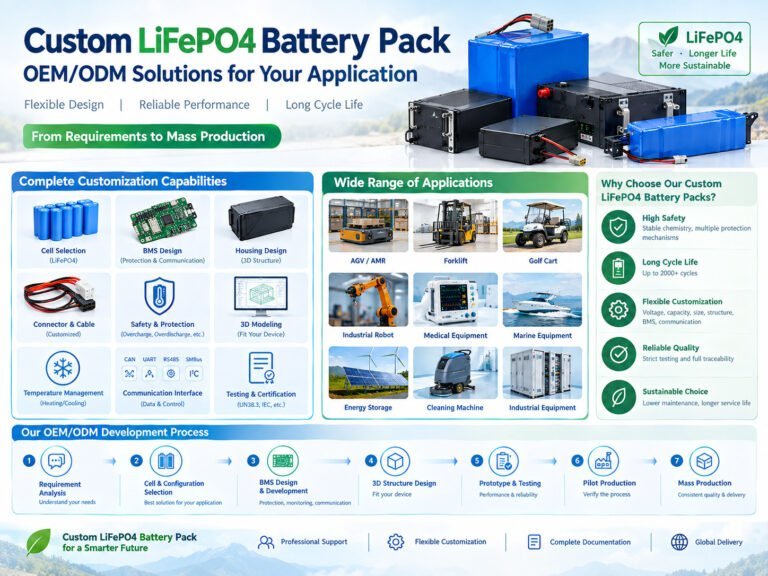
Dongguan Yizhan Electronics Technology Co., Ltd. (First Power) specializes in custom lithium battery solutions for OEM and ODM projects. With years of experience in battery pack design and manufacturing, we provide tailored solutions based on your product requirements, including:

  • Custom LiFePO4, Li-ion, and LiPo battery packs
  • Voltage options from 12V to 72V and beyond
  • Custom BMS development and communication protocols (CAN, RS485, UART, Bluetooth, etc.)
  • Battery enclosure, connector, and cable customization
  • Global certifications including UL, CE, UN38.3, IEC 62133, and more
  • Engineering support from prototype development to mass production

Whether you need a battery for e-bikes, golf carts, forklifts, AGVs, AMRs, robots, medical devices, marine applications, or energy storage systems, our engineering team is ready to help you find the optimal solution.

Have a custom battery project in mind? Contact Dongguan Yizhan Electronics Technology Co., Ltd. today to discuss your requirements and receive a tailored battery solution from our experienced engineering team.

We look forward to helping power your next innovation with safe, reliable, and high-performance lithium battery solutions.


자주 묻는 질문

1. Why is engineering capability important when selecting a lithium battery supplier?

Engineering expertise ensures the supplier can customize battery packs, optimize performance, integrate smart BMS features, and adapt solutions to your specific product requirements.

2. What certifications should an OEM lithium battery supplier have?

Common certifications include UL2271, IEC 62133-2, UN38.3, CE, RoHS, and EN 50604, depending on the target market and application.

3. How can I evaluate a supplier’s quality control?

Ask about cell inspection, automated production, aging tests, capacity testing, traceability systems, and whether every battery undergoes functional testing before shipment.

4. Why is production capacity important?

A supplier with stable manufacturing capacity and a reliable supply chain can ensure consistent deliveries, helping OEM manufacturers avoid production delays.

5. What kind of after-sales support should I expect?

A reliable supplier should provide technical consultation, warranty service, troubleshooting, firmware updates for smart BMS systems, and ongoing engineering support throughout the product lifecycle.

Learn the four essential qualities OEM manufacturers should consider when selecting a lithium battery supplier, from engineering expertise and quality control to production capacity and long-term technical support.
2026-07-13
+
Discover why modern warehouses are switching to lithium batteries for forklifts, AGVs, AMRs, and material-handling equipment to improve efficiency, reduce downtime, and lower total operating costs.
2026-07-13
+
Yizhan Electronics provides customized lithium battery solutions for cleaning robots. Explore Li-ion and LiFePO4 battery packs with smart BMS, OEM/ODM support, and reliable performance
2026-07-10
+
Learn how to upgrade forklift batteries from lead-acid to lithium-ion. Explore conversion costs, benefits, safety improvements, lifespan, and LiFePO4 solutions.
2026-07-10
+