
モビリティスクーターのバッテリーは、車両の性能、航続距離、充電特性、重量、および総所有コストにおいて重要な要素です。. 製造業者、販売業者、車両運営事業者、およびモビリティ機器のサプライヤーにとって、鉛蓄電池とリチウムイオン電池のどちらの技術を採用するかを決定するには、単にバッテリーの価格を比較するだけでは不十分です。.
AGMバッテリーやゲルバッテリーなどの密閉型鉛蓄電池は、長年にわたりモビリティスクーターで広く使用されてきました。また、リン酸鉄リチウム(LiFePO4)バッテリーパックを含むリチウムイオンバッテリーも、軽量性、頻繁な充放電、コンパクトなパッケージング、およびカスタマイズされた電気的性能が重要視される最新のモビリティ機器に使用されています。.
適切なバッテリーの選定には、スクーターの電圧、容量、モーター出力、コントローラー、想定される稼働サイクル、バッテリー収納部、充電器、使用環境、およびターゲット市場などが考慮されます。.
したがって、B2Bのバイヤーやモビリティスクーターメーカーにとって、重要な問いは単に “「リチウムは鉛酸電池より優れていますか?」” むしろ、現実的な問題は次の通りです:
目的とするモビリティスクーター用途において、必要な電気的、機械的、安全面、および商業的な性能を満たすのは、どの電池技術でしょうか?
本ガイドでは、モビリティスクーター用の鉛蓄電池とリチウム電池を比較し、OEMメーカーやバッテリー購入者がモビリティスクーターのバッテリーシステムを開発またはアップグレードする際に評価すべき技術的要素について解説します。.
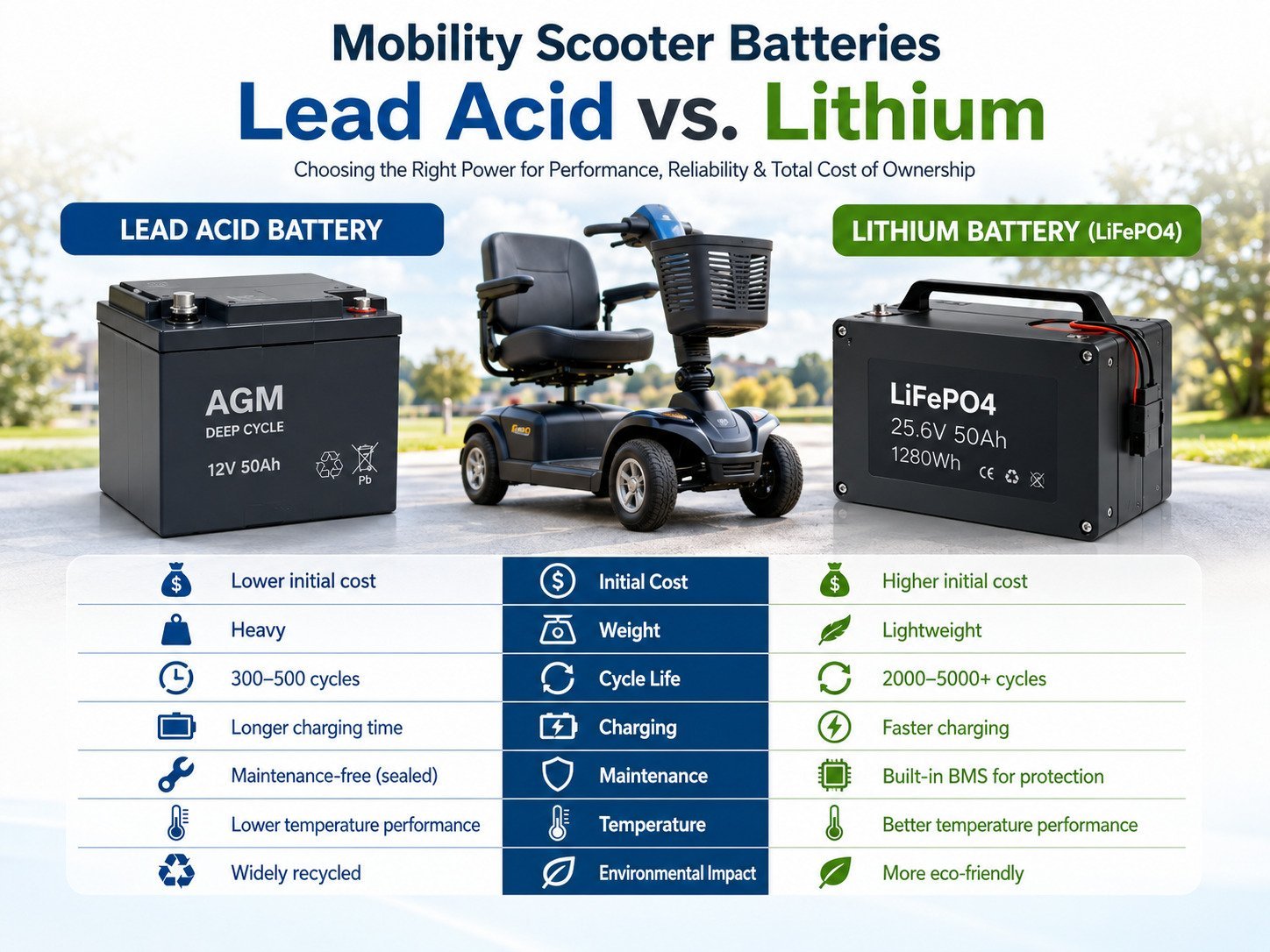
第1部:モビリティスクーター用バッテリー――鉛蓄電池とリチウム電池の比較
| パラメータ | 密閉型鉛蓄電池/AGM/ゲル型 | リチウムイオン/LiFePO4 |
|---|---|---|
| 初期購入費用 | 概して低い | 概して高い |
| バッテリー重量 | 高い | 同等のエネルギー需要に対してより低い |
| エネルギー密度 | 下へ | より高い |
| サイクル寿命 | 用途による | 用途によって異なりますが、多くの場合、頻繁なオン・オフ動作に適しています |
| 充電時間 | 一般的に長い | 適切な充電器を使用すれば、充電時間の短縮が可能です |
| メンテナンス | 密閉型では低い | 適切に設計されたBMSを搭載した低電圧モデル |
| BMSの要件 | 通常、電子式BMSは搭載されていません | 必須 |
| 過放電 | 耐用年数を縮める可能性があります | BMSは放電制限を管理できます |
| 自己放電 | 比較的高い | 比較的低い |
| 移植性 | 重量制限 | 軽量な設計に適しています |
| 初期投資 | 下へ | より高い |
| 長期的なコスト | 使い方次第です | サイクル周波数と耐用年数によって異なります |
| カスタマイズ | 標準フォーマットによる制約 | 柔軟なパッケージ設計 |
| 充電器 | 鉛蓄電池の充電プロファイル | リチウム対応の充電プロファイルが必要です |
| 代表的な用途 | 従来のモビリティスクーター | 持ち運び可能で、折りたたみ式、かつ頻繁に使用されるモビリティスクーター |
実際の性能は、バッテリーの設計、セルの化学組成、容量、負荷特性、温度、充電器、BMSの設定、およびスクーターの構造によって異なります。.
1. モビリティスクーターのバッテリー要件について
モビリティスクーターとは、移動に制限のある利用者のための個人用移動手段として設計された電動車両です。モデルによっては、屋内での使用、屋外での移動、旅行用途、あるいは長時間の日常的な使用を想定して設計されているものもあります。.
こうしたさまざまな用途によって、バッテリーに求められる要件も異なります。.
コンパクトな折りたたみ式スクーターには、次のような点が重視されるかもしれません:
- バッテリーの重量が軽い
- コンパクトなサイズ
- 取り外し可能なバッテリー設計
- 便利な充電
- 運搬性
大型の屋外用スクーターには、以下のものが必要になる場合があります:
- 大容量
- より高い連続吐出能力
- 変動する負荷下でも安定した動作
- 動作範囲の拡大
- 堅牢な機械構造
したがって、バッテリーの選定は、まず車両の運用要件に基づいて行うべきである。.
代表的なバッテリーの仕様には、次のようなものがあります:
- 公称電圧
- 容量(Ah)
- エネルギー(Wh)
- 連続放電電流
- ピーク放電電流
- 充電電流
- バッテリー寸法
- バッテリー重量
- コネクタの設定
- 通信インターフェース
- 動作温度
- 保存温度
OEM開発においては、セル構成を決定する前に、これらの仕様を策定しておく必要があります。.
2. 鉛蓄電池式モビリティスクーターのバッテリーとは?
鉛蓄電池は、鉛を主成分とする電極と硫酸を電解液として使用しています。最近のモビリティスクーターでは、従来の開放型バッテリーではなく、一般的に密閉型が採用されています。.
一般的な密閉型鉛蓄電池の技術には、以下の2つがあります。 AGMバッテリーとゲルバッテリー.
AGMバッテリー
AGMとは、Absorbent Glass Mat(吸収性ガラスマット)の略称です。.
電解液はガラス繊維製セパレーターに吸収されます。このバッテリーは密閉型であり、メンテナンスフリーでの運用が求められる用途向けに設計されています。.
AGMバッテリーは一般的に標準化されたサイズで入手できるため、交換用途に便利です。.
ゲル電池
ゲル電池では、シリカ系添加剤を用いて電解液を固定化しています。.
また、密閉構造になっているため、移動支援機器にも使用可能です。.
具体的なバッテリーの選定は、スクーターメーカーの設計、充電システム、使用条件、およびバッテリー収納スペースによって異なります。.
3. リチウムイオン式モビリティスクーターのバッテリーとは?
リチウムイオン式モビリティスクーター用バッテリーとは、リチウムイオンセルと一体型のバッテリー管理システムで構成される充電式バッテリーパックのことです。.
モビリティ用途において、バッテリーパックには、求められる電気的・機械的設計に応じて、円筒形、角形、またはパウチ型のセルが使用されることがあります。.
一般的なリチウム電池パックには、以下のものが含まれています:
- リチウム電池
- ビーエムエス
- 細胞間の相互接続
- 温度センサー
- ヒューズまたは保護部品
- 住宅
- コネクタ
- ワイヤーハーネス
- 充電インターフェース
BMSは、充電および放電中にバッテリーの状態を監視・管理します。.
適切に設定されたBMSは、以下の事態に対する保護機能を提供する可能性があります:
- オーバーチャージ
- 過放電
- 過電流
- ショート
- 異常な温度
- 細胞電位の不均衡
OEM用バッテリープロジェクトにおいては、BMSを独立した部品として扱うのではなく、モーターコントローラー、充電器、セル構成、および動作電流に応じて選定する必要があります。.
4. バッテリーの重量:モビリティスクーター選びにおける重要な検討事項
バッテリーの重量は、モビリティスクーターの設計において重要な技術的要素です。.
鉛蓄電池には比較的重い材料が含まれており、通常、所定の蓄電量を確保するには、より多くの電池質量が必要となります。.
リチウム電池は、より高いエネルギー対重量比を実現できるため、メーカーは同等のエネルギー要件を満たしつつ、より軽量なバッテリーパックを設計することが可能になります。.
これは特に、次のような場合に当てはまります:
- 折りたたみ式モビリティスクーター
- 旅行用スクーター
- 携帯用移動補助具
- 着脱式バッテリーシステム
- 車両で輸送される製品
バッテリーの軽量化は、製品全体の設計にも影響を及ぼす可能性があります。.
例えば、製造業者は、許容重量枠を次のような用途に利用することがあります:
- スクーターの総重量を軽減する
- バッテリー容量を増やす
- 取り外し可能なバッテリーモジュールを作成する
- 製品の携帯性を向上させる
- コンパクトなバッテリーケースを開発する
ただし、実際の重量差は、選択した電池の化学系、容量、筐体、BMS、保護部品、および機械的要件によって異なります。.
5. バッテリー容量:Ahだけではすべてが語れない
モビリティスクーターのバッテリーは、通常、アンペア時(Ah)で規定されます。.
例えば、こうだ:
24 V 20 Ah
しかし、「Ah」だけでは、蓄積されたエネルギーの総量を表すものではありません。.
おおよそのエネルギーは、次のように計算できます:
エネルギー(Wh)=電圧(V)×容量(Ah)
したがって:
24 V × 20 Ah = 480 Wh
24 V 20 Ahのバッテリーの公称エネルギー容量は約480 Whです。.
ただし、スクーターの実際の航続距離は、さまざまな要因によって異なります。.
これらには以下が含まれる:
- ライダー体重
- スクーターの重量
- モーターの効率
- コントローラの特性
- 地形
- 傾斜
- 速度
- 加速
- タイヤの状態
- 温度
- バッテリーの使用年数
- 運転行動
したがって、バッテリーメーカーは、実際の航続距離を予測する際に、公称Ah値のみに頼ることは避けるべきである。.
B2B用途においては、所定の動作条件下で通信範囲試験を実施する必要があります。.
6. 有効容量と放電深度
バッテリーの容量と実使用容量は、必ずしも一致するとは限りません。.
鉛蓄電池は、高い電流で放電すると、利用可能な容量が低下することがあります。また、放電中は電圧も低下します。.
リチウム電池は、放電サイクルの大部分において、一般的により安定した電圧特性維持します。.
また、BMSでは、所定の低電圧保護ポイントを設定することも可能です。.
したがって、OEM設計においては、バッテリーの有効エネルギーを以下の項目と併せて評価する必要があります:
容量 + 放電電流 + カットオフ電圧 + 温度 + 負荷プロファイル
これは、単にAh定格を比較するよりも、より有意義な技術的な参考情報となります。.
7. 鉛蓄電池とリチウム電池の充電の違い
充電についても、重要な検討事項の一つです。.
鉛蓄電池では通常、鉛蓄電池の化学的特性に合わせて設計された充電プロファイルが用いられます。充電器には、バルク充電、吸収充電、フロート充電の各段階が含まれる場合があります。.
リチウム電池には、選択したリチウム化学組成および直列接続構成に適した充電プロファイルが必要です。.
例えば、リチウム電池パックでは、定電流・定電圧充電方式が採用されることがある。.
充電器の電圧は、バッテリーの最大充電電圧と一致している必要があります。.
したがって:
鉛蓄電池用充電器をリチウム電池にそのまま使用してはいけません。.
モビリティスクーターのバッテリーを鉛酸バッテリーからリチウムイオンバッテリーに交換する際は、システム全体の一環として充電器も点検する必要があります。.
8. 鉛蓄電池式の電動スクーターはリチウムイオン電池式に改造できますか?
はい、多くの用途において、モビリティスクーターはリチウム電池を使用できるように設計できますが、互換性を確認する必要があります。.
直接交換するには、公称電圧が一致するだけでは不十分です。.
以下のパラメータを確認してください。.
8.1 電圧
バッテリーの公称電圧および最大電圧は、スクーターのコントローラーおよび電気系統と互換性があるものでなければなりません。.
8.2 容量
バッテリーの容量は、必要な動作範囲を満たすものでなければなりません。.
8.3 連続電流
バッテリーは、モーターとコントローラーに十分な連続電流を供給できなければなりません。.
8.4 ピーク電流
加速時や上り坂走行時には、一時的な電流需要が生じる場合があります。.
BMSおよびセルは、必要なピーク電流に耐えられるものでなければならない。.
8.5 充電器の互換性
充電器は、正しい充電プロファイルを使用する必要があります。.
8.6 外形寸法
リチウム電池パックは、用意されているバッテリー収納スペースに収まるものでなければなりません。.
8.7 コネクタ
バッテリーの端子およびコネクターは、車両の電気的インターフェースと適合している必要があります。.
8.8 BMS通信
一部のモビリティスクーターでは、バッテリーと車両の電子制御装置との間で通信が行われています。.
通信が必要な場合、リチウムBMSは適切なプロトコルに対応している必要があります。.
8.9 低電圧保護
リチウムイオンバッテリーのBMSカットオフ電圧は、スクーターのコントローラーと整合させる必要があります。.
こうした要因により、リチウムへの転換は 単なるバッテリー交換ではなく、エンジニアリング統合プロジェクト.
9. モビリティスクーター向けリチウムイオン電池BMSの設計
BMSは、リチウムイオン式モビリティスクーターのバッテリーにおいて最も重要な部品のひとつです。.
その機能には、次のようなものが含まれる可能性があります:
- 細胞電位のモニタリング
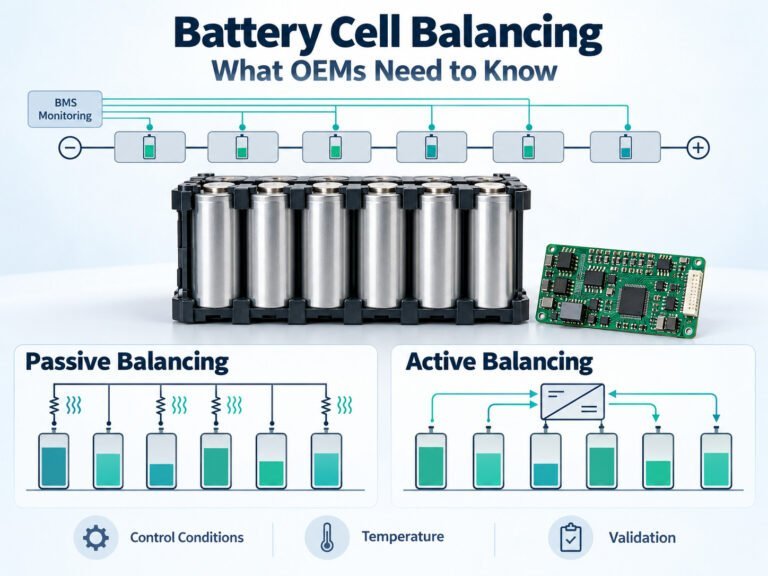
- セルバランシング
- 過充電保護
- 過放電保護
- 過電流保護
- 短絡保護
- 温度モニタリング
- 充電制御
- 充電状態の推定
- 故障記録
- コミュニケーション
OEMプロジェクトにおいては、BMSは電気システム全体を考慮して選定する必要があります。.
例えば、高出力モーターを搭載したスクーターの場合、コンパクトな屋内用スクーターとは異なるBMS構成が必要になる可能性があります。.
したがって、バッテリー供給業者は以下の点を評価すべきである:
モーター出力 → コントローラー電流 → バッテリー放電電流 → BMSの定格電流 → セルの電流許容値
このチェーンは、信頼性の高いシステム設計に不可欠です。.
10. モビリティスクーター用途向けのLiFePO4
LiFePO4(リン酸鉄リチウムとも呼ばれる)は、移動機器に採用が検討できるリチウムイオン電池の化学系の一つである。.
安定した電気化学的構造を特徴とし、頻繁な充放電サイクルを伴う充電式エネルギー貯蔵が求められる用途に使用されています。.
モビリティスクーターのバッテリー設計における潜在的な利点には、次のようなものがあります:
- バッテリーの重量が軽い
- 長寿命の可能性
- 安定した放電特性
- 日常的なメンテナンスの手間が少ない
- 柔軟なパック構成
- BMS保護機能との連携
OEMメーカーにとって、LiFePO4はカスタマイズされたバッテリー構成にも対応可能です。.
例えば、メーカーは次のような点を踏まえてパッケージを設計する場合があります:
8S LiFePO4
あるいは、必要なシステム電圧に応じて、別の構成とすることも可能です。.
直列および並列の接続構成は、必要な電圧、容量、電流、および設置スペースに基づいて決定する必要があります。.
11. モビリティスクーターのバッテリー構成
電池の接続方式は、通常、直列・並列の表記を用いて表されます。.
例えば、こうだ:
8S1P
8つのセルまたはセル群が直列に接続されていることを意味する。.
直列接続をすると電圧が上昇します。.
並列接続を行うと、容量と許容電流が増加します。.
関係を簡略化すると、次のようになります:
パック電圧 ≈ セル電圧 × 直列接続されたセルの数
パック容量 ≈ セル容量 × 並列接続セル数
例えば、公称電圧が 3.2 V のセルを使用する場合:
8S LiFePO4 ≈ 25.6 V(公称電圧)
20 Ahのセルを使用した8S1Pパックの場合、おおよそ以下のようになります:
25.6 V × 20 Ah = 512 Wh
具体的な構成は、セルの仕様や用途の要件によって異なります。.
12. 鉛蓄電池とリチウムイオン電池:初期費用
鉛蓄電池が依然として重要視されている理由の一つは、その購入価格にある。.
標準的なAGMバッテリーは、特注のリチウムイオンバッテリーパックに比べて初期コストが安くなる場合があります。.
リチウム電池パックには通常、以下のような追加の部品が必要です:
- リチウム電池
- ビーエムエス
- 保護装置
- 住宅
- 配線
- コネクタ
- バッテリーの検査
- 認証
- 技術開発
これにより、システムの初期コストが高くなります。.
しかし、B2Bの購買担当者は、購入価格だけに基づいてバッテリーの経済性を評価すべきではありません。.
13. 総所有コスト
総所有コスト(TCO)は、バッテリー技術を評価するためのより包括的な手法を提供します。.
簡略化されたモデルは次のとおりです:
TCO = 購入コスト + 交換コスト + 充電コスト + 保守コスト + ダウンタイムコスト
使用頻度の低いモビリティスクーターの場合、鉛蓄電池は購入価格が安いため、商業的に適していると言えるかもしれません。.
頻繁に使用するモビリティスクーターの場合、バッテリーの交換頻度や稼働停止時間がより重要な問題となる可能性があります。.
したがって、リチウムの初期コストの高さは、以下の点と照らし合わせて評価することができる:
- 予想耐用年数
- 使用頻度
- 充電頻度
- 交換間隔
- 人件費
- 輸送に関する要件
B2Bのバイヤーは、バッテリーサプライヤー間のサイクル寿命の主張を比較する際、実際の試験条件を確認すべきです。.
14. バッテリーのサイクル寿命
リチウム電池と鉛蓄電池を比較する際、しばしば「サイクル寿命」という用語が使われます。.
ただし、サイクル寿命の数値は、常に試験条件と併せて評価する必要があります。.
重要な要素としては、以下のものが挙げられます:
- 放電深度
- 充電電流
- 放電電流
- 周囲温度
- 充電電圧
- 休憩時間
- 「エンド・オブ・ライフ」の定義
例えば、試験条件に関する情報が伴わない「2,000サイクル」という数値だけでは、技術的な比較を行うには情報が不十分です。.
専門のバッテリーサプライヤーであれば、公表されているサイクル寿命データの根拠となる試験方法や性能基準について説明できるはずです。.
15. 温度特性
モビリティスクーターは、屋外においてさまざまな環境条件下で使用されることがあります。.
バッテリーの性能は、以下の要因によって影響を受ける可能性があります:
- 低温
- 高温
- 保存温度
- 充電温度
リチウム電池は、低温下での充電時に特に注意が必要です。.
バッテリーの設計によっては、BMSが所定の温度範囲外での充電を阻止する場合があります。.
寒冷地向けの製品については、メーカーは以下の点を検討するとよい。
- 温度センサー
- 低温時の充電保護
- 暖房システム
- 断熱
- BMS温度制御
正しい解決策は、対象となる動作環境によって異なります。.
16. 振動および機械的試験
モビリティスクーターは、道路、歩道、スロープ、および凹凸のある路面で走行します。.
そのため、バッテリーパックは機械的な振動や衝撃を受けることになる。.
OEM向けバッテリーサプライヤーにとっては、パックの開発段階において機械的信頼性を考慮すべきである。.
関連する検査には、次のようなものがあります:
- 振動試験
- 衝撃試験
- 落下試験
- コネクタの試験
- 筐体試験
- ケーブルの耐久性試験
バッテリーパックは、車両への搭載環境に合わせて機械設計を行う必要があります。.
これには、運転中の動きを抑えるために、セルや内部部品を固定することが含まれます。.
17. 防水・防塵性能
屋外で使用するモビリティスクーターでは、次のような事態が発生する可能性があります:
- 雨
- 道路からの水はね
- ダスト
- 泥
- 湿度
必要な筐体の保護等級は、スクーターの使用環境によって異なります。.
OEMは、防水・防塵対策が必要な場合、IP規格に準拠したバッテリー筐体を指定することがあります。.
実際のIP等級は、製品の設計に応じて選定し、適切な試験を通じて確認する必要があります。.
IP等級が高いからといって、すべてのモビリティスクーターにそれが必須であると自動的にみなすべきではありません。.
18. バッテリーの安全性と保護
バッテリーの安全性は、システムレベルでの考慮事項です。.
リチウム電池の場合、バッテリーパックには適切な電気的および機械的保護機能が備わっていなければなりません。.
重要なデザイン要素としては、次のようなものが挙げられます:
- 適切な細胞の選定
- BMS保護
- ヒューズによる保護
- 温度モニタリング
- 断熱
- 機械的補強
- 適切なコネクタ
- 充電器の互換性
- 短絡保護
バッテリーパックも、管理された製造手順に従って製造されるべきである。.
品質管理には、次のようなものが含まれます:
- 入荷セル検査
- 細胞電位測定
- 内部抵抗試験
- キャパシティ・テスト
- BMS試験
- 溶接検査
- 絶縁試験
- エージング試験
- 最終機能試験
19. 細胞の選択が重要な理由
リチウム電池すべてが同じ電気的特性を持っているわけではありません。.
OEM用バッテリーの開発には、さまざまなセル形式やメーカーが関与する場合があります。.
細胞の選定にあたっては、以下の点を考慮すべきである:
- 化学
- 定員
- 連続放電電流
- ピーク放電電流
- サイクル寿命特性
- 動作温度
- 細胞の寸法
- サプライヤーの一貫性
モビリティスクーターへの応用においては、単に容量が最も大きいセルを選ぶのではなく、実際の負荷特性に応じてセルを選定すべきである。.
バッテリーエンジニアは、以下の要素間の関係を評価すべきである:
セル → パック → BMS → 充電器 → コントローラー → モーター
このシステム的なアプローチにより、量産時の互換性の問題を軽減することができます。.
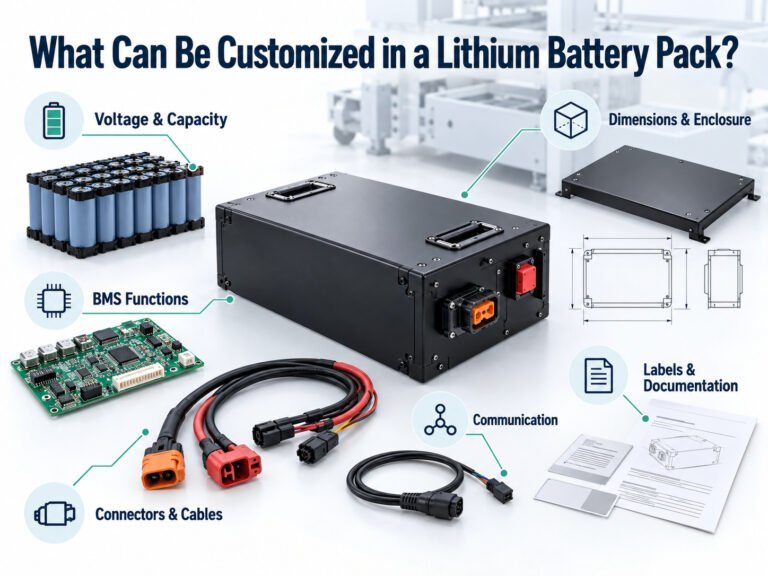
20. オーダーメイドのモビリティスクーター用バッテリーパックの設計
交換用としては標準的なバッテリーでも適している場合がありますが、OEM製品の場合は、カスタマイズされたバッテリーパックが必要になる場合があります。.
特注のモビリティスクーター用バッテリーは、以下の点を踏まえて設計することができます:
- 電圧
- 定員
- 最大電流
- 電池ケース
- 取付構造
- コネクタ
- 通信インターフェース
- 充電器
- ビーエムエス
- 添付資料
- 環境要件
たとえば、OEMからは次のような要求がある場合があります:
24 V / 20 Ah LiFePO4
出演:
- 特注筐体
- CAN通信
- スマートBMS
- 着脱可能なデザイン
- バッテリー残量表示
- 特定のコネクタ
- UL またはその他の市場固有の適合要件
これにより、バッテリーメーカーは、これらの要件に基づいてセル構成やBMSのアーキテクチャを開発することができるようになります。.
21. OEMおよびODM向けモビリティスクーター用バッテリーソリューション
モビリティスクーターのメーカーにとって、OEM/ODMによる提携は、製品開発において柔軟性をもたらすことができます。.
バッテリーサプライヤーは、以下の複数の段階をサポートすることができます:
要件分析
レビュー
- 車両電圧
- モーター定格
- コントローラー
- 必須の範囲
- 営業時間
- 充電に関する要件
- 電池ケース
電気設計
開発:
- セルの構成
- ビーエムエス
- 定格電流
- 充電システム
- 保護アーキテクチャ
機械設計
開発:
- 住宅
- 取り付け位置
- コネクタの位置
- 防水
- 内部構造
プロトタイプ
車両試験用のバッテリーパック試作機を製作する。.
テスト
評価:
- 定員
- 充電
- 排出
- 温度
- 振動
- 防水
- BMS保護
認証サポート
対象市場および製品の要件に基づき、技術文書を作成し、テストを実施する。.
量産
検証が完了した後、バッテリーパックは管理された環境下での量産段階に進むことができます。.
22. 電池の認証および適合性
認証要件は、対象市場や用途によって異なります。.
リチウム電池製品の場合、輸送および製品の適合性に関しては、以下のような規格や規制が適用されることがあります:
- 国連 38.3
- IEC 62133-2
- UL規格
- CE関連の要件
- EUバッテリー規制
- RoHS
- 地域ごとの市場要件
具体的な要件については、最終的なバッテリーの設計、スクーター製品、販売市場、および適用される法規制に基づいて確認する必要があります。.
B2B調達においては、バイヤーはバッテリーサプライヤーに対し、関連する認証書類や試験報告書の提出を求めるべきである。.
また、企業の一般的な認証がすべてのバッテリー製品に適用されると仮定するのではなく、実際のバッテリーモデルと照らし合わせて認証内容を確認する必要があります。.
23. リチウム電池パックの製造における品質管理
バッテリーの最終的な性能は、セルの化学的特性だけでなく、製造品質にも左右されます。.
プロ仕様のバッテリーパックの製造工程には、以下のようなものが含まれる場合があります:
細胞選別
セルは、電圧、内部抵抗、および静電容量に基づいて選別することができます。.
レーザー溶接または抵抗溶接
採用する溶接プロセスは、バッテリーの構造や材料によって異なります。.
BMSの設置
BMSの設置および電気的検証が完了しました。.
断熱
設計に基づき、断熱材およびその間隔を確認する。.
経年劣化試験
完成したバッテリーパックは、充放電サイクルを行うことで、性能上の異常を特定することができます。.
容量テスト
実際のバッテリー容量は、仕様値と比較して測定されます。.
機能テスト
保護機能および電気的出力が検証された。.
最終検査
完成したパックは、出荷前に検査されます。.
移動支援機器の場合、これらの工程により、生産ロット間の品質の一貫性が確保されます。.
24. B2Bのバイヤーはどのバッテリーを選ぶべきか?
すべてのモビリティスクーターに通用する、万能なバッテリーというものは存在しません。.
次のような場合には、鉛蓄電池が適している可能性があります:
- バッテリーの初期費用は重要な検討事項です
- このスクーターにはすでにAGMバッテリーまたはゲルバッテリーが使用されています
- この車はたまにしか使われていません
- バッテリーの重量は、設計上の大きな制約にはならない
- 標準の交換用電池の使用を推奨します
- 既存の充電器のアーキテクチャは、鉛蓄電池用に設計されています。
リチウムが適している可能性があるのは、次のような場合です:
- バッテリーの重量を軽減する必要がある
- そのスクーターは頻繁に使われています
- この車両には取り外し可能なバッテリーが必要です
- 移植性は重要です
- 頻繁な充電が必要になると予想されます
- 独自の形状のバッテリーが必要です
- メーカーは統合型BMSを求めている
- 長期的な運営の経済性は重要である
正しい判断は、電池の化学組成だけではなく、その用途に基づいて行うべきである。.
25. 鉛蓄電池からリチウム電池への更新チェックリスト
鉛蓄電池式のモビリティスクーターのバッテリーをリチウムイオンバッテリーに交換する前に、B2Bの購買担当者は以下の点を確認する必要があります:
電気
☐ 定格電圧
☐ 最大電圧
☐ 容量
☐ 連続電流
☐ ピーク電流
☐ コントローラーの互換性
充電
☐ 充電器の電圧
☐ 充電器の電流
☐ 充電プロファイル
☐ 充電コネクタ
機械
☐ バッテリーの寸法
☐ 重量
☐ 取り付けポイント
☐ コネクタの位置
☐ ケーブルの長さ
ビーエムエス
☐ 過充電防止機能
☐ 過放電保護
☐ 過電流保護
☐ 過熱保護
☐ セルのバランス調整
☐ 通信プロトコル
環境
☐ 動作温度
☐ 保管温度
☐ 振動
☐ 耐水性
☐ 防塵機能
コンプライアンス
☐ 交通手段に関する要件
☐ 製品認証
☐ 対象市場の規制
☐ 試験報告書
☐ トレーサビリティに関する文書
26. 電動スクーター用バッテリーメーカーの選び方
OEMやB2Bの調達においては、バッテリーサプライヤーの選定は、単に見積もりを比較するだけでは不十分です。.
サプライヤーの以下の点を考慮してください:
技術力
メーカーは、御社の製品に合わせてセル構成、BMS、および筐体を設計できますか?
製造能力
サプライヤーは、PACKの組み立ておよび品質検査のプロセスを適切に管理していますか?
テスト能力
そのサプライヤーは、容量試験、経年劣化試験、振動試験、温度試験、および保護試験を実施できますか?
認定資格の取得経験
そのサプライヤーは、貴社のターゲット市場で求められる文書作成や試験に対応できますか?
カスタマイズ機能
サプライヤーは、電圧、容量、外形寸法、コネクタ、BMS、および通信機能をカスタマイズできますか?
生産の一貫性
サプライヤーは、製造ロット間でバッテリー性能の一貫性を維持できますか?
アフターセールス・サポート
サプライヤーは、試作開発および量産段階において技術サポートを提供できますか?
これらの要素は、バッテリーが単なる汎用交換部品ではなく、モビリティスクーターの構成部品として組み込まれる場合、特に重要となります。.
27. OEM製モビリティスクーターにおいて、カスタムバッテリーパックが有効な理由
標準的なバッテリーを使用すると、スクーターの設計を既存のバッテリー形式に合わせて調整せざるを得なくなります。.
専用バッテリーを採用することで、車両に合わせてバッテリーアーキテクチャを設計することが可能になります。.
例えば、メーカーによっては、特定の形状をした、スペースが限られた電池収納部を設けている場合があります。.
標準的なバッテリーを選定して車両を改造する代わりに、OEM向けバッテリーサプライヤーは次のような設計を行うことができます:
セル構成 + BMS + 筐体 + コネクタ + 取付構造
一つのシステムとして。.
これにより、次のような製品要件に対応することができます:
- コンパクトな設置
- 取り外し可能なバッテリー
- 軽量設計
- カスタム容量
- スマートバッテリー監視
- 車両間通信
- 特定のコネクタシステム
新しいプラットフォームを開発しているモビリティスクーターメーカーにとって、このアプローチはバッテリーと車両の統合を簡素化することができます。.
28. よくある質問
モビリティスクーターには、鉛蓄電池よりもリチウム電池の方が適しているのでしょうか?
リチウム電池と鉛蓄電池には、それぞれ異なる特性があります。軽量性、頻繁な充放電、携帯性、およびカスタマイズされたバッテリー設計が重要となる場合には、リチウム電池が適しています。一方、初期コストや既存システムとの互換性が優先される場合には、鉛蓄電池が適している場合があります。.
24 Vの鉛蓄電池をリチウム電池に交換することはできますか?
リチウム電池の交換は可能かもしれませんが、交換を行う前に、バッテリー電圧、充電器、BMS、コントローラー、必要電流、外形寸法、およびコネクタを確認する必要があります。.
モビリティスクーターのリチウム電池の寿命はどれくらいですか?
バッテリーの耐用年数は、化学組成、セルの品質、放電深度、充電条件、温度、電流、および使用頻度によって異なります。サイクル寿命に関する主張は、定義された試験条件に基づいて評価する必要があります。.
以前使っていた鉛蓄電池用充電器を、リチウム電池に使っても大丈夫ですか?
必ずしもそうとは限りません。リチウム電池には適切な充電プロファイルが必要です。使用前に、純正の充電器がリチウム電池に対応していることを確認してください。.
LiFePO4はモビリティスクーターに適していますか?
LiFePO4は、その電気的・機械的特性が車両の要件を満たす場合、モビリティスクーターへの採用が検討可能です。.
リチウムを使うと、電動スクーターは軽くなるのでしょうか?
可能です。リチウム電池は鉛蓄電池よりも高いエネルギー対重量比を実現できますが、実際の軽量化効果は、電池の容量やパック全体の設計によって異なります。.
モビリティスクーターのバッテリー容量はどのように計算すればよいですか?
使用方法:
Wh = V × Ah
例えば、24 V・20 Ahのバッテリーの公称エネルギーは約480 Whです。.
特注の電動スクーター用バッテリーを注文する際、どのような情報を提供すればよいですか?
バッテリーの仕様(原仕様)、電圧、容量、モーター出力、コントローラーの電流、バッテリー収納部の寸法、コネクタ、充電器の仕様、必要な動作範囲、通信要件、およびターゲット市場を明記してください。.
結論:モビリティスクーターには鉛蓄電池とリチウムイオン電池、どちらが適しているか?
モビリティスクーターには鉛蓄電池とリチウム電池のどちらも使用できますが、それぞれの特性によって対応できる製品要件が異なります。.
鉛蓄電池 コスト重視の製品、確立された車両プラットフォーム、およびバッテリーの重量が大きな制約とならない交換用途においては、引き続き有用である。.
リチウム電池, 、LiFePO4バッテリーパックを含め、バッテリーの軽量化、頻繁な充放電、携帯性に優れた設計、カスタマイズされた寸法、および統合型バッテリー管理が求められるモビリティスクーターには、これらのバッテリーが適しています。.
B2Bのバイヤーにとって、選定プロセスは単なる 鉛蓄電池とリチウム電池の比較 比較。.
バッテリーは、車両システム全体の一部として評価されるべきです:
バッテリーセル → パック → BMS → 充電器 → コントローラー → モーター → 車両
OEMおよびODMのモビリティスクータープロジェクトにおいては、セルの選定、BMSの開発、パック設計、試験、認証支援、量産能力を備えたバッテリーメーカーが、設計の初期段階からバッテリーを車両に統合する支援を行うことができます。.
結局のところ、適切なバッテリーとは、そのスクーターの要件を満たすものである。 電気、機械、環境、安全、規制、および商業上の要件.
バッテリーメーカーについて
東莞伊湛電子科技有限公司 モビリティ機器やその他の電気機器向けに、カスタマイズされたバッテリーソリューションを提供するリチウム電池パックのメーカーです。.
同社は以下を支援しています OEMおよびODM向けバッテリー開発, 、これにはセルの選定、バッテリーパックの設計、BMSの統合、構造設計、試作開発、試験、量産などが含まれます。.
バッテリーソリューションは、以下の要件に応じて開発することができます:
- 電圧と容量
- バッテリー寸法
- 放電電流
- BMSの機能
- コミュニケーション
- コネクタ
- 防水エンクロージャー
- 充電システム
- アプリケーション環境
- ターゲット市場への適合性
電動スクーターのメーカーや販売業者にとって、開発プロセスは、既存のバッテリー仕様や車両全体の要件を起点として開始することができます。.
 English
  Chinese
  Japanese
  German
  French
  Korean
