
Choosing the right battery for a four-wheeler or ATV involves more than checking the battery voltage and price. The battery affects starting performance, electrical stability, operating time, vehicle weight, charging requirements, service life, and maintenance.
Lead-acid batteries have been used in ATVs and utility vehicles for many years. AGM and other sealed lead-acid batteries remain common in conventional gasoline-powered four-wheelers because they are available in standard formats and can provide the current required for engine starting.
Lithium-ion batteries are also used in ATV and four-wheeler applications. Depending on the vehicle design, lithium battery packs can provide a lower battery weight, flexible PACK configuration, integrated battery management, and characteristics suitable for frequent cycling. LiFePO4, or lithium iron phosphate, is one lithium chemistry that can be considered for selected mobility and electric vehicle applications.
For consumers, replacing an ATV battery may be a straightforward maintenance task. For ATV manufacturers, distributors, fleet operators, and battery procurement teams, battery selection requires a system-level evaluation.
The appropriate battery depends on the vehicle architecture, voltage, current requirements, battery compartment, charging system, operating environment, usage pattern, and target market.
This guide explains the differences between lead-acid and lithium batteries for four-wheelers and ATVs and provides a practical framework for B2B buyers and OEM manufacturers.
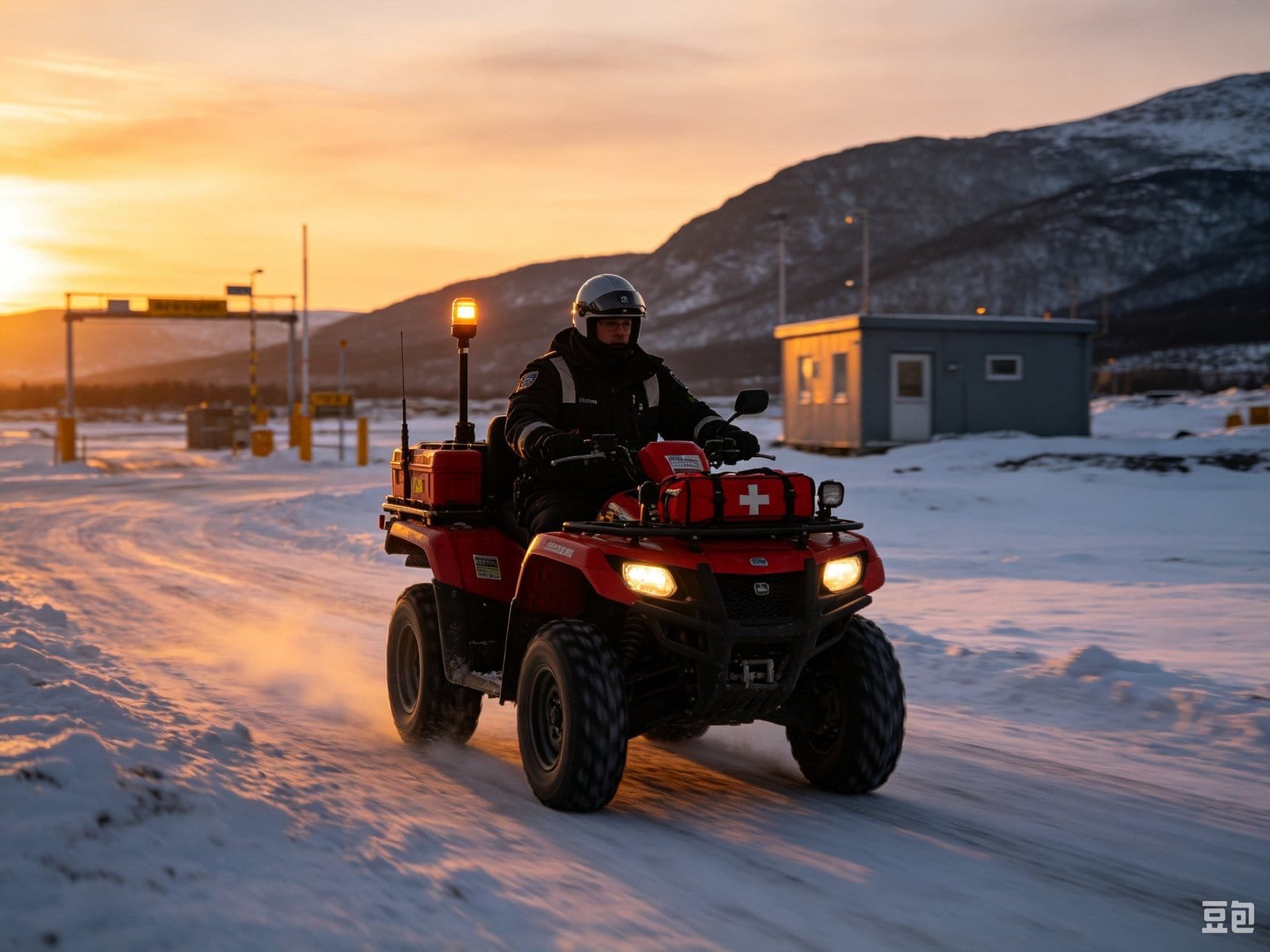
Lead Acid vs. Lithium ATV Batteries: Quick Comparison
| パラメータ | Lead Acid / AGM | リチウムイオン/LiFePO4 |
|---|---|---|
| 初期購入費用 | 概して低い | 概して高い |
| バッテリー重量 | Relatively heavy | Lower for comparable energy requirements |
| エネルギー密度 | 下へ | より高い |
| Starting current | Available in suitable designs | Available in suitable designs |
| Deep-cycle operation | 用途による | Suitable designs available |
| 充電 | Lead-acid charger required | Lithium-compatible charger required |
| メンテナンス | Low for sealed AGM | Low with proper BMS |
| ビーエムエス | Usually not required | 必須 |
| 自己放電 | 比較的高い | 比較的低い |
| 耐振動性 | Depends on battery construction | Depends on PACK design |
| Temperature performance | 用途による | Requires chemistry-specific management |
| カスタマイズ | Usually based on standard formats | Flexible PACK configuration |
| 耐用年数 | Depends on use and maintenance | Depends on chemistry and operating conditions |
| TCO | Depends on usage pattern | Depends on usage pattern |
Neither chemistry is suitable for every ATV. The battery should be selected according to the actual electrical and mechanical requirements of the vehicle.
1. What Is an ATV Battery?
An ATV battery provides electrical energy to the vehicle’s electrical system.
The exact function depends on whether the four-wheeler is powered by an internal combustion engine or an electric motor.
For a conventional gasoline-powered ATV, the battery may support:
- Engine starting
- Ignition
- Lighting
- Instrumentation
- Electronic control systems
- Fuel injection
- Winches
- Communication equipment
- Auxiliary accessories
For an electric ATV, the battery becomes the main energy source for the traction motor.
This creates a major difference in battery design.
A gasoline ATV generally needs a battery capable of supplying high current for engine starting, while an electric ATV requires a traction battery capable of delivering energy and current over a longer operating period.
Therefore, “ATV battery” is not a single technical category. The battery requirements depend on the vehicle architecture.
2. What Type of Battery Does a Gasoline ATV Need?
Most gasoline-powered four-wheelers use a low-voltage electrical system, commonly based around a 12 V battery class.
The battery needs to support engine starting and the vehicle’s electrical loads.
主な仕様は以下の通りです:
- 公称電圧
- バッテリー容量
- Starting current
- ピーク放電電流
- Reserve capacity
- 外形寸法
- Terminal configuration
- Charging compatibility
- 動作温度
For a starting battery, capacity in Ah is not the only important parameter.
A battery with adequate Ah capacity may still be unsuitable if its starting-current capability is insufficient.
This is why ATV starting batteries should be evaluated using both capacity and current capability.
3. What Is a Lead-Acid ATV Battery?
Lead-acid batteries use lead-based electrodes and sulfuric acid electrolyte.
ATVs can use several lead-acid battery formats, including:
- Flooded lead acid
- AGM
- Gel
For modern recreational and utility vehicles, sealed AGM batteries are commonly used because their construction reduces the need for routine electrolyte maintenance.
AGM Battery
AGM means Absorbent Glass Mat.
The electrolyte is retained in an absorbent separator within the battery.
AGM batteries are sealed and designed for applications where vibration, installation orientation, and maintenance requirements need to be considered.
Potential advantages for ATV applications include:
- Established technology
- Standard battery formats
- Broad replacement availability
- 日常的なメンテナンスの手間が少ない
- Suitable starting-current capability in application-specific designs
For an ATV already designed around a standard AGM battery, replacing the battery with another compatible AGM model can be a straightforward solution.
4. What Is a Lithium ATV Battery?
A lithium ATV battery is a battery PACK built from lithium-ion cells.
A lithium PACK normally contains more components than the cells themselves.
A complete PACK can include:
- リチウム電池
- バッテリー管理システム
- ヒューズ
- バスバー
- 温度センサー
- ワイヤーハーネス
- コネクタ
- 住宅
- 機械的保護
- 断熱材
The BMS monitors battery conditions and can provide protection functions such as:
- 過充電保護
- 過放電保護
- 過電流保護
- 短絡保護
- 温度保護
- セルバランシング
For an OEM application, the BMS should be selected according to the battery’s actual current, voltage, temperature, and communication requirements.
5. Starting Battery vs. Traction Battery
Before choosing lithium or lead acid, the first question should be:
Is the battery used for starting or propulsion?
Starting Battery
A starting battery provides high current for a short period.
The starter motor may draw a substantial current while cranking the engine.
The battery therefore needs:
- Suitable peak current
- Stable voltage during cranking
- Appropriate internal resistance
- Suitable temperature performance
- Charging-system compatibility
Traction Battery
An electric ATV uses a traction battery.
The battery must provide energy to the motor over a longer period.
主な仕様は以下の通りです:
- 公称電圧
- 定員
- エネルギー(Wh)
- 連続放電電流
- ピーク放電電流
- サイクル寿命
- 熱管理
- ビーエムエス
- コミュニケーション
- 充電に関する要件
A starting battery and a traction battery should therefore not be evaluated using the same design criteria.
6. Why Battery Weight Matters on Four-Wheelers
ATVs are frequently used in outdoor environments where vehicle weight can affect transportation and handling.
Lead-acid batteries contain relatively heavy materials.
Lithium battery technology can provide a higher energy-to-weight ratio, allowing manufacturers to develop battery packs with lower weight for a given energy requirement.
This can be useful for:
- Recreational ATVs
- Utility four-wheelers
- Electric ATVs
- Hunting vehicles
- Agricultural vehicles
- アウトドア用品
- Portable off-road vehicles
For OEM manufacturers, reducing battery weight may also create additional design flexibility.
The available weight allowance can potentially be used for:
- Additional battery capacity
- Payload
- アクセサリー
- Vehicle structure
- 携帯用機器
However, the weight of a lithium battery should always be evaluated as a complete PACK, including the cells, BMS, enclosure, wiring, connectors, and protection components.
7. Battery Capacity: Ah and Wh
Battery capacity is commonly expressed in amp-hours.
例えば、こうだ:
12 V 20 Ah
For an energy-storage application, nominal energy can be calculated as:
エネルギー(Wh)=電圧(V)×容量(Ah)
したがって:
12 V × 20 Ah = 240 Wh
For an electric ATV:
48 V × 50 Ah = 2,400 Wh
This provides an approximate nominal energy value.
Actual operating time depends on the vehicle’s power consumption and operating conditions.
重要な要素としては、以下のものが挙げられます:
- モーター出力
- コントローラの効率
- 車両重量
- ライダー体重
- 地形
- 速度
- 加速
- タイヤの空気圧
- 周囲温度
- バッテリー温度
- Driving conditions
Therefore, an ATV manufacturer should not estimate range from Ah alone.
8. Starting Current Is Critical for Gasoline ATVs
For a gasoline-powered four-wheeler, the starting system can create a high short-duration current demand.
The battery must be capable of supplying this current while maintaining sufficient voltage.
重要なパラメータには、次のようなものがあります:
ピーク放電電流
This represents the battery’s ability to supply high current over a specified period.
Cold Cranking Performance
Cold cranking performance is relevant when an ATV is operated in low-temperature environments.
内部抵抗
Battery internal resistance affects voltage drop during high-current discharge.
BMS Current Limit
For a lithium starting battery, the BMS must be configured to support the actual starting current.
A battery may contain sufficient energy but still fail to start the engine if the BMS or cells cannot support the required current.
This makes current capability a key part of lithium ATV battery design.
9. Lithium Battery Cycle Life
Cycle life becomes particularly important when an ATV battery is frequently charged and discharged.
Examples include vehicles used for:
- Long working shifts
- Agricultural operations
- Utility services
- Repeated outdoor transportation
- Electric ATV applications
Lithium battery cycle life depends on multiple factors.
これらには以下が含まれる:
- 細胞化学
- セルの品質
- 放電深度
- 充電電流
- 放電電流
- 動作温度
- 保管条件
- BMSの設定
- 充電電圧
Cycle-life claims should therefore be evaluated together with test conditions.
For B2B procurement, a supplier should ideally provide information about the testing method, depth of discharge, temperature, charge/discharge rate, and end-of-life definition.
10. Charging Requirements: Lead Acid vs. Lithium
Charging systems are different for lead-acid and lithium batteries.
Lead-acid batteries use charging profiles designed for their chemistry.
Lithium batteries require a charging profile compatible with the selected lithium chemistry and PACK voltage.
A lithium battery system may require:
- Controlled charging voltage
- Controlled charging current
- 温度モニタリング
- BMS保護
- セルバランシング
The charger must therefore be considered part of the battery system.
鉛蓄電池用充電器をリチウム電池にそのまま使用してはいけません。.
When upgrading an ATV from lead acid to lithium, the vehicle charging system should be checked before installation.
11. Can You Replace a Lead-Acid ATV Battery With Lithium?
In many applications, a lithium replacement can be developed.
However, replacing a lead-acid battery with lithium is not simply a matter of matching the nominal voltage.
The following parameters should be evaluated.
電圧
The battery voltage must be compatible with the ATV electrical system.
充電電圧
The ATV charging system must provide a suitable charging voltage for the lithium battery.
ピーク電流
The battery must support the current required by the starter motor and other loads.
BMS Current Rating
The BMS must be able to handle the actual current demand.
バッテリー寸法
The lithium PACK needs to fit into the original battery compartment.
Terminal Position
Terminal type, polarity, and position should match the vehicle installation.
温度
The battery should be suitable for the expected operating environment.
Vehicle Electronics
Modern ATVs may include electronic systems that require stable battery voltage and specific electrical behavior.
A lithium conversion should therefore be treated as a system compatibility project.
12. Lithium BMS Design for ATV Applications
The BMS is an important part of a lithium battery PACK.
For ATV applications, the BMS can provide several functions.
Cell Monitoring
The BMS monitors individual cell or cell-group voltages.
セル・バランシング
Balancing helps maintain appropriate voltage consistency between cells.
過充電保護
The BMS can disconnect or control charging when voltage exceeds the defined protection threshold.
過放電保護
The BMS can protect cells when the battery voltage reaches the defined lower limit.
過電流保護
The BMS can respond to current above the configured limit.
短絡保護
The BMS can provide protection against abnormal electrical conditions.
温度モニタリング
Temperature sensors can monitor cell or PACK temperature.
For high-current ATV applications, BMS parameters must be carefully matched to the actual load profile.
13. LiFePO4 for Four-Wheeler Applications
LiFePO4, or lithium iron phosphate, is one lithium-ion chemistry used in rechargeable battery systems.
It can be considered for applications where the battery design requires characteristics such as:
- 安定した動作
- Frequent cycling
- 長寿命の可能性
- 低メンテナンス
- Custom PACK configuration
- BMS-based protection
LiFePO4 is particularly relevant to certain energy-storage and electric mobility applications.
However, cell chemistry should be selected based on the complete vehicle requirements.
The correct chemistry depends on:
- 電圧
- エネルギー
- 現在
- 温度
- 重量
- 空きスペース
- 充電に関する要件
- 安全要件
- Cost target
There is no single lithium chemistry that fits every ATV.
14. Lithium Battery Configuration
Lithium PACKs are commonly configured using series and parallel connections.
直列接続をすると電圧が上昇します。.
並列接続を行うと、容量と許容電流が増加します。.
For example, LiFePO4 cells have a nominal voltage of approximately 3.2 V.
A 4S configuration provides approximately:
4 × 3.2 V = 12.8 V nominal
This can be considered for certain 12 V-class applications, provided that the charging system and electrical system are compatible.
For electric ATVs, a larger number of cells can be connected in series to achieve a higher system voltage.
The final configuration depends on:
- 必要電圧
- 必要容量
- モーター出力
- コントローラの電流
- Cell specifications
- バッテリー寸法
- BMS architecture
15. ATV Battery Vibration Requirements
ATVs operate on uneven surfaces and can experience continuous mechanical vibration.
Typical operating environments may include:
- Dirt roads
- Gravel
- 泥
- Rocks
- Agricultural land
- Forest trails
- Construction areas
Battery PACK design should therefore address mechanical vibration.
For lithium PACKs, engineering considerations can include:
- Cell fixation
- Internal support
- Busbar structure
- 溶接品質
- コネクタの保持
- ケーブルの配線
- 筐体の強度
- 取付構造
テストには、以下のものが含まれる場合があります:
- 振動試験
- Mechanical shock testing
- 落下試験
- コネクタの試験
- ケーブルの耐久性試験
The testing method should reflect the actual installation and operating environment.
16. Waterproofing and Dust Protection
Outdoor four-wheelers can encounter rain, mud, dust, and water splash.
A battery housing should therefore be designed according to the environmental requirements of the vehicle.
Potential design elements include:
- Sealed enclosure
- 防水コネクタ
- Gaskets
- Cable glands
- Corrosion-resistant materials
- Proper drainage
- Internal insulation
An IP rating may be specified when the application requires protection against dust and water.
The required IP level should be determined according to the vehicle’s operating environment and verified through appropriate testing.
17. Temperature Requirements for ATV Batteries
ATVs can operate across a wide range of environmental conditions.
Temperature affects battery performance and charging behavior.
重要なパラメータには、次のようなものがあります:
- 動作温度
- 充電温度
- 保存温度
- 細胞温度
- BMSの温度閾値
For lithium batteries, low-temperature charging requires particular attention.
Depending on the selected chemistry and battery design, the BMS may prevent charging when the battery temperature is outside the permitted range.
For vehicles intended for cold climates, an OEM may consider:
- 温度センサー
- 低温時の充電保護
- Battery heating
- 断熱
- BMS temperature management
The appropriate solution should be determined according to the target climate and application.
18. Lead Acid vs. Lithium: Maintenance
Sealed AGM batteries require limited routine maintenance compared with flooded lead-acid batteries.
Lithium batteries also require limited routine maintenance when the PACK is properly designed.
However, maintenance does not disappear completely.
Battery users should periodically check:
- Battery terminals
- コネクタ
- 配線
- 住宅
- 取り付け位置
- 充電システム
- Visible physical damage
For lithium batteries, BMS fault information should also be monitored when a smart BMS is installed.
Following the manufacturer’s charging and storage instructions is important for both battery technologies.
19. Total Cost of Ownership
Initial battery price is only one part of the commercial decision.
A simplified total-cost-of-ownership model is:
TCO = Initial Cost + Replacement Cost + Charging Cost + Maintenance Cost + Downtime Cost
Lead-acid batteries generally have a lower initial purchase cost.
Lithium battery PACKs generally require additional components such as:
- リチウム電池
- ビーエムエス
- 保護部品
- 添付資料
- 配線
- コネクタ
- 技術開発
This can increase the initial cost.
However, B2B buyers should also evaluate:
- Expected operating cycles
- Battery replacement frequency
- Vehicle usage
- Labor
- ダウンタイム
- 交通
- 重量要件
A battery with a higher purchase price may have a different TCO when used frequently, while lead acid may remain commercially appropriate for low-frequency or cost-sensitive applications.
The correct decision should be based on the actual operating profile.
20. When Lead Acid Makes Sense for an ATV
Lead acid remains a practical choice for many conventional four-wheelers.
It may be appropriate when:
- The ATV is already designed for lead acid
- Initial purchase cost is important
- Battery weight is acceptable
- Standard battery dimensions are required
- Replacement availability is important
- The vehicle has a conventional charging system
- Usage is intermittent
- The existing electrical system has been validated with AGM or another lead-acid type
In these applications, a compatible AGM battery can provide a straightforward replacement solution.
21. When Lithium Makes Sense for an ATV
Lithium may be considered when the vehicle requires:
- バッテリーの軽量化
- Frequent charging and discharging
- Compact battery packaging
- Custom battery dimensions
- Integrated BMS functions
- High usable energy within limited space
- 取り外し可能なバッテリー設計
- スマートバッテリー監視
- Customized communication
Lithium is also relevant to electric ATV development, where the battery serves as the main energy source for the traction system.
22. Lithium Batteries for Electric ATVs
Electric ATVs have different battery requirements from gasoline-powered vehicles.
The traction battery must supply energy to the motor through the controller.
Typical specifications include:
- 公称電圧
- Maximum voltage
- 定員
- エネルギー
- 連続放電電流
- ピーク放電電流
- 充電電流
- ビーエムエス
- コミュニケーション
- 熱管理
- 機械的保護
For example, an electric ATV platform may require a customized battery in a voltage class such as 48 V, 60 V, 72 V, or another system voltage.
The final voltage should be determined by the motor and controller architecture.
The battery should not be selected based only on a desired nominal voltage.
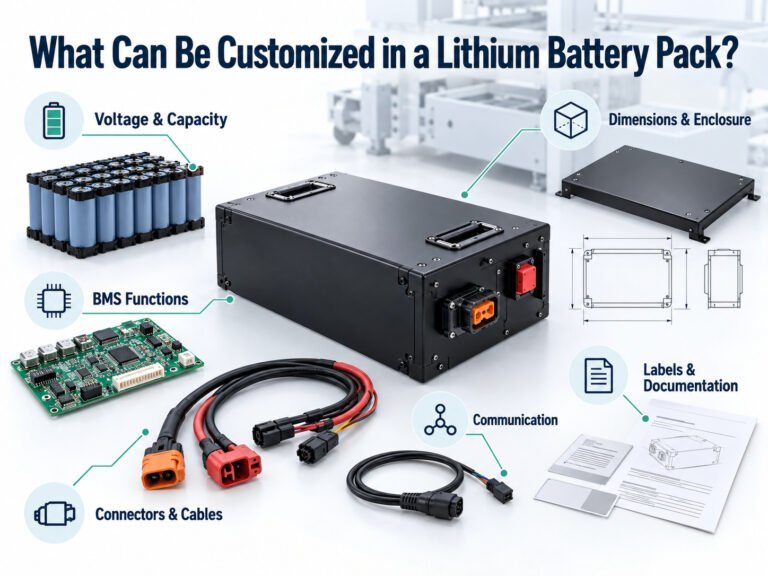
23. Custom ATV Lithium Battery PACK
OEM manufacturers may require a battery that does not match any standard battery format.
A custom lithium PACK can be developed according to:
- 電圧
- 定員
- 現在
- バッテリー寸法
- 取付構造
- コネクタ
- ビーエムエス
- コミュニケーション
- 充電器
- 防水
- Temperature requirements
For example, a manufacturer may request:
48 V / 50 Ah lithium battery PACK
出演:
- 特注筐体
- スマートBMS
- 特定のコネクタ
- 温度モニタリング
- 通信インターフェース
- Vehicle mounting structure
The battery supplier can develop the cell configuration and PACK architecture around the vehicle requirements.
24. OEM and ODM ATV Battery Development Process
A professional OEM/ODM battery development project can follow a structured process.
ステップ1:要件分析
The battery manufacturer reviews:
- 車両電圧
- Motor or starter specifications
- コントローラー
- 現在の要件
- 定員
- 電池ケース
- 充電器
- 動作環境
ステップ2:セルの選択
Cells are selected according to:
- 化学
- 定員
- 現在
- 寸法
- 温度
- Application cycle
ステップ3:電気設計
エンジニアリングチームは、以下を決定します:
- シリーズ構成
- Parallel configuration
- BMS仕様書
- ヒューズ
- Protection system
- 充電に関する要件
Step 4: Mechanical Design
The PACK housing is developed around:
- 電池ケース
- 取り付け位置
- コネクタ
- ケーブルの配線
- Environmental protection
Step 5: Prototype
Prototype battery PACKs are manufactured for vehicle testing.
Step 6: Validation
The prototype can be evaluated through:
- キャパシティ・テスト
- Charging testing
- Discharge testing
- BMS試験
- 温度試験
- 振動試験
- 防水試験
Step 7: Mass Production
After validation, the approved battery design can move into production.
This process allows the battery supplier and ATV manufacturer to address compatibility before mass production.
25. ATV Battery Testing and Quality Control
Battery quality depends on cell consistency, PACK design, manufacturing processes, and testing.
A lithium battery manufacturer may implement multiple inspection stages.
Incoming Cell Inspection
Cells can be checked for:
- 電圧
- 内部抵抗
- 定員
- 外観
- Batch information
Cell Matching
Cells can be grouped according to electrical characteristics.
PACK Assembly
The battery is assembled according to the approved design.
Welding Inspection
Welded connections are inspected according to the selected manufacturing process.
BMS試験
Protection and monitoring functions are verified.
容量テスト
The finished battery is tested against the specified capacity.
経年劣化試験
Aging procedures can help identify abnormal battery behavior before shipment.
振動試験
The PACK can be evaluated under mechanical vibration conditions.
防水試験
When an IP-rated design is required, the completed housing can be tested according to the relevant method.
A structured quality-control process helps maintain consistency between production batches.
26. ATV Battery Certification and Compliance
Certification requirements depend on the battery type, vehicle application, and target market.
Depending on the project, requirements may involve:
- 国連 38.3
- IEC規格
- UL規格
- CE関連の要件
- RoHS
- EUバッテリー規制
- 輸送に関する要件
- Country-specific regulations
The exact requirements should be confirmed according to the final battery design and destination market.
For B2B procurement, buyers should request documentation that corresponds to the actual battery model.
A supplier’s general certification should not automatically be assumed to cover every battery configuration.
27. How to Choose an ATV Battery Manufacturer
For B2B buyers, battery supplier selection should include both technical and manufacturing evaluation.
Cell Supply
Ask about the cell manufacturer, chemistry, model, capacity, and traceability.
技術力
Check whether the supplier can develop customized cell configurations, BMS parameters, housings, connectors, and communication functions.
BMS開発
For lithium batteries, confirm whether the BMS can support the required continuous and peak current.
Testing Capability
Ask whether the supplier can perform:
- キャパシティ・テスト
- エージング試験
- 振動試験
- 温度試験
- 防水試験
- BMS試験
認証サポート
Confirm whether the supplier can provide applicable compliance documents and test reports.
生産能力
評価:
- Production capacity
- Quality-control procedures
- バッチトレーサビリティ
- Automated or controlled assembly
- 最終検査
OEM/ODM Support
For a new ATV platform, an OEM/ODM battery manufacturer can support battery development from prototype to mass production.
28. Questions to Ask Before Buying an ATV Lithium Battery
B2B buyers can use the following checklist when communicating with a battery supplier.
電気
- What is the nominal voltage?
- What is the capacity?
- What is the nominal energy?
- What is the continuous discharge current?
- What is the peak discharge current?
- What is the maximum charging current?
ビーエムエス
- What protection functions are included?
- What is the continuous current rating?
- What is the peak current rating?
- Is temperature monitoring included?
- Does the BMS support communication?
- Can the protection parameters be customized?
機械
- What are the PACK dimensions?
- What is the battery weight?
- How is the battery mounted?
- What connector is used?
- Is the housing customized?
環境
- What is the operating temperature?
- What is the charging temperature?
- Is waterproofing required?
- What vibration testing is available?
コンプライアンス
- Which transportation tests are available?
- Which product certifications are available?
- Are the reports applicable to the actual battery model?
- Can the supplier support target-market compliance?
29. ATV Battery Selection Checklist
Before selecting or developing a four-wheeler battery, confirm:
Vehicle
☐ Gasoline or electric ATV
☐ Motor or engine specification
☐ Controller specification
☐ Electrical system voltage
☐ Accessory loads
バッテリー
☐ Voltage
☐ 容量
☐ Energy
☐ 連続電流
☐ ピーク電流
☐ Dimensions
☐ 重量
充電
☐ 充電器の電圧
☐ 充電器の電流
☐ 充電プロファイル
☐ Charging temperature
ビーエムエス
☐ 過充電防止機能
☐ 過放電保護
☐ 過電流保護
☐ 短絡保護
☐ 過熱保護
☐ セルのバランス調整
☐ Communication
環境
☐ 動作温度
☐ 保管温度
☐ 振動
☐ Shock
☐ Water exposure
☐ Dust exposure
コンプライアンス
☐ UN 38.3
☐ Applicable product standards
☐ 対象市場の規制
☐ 試験報告書
☐ Product traceability
30. Frequently Asked Questions About ATV Batteries
What is the best battery for a four-wheeler?
There is no single battery that fits every four-wheeler. Lead acid can be suitable for conventional starting systems and cost-sensitive applications. Lithium can be considered when low weight, frequent cycling, custom packaging, or integrated BMS functions are required.
Is lithium better than lead acid for an ATV?
The answer depends on the application. Lithium and lead acid have different characteristics. The appropriate choice depends on starting current, weight, charging system, usage frequency, operating environment, and vehicle compatibility.
Can I replace a 12 V lead-acid ATV battery with lithium?
A lithium replacement may be possible, but the charging voltage, peak current, BMS, physical dimensions, terminal configuration, and ATV charging system must be checked first.
Can I use my original lead-acid charger with a lithium ATV battery?
Not automatically. The charger must be compatible with the lithium battery’s chemistry, voltage, and charging requirements.
Is LiFePO4 suitable for an ATV?
LiFePO4 can be used for selected ATV and electric mobility applications when the voltage, current, capacity, temperature, packaging, and charging requirements are properly addressed.
Does lithium reduce ATV battery weight?
Lithium battery technology can provide a lower energy-to-weight ratio than lead acid in suitable designs. The actual weight depends on the complete PACK configuration.
What determines ATV battery range?
For electric ATVs, range depends on battery energy, motor power, vehicle weight, terrain, speed, rider weight, temperature, and driving conditions.
Does an ATV lithium battery need a BMS?
Yes. A lithium battery PACK should use a properly designed BMS to monitor cells and provide appropriate protection functions.
What information does a battery manufacturer need for an OEM ATV project?
Useful information includes the vehicle voltage, motor or starter specification, controller current, required capacity, battery compartment dimensions, connector, charger, operating temperature, communication requirements, and target market.
Conclusion: Lead Acid or Lithium for Four-Wheeler Batteries?
The choice between lead acid and lithium for an ATV should be based on the vehicle’s actual requirements rather than battery chemistry alone.
鉛蓄電池 remain suitable for many conventional gasoline-powered four-wheelers, particularly when standard formats, established compatibility, replacement availability, and initial purchase cost are important.
リチウム電池 can be considered for applications requiring lower battery weight, frequent cycling, compact packaging, customized battery dimensions, smart BMS functions, or an electric drivetrain.
For gasoline ATVs, key considerations include:
Starting current + charging system + voltage + physical compatibility
For electric ATVs, the evaluation expands to:
Voltage + energy + continuous current + peak current + BMS + charger + thermal management + mechanical protection
For B2B manufacturers, the battery should be treated as part of the complete vehicle system:
Cell → Battery PACK → BMS → Charger → Controller → Motor / Engine Electrical System → ATV
A suitable battery solution should balance electrical performance, mechanical requirements, environmental conditions, safety, compliance, manufacturing consistency, and total cost of ownership.
For OEM and ODM projects, battery development can begin with an existing battery sample, electrical specification, vehicle wiring information, battery compartment dimensions, or complete vehicle requirements. The battery manufacturer can then work through cell selection, BMS design, PACK engineering, prototype development, testing, certification support, and mass production.
The right ATV battery is ultimately the battery that meets the specific requirements of the vehicle and its intended operating environment.
東莞一展電子科技有限公司について
Dongguan Yizhan Electronics Technology Co., Ltd. is a lithium battery PACK manufacturer providing customized battery solutions for electric mobility, industrial equipment, outdoor equipment, and other battery-powered applications.
同社は以下を支援しています OEMおよびODM向けバッテリー開発を含む:
- Lithium cell selection
- バッテリーパックの設計
- BMSの統合
- 構造設計
- プロトタイプ開発
- キャパシティ・テスト
- エージング試験
- 振動試験
- Waterproofing solutions
- 認証サポート
- 量産
For ATV and four-wheeler manufacturers, battery PACKs can be customized according to voltage, capacity, current, dimensions, connectors, BMS functions, communication requirements, charging systems, and operating environments.
A project can begin with a battery specification or complete vehicle requirement, allowing the battery design to be developed around the actual application.
 English
  Chinese
  Japanese
  German
  French
  Korean
