
SOCがバッテリーの残量に関係していることは多くの人が知っていますが、それが具体的に何を意味するのか、またなぜリチウム電池の性能、安全性、および寿命においてそれほど重要な役割を果たしているのかについては、十分に理解していないかもしれません。.
簡単に言えば:
SOC(State of Charge:充電状態)とは、バッテリーの残容量を、利用可能な総容量に対する割合(パーセンテージ)で表したものです。これは、バッテリーに残っているエネルギー量がどれくらいか、またどれくらいの時間動作し続けることができるかを推定するための重要な指標です。.
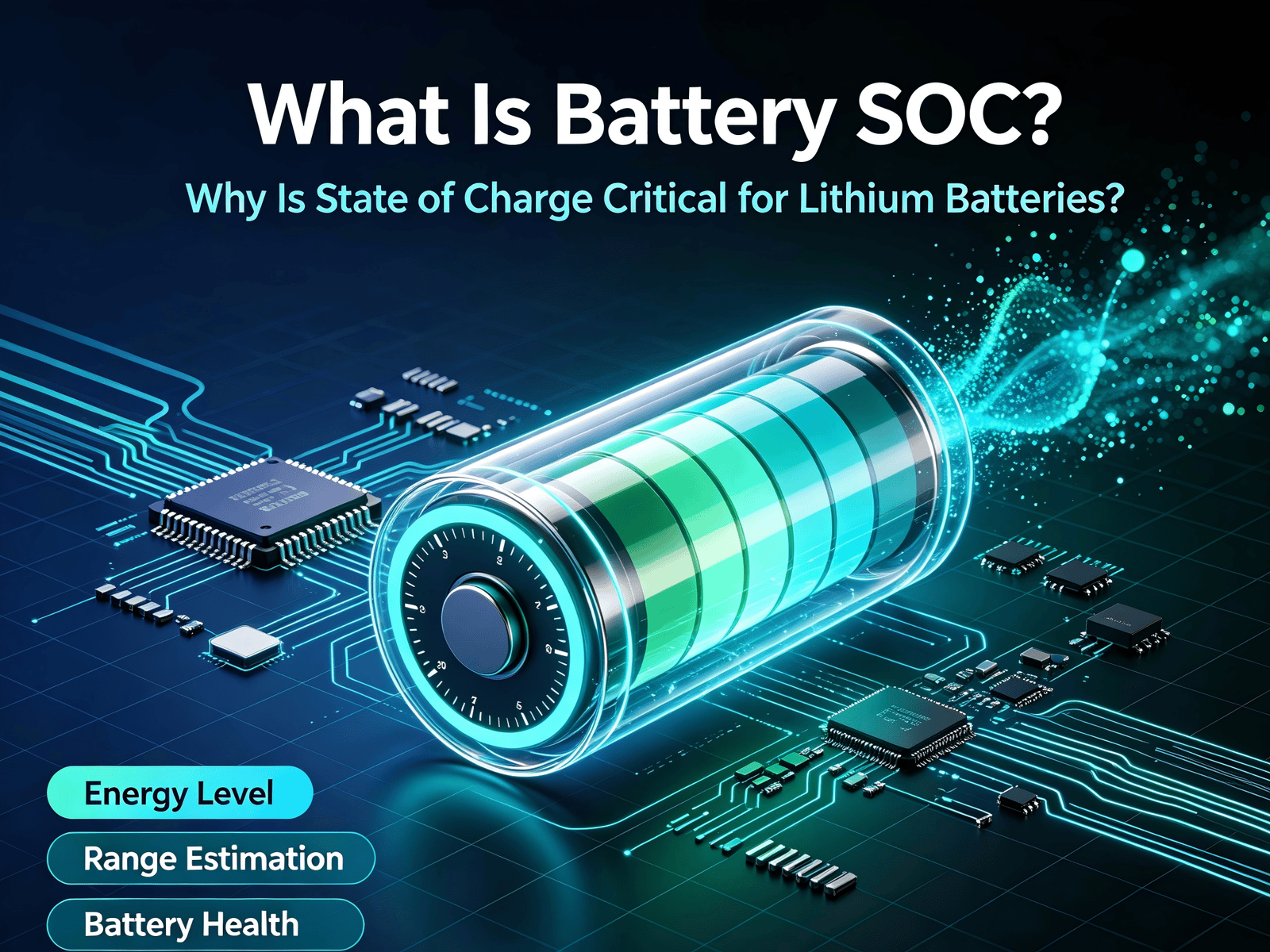
第1部:バッテリーのSOCとは?
SOCとは、以下の略語です:
充電状態
これは、バッテリーの残容量と定格容量との比率を表しています。.
計算式は次のとおりです:
SOC = 残量 ÷ 定格容量 × 100%
例えば、こうだ:
A:
- 48V 20Ah リチウムイオンバッテリーパック
- 残容量:約10Ah
SOCとは:
SOC ≈ 50%
これは、バッテリーの残存使用可能エネルギーが約半分であることを意味します。.
第2部:SOCはスマートフォンのバッテリー残量(パーセント表示)と同じものですか?
多くの人はこう考えています:
SOCとは、単にスマートフォンに表示されるバッテリー残量のパーセンテージのことです。.
しかし、産業用リチウム電池におけるSOC推定の基盤となる技術は、はるかに複雑である。.
スマートフォンは通常、比較的安定した環境下で動作しますが、産業用リチウム電池は次のような条件に対応する必要があります:
- 大電流での充放電
- 極端な温度環境
- 長時間稼働
- 頻繁な充放電サイクル
例えば、AGVロボットが連続運転している場合:
- モーターの起動により、突発的な電流需要が発生する
- 負荷条件は頻繁に変化する
- バッテリーの温度が変動する
これらすべての要因が、SOCの推定に影響を与える可能性があります。.
したがって、産業用バッテリーシステムには、より高精度なSOC管理アルゴリズムが求められます。.
第3部:リチウム電池にとってSOCはなぜ重要なのか?
3.1 過充電および過放電の防止
SOCは、によって監視される最も重要なパラメータの一つであり、 バッテリー管理システム(BMS).
SOCを監視することで、BMSは以下のことを判断できます:
- 現在のバッテリー残量
- 充電に制限を設けるべきかどうか
- 放電保護が必要かどうか
過充電
原因として考えられるもの:
- バッテリー温度の上昇
- 内部応力
- バッテリー性能の低下
過放電
次のような結果を招く可能性があります:
- 容量の低下
- サイクル寿命の低下
- 細胞の損傷
第4部:SOCはどのようにしてバッテリー寿命を延ばすのか?
リチウム電池は、あらゆる使用条件下で同じ性能を発揮するわけではありません。.
以下のような極端な状態での長期運転:
- 長期間にわたってフル充電状態を維持する
- 極めて低いレベルまで深く放電する
バッテリーへの負担を増大させる可能性があります。.
正確なSOC管理は、以下の最適化に役立ちます:
- 充電戦略
- 排出基準
- バッテリーの動作条件
産業用機器において、適切なSOC管理を行うことで、安定した性能を維持し、バッテリーの信頼性を向上させることができます。.
第5部:SOCはどのように算出されるのか?
BMSでは通常、SOCを推定するために複数の手法を組み合わせています。.
5.1 クーロン計数法
クーロン計数は、SOC推定法として広く用いられている手法の一つである。.
以下の項目を監視することで、残容量を算出します:
- バッテリーに流れ込む電流
- バッテリーから流れ出る電流
- 稼働時間
これを簡単に理解する方法は次のとおりです:
これは、タンクに流れ込む水と流れ出る水を監視するのと同様に、バッテリーに出入りするエネルギー量を追跡するものです。.
5.2 電圧に基づく推定
この手法では、以下の項目を測定することでSOCを推定します:
- バッテリー電圧
- 電圧変化特性
しかし、……については、 LiFePO4バッテリー, 、電圧に基づくSOC推定は困難な場合があります。.
LiFePO4電池は電圧プラットフォームが比較的安定しているため、特定のSOC範囲内では電圧の変化が必ずしも明らかではない。.
5.3 インテリジェントアルゴリズムに基づく推定
高度なBMSソリューションには、以下の要素が組み合わされています:
- 電流測定
- 電圧監視
- 気温データ
- 過去のバッテリー性能データ
インテリジェントなアルゴリズムを通じてSOCの精度を向上させる。.
第6部:LiFePO4電池においてSOC管理が重要な理由とは?
LiFePO4(リン酸鉄リチウム)電池には、次のような特徴があります:
- 安定した化学的性質
- 長いサイクル寿命
- 確かな安全性能
しかし、それらには次のような独特な特徴もあります:
LiFePO4電池は、比較的平坦な電圧特性曲線を示します。.
ということだ:
バッテリーのSOCが80%から30%に変化しても、電圧差はそれほど大きくない場合があります。.
SOCを電圧のみから推定する場合:
その結果、次のような事態が生じる可能性があります:
- バッテリー残量の表示が正確でない
- 予期せぬ停電
- 残容量の推定値が不正確
したがって、高品質なLiFePO4バッテリーシステムには、以下の要件が必要です:
- 正確な電流測定
- スマートBMSアルゴリズム
- 細胞の均一性管理
第7部:SOC、SOH、SOPの違いとは?
BMSシステムでは、一般的に以下の3つの重要なバッテリーパラメータが使用されます:
| パラメータ | 氏名 | 意味 |
|---|---|---|
| SOC | 充電状態 | バッテリーの残量 |
| SOH | 健康状態 | バッテリーの健康状態 |
| SOP | 「権力の状態」 | 利用可能な出力能力 |
簡単に説明すると:
- SOC: 残りのエネルギーはどれくらいですか?
- SOH: バッテリーの状態はどのくらい良好ですか?
- SOP: 現在、このバッテリーはどのくらいの電力を供給できますか?
これらのパラメータが相まって、バッテリーの安全かつ効率的な動作を確保するのに役立ちます。.
第8部:スマートBMSはSOC管理をどのように改善するのか?
高度なBMSには、次のような機能があります:
✅ SOCのリアルタイム監視
✅ 細胞電圧のモニタリング
✅ 温度監視
✅ 充電・放電保護
✅ バッテリーのデータ通信
利用可能な通信方法には、以下のものがあります:
- CAN
- RS485
- UART
- Modbus
これらの機能は、以下の分野で広く利用されています:
- AGVとAMRロボット
- フォークリフト
- 船舶用バッテリー
- 産業機器
- エネルギー貯蔵システム
第9部:正確なSOC管理機能を備えたリチウム電池の選び方
リチウム電池のサプライヤーを選ぶ際は、電池の容量だけに注目してはいけません。.
また、以下の点についても評価する必要があります:
1. BMSソリューション
バッテリーが以下の機能に対応しているか確認してください:
- 正確なSOCの算出
- 通信機能
- 安全保護機能
2. 細胞の一貫性
高品質なセルマッチングにより、以下の効果が得られます:
- より正確なSOC推定
- よりバランスの取れた容量の経年変化
- 長期的に安定したパフォーマンス
3. メーカーの技術力
リチウム電池の専門メーカーには、以下の要件が求められます:
- BMS開発能力
- バッテリーシステムの設計経験
- アプリケーションに特化した最適化機能
まとめ:SOCはなぜ重要なのか?
SOCは、単なるバッテリー残量表示ではありません。.
これは、インテリジェントバッテリー管理システムにおける重要なパラメータであり、以下の項目に直接影響を与えます:
✅ バッテリーの安全性
✅ エネルギーの利用
✅ 残り実行時間の推定値
✅ サイクル寿命
✅ 機器の信頼性
AGV、フォークリフト、ロボット、電気自動車、およびエネルギー貯蔵システムにおいて、安全かつ効率的で信頼性の高いバッテリー運用を実現するには、正確なSOC管理が不可欠です。.
 English
  Chinese
  Japanese
  German
  French
  Korean
