
IEC 62619 specifies safety requirements for rechargeable lithium cells and batteries used in industrial applications. Manufacturers may encounter the standard when supplying batteries for industrial equipment, automated guided vehicles, telecommunications or stationary power applications.
Preparing for assessment involves identifying the product scope, documenting its construction and agreeing on the evaluation plan. A cell report alone does not establish conformity of a complete battery system.
This guide explains the scope of IEC 62619, the documentation manufacturers should prepare and the relationship between battery assessment, transport testing and system integration.
This article provides planning guidance based on publicly available sources. It does not reproduce the standard or provide a clause-by-clause interpretation. Confirm detailed requirements using an authorized copy and the assessment body handling the project.

Part 1.What Is IEC 62619?
IEC 62619 is an international safety standard for secondary lithium cells and batteries used in industrial applications.
The IEC listing identifies IEC 62619:2022 as Edition 2.0. Its scope includes stationary applications and specified motive applications. Where an application-specific IEC standard has conflicting requirements, the application-specific standard takes precedence. Source: IEC 62619:2022
IEC 62619 is a safety standard. It should not be presented as proof of a particular cycle life, operating range or field service period.
Part 2.Which Applications Are Within Its Scope?
The examples listed by IEC include:
| Application Category | 例 |
|---|---|
| Stationary applications | Telecommunications, UPS, electrical energy storage, utility switching and emergency power |
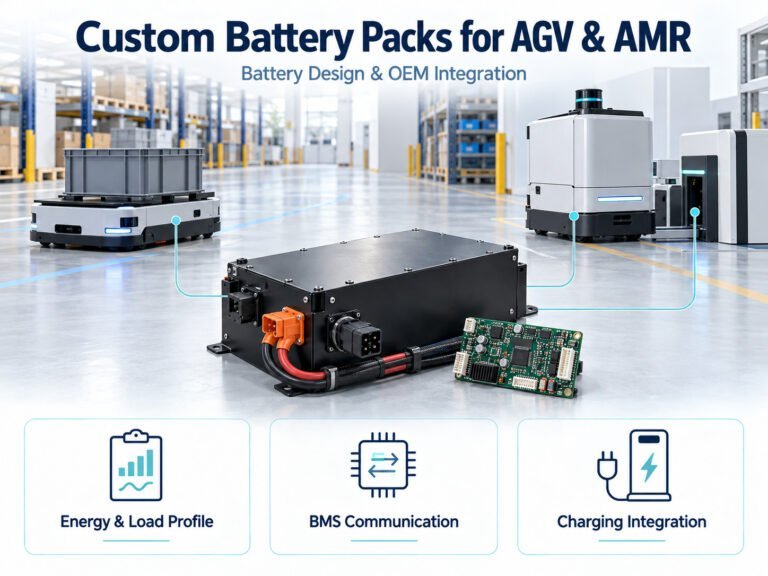
| Motive applications | Forklift trucks, golf carts, AGVs, railway vehicles and marine vehicles, excluding road vehicles |
These examples support initial classification. They do not replace a review of the actual product and its operating environment.
Do not select a standard solely because a battery uses lithium chemistry. Confirm the intended application and assessment boundary first.
Part 3.Does IEC 62619 Apply to Every Lithium Battery?
No. The intended use determines which standards require consideration.
例えば、こうだ:
- Portable lithium battery applications may fall within IEC 62133-2.
- Industrial lithium batteries may fall within IEC 62619.
- Electrical energy storage applications may also require consideration of IEC 63056.
- Road-vehicle applications require an application-specific standards review.
IEC 62133-2 addresses portable sealed secondary lithium cells and batteries under intended use and reasonably foreseeable misuse. It should not be treated as interchangeable with an industrial battery standard.
Part 4.IEC 62619 Testing, Certification and Compliance Claims
“Tested,” “certified” and “compliant” should not be used as interchangeable descriptions.
| Document or Claim | 確認すべき事項 |
|---|---|
| Test report | Product tested, standard edition, assessment scope and results |
| Certification document | Issuing body, scheme, covered models and current status |
| Manufacturer declaration | Technical evidence supporting the stated conformity |
| Product marking | Authorization and conditions governing use of the mark |
A report covering selected tests should not be described as evidence of a complete assessment.
When a customer requests “IEC 62619 certification,” clarify the required deliverable. The request may refer to a test report, a third-party certificate or documentation under a specified certification scheme.
Where the IECEE CB Scheme is involved, confirm the required CB Test Certificate and associated Test Report with the participating body.
Part 5.Define the Product Boundary Before Testing
The manufacturer and assessment body should agree on what is being evaluated.
A cell, module, battery pack and installed energy storage system are different assessment objects. Documentation for one level does not automatically cover the others.
Record:
- Product name and model.
- Cell manufacturer and model.
- Series and parallel configuration.
- Rated voltage, capacity and energy.
- BMS hardware and firmware.
- Protection devices.
- Enclosure and insulation.
- Power and signal interfaces.
- Intended operating conditions.
For a product family, identify differences between models. Do not assume that changing capacity, configuration or enclosure dimensions leaves the assessment scope unchanged.
Part 6.Technical Documents to Prepare
The following is a manufacturer planning checklist, not a substitute for the assessment body’s submission requirements.
Product Description and Specifications
Prepare a description of the application, battery configuration, operating limits and installation conditions.
Distinguish normal operating limits from protection thresholds.
Drawings and Bill of Materials
Provide drawings and a controlled component list identifying cells, interconnections, protective devices, insulation, connectors and structural parts.
Documents should identify revisions so they can be matched to the submitted samples.
Cell Documentation
Provide the selected cell’s data sheet and available test documentation.
Confirm that the cell manufacturer, model and ratings match the cells used in the battery.
Electrical and Protection Information
Document the electrical architecture and explain the functions used to manage abnormal conditions.
Include relevant thresholds, delays, tolerances and recovery behavior.
Software and Configuration Records
Identify firmware versions and configurable parameters that affect battery operation.
Explain how approved settings are controlled during production and service.
Instructions and Marking Information
Prepare the proposed labels and instructions for installation, operation, charging, storage and handling.
These documents should reflect the assessed product rather than a generic battery template.
Part 7.BMS Considerations During Assessment Planning
The battery management system forms part of the battery’s operating and protection architecture.
Manufacturers should document:
- Measurements available to the BMS.
- Charge and discharge control.
- Temperature-related limits.
- Fault detection and reporting.
- Recovery conditions.
- Behavior following communication loss.
- Interaction with external equipment.
Explain which functions operate locally and which depend on the host or charger.
A feature name such as “overcharge protection” does not describe its implementation. The assessment needs the relevant design information and evidence.
The exact requirements and test conditions must be established from the applicable standard and assessment plan.
Part 8.Mechanical and Thermal Design Preparation
Review the submitted construction against the intended installation.
Planning questions include:
- How are cells restrained?
- How are conductive parts insulated?
- How are cables secured?
- How are terminals protected against unintended contact?
- Where are temperature measurements taken?
- What operating conditions are specified?
- Which external components affect battery operation?
Record the construction used in testing. If production units differ from the submitted samples, the manufacturer should review whether the evidence remains applicable.
Part 9.How to Plan IEC 62619 Testing
The testing program should be agreed with a laboratory or certification body whose scope covers the work.
Confirm the following before producing test samples:
| Planning Item | Question to Resolve |
|---|---|
| Applicable edition | Which edition and associated requirements apply? |
| Assessment object | Are cells, battery systems or both included? |
| Model coverage | Which configurations will be covered? |
| Sample requirements | How many samples are needed, and in what condition? |
| Supporting equipment | Are chargers, fixtures or host controls required? |
| Test configuration | What hardware, firmware and settings will be used? |
| Acceptance criteria | Which requirements apply to each assessment? |
| Deliverables | What reports or certificates will be issued? |
Avoid setting sample quantities or test conditions from a general online checklist. They depend on the product and assessment scope.
Do not publish fixed costs or completion times without a quotation based on the actual design.
Part 10.IEC 62619 and Related Requirements
IEC 62619 and IEC 63056
IEC 63056 provides additional or specific requirements for secondary lithium cells and batteries used in electrical energy storage systems. Its official description identifies IEC 62619 as the source of basic industrial battery safety requirements.
For an energy storage project, determine whether both standards are relevant. A battery assessment also does not establish conformity of every component or installation in the complete storage system.
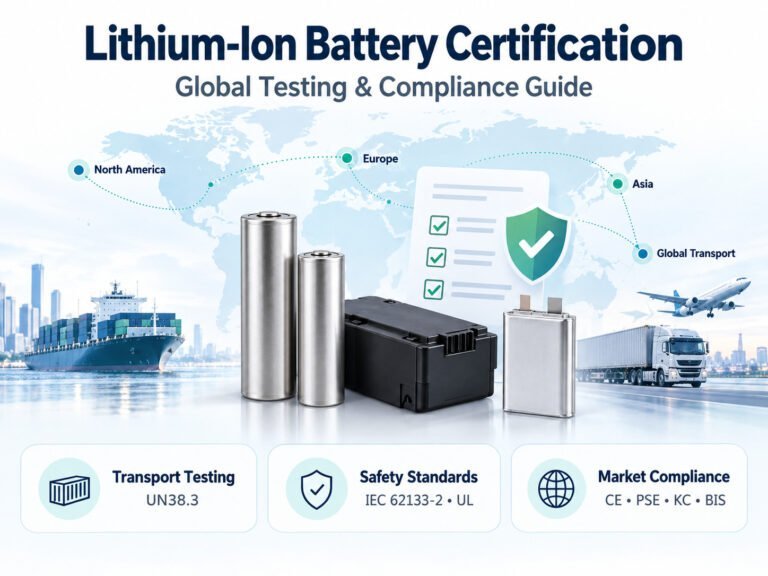
IEC 62619 and UN38.3
UN38.3 addresses lithium battery transport testing. IEC 62619 addresses industrial battery safety within its scope.
Neither should be presented as a replacement for the other.
Transport preparation also involves applicable packaging, marking and documentation requirements. PHMSA provides guidance on lithium battery design tests and test summaries.
IEC 62619 and Market Access
An IEC 62619 report or certificate is not a universal sales authorization.
Manufacturers must separately identify applicable legislation, national requirements and complete-equipment obligations.
For EU projects, voluntary certification documents should not be confused with the conformity assessment required under applicable legislation. The European Commission explains this distinction in its conformity assessment guidance.
Part 11.Design Changes After Assessment
An assessed design needs change control.
Changes requiring review may include:
- Cell manufacturer or model.
- Series or parallel configuration.
- Protection components.
- BMS hardware or firmware.
- Operating thresholds.
- Enclosure or insulation.
- Interconnections, cables or connectors.
Not every change requires the same action. Ask the relevant assessment body whether a document update, engineering review or additional testing is needed.
Keep a record linking the approved construction, production revision and assessment documents.
Part 12.How Buyers Can Review IEC 62619 Documents
Buyers should verify that the evidence applies to the product being purchased.
確認:
- The issuing laboratory or certification body.
- Report or certificate number.
- Standard edition.
- Manufacturer and production information.
- Product model and ratings.
- Covered construction and model variants.
- Scope, limitations and exclusions.
- Current certificate status where applicable.
Request clarification when the document covers a cell but the purchase concerns a complete battery pack.
A logo on a product page does not establish document coverage.
Part 13.What IEC 62619 Evidence Does Not Establish
An assessment should not be used to claim that a battery:
- Cannot experience a failure.
- Is suitable for every industrial application.
- Has a specified cycle life without supporting performance tests.
- Meets all transport requirements.
- Establishes conformity of the complete host equipment.
- Is approved for every country.
Safety evidence applies to a defined product, construction and assessment scope.
よくある質問
Is IEC 62619 Mandatory in Every Country?
No universal requirement applies across all countries and applications. Its use may arise from legislation, national standards, certification schemes or customer specifications.
Does It Cover LFP and Other Lithium-Ion Chemistries?
Scope should be confirmed for the selected secondary lithium cell or battery and its industrial application. Chemistry alone does not establish conformity.
Can Cell Documentation Cover a Complete Battery Pack?
Cell documentation can support an assessment, but it does not automatically cover the assembled battery’s connections, protection and construction.
Does IEC 62619 Establish Cycle Life?
It is a safety standard. Cycle-life claims need separate evidence with defined test conditions and endpoints.
Does It Replace UN38.3?
No. The two address different assessment purposes.
Can an Existing Report Cover a Modified Battery?
That requires review of the changes and document scope. Do not assume coverage based only on a similar model name.
Manufacturer Preparation Checklist
Before requesting an assessment quotation, prepare:
- The intended application and destination markets.
- Product specifications and drawings.
- Cell identification and supporting documents.
- Controlled construction and component records.
- BMS functions, settings and firmware information.
- Proposed model variants.
- Instructions and label information.
- A list of the reports or certificates required by the customer.
Use this information to agree on the assessment scope, test plan and deliverables before submitting samples.

 English
  Chinese
  Japanese
  German
  French
  Korean
