
近年、世界中の倉庫では、目立たないながらも大きな変革が進んでいます。特にフォークリフト、無人搬送車(AGV)、および資材運搬機器において、従来の鉛蓄電池がリチウムイオン電池システムへと急速に置き換えられつつあります。.
この変化は、単に動力源のアップグレードにとどまらず、物流業務における高効率化、自動化、そしてインテリジェントなエネルギー管理に向けた、より広範な動きを象徴するものです。.
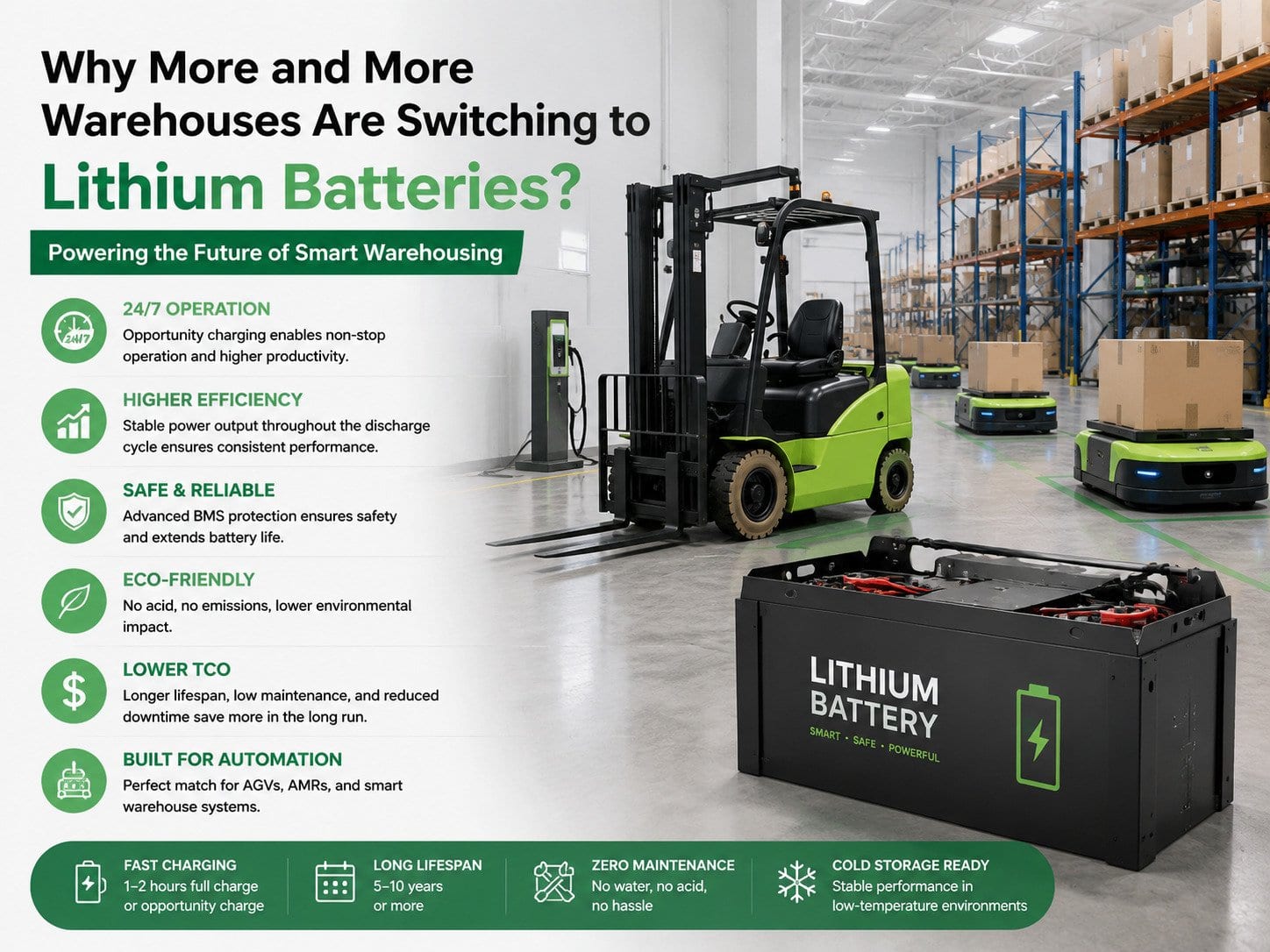
第1部:24時間365日体制の倉庫運営の台頭
Eコマースやグローバルな流通ニーズに牽引される現代のサプライチェーンでは、倉庫がほぼ24時間体制で稼働することが求められています。.
鉛蓄電池は、以下の条件を必要とするため、この環境下では性能が低下してしまいます:
- 充電時間が長い(通常8時間以上)
- 充電後の冷却時間
- 専用充電室およびバッテリー交換システム
対照的に、リチウム電池は以下の機能をサポートしています:
- 機会充電(休憩中の充電)
- 急速充電機能
- 勤務中にバッテリーを交換する必要はありません
これにより、フォークリフトや設備の稼働時間を延長でき、倉庫の生産性を大幅に向上させることができます。.
第2部:高効率と安定した性能
リチウム電池の最大の利点の一つは、その平坦な放電特性である。.
放電に伴い徐々に電力が低下する鉛蓄電池とは異なり、リチウム電池はサイクル全体を通じて安定した電圧出力を維持します。.
その結果、こうなる:
- フォークリフトの安定した性能
- 安定した持ち上げ力
- AGVおよび自動化システムにおける信頼性の高い稼働
自動倉庫において、この安定性は極めて重要であり、機械は性能の低下なく、予測可能な動作を続けなければならない。.
第3部:総所有コスト(TCO)の削減
リチウム電池は初期費用は高いものの、長期的な価値ははるかに大きい。.
主なコスト面でのメリットは以下の通りです:
- 寿命が長い(多くの場合、5~10年)
- 最小限のメンテナンス
- エネルギー効率の向上(充電時のエネルギーの無駄を減らす)
- 予備のバッテリーやシステム交換は不要です
長期的に見れば、倉庫におけるダウンタイム、人件費、および保守費用が削減されるため、リチウム電池は長期的にはより経済的な選択肢となります。.
第4部:自動化とスマート倉庫に最適なソリューション
倉庫の自動化が進むにつれ、リチウム電池はAGVやAMRにとって主要な動力源となっている。.
これらのシステムには、以下の要件があります:
- 頻繁な始動・停止の繰り返し
- 安定した電圧供給
- コンパクトで軽量なエネルギーシステム
- バッテリーのリアルタイム監視
バッテリー管理システム(BMS)を内蔵したリチウム電池には、次のような利点があります:
- バッテリーの状態をリアルタイムで監視
- 倉庫システムとのCAN/RS485通信
- スマートな充電制御と保護機能
こうした理由から、リチウム電池はインダストリー4.0の物流システムに最適である。.
第5部 安全性と環境性能の向上
現代の倉庫では、安全性と持続可能性も重視されています。.
リチウム電池システムには、次のような利点があります:
- 酸の漏れや腐食性ガスは発生しません
- 高度なBMS保護機能を使用することで、火災リスクを低減
- 鉛蓄電池に比べて環境への影響が少ない
こうした特徴から、屋内の倉庫、食品物流センター、コールドチェーン施設での利用に特に適しています。.
第6部:低温保管環境における優れた性能
冷蔵倉庫は、従来のバッテリーにとって特有の課題をもたらします。.
鉛蓄電池は低温下で性能が大幅に低下する一方、リチウム電池システム、特に寒冷地向けに設計されたものは、安定した性能を維持します。.
福利厚生は以下の通り:
- 低温時でも確実な始動
- 低温環境下でも安定した放電
- 過酷な環境下での使用に向けた、オプションの暖房システムの統合
このため、リチウム電池はコールドチェーン物流や冷蔵保管施設に最適です。.
結論:メンテナンス負担の大きいシステムからスマートエネルギーシステムへ
倉庫における鉛蓄電池からリチウム電池への移行は、単なるアップグレードにとどまらず、エネルギー管理のあり方そのものの変革なのです。.
倉庫では、もはやバッテリーの手作業による取り扱いやメンテナンスに頼る必要はありません。その代わりに、インテリジェントなリチウムイオンバッテリーシステムを原動力とする、スマートで自動化されたエネルギーエコシステムへと進化しつつあります。.
わかりやすく言えば、"ヴェニュー "である:
倉庫業界は、「バッテリーのメンテナンス」から「エネルギー・インテリジェンス」へと移行しつつある。“
倉庫向けのオーダーメイド型リチウム電池ソリューションをお探しですか?
当社は、以下の用途向けにカスタマイズされたリチウム電池システムを提供しています:
- フォークリフト
- AGV/AMR
- 倉庫用物流機器
- 産業用オートメーションシステム
OEM/ODM対応、スマートBMSの統合、およびグローバルな認証取得のサポートを通じて、当社は倉庫の次世代エネルギーシステムへのアップグレードを支援します。.
よくあるご質問
Q1:なぜ倉庫ではリチウム電池への切り替えが進んでいるのでしょうか?
リチウム電池は、充電が速く、寿命が長く、メンテナンスの手間が少なく、AGVなどの自動化システムとの互換性にも優れているからです。.
Q2:フォークリフトには、鉛蓄電池よりもリチウム電池の方が適していますか?
はい。リチウム電池は、安定した出力と長いサイクル寿命を備え、メンテナンスも不要であるため、複数シフト制のフォークリフト運用においてより効率的です。.
Q3:倉庫用リチウム電池の寿命はどれくらいですか?
通常、使用状況、充電サイクル数、およびバッテリー管理システムの品質にもよりますが、5年から10年程度です。.
Q4:AGVや倉庫用ロボットにリチウム電池は使用できますか?
はい。リチウム電池は、急速充電が可能で、スマートなBMS通信機能を備えているため、AGVやAMRの電源として好んで採用されています。.
Q5:リチウム電池は倉庫での使用に適していますか?
はい。適切なBMSシステムを備えたリチウム電池には、過電圧、過電流、温度制御など、複数の保護機能が備わっています。.
 English
  Chinese
  Japanese
  German
  French
  Korean
