
医療機器は、モニタリング、診断、治療、移動、および患者ケアを支えるために、安定的で信頼性の高い電源を必要とします。患者モニターや輸液ポンプから、携帯型超音波診断装置、医療用カート、リハビリテーション機器、医療用ロボットに至るまで、バッテリーの要件は、機器の電気的設計、動作環境、機械的構造、および用途によって異なります。.
医療機器メーカーにとって、バッテリーパックの選定は、単に電圧や容量を選ぶだけの問題ではありません。適切なバッテリーソリューションを実現するには、セル選定のカスタマイズ、バッテリー構成、BMSの開発、機械設計、通信機能、安全保護、試験、および市場ごとの規制対応が必要となる場合があります。.
本ガイドでは、医療機器用のカスタムリチウム電池パックを選定する際に考慮すべき重要な要素と、OEM/ODMによる電池開発が医療機器メーカーをどのように支援できるかについて解説します。.
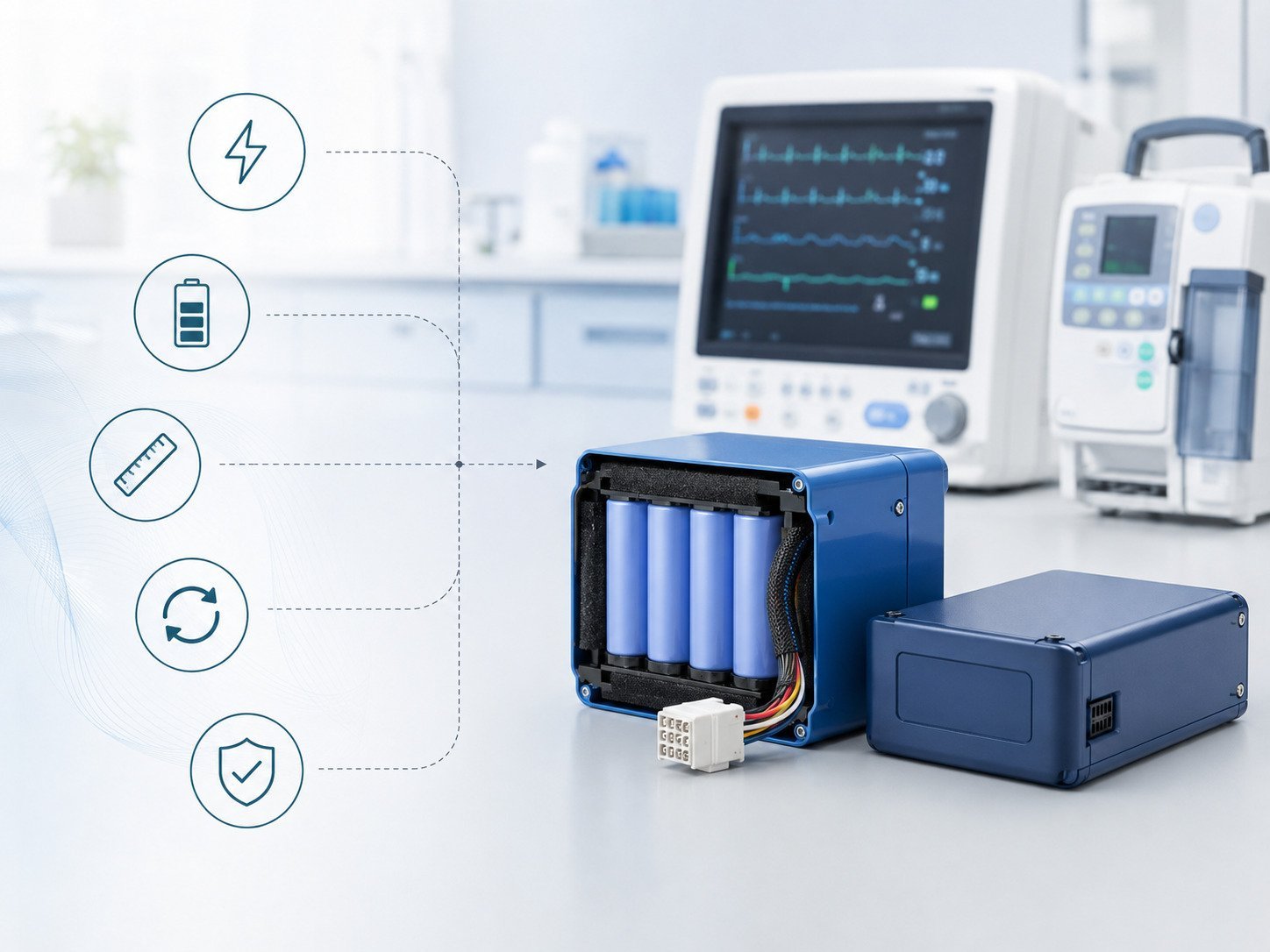
1. 医療機器にカスタムバッテリーパックが必要な理由
多くの医療機器は、機器を継続的に稼働させるために安定した電源供給が不可欠な環境下で動作しています。バッテリーの故障は、モニタリングプロセスを中断させたり、機器の稼働を停止させたり、あるいは直ちに交換や充電が必要になったりすることがあります。.
医療機器については、バッテリーの寸法、重量、稼働時間、および電気的特性についても厳しい制限が設けられている場合があります。.
一般的な用途は以下の通り:
- 患者用モニター
- 輸液ポンプ
- 携帯型超音波診断装置
- 呼吸用機器
- 医療用カート
- リハビリ機器
- 医療用ロボット
- 携帯型診断装置
- 救急医療機器
- 在宅医療機器
- 携帯用医療機器
アプリケーションごとに負荷の傾向は異なります。.
例えば、携帯型患者モニターには、安定した出力と十分な稼働時間を備えたコンパクトなバッテリーが必要となる一方、医療用カートには、複数の機器を駆動できる大容量のバッテリーが必要となる場合があります。.
カスタムバッテリーパックにより、バッテリーメーカーと医療機器メーカーは、実際の機器要件に合わせて、電気的、機械的、熱的、および通信上の特性を定義することができます。.
2. 医療機器の電源要件から検討する
バッテリー選定の第一歩は、機器の実際の消費電力を把握することです。.
重要なパラメータには、次のようなものがあります:
- 公称電圧
- 動作電圧範囲
- 平均消費電力
- 連続電流
- ピーク電流
- 待機電流
- 必要な稼働時間
- 充電時間
- エネルギー消費量
- 設置スペース
- 動作温度
- 充電温度
バッテリーのエネルギー計算
基本的な計算式は次のとおりです:
必要エネルギー = 平均出力 × 稼働時間 ÷ システム効率
例えば、ある医療機器の平均消費電力が30 Wで、6時間稼働する必要がある場合、90%のシステム効率を前提とすると:
30 W × 6 h ÷ 0.90 ≈ 200 Wh
したがって、バッテリーは、実際の放電特性および機器の要件に応じて、適切な容量と動作余裕を持たせて設計する必要があります。.
容量だけでは十分な情報が得られません。.
バッテリーのエネルギーは、次のように計算できます:
エネルギー(Wh)=電圧(V)×容量(Ah)
例えば、こうだ:
12 V × 10 Ah = 120 Wh
while:
24 V × 10 Ah = 240 Wh
したがって、医療機器メーカーは、バッテリーソリューションを比較する際には、AhとWhの両方を評価する必要があります。.
3. 機器の負荷プロファイルを分析する
平均消費電力は、バッテリー設計の一部に過ぎません。.
一部の医療機器では、短時間ながら高い電力需要が生じることがあります。モーター、ポンプ、コンプレッサー、発熱体、無線通信モジュール、その他の部品により、過渡的な電流のピークが発生する可能性があります。.
したがって、バッテリーの設計においては、以下の点を考慮すべきである:
連続電流
通常運転時の電流。.
ピーク電流
起動時や短時間の高負荷状態における電流。.
待機電流
機器が本来の機能を積極的に実行していないときに消費される電力。.
負荷変動
一部の医療機器は、動作サイクルを通じて必要な電力が変化する状態で動作します。.
公称容量が十分なバッテリーであっても、セルの構成やBMSが実際のピーク電流に対応するように設計されていない場合、電圧降下が生じる可能性があります。.
このため、バッテリー設計においては、デバイスの定格容量だけでなく、負荷プロファイル全体を考慮すべきである。.
4. 適切なリチウム電池の化学組成を選択する
リチウムイオン電池には、さまざまな化学組成のものがあります。適切な化学組成は、デバイスのエネルギー要件、設置スペース、重量制限、動作条件、サイクル要件、および安全設計によって決まります。.
カスタムバッテリーパックの一般的な選択肢として、NMCリチウムイオン電池とLiFePO4が挙げられます。.
NMCリチウムイオン電池
NMC電池は、バッテリーのサイズや重量が重要な設計要素となる用途において、採用を検討することができます。.
主な用途としては、次のようなものが挙げられます:
- 携帯型医療用モニター
- 携帯型超音波診断装置
- 診断機器
- 携帯用呼吸装置
- 小型医療機器
バッテリーパックは、必要な電圧、容量、外形寸法、および電流特性に応じて構成することができます。.
LiFePO4バッテリー
LiFePO4は、サイクル寿命、熱的特性、およびバッテリーの安全性が重要な設計要素となる用途において、採用を検討することができます。.
主な用途としては、次のようなものが挙げられます:
- 医療用カート
- リハビリ機器
- 医療用ロボット
- 非常用電源設備
- 移動式医療システム
- 充放電サイクルが頻繁な機器
あらゆる医療機器に共通する電池の化学組成というものはありません。.
選定は、当該機器の技術要件全体に基づいて行うべきである。.
5. 機器に合わせてバッテリー構成を設計する
セルの化学系を選定した後、バッテリーの構成を決定する必要があります。.
リチウムイオンバッテリーパックについては、エンジニアは通常、以下の項目を定義します:
直列接続 (S)
バッテリー電圧を測定します。.
並列接続(P)
バッテリーの容量と利用可能な電流を判定します。.
たとえば、バッテリー構成は次のように設計される場合があります:
4S2P
最終的な構成は、選択したセルの仕様および機器の要件によって異なります。.
バッテリーパックの設計においては、以下の点も考慮する必要があります:
- 細胞の寸法
- セル容量
- 細胞内抵抗
- 連続放電電流
- ピーク放電電流
- 熱的特性
- 利用可能な設置スペース
特に多セル型バッテリーパックにおいては、セルの均一性が極めて重要です。パックの組み立てに先立ち、電圧、容量、内部抵抗などの関連パラメータに基づいてセルを評価する必要があります。.
6. 医療機器用バッテリーパックのBMS設計
バッテリー管理システムは、特注の医療用バッテリーパックの重要な構成要素です。.
BMSは、バッテリーの動作状態を監視し、バッテリーの構成に応じて保護機能を提供することができます。.
代表的な機能には、次のようなものがあります:
- 過充電保護
- 過放電保護
- 過電流保護
- 短絡保護
- 過熱保護
- 低温保護機能
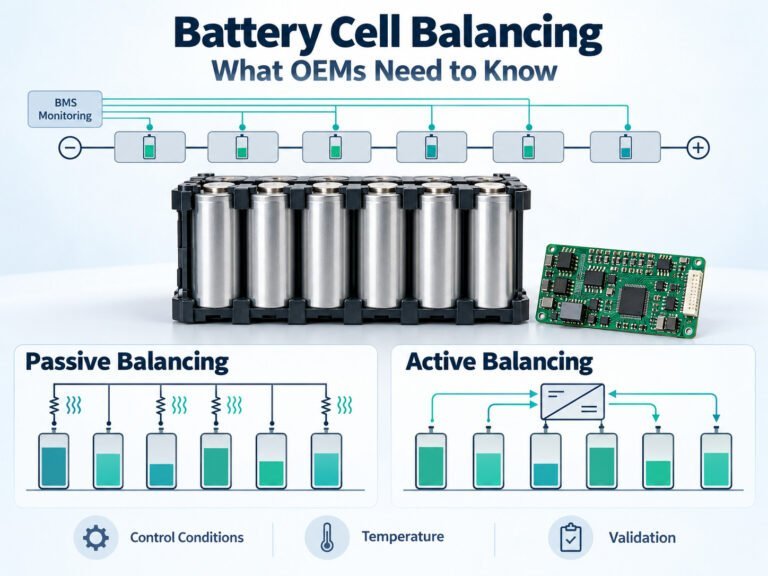
- セルバランシング
- 電圧監視
- 電流の監視
- 温度モニタリング
- SOC推定
- SOHモニタリング
- 故障検出
- 循環棚卸
保護パラメータは、選択したセルおよび機器の要件に応じて設定する必要があります。.
医療用バッテリーパックでは、実際の用途における電気的特性を評価せずに、汎用のBMSを安易に採用すべきではありません。.
7. スマートBMSの通信
一部の医療機器では、バッテリー情報をメイン制御システムに送信する必要があります。.
スマートBMSは、次のような通信プロトコルに対応しています:
- CAN
- SMBus
- UART
システムアーキテクチャに応じて、バッテリーからは次のような情報が得られます:
| バッテリーデータ | 申し込み |
|---|---|
| 電圧 | 電力監視 |
| 現在 | 負荷監視 |
| SOC | バッテリー残量の推定 |
| SOH | バッテリーの状態 |
| 温度 | 温度監視 |
| 循環棚卸 | メンテナンス情報 |
| 故障コード | システム診断 |
| 残りの容量 | 実行時間の推定 |
OEM向け医療機器の場合、通信プロトコルやデータ形式は、バッテリーの開発プロセス中に定義することができます。.
これは、機器のディスプレイや制御システムが、オペレーターにバッテリーの状態を表示する必要がある場合に特に役立ちます。.
8. バッテリーパックの寸法をカスタマイズする
医療機器は、内部の設置スペースが限られていることがよくあります。.
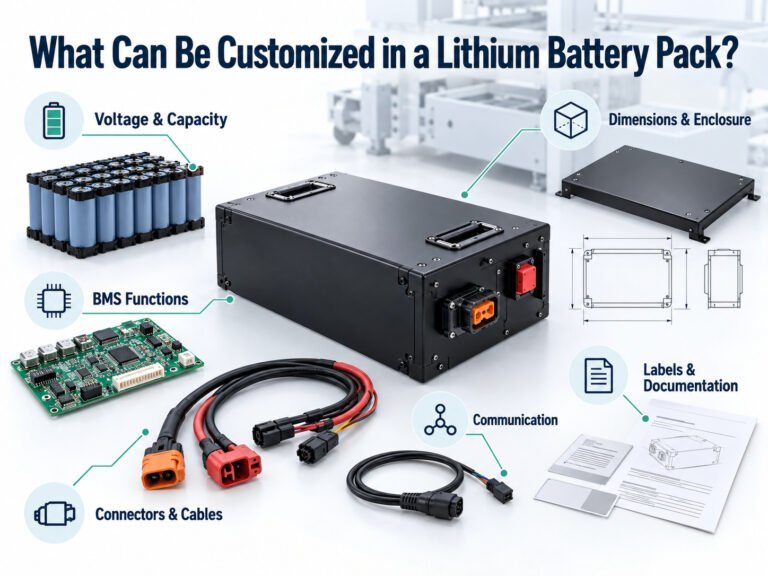
標準的なバッテリーでは、デバイスの機械的構造やコネクタの配置に適合しない場合があります。カスタムバッテリーパックを開発することで、利用可能なスペースに合わせてバッテリーを設計することが可能になります。.
機械的なカスタマイズには、次のようなものがあります:
- バッテリー寸法
- 細胞の配列
- コネクタの種類
- コネクタの位置
- ケーブルの長さ
- 取付構造
- バッテリーケース
- 断熱
- ヒューズの設置場所
- BMSの立場
- 充電インターフェース
例えば、同じ電気的仕様であっても、機器の構造に応じて、異なる機械的構成でパッケージ化される可能性があります。.
これが、標準的なバッテリー製品とOEMバッテリーソリューションとの主な違いの一つです。.
9. 動作温度および充電温度を考慮する
温度は、リチウム電池の性能と安全性に直接的な影響を及ぼします。.
医療機器メーカーは、以下を定義すべきである:
- 動作温度範囲
- 充電可能温度範囲
- 保管温度範囲
- バッテリーの最高温度
- 最低充電温度
- 温度転移条件
バッテリーは、用途に応じてさまざまな環境下で動作する場合があります。.
例えば、病院で使用される機器は比較的管理された室内環境下で運用される一方、救急医療用機器や移動型医療システムは、より広い温度範囲にさらされる場合があります。.
BMSは、NTCサーミスタなどの温度センサーを使用して、セルやパックの温度を監視し、あらかじめ定義されたパラメータに基づいて保護動作を開始することができます。.
低温での充電が必要な場合は、バッテリーの設計において、低温下での充電性能および保護戦略を特に評価する必要があります。.
10. バッテリーの安全性と保護
バッテリーの設計プロセス全体を通じて、安全性を考慮する必要があります。.
特注の医療用バッテリーパックには、複数の保護層が組み込まれている場合があります。.
電気的保護
電気的保護措置には、次のようなものがあります:
- 過電圧保護
- 低電圧保護
- 過電流保護
- 短絡保護
- 過充電保護
- 過放電保護
熱保護
温度監視は、異常な運転状態の検知に役立ちます。.
機械的保護
バッテリー構造は、セルを確実に固定するとともに、想定される振動、衝撃、および機械的ストレスから電気接続部を保護するものでなければならない。.
細胞の一貫性
同一のバッテリーパックに使用されるセルは、バッテリーメーカーの品質管理プロセスに従って適切にマッチングさせる必要があります。.
パラメータには、次のようなものがあります:
- 定員
- 電圧
- 内部抵抗
- 自己放電特性
したがって、信頼性の高いバッテリーの開発プロセスには、セルの選定、電気設計、機械設計、BMSの開発、試験、および生産時の品質管理が含まれます。.
11. 医療用バッテリーパックの試験要件
試験は、バッテリーの設計およびターゲット市場に応じて計画すべきである。.
一般的なバッテリー試験には、次のようなものがあります:
容量テスト
所定の試験条件下で、バッテリーが指定された容量を供給できるかどうかを確認します。.
充放電試験
通常の動作サイクルにおけるバッテリーの挙動を評価します。.
経年劣化試験
制御された充放電プロセスの後、バッテリーの性能を確認するのに役立ちます。.
温度試験
指定された温度条件下におけるバッテリーの挙動を評価します。.
振動試験
所定の振動条件下における機械的健全性を評価する。.
機械的衝撃試験
指定された衝撃条件に対するバッテリーパックの機械的応答を評価する。.
絶縁試験
適用される設計および試験要件に基づき、電気絶縁の検証を支援します。.
BMS機能試験
保護閾値、バランス制御動作、通信、および障害時の応答を確認します。.
試験要件は、最終段階の作業として扱うのではなく、量産開始前に策定しておくべきである。.
12. 医療用電池の認証およびコンプライアンス
バッテリーの規制適合性は、バッテリーの設計、機器の分類、ターゲット市場、輸送要件、および最終製品の認証戦略によって異なります。.
想定される基準や要件としては、以下のようなものが挙げられます:
- IEC 62133-2
- UN38.3
- UL規格
- CE関連の要件
- RoHS
- EUバッテリー規制
- IEC 60601-1
しかし、バッテリーに関する規制への準拠と、医療機器に関する規制への完全な準拠とは、同じものではありません。.
例えば、IEC 62133-2は、携帯用密閉型二次リチウム電池およびバッテリーの安全要件を規定しています。また、IEC 60601-1は、医療用電気機器の基本的な安全要件および必須性能要件を規定しています。.
したがって、バッテリーメーカーと医療機器メーカーは、プロジェクトの初期段階で、適用される適合要件を明確に定義すべきである。.
また、地域によって規制要件が異なる可能性があるため、ターゲットとなる販売市場も早い段階で特定しておく必要があります。.
13. 医療用バッテリーパックのメーカー選び方
医療機器メーカーにとって、バッテリーサプライヤーの評価には、技術力、生産能力、品質管理、試験リソース、およびOEM/ODMの実績を含めるべきである。.
技術力
バッテリーメーカーが以下の対応が可能かどうかを確認してください:
- 細胞の選択
- バッテリー構成
- BMS開発
- ファームウェアのカスタマイズ
- 機械設計
- コネクタのカスタマイズ
- 通信プロトコル開発
製造能力
次のような生産プロセスを評価する:
- 細胞選別
- 自動組み立て
- レーザー溶接
- BMSの組み立て
- バッテリーの経年劣化
- キャパシティ・テスト
- 最終検査
品質管理
サプライヤーは、以下の事項について明確な手順を定めておくべきである:
- 入荷検査
- 工程検査
- バッテリーの検査
- 最終検査
- バッチ管理
- 製品のトレーサビリティ
長期にわたる医療機器プロジェクトにおいては、製造ロット間の一貫性が重要な考慮事項となります。.
14. 医療用バッテリーのOEM/ODM開発プロセス
体系化されたOEM/ODMプロセスは、医療機器メーカーが初期要件の段階から量産段階へと移行する上で役立ちます。.
ステップ1:要件分析
お客様からは以下のものを提供していただきます:
- 電圧
- 定員
- 現在
- 実行時間
- 寸法
- 動作環境
- 通信要件
- ターゲット市場
ステップ2:セルの選択
エンジニアは、適切な電池の化学組成、サイズ、容量、放電特性、および供給状況について評価を行います。.
ステップ3:電気設計
バッテリー構成および電気アーキテクチャが定義されています。.
ステップ4:BMSの開発
保護パラメータ、監視機能、通信プロトコル、およびファームウェアの要件が定められている。.
ステップ5:機械設計
バッテリーの寸法、筐体、コネクタ、ケーブル、および取り付け構造が開発された。.
ステップ6:プロトタイプ
機器への組み込みや試験を行うために、プロトタイプのバッテリーパックが製造されます。.
ステップ7:機能テスト
プロトタイプについては、容量、電圧、電流、充電、放電、温度、BMS機能、および通信機能について試験が行われます。.
ステップ8:信頼性試験
プロジェクトの要件に応じて、追加のテストが実施されます。.
ステップ9:認証
必要なバッテリーおよび製品レベルの適合性試験は、対象市場および認証計画に従って実施されます。.
ステップ10:試作
試作生産では、製造プロセスと品質管理手順の検証が行われます。.
ステップ11:量産
検証を経て、バッテリーは、定められた検査およびトレーサビリティ手順に基づき、管理された環境下で量産段階に入ります。.
15. カスタムリチウム電池パックの医療機器用途
さまざまな種類の医療機器向けに、カスタム仕様のリチウム電池パックを開発することが可能です。.
| 申し込み | バッテリーに関する一般的な考慮事項 |
|---|---|
| 患者モニター | コンパクトな設計、安定した電力供給、動作時間 |
| 輸液ポンプ | コンパクトなバッテリー、制御された放電 |
| 携帯型超音波診断装置 | エネルギー容量、重量、稼働時間 |
| 医療用カート | 大容量、携帯性 |
| 医療用ロボット | サイクル寿命、出力電流、BMS |
| リハビリテーション用機器 | 容量、機械的統合 |
| 呼吸用機器 | 安定した連続電力 |
| 診断機器 | 電圧安定性、稼働時間 |
| 緊急用装備 | 信頼性、充電管理 |
| 在宅医療機器 | コンパクトな設計、安全な操作 |
バッテリーの最終的な仕様は、常に実際の機器の要件に基づいて決定する必要があります。.
16. バッテリー通信と機器の統合
バッテリーの組み込みについては、機器の設計段階で検討すべきである。.
バッテリーインターフェースには、以下のものが含まれる場合があります:
電源インターフェース
- プラス端子
- マイナス端子
- 充電インターフェース
通信インターフェース
- CAN
- SMBus
- UART
モニタリング
- 電圧
- 現在
- 温度
- SOC
- SOH
- 障害状況
バッテリーおよび医療機器の制御システムは、通信、充電、放電の挙動、障害対応、およびシステム停止時の動作を確認するため、一体となって試験を行う必要があります。.
このシステムレベルの検証は、バッテリーが医療機器の全体的な電源アーキテクチャの一部であるため、OEM医療機器にとって重要です。.
17. カスタム医療用バッテリーパックの仕様チェックリスト
医療機器メーカーは、バッテリーメーカーに見積もりを依頼する前に、以下の情報を用意しておく必要があります:
| 要件 | 仕様 |
|---|---|
| バッテリー化学 | NMC / LiFePO4 / その他 |
| 公称電圧 | V |
| 定員 | あ |
| エネルギー | Wh |
| 連続電流 | A |
| ピーク電流 | A |
| 稼働時間 | 営業時間 |
| 充電時間 | 営業時間 |
| 動作温度 | °C |
| 充電温度 | °C |
| 寸法 | 長さ × 幅 × 高さ |
| 重量 | kg |
| ビーエムエス | 必須 / 不要 |
| コミュニケーション | CAN / SMBus / UART |
| コネクタ | 職種/役職 |
| 住宅 | 必須 / 不要 |
| IP等級 | 必須の評価 |
| 認証 | 目標基準 |
| 申し込み | 医療機器 |
| ターゲット市場 | EU/米国/アジア/世界 |
| 年間発行部数 | 単位/年 |
これらの仕様情報を提供することで、バッテリーメーカーはプロジェクトをより正確に評価できるようになります。.
18. よくある質問
医療機器にはどのような種類のリチウム電池が使われていますか?
医療機器では、用途に応じてさまざまな種類のリチウム電池が使用されます。NMCやLiFePO4は、エネルギー密度、安全要件、動作条件、サイクル性能、設置スペースなどを考慮して評価される可能性のある2つの選択肢です。.
医療機器用のリチウム電池パックは、カスタマイズ可能ですか?
はい。機器の電圧、容量、外形寸法、コネクタ、BMS、通信インターフェース、動作温度、その他の要件に合わせて、カスタムバッテリーパックを設計することが可能です。.
BMSは医療機器と通信できますか?
はい。機器のアーキテクチャによっては、スマートBMSはCAN、SMBus、UARTなどのインターフェースに対応しています。.
バッテリーの寸法やコネクタはカスタマイズできますか?
はい。OEMバッテリーメーカーは、機器の要件に応じて、バッテリーの構造、コネクターの位置、ケーブルの長さ、筐体、および取り付け構成を設計することができます。.
医療機器用バッテリーにはどのような認証が必要ですか?
要件は、バッテリーの設計、ターゲット市場、輸送要件、および最終的な医療機器の認証戦略によって異なります。規格や要件には、IEC 62133-2、UN38.3、UL関連規格、CE関連要件、およびその他の適用される規制などが含まれる場合があります。.
LiFePO4電池は医療機器に使用できますか?
はい。LiFePO4は、その電気的特性、サイズ、重量、動作条件、およびサイクル要件が用途に合致する場合、医療機器への採用が検討可能です。.
必要なバッテリー容量はどのように計算すればよいですか?
まず、機器の平均消費電力と必要な稼働時間から検討します:
エネルギー = 出力 × 稼働時間
次に、システムの効率、バッテリーの動作条件、経年劣化、および必要予備容量を考慮する。.
オーダーメイドの医療用バッテリーの開発には、どれくらいの時間がかかりますか?
開発期間は、バッテリーの複雑さ、BMSの要件、機械設計、認証要件、およびサンプルの検証状況によって異なります。シンプルなバッテリーパックと、独自の通信機能や筐体を備えたスマートバッテリーでは、開発サイクルが大きく異なる場合があります。.
医療用電池メーカーはサンプルを提供できますか?
専門のOEM/ODMメーカーであれば、試作生産に先立ち、機器への組み込みや技術検証のためのバッテリーパックの試作を開発することができます。.
19. 医療用バッテリーパックの特注メーカーと提携する
医療機器用のリチウム電池を選定する際には、電池の設計と、当該機器の電気的、機械的、熱的、および規制上の要件との整合性を図る必要があります。.
カスタムOEM/ODMのアプローチを採用することで、機器を標準的なバッテリーに合わせるのではなく、実際の用途に合わせてバッテリーパックを開発することが可能になります。.
医療機器メーカーにおいては、開発プロセスにおいて以下の点を考慮すべきです:
電力要件 → 電池の化学組成 → バッテリー構成 → BMS → 機械設計 → 熱条件 → 通信 → 試験 → 規格適合 → 量産
東莞易展電子技術有限公司は、さまざまな機器用途向けに、カスタムリチウムイオンバッテリーパックのOEM/ODMサービスを提供しています。開発プロセスには、バッテリー仕様の分析、セルの選定、バッテリーパックの設計、BMSの開発、試作、試験、および量産支援などが含まれます。.
医療機器の開発を行っており、カスタムバッテリーソリューションが必要な場合は、以下の情報をご提供ください。 電圧、容量、外形寸法、稼働時間、必要電流、通信インターフェース、およびターゲット市場. これらのパラメータを活用することで、バッテリーのアーキテクチャを評価し、OEM/ODMソリューションを開発することができます。.
 English
  Chinese
  Japanese
  German
  French
  Korean
