
電動シザーリフトは、建設現場、倉庫のメンテナンス、施設管理、設備の設置、その他の高所作業などで使用されています。電動モデルは、バッテリーから電力を供給し、駆動モーター、昇降システム、制御装置、安全装置、および補助的な電気部品を駆動します。.
バッテリーの選定は、稼働時間、揚力性能、充電要件、機器の重量、およびシステムの互換性に影響を与える可能性があります。選定プロセスでは、電圧、容量、放電電流、稼働時間、外形寸法、重量、充電要件、バッテリーの化学組成、動作温度など、いくつかのパラメータが考慮されます。.
リン酸鉄リチウム(LiFePO4)は、一部の電動シザーリフト用途で使用される電池化学の一種です。機器の設計に応じて、LiFePO4バッテリーパックには、バッテリー管理システム(BMS)、特定のコネクタ、通信インターフェース、およびカスタマイズされた寸法などを組み込むことができます。.
このガイドでは、電動シザーリフト用のバッテリーを選定または設計する際に考慮すべき主な要素について解説します。.
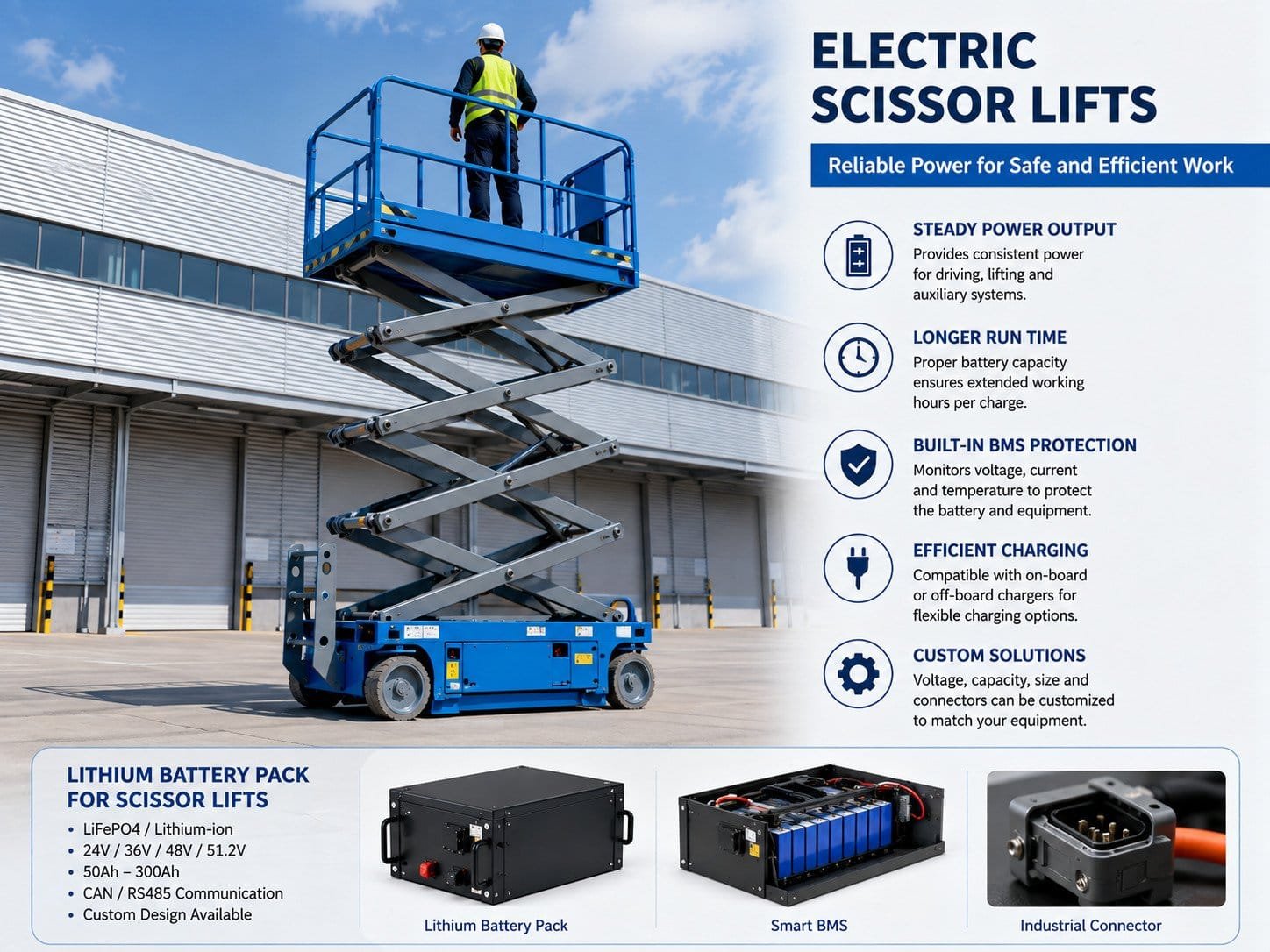
第1部:電動シザーリフトとは?
電動シザーリフトとは、シザー機構を用いて作業台を垂直方向に移動させる高所作業台のことである。.
電動シザーリフトは、次のような用途に使用されます:
- 建物の維持管理
- 倉庫業務
- 工場の保守・点検
- 照明インスタレーション
- 電気工事
- 機器の設置
- 施設の維持管理
- 屋内工事
- 点検作業
一般的な電動シザーリフトには、次のようなものが含まれる場合があります:
- 駆動モーター
- リフト用モーターまたは油圧システム
- モーターコントローラ
- ステアリングシステム
- 制御盤
- 安全システム
- センサー
- 緊急対応システム
- バッテリー充電器
バッテリーは、これらのシステムに電力を供給します。電力需要は、機器の稼働状況によって変化することがあります。走行、昇降、操舵、待機運転、および補助機能では、それぞれ異なる量の電力が必要となる場合があります。.
第2部:電動シザーリフトにはどのような種類のバッテリーが使われているのか?
電動シザーリフトは、機器の設計、使用条件、および充電システムに応じて、さまざまなバッテリー技術を採用することができます。.
鉛蓄電池
鉛蓄電池は、さまざまな電動産業用車両や高所作業車に使用されています。.
その特徴は以下の通りです:
- 確立されたバッテリー技術
- 幅広い入手可能性
- さまざまな容量のオプション
- 多くの既存の機器設計との互換性
- 一部構成では、リチウム電池システムに比べて重量が重い
液式鉛蓄電池には、特定のメンテナンス手順が必要です。密閉型鉛蓄電池とAGM電池では、メンテナンス要件や充電特性が異なります。.
AGMバッテリー
AGM(Absorbent Glass Mat)バッテリーは、バルブ制御式鉛蓄電池の一種です。.
その特徴は以下の通りです:
- 密閉構造
- 日常的なメンテナンスの手間が少ない
- 耐振動性
- さまざまな容量および電流のオプション
使用するシザーリフトに応じて、バッテリーの重量、充電電圧、充電電流、設置スペース、および使用条件を確認する必要があります。.
LiFePO4電池
リン酸鉄リチウム(LiFePO4)は、充電式バッテリーシステムに使用されるリチウムイオン電池の化学系です。.
電動シザーリフト用のLiFePO4バッテリーパックは、次のような要件に応じて構成することができます:
- 公称電圧
- 定員
- 連続放電電流
- ピーク放電電流
- バッテリー寸法
- BMSパラメータ
- 通信プロトコル
- コネクタの種類
- 動作温度
LiFePO4は、定期的な充放電が必要な機器への採用が検討できます。.
その適合性は、機器の電気系統、充電器、使用条件、設置スペース、およびバッテリーの仕様によって異なります。.
第3部:電動シザーリフト用バッテリーの選び方
バッテリーの選定は、標準的なバッテリーサイズではなく、機器の仕様を基準に行うべきです。.
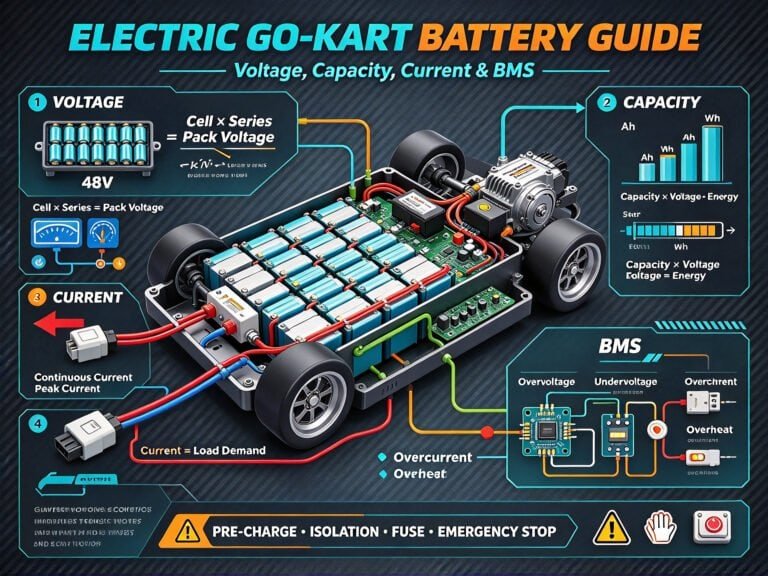
1. バッテリー電圧を確認する
バッテリー電圧は、機器の電気系統に適合している必要があります。.
電動シザーリフトには、さまざまな電圧のプラットフォームが採用されています。機器の設計に応じて、24V、36V、48V、または51.2Vなどの仕様があります。.
必要な電圧については、機器の取扱説明書または既存のバッテリーの仕様書で確認してください。.
確認:
- 電池の公称電圧
- モーター電圧
- コントローラの電圧
- 充電器の出力電圧
- システムの最大電圧
- 最小動作電圧
鉛蓄電池からLiFePO4電池に切り替える際は、バッテリーの電圧範囲や充電器の要件についても評価する必要があります。.
公称電圧が類似しているからといって、必ずしも2種類の電池の化学系で同じ充電システムが使用できるとは限りません。.
2. バッテリー容量の算出
バッテリーの容量は、通常、アンペア時(Ah)で表されます。.
バッテリーのエネルギーは、以下の式を用いて推定できます:
エネルギー(Wh)=電圧(V)×容量(Ah)
例えば、こうだ:
48V × 100Ah = 4,800Wh
48V 100Ahのバッテリーの公称エネルギー容量は約4.8kWhです。.
実際の運転時に利用可能なエネルギー量は、公称値と異なる場合があります。その要因としては、以下のものが挙げられます:
- 放電電流
- 放電深度
- 温度
- BMSの設定
- バッテリーの経年劣化
- システムの効率
このため、バッテリーの容量は、機器の稼働サイクルに応じて選定する必要があります。.
3. 必要な稼働時間を算出する
基本的な手術時間の推定値は、以下の式を用いて計算できます:
稼働時間 = バッテリー容量(Wh) ÷ 平均消費電力(W)
たとえば、平均消費電力が1,000Wで、バッテリーの公称エネルギーが4,800Whの場合:
4,800Wh ÷ 1,000W = 4.8時間
これは理論上の推定値です。.
実際の稼働時間は、シザーリフトの使用方法によって異なります。走行、昇降、操舵、停止、待機運転、積載量、および付属機器はすべて、エネルギー消費量に影響を与える可能性があります。.
OEM開発においては、代表的な動作サイクルにおける消費電力を測定することで、バッテリー容量選定のためのデータを得ることができます。.
4. 連続放電電流およびピーク放電電流を確認する
バッテリーの容量は、そのバッテリーがモーターの負荷に対応できるかどうかを決定づけるものではありません。.
バッテリーは、必要な放電電流を満たすものを選定する必要があります。.
以下の状況では、電流が増加することがあります:
- モーターの起動
- 加速
- プラットフォームリフト
- 坂道での運転
- 荷物の運搬
- 凹凸のある路面での走行
以下の2つの現行仕様について評価を行う必要があります:
連続放電電流: 通常動作時にバッテリーが供給できる電流。.
最大放電電流: 一時的な高負荷条件下において、所定の期間に供給可能な電流。.
BMSの放電電流制限値も、機器の要件に合致している必要があります。.
カスタムバッテリープロジェクトにおいては、モーターコントローラーの仕様や機器の稼働中の測定値から、必要な電流を算出することができます。.
5. バッテリーの寸法を確認する
バッテリーは、用意されているバッテリー収納スペースに収まる必要があります。.
測定方法:
- 長さ
- 幅
- 高さ
- 取り付け位置
- 端位置
- コネクタの位置
- ケーブルの配線
設置スペースの寸法が標準的なバッテリーのサイズに合わない場合は、カスタムバッテリーパックを設計することができます。.
また、機械設計においては、設置、充填、点検、および交換のための適切なアクセス手段を確保する必要があります。.
6. バッテリーの重量を考慮する
バッテリーの重量は、機器全体の重量に占める割合となっています。.
鉛蓄電池システムは、一般的に、同等のエネルギー仕様を持つ一部のリチウム電池構成よりも重量が重くなります。実際の差は、バッテリーの設計によって異なります。.
バッテリーの重量を比較する際は、バッテリーアセンブリ全体を考慮してください:
- 細胞
- ビーエムエス
- 添付資料
- バスバー
- コネクタ
- ケーブル
- 保護部品
バッテリーの最終的な重量については、機器の機械的要件、積載要件、および安定性要件に照らして確認する必要があります。.
第5部:電動シザーリフト用LiFePO4バッテリーの特性
LiFePO4は、定期的な充放電サイクルを伴う電動シザーリフトの用途において、採用を検討することができます。.
サイクル・ライフ
バッテリーのサイクル寿命は、以下の要因などによって異なります:
- 放電深度
- 充電方法
- 放電率
- 動作温度
- 細胞の特性
- BMSの設定
したがって、サイクル寿命の仕様は、製造元の試験条件に基づいて評価されるべきである。.
実際の耐用年数は、バッテリーの使用方法によって異なる場合があります。.
重量
LiFePO4バッテリーパックは、同等のエネルギー容量を持つ一部の鉛酸バッテリー構成に比べて、軽量になる場合があります。.
実際の重量は、以下の要因によって異なります:
- セル容量
- セルの構成
- ビーエムエス
- 住宅
- コネクタ
- 保護部品
異なるバッテリーシステムを比較する際には、バッテリーアセンブリ全体を考慮に入れる必要があります。.
自己放電
LiFePO4電池は、一般的に鉛蓄電池に比べて自己放電が比較的少ない。.
長期間使用しない機器については、保管条件および推奨される充電状態について、バッテリーメーカーの仕様に従ってください。.
ビーエムエス
LiFePO4バッテリーパックには、通常、BMSが搭載されています。.
BMSでは、以下の項目を監視できます:
- 細胞電位
- パック電圧
- 充電電流
- 放電電流
- バッテリー温度
- 充電状態
- 故障状態
保護機能には、次のようなものがあります:
- 過充電保護
- 過放電保護
- 過電流保護
- 短絡保護
- 過熱保護
- 低温保護
具体的な保護パラメータは、セルおよび機器の要件に応じて設定する必要があります。.
第6部:電動シザーリフトにおけるLiFePO4と鉛蓄電池の比較
| 特徴 | 鉛酸 | LiFePO4 |
|---|---|---|
| 重量 | 概して高い | バッテリーの構成によって異なります |
| 初期費用 | 概して低い | 概して高い |
| サイクル寿命 | 使用条件によって異なります | 使用条件によって異なります |
| 自己放電 | 比較的高い | 比較的低い |
| メンテナンス | バッテリーの種類によって異なります | 日常的なメンテナンスは概して少ない |
| ビーエムエス | 通常は分離されているか、統合されていない | 通常積分型 |
| 充電 | 互換性のある充電システムが必要です | 互換性のあるリチウムイオンバッテリー充電システムが必要です |
| 低温充電 | バッテリーの種類によって異なります | 適切な温度管理が必要です |
電池の化学的特性は、機器の動作サイクル、充電システム、設置スペース、使用温度範囲、電流要件、および予算と併せて評価する必要があります。.
第7部 電動シザーリフト用バッテリーのBMS要件
BMSは、リチウムイオンバッテリーパックを構成する部品の一つであり、バッテリーの状態を監視し、保護機能を制御する役割を担っています。.
電動シザーリフトの場合、BMSは以下の項目を監視することがあります:
- 細胞電位
- パック電圧
- 充電電流
- 放電電流
- 細胞温度
- バッテリー温度
- 充電状態
- 障害状況
また、制御システムがバッテリーとの通信に対応している場合、BMSは機器コントローラと通信を行うこともできます。.
利用可能な通信インターフェースには、以下のものがあります:
- CAN
- CAN FD
- RS485
- UART
- Modbus
必要な通信インターフェースは、制御システムによって異なります。.
バッテリー通信により、次のような情報が得られる場合があります:
- 充電状態
- 電圧
- 現在
- 温度
- 充電状況
- 障害情報
バッテリーの開発段階において、通信要件を定義しておく必要がある。.
第8部 充電要件
バッテリーを選ぶ際は、充電の互換性を確認する必要があります。.
LiFePO4バッテリーについては、以下を確認してください:
- 充電器の出力電圧
- 充電電流
- 充電プロファイル
- 充電時間
- コネクタ
- 通信要件
- 充電温度
鉛蓄電池用に設計された充電器は、必ずしもLiFePO4電池に適していると見なすべきではありません。.
フリート用途においては、充電方法もバッテリーの容量要件に影響を与える可能性があります。.
利用可能な充電方法には、以下のものがあります:
- スケジュール充電
- 夜間充電
- チャンスチャージ
- 自動充電
- バッテリーの交換
充電方法は、機器の稼働スケジュールおよび充電インフラに合わせて設定する必要があります。.
第9部 動作温度
電動シザーリフトは、屋内でも屋外でも使用可能です。.
バッテリーの設計においては、以下の点を考慮すべきである:
- 動作温度
- 充電温度
- 保存温度
- 気温の変化
- 湿度
- ダスト
- 水分
LiFePO4バッテリーは、低温での充電時に特別な配慮が必要です。BMSは、温度測定値に基づいて、条件が指定範囲外になった場合に充電を制限することができます。.
アウトドア用品については、バッテリー収納部や環境保護についても考慮する必要があります。.
第10部 バッテリー筐体および機械的保護
電動シザーリフトは、運転中に振動や機械的な動きが生じることがあります。.
バッテリーハウジングは、使用環境に応じて設計することができます。.
用途によっては、バッテリーに以下の要件が必要となる場合があります:
- 保護ハウジング
- 確実な取り付け
- 耐振動性
- 湿気対策
- 防塵対策
- ケーブル保護
- 適切なコネクタ
- 熱管理
必要な筐体の保護等級は、実際の使用環境および機器の設計に基づいて決定する必要があります。.
第11部:電動シザーリフト用にLiFePO4バッテリーをカスタマイズする方法
OEMメーカーによっては、市販のバッテリーでは満たせないバッテリーに関する要件を定めている場合があります。.
機器の仕様に応じて、カスタムバッテリーパックを開発することが可能です。.
ステップ1:機材情報の収集
役立つ情報には、次のようなものがあります:
- 機器の電圧
- 既存のバッテリー仕様
- モーター出力
- ピーク電流
- 必要な稼働時間
- 電池ケースの寸法
- 充電器に関する情報
- コネクタの仕様
- 通信プロトコル
- 動作温度
ステップ2:エネルギー必要量の算出
まずは、推定消費電力と稼働時間から確認しましょう。.
必要エネルギー = 平均出力 × 稼働時間
この結果は、バッテリー容量を選定する際の出発点として活用できます。.
ステップ3:バッテリーセルを選択する
細胞の選定にあたっては、以下の点を考慮すべきである:
- 電池の化学組成
- 公称電圧
- 定員
- 連続放電電流
- ピーク放電電流
- 温度範囲
- 想定されるサイクル条件
ステップ4:セル構成の設計
セルは、必要な電圧や容量に応じて、直列または並列に接続することができます。.
設定は、以下の項目と照らし合わせて確認する必要があります:
- モーターの仕様
- コントローラの要件
- 充電器の要件
- 電池ケース
- BMSの仕様
ステップ 5: BMS の設定
BMSのパラメータは、以下に基づいて設定できます:
- 細胞電圧の限界値
- 充電電流
- 放電電流
- 温度範囲
- セルバランシング
- 通信要件
ステップ6:バッテリーハウジングの設計
筐体は、以下の要件に基づいて設計することができます:
- 空きスペース
- 取り付け方法
- コネクタの位置
- ケーブルの配線
- 環境条件
- サービス要件
手順 7:バッテリーパックのテスト
バッテリーの検査には、次のようなものがあります:
- キャパシティ・テスト
- 充放電テスト
- BMS保護機能の試験
- 温度試験
- 通信テスト
- 振動試験
- コネクタの試験
- 筐体試験
試験方法は、バッテリーの設計および用途に応じて選択する必要があります。.
バッテリー容量の計算例
次のような電動シザーリフトを想定してください:
- システム電圧:48V
- 平均消費電力:1,200W
- 必要な稼働時間:5時間
推定エネルギー必要量は以下の通りです:
1,200W × 5時間 = 6,000Wh
48Vの場合:
6,000Wh ÷ 48V = 125Ah
これにより、おおよその初期の目安として 48V 125Ah.
以下の点を考慮した上で、最終的な容量を調整する必要がある場合があります:
- 利用可能なバッテリーエネルギー
- モーターの効率
- コントローラの効率
- リフトシステムの効率
- バッテリー温度
- 放電深度
- バッテリーの経年劣化
- 運転負荷
- 待機時消費電力
実際の機器での試験を行うことで、最終的なバッテリー選定に向けたさらなる情報を得ることができます。.
第12部:製品開発段階におけるバッテリーの試験
バッテリー試験は、電気的、熱的、機械的、および通信に関する要件を評価するために活用できます。.
テストには、以下のものが含まれる場合があります:
- バッテリー容量
- 充放電性能
- 現在の能力
- BMS保護
- 温度特性
- 通信機能
- 耐振動性
- コネクタの性能
- 筐体の保護
OEM機器の場合、代表的な動作条件下での試作機試験を行うことで、バッテリー構成が機器の要件を満たしているかどうかを判断するのに役立ちます。.
輸送を目的とする電池については、該当する輸送試験および書類についても考慮する必要があります。.
第13部 認証およびコンプライアンス
バッテリーの要件は、バッテリーの設計、用途、輸送方法、および販売先市場によって異なります。.
プロジェクトによっては、製造業者は以下の点を評価する必要がある場合があります:
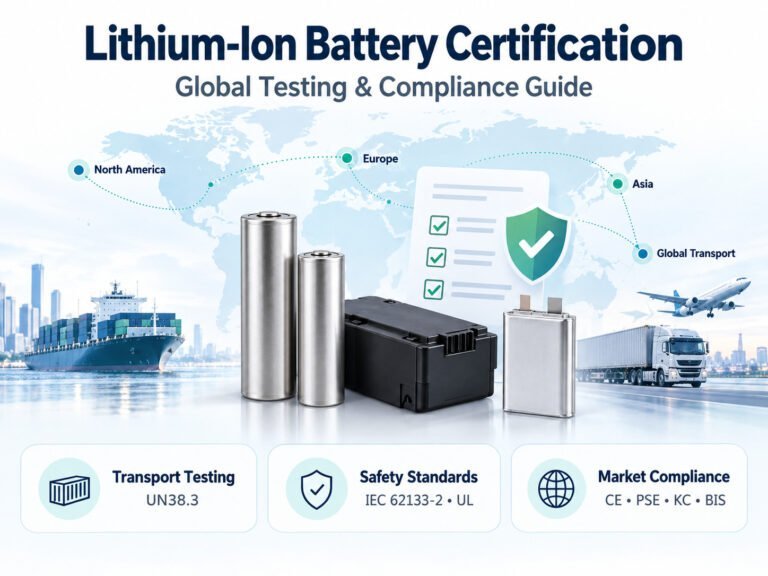
- UN 38.3 輸送試験
- 適用されるIEC規格
- 地域ごとの安全要件
- 電磁両立性に関する要件
- 環境要件
- 機械・設備に関する規制
欧州市場に投入される電池については、以下の要件の適用について EU電池規則(EU)2023/1542 バッテリーの分類および使用目的に応じて評価すべきである。.
製品開発の段階で認証要件を明確にし、バッテリー開発の過程で関連する設計要件を考慮できるようにすべきである。.
第14部 電動シザーリフト用バッテリーメーカーの選び方
OEMプロジェクトにおいては、バッテリーサプライヤーを技術力および生産能力に基づいて評価することができます。.
関連する分野には、次のようなものがあります:
- 細胞の選択
- バッテリーパックの設計
- BMSの設定
- 機械設計
- コミュニケーション能力の育成
- 試作
- 電気試験
- 環境試験
- 認証サポート
- 生産品質管理
また、製造業者は、バッテリーの仕様、充電要件、保護機能、および動作条件に関する技術文書も提供すべきである。.
特注バッテリーのプロジェクトにおいては、メーカーは、提案された構成が当該機器の電気的および機械的要件にどのように適合しているかを説明できる必要がある。.
第15部 特注バッテリーを注文する際に提供すべき情報
機器に関する完全な情報を提供することで、バッテリー開発中の仕様確認の繰り返しを減らすことができます。.
OEMバイヤーは以下を提供できます:
| 要件 | 情報の例 |
|---|---|
| 電圧 | 24V / 36V / 48V / 51.2V |
| 定員 | 「あ」か「う」か |
| モーター出力 | W または kW |
| ピーク電流 | A |
| 稼働時間 | 1シフトあたりの時間数 |
| 充電 | 充電器の電圧・電流 |
| 寸法 | 長さ × 幅 × 高さ |
| コミュニケーション | CAN / RS485 / UART |
| 温度 | 航続距離および充電距離 |
| インストール | 取り付けおよびコネクタの要件 |
| 環境 | 屋内/屋外/ほこり/湿気 |
バッテリーの設計プロセスにおいては、機器の図面、写真、既存のバッテリー仕様、モーターのデータ、および運転時の測定値なども提供することが可能です。.
よくある質問
電動シザーリフトにはどのような種類のバッテリーが使われていますか?
電動シザーリフトは、機器の設計に応じて、鉛蓄電池、AGM電池、またはリチウム電池システムを使用できます。LiFePO4は、適切な用途において検討できるリチウム電池の化学組成の一つです。.
LiFePO4は電動シザーリフトに適していますか?
LiFePO4は、充電式バッテリーを必要とし、繰り返しの充放電サイクルが求められる電動シザーリフトへの採用が検討できます。具体的な機器に応じて、電圧、容量、電流、BMS、充電、外形寸法、および動作温度について評価を行う必要があります。.
電動シザーリフトのバッテリーは、どのくらいの電圧を使用していますか?
すべての電動シザーリフトに共通する単一の電圧仕様は存在しません。機器は、モーター、コントローラー、および電気的構成に応じて、異なる電圧仕様を採用している場合があります。.
シザーリフトのバッテリー容量はどのように計算すればよいですか?
基本的な計算式は次のとおりです:
バッテリー容量(Wh)= 電圧(V)× 容量(Ah)
必要なエネルギーは、以下の式を用いて推定できます:
必要エネルギー(Wh)=平均電力(W)×稼働時間(h)
その結果は、装置の実際の稼働状況と照らし合わせて評価する必要があります。.
鉛蓄電池をLiFePO4に置き換えることはできますか?
バッテリー電圧、充電器、必要電流、BMS、外形寸法、コネクタ、および動作条件が互換性がある場合、鉛蓄電池をLiFePO4に置き換えることができます。.
バッテリーの化学組成を変更する前に、電気系統全体を点検する必要があります。.
LiFePO4製のシザーリフト用バッテリーには、BMSが必要ですか?
リチウム電池パックでは通常、BMSを使用して電池の状態を監視し、保護機能を提供します。また、BMSは必要に応じて機器のコントローラと通信を行うこともできます。.
シザーリフトのバッテリーはどれくらい持ちますか?
バッテリーの耐用年数は、バッテリーの化学組成、放電深度、充電条件、動作温度、放電率、保管状態、および使用頻度によって異なります。実際の耐用年数は、用途によって異なります。.
電動シザーリフトには、特注のバッテリーパックを使用できますか?
はい。機器の電圧、容量、電流、外形寸法、コネクタ、BMS、通信、充電、および環境要件に応じて、カスタムバッテリーパックを設計することができます。.
結論
電動シザーリフト用のバッテリーを選ぶ際には、機器システム全体を考慮する必要があります。電圧、容量、エネルギー消費量、連続電流およびピーク電流、稼働時間、重量、外形寸法、バッテリーの化学組成、BMS、充電、温度、通信、および機械的保護など、これらすべての要素がバッテリーの選定に影響を与えます。.
LiFePO4は、電動シザーリフトへの採用が検討できる電池化学の一つです。その適性は、機器の稼働サイクル、電気的構成、充電システム、設置スペース、温度範囲、およびバッテリー要件によって異なります。.
OEM機器メーカー向けには、リフトの電気的および機械的仕様に応じて、カスタムバッテリーパックを設計することが可能です。開発プロセスには、セルの選定、パック構成、BMSの設定、筐体設計、試作、および実機試験などが含まれます。.
バッテリーの計算結果は初期の参考値となりますが、実際の運用データや試作機の試験結果を用いて、最終的な構成を検証することができます。バッテリーの仕様については、機器メーカーの要件および適用される安全、輸送、市場参入に関する要件と照らし合わせて確認する必要があります。.
 English
  Chinese
  Japanese
  German
  French
  Korean
