
De nombreux utilisateurs de vélos électriques sont confrontés à ce problème :
La batterie fonctionne normalement sur les routes plates, mais dans les montées, la puissance diminue rapidement ou le véhicule s'arrête brusquement.
La première pensée qui vient généralement à l'esprit est :
“ La capacité de la batterie est-elle trop faible ? ”
Cependant, une perte de puissance en montée ne signifie pas toujours que la batterie manque de capacité.
Les facteurs réels qui influencent les performances en escalade sont les suivants :
- Capacité de décharge instantanée
- Courant de décharge continu
- Performances des cellules de batterie
- Paramètres de protection du BMS
Pour les applications à forte sollicitation, telles que les vélos électriques, les voiturettes de golf, les véhicules à guidage automatique (AGV) et les robots, une batterie ne doit pas seulement assurer le stockage d'énergie. Elle doit également fournir une puissance de sortie élevée et stable.

1re partie. Une plus grande capacité de batterie ne garantit pas toujours de meilleures performances en montée
Lorsqu'ils choisissent une batterie au lithium, de nombreux clients s'intéressent principalement aux éléments suivants :
- Tension (V)
- Capacité (Ah)
- Parcours à cheval
Par exemple :
Une batterie de 48 V et 20 Ah a une capacité supérieure à celle d'une batterie de 48 V et 10 Ah.
Cependant, les capacités d'escalade dépendent principalement :
- Courant de décharge continu maximal
- Courant de décharge maximal
- Taux de décharge des cellules
- Réglages de la limite de courant du BMS
En bref :
L'ah détermine l'autonomie de la batterie, tandis que les ampères déterminent la puissance qu'elle peut fournir.
Une batterie dotée d'une grande capacité mais dont la capacité de décharge est insuffisante peut tout de même subir des chutes de tension et voir ses performances diminuer en cas de charges importantes.
Partie 2. Pourquoi la tension de la batterie diminue-t-elle lors d'une montée ?
Lorsqu'il gravit une côte, le moteur a besoin d'un couple plus élevé et consomme un courant nettement plus important.
Par exemple :
Conduite normale :
- Courant du moteur : 10 A - 15 A
Montée :
- La demande de courant pourrait atteindre 30 A, 40 A, voire plus
Lors d'une décharge à courant élevé, la batterie subit :
Chute de tension
Si la résistance interne des cellules de la batterie est élevée :
- Courant de sortie plus élevé
- Une chute de tension plus importante
Lorsque la tension descend en dessous du seuil de protection du BMS :
- Le BMS peut couper la sortie
- L'appareil cesse soudainement de fonctionner
C'est pourquoi certains utilisateurs rencontrent les problèmes suivants :
“ Pourquoi ma batterie s'éteint-elle alors qu'elle affiche encore une capacité de 50% ? ”
Partie 3. Les cellules de batterie déterminent les performances en cas de charge élevée
Un bloc-batterie au lithium est composé de plusieurs cellules de batterie.
Les différentes cellules présentent des caractéristiques de performance différentes.
Cellules standard :
✅ Convient à un usage quotidien normal
❌ Capacité de sortie à courant élevé limitée
❌ Plus susceptible de subir des chutes de tension en cas de charges importantes
Cellules à débit élevé :
✅ Prise en charge de courants de décharge plus élevés
✅ Offrir une réponse plus rapide en cas de variations de charge
✅ Adapté aux applications nécessitant une grande puissance
Pour des applications telles que :
- Vélos électriques
- Motos électriques
- Robots AGV
- Équipements industriels
Le choix des bonnes cellules est plus important que le simple fait d'augmenter la capacité de la batterie.
Partie 4. Comment le système de gestion de la batterie (BMS) peut-il entraîner une perte de puissance en montée ?
Le BMS (système de gestion de batterie) ne se contente pas de protéger la batterie. Il contrôle également la quantité d'énergie que celle-ci peut fournir en toute sécurité.
Le BMS gère :
- Protection contre les surcharges
- Protection contre la surcharge
- Protection contre les surintensités
- Protection de la température
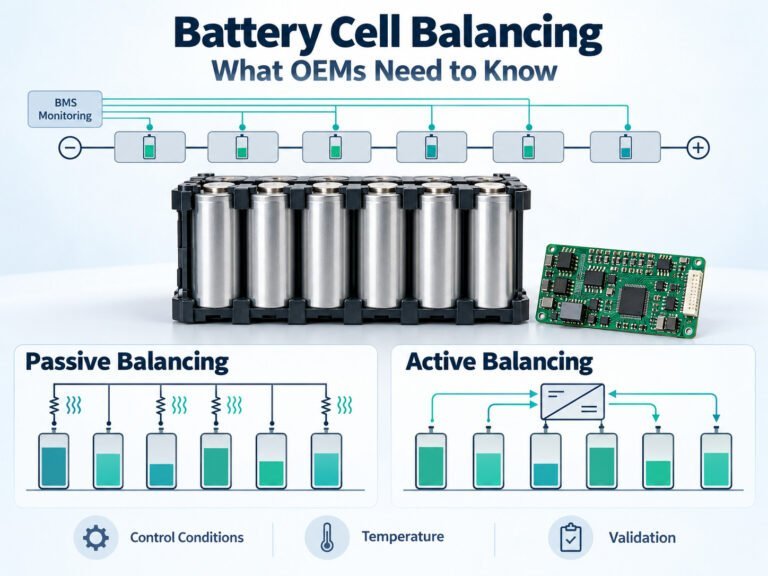
- Équilibre cellulaire
Si la limite de courant du BMS est trop faible :
Exemple :
Caractéristiques techniques du moteur :
40 A
Limite BMS :
30A
Le système peut détecter un courant excessif et déclencher la protection.
Par conséquent, un système de batteries hautement performant nécessite une bonne adéquation entre :
- Éléments de batterie
- Moteur
- Contrôleur
- BMS
Les applications avancées peuvent également nécessiter des fonctions de communication intelligentes, telles que :
- CAN
- UART
- RS485
Partie 5. La température influe également sur les performances en montée
La température a une incidence considérable sur les performances des batteries au lithium.
Dans les environnements froids :
- Les réactions chimiques au sein de la batterie ralentissent
- La capacité disponible diminue
- La puissance de sortie est réduite
- La tension diminue plus rapidement
Cela est particulièrement important pour :
- Équipement de plein air
- Environnements de stockage à froid
- Régions de hautes latitudes
Les solutions peuvent inclure :
- Cellules de batterie à basse température
- Systèmes de chauffage
- Système de gestion de batterie (BMS) à température contrôlée
Les applications telles que les véhicules à guidage automatique (AGV), les robots et les équipements d'extérieur nécessitent des batteries conçues en fonction des conditions réelles d'utilisation.
Partie 6. Comment améliorer les performances d'ascension des batteries au lithium ?
Si votre équipement subit des baisses de puissance pendant l'ascension, pensez à optimiser les éléments suivants :
✅ Choisissez des cellules de batterie à haut débit
Les cellules à haut débit améliorent :
- Puissance maximale
- Réponse de charge
- Stabilité de l'alimentation électrique
✅ Augmenter la capacité de décharge continue
La batterie doit être adaptée au moteur en fonction des critères suivants :
- Tension
- Capacité
- Courant de décharge continu
✅ Optimiser la conception du système de gestion de batterie (BMS)
Un système de gestion de batterie (BMS) correctement configuré garantit la compatibilité entre :
- Bloc-batterie
- Puissance du moteur
- Exigences relatives au contrôleur
- Conditions de fonctionnement
✅ Choisissez une solution sur mesure de batterie au lithium
Chaque application nécessite une conception de batterie spécifique :
| Application | Exigences clés |
| Vélo électrique | Débit élevé + Conception légère |
| Voiturette de golf | Grande capacité + Longue durée de vie |
| AGV | Puissance de sortie élevée + Stabilité |
| Robot industriel | Communication intelligente + Sécurité |
| Équipements marins | Conception étanche + grande autonomie |
Yizhan Electronics : solutions sur mesure de batteries au lithium pour les applications à forte charge
En tant que fabricant professionnel de batteries au lithium, la société Dongguan Yizhan Electronics Technology Co., Ltd. se concentre sur :
- Blocs-batteries au lithium sur mesure
- Solutions de batteries LiFePO4
- Systèmes de batteries d'alimentation
- Fabrication de batteries en OEM/ODM
Nous fournissons :
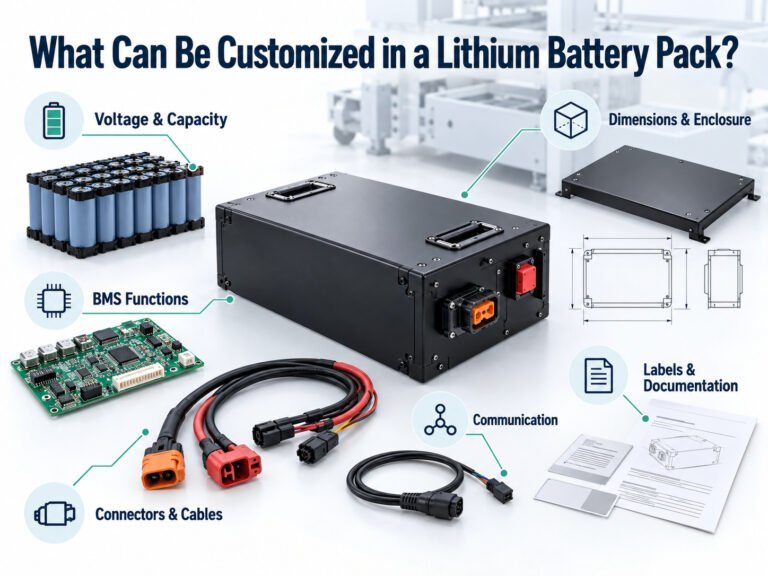
- Personnalisation de la tension
- Personnalisation de la capacité
- Développement du BMS
- Conception structurelle
- Développement de prototypes et production en série
Des vélos électriques aux voiturettes de golf, en passant par les véhicules à guidage automatique (AGV) et les robots intelligents, Yizhan Electronics conçoit des solutions de batteries adaptées aux besoins concrets des applications afin de garantir une alimentation stable, même dans des conditions de charge élevée.
Vous constatez une perte de puissance dans les montées, une autonomie réduite ou des performances instables ? Contactez nous pour trouver la solution de batterie au lithium la mieux adaptée à votre application.
FAQ
1. Pourquoi ma batterie au lithium perd-elle de la puissance lorsque je monte des côtes ?
Une batterie au lithium peut perdre de la puissance lors d'une montée, car le moteur nécessite un courant de sortie plus élevé. Si les cellules de la batterie, le BMS ou la capacité de décharge ne permettent pas de supporter cette charge accrue, la tension de la batterie peut chuter rapidement et déclencher le système de protection.
Parmi les principales causes, on peut citer :
Courant de décharge insuffisant
Résistance interne élevée des cellules de batterie
Réglages incorrects du courant du BMS
Fonctionnement à basse température
Vieillissement de la batterie
2. Une batterie au lithium avec une capacité en Ah plus élevée offre-t-elle de meilleures performances en montée ?
Pas toujours.
La capacité de la batterie (Ah) détermine principalement la quantité d'énergie stockée par celle-ci et la durée de fonctionnement de l'appareil.
Les performances en montée dépendent davantage :
Courant de décharge continu
Capacité de débit maximale
Qualité des cellules de batterie
Configuration du BMS
Une batterie de plus grande capacité, même si son taux de décharge est faible, peut tout de même avoir du mal à faire face à des charges importantes.
3. De combien d'ampères une batterie au lithium a-t-elle besoin pour gravir des côtes ?
Le courant nécessaire dépend de l'application, de la puissance du moteur, du poids du véhicule, de l'angle de pente et des conditions d'utilisation.
Par exemple :
Les applications liées aux vélos électriques peuvent nécessiter un courant de décharge continu compris entre 20 A et 40 A.
Les voiturettes de golf peuvent nécessiter un courant de sortie plus élevé pour les charges plus lourdes
Les AGV et les robots industriels nécessitent des performances de déchargement adaptées en fonction des cycles de fonctionnement
Un fabricant professionnel de batteries est en mesure de calculer la capacité de décharge requise en fonction de l'application concrète.
4. Le système de gestion de la batterie (BMS) peut-il provoquer l'arrêt de ma batterie au lithium pendant une montée ?
Oui.
Le système de gestion de la batterie (BMS) protège la batterie contre les situations dangereuses. Lors d'une montée, le moteur peut soudainement nécessiter un courant élevé.
Si le courant dépasse la limite de protection du BMS, celui-ci peut déclencher la protection contre les surintensités et déconnecter temporairement la sortie.
Un système de gestion des bâtiments (BMS) correctement conçu doit répondre aux critères suivants :
Capacité des cellules de batterie
Puissance du moteur
Caractéristiques techniques du contrôleur
Conditions de candidature
 English
  Chinese
  Japanese
  German
  French
  Korean
