
Qu'est-ce qu'un système de gestion de batterie (BMS) ?
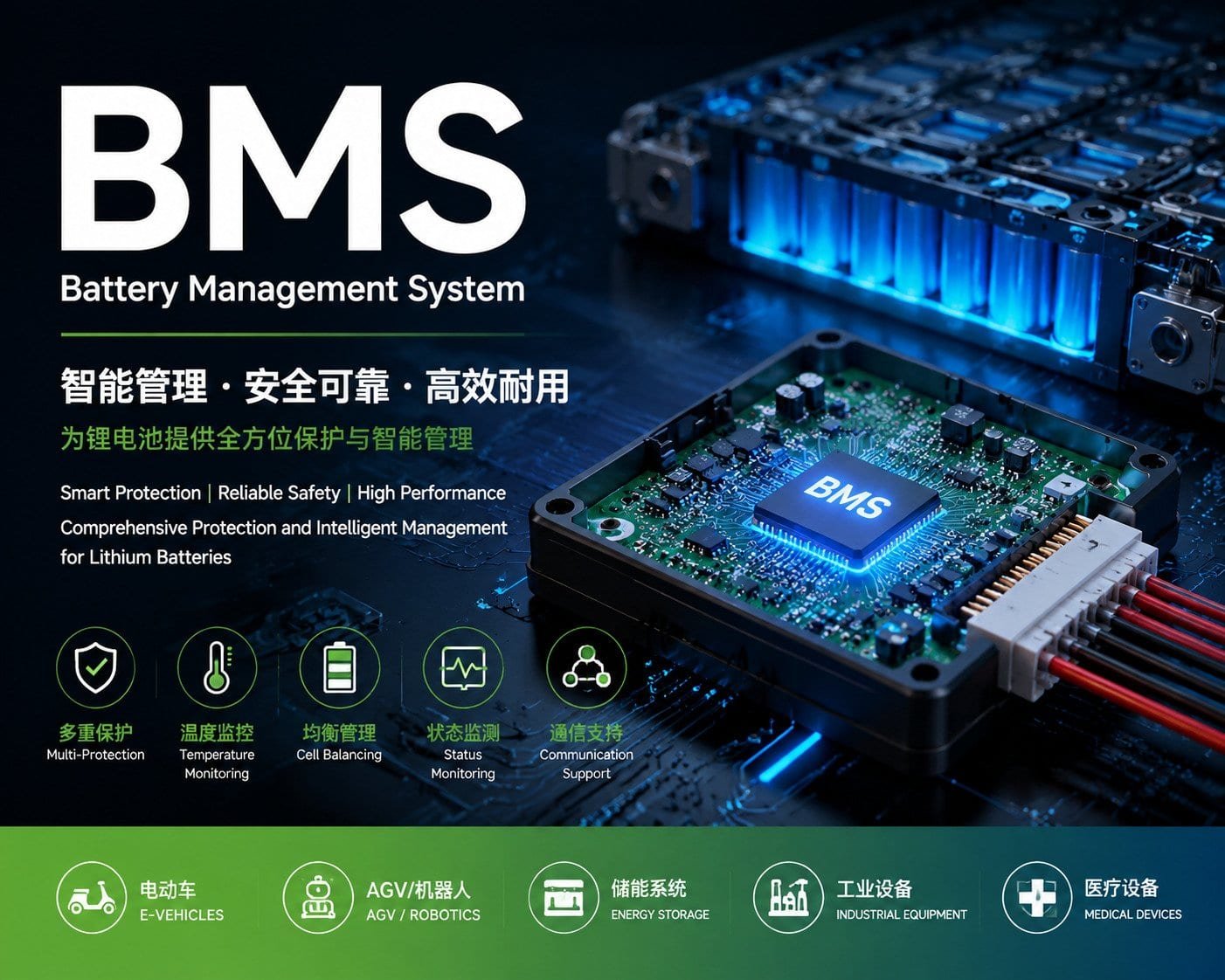
Le système de gestion de batterie (BMS) est un système électronique intelligent conçu pour surveiller, contrôler et protéger les packs de batteries au lithium.
Ce système garantit que chaque cellule de batterie fonctionne dans des limites électriques et thermiques sûres, ce qui permet d'éviter les défaillances tout en optimisant les performances et la durée de vie.
En termes simples, une batterie au lithium sans BMS est puissante mais non contrôlée. Avec un BMS, elle devient un système énergétique sûr, stable et intelligent.
Pourquoi le système de gestion de batterie (BMS) est-il important pour les batteries au lithium ?
Les batteries au lithium sont largement utilisées dans les deux-roues, la robotique et les systèmes de stockage d'énergie, mais elles sont très sensibles aux variations de tension, de courant et de température.
Sans une prise en charge adéquate, ils risquent de souffrir :
Surcharge
Surdécharge
Emballement thermique
Déséquilibre cellulaire
C'est là que le BMS prend toute son importance.
1. Prévient les défaillances de batterie et les risques liés à la sécurité
L'un des rôles les plus importants du BMS est la protection.
Il surveille en permanence l'état de la batterie et permet d'éviter :
Dégâts dus à une surcharge
Défaillance due à une décharge excessive
Court-circuit
Courant excessif
Cela réduit considérablement le risque de défaillance de la batterie et d'incidents thermiques.
2. Contrôle la température et empêche l'emballement thermique
La température est l'un des facteurs les plus déterminants pour la sécurité des batteries au lithium.
Le système BMS surveille la température en temps réel et réagit de la manière suivante :
Réduction de la puissance de sortie à haute température
Limitation de la recharge à basse température
Arrêt du système lorsque cela est nécessaire
Cela permet d'éviter la surchauffe, les risques d'incendie et la baisse des performances.
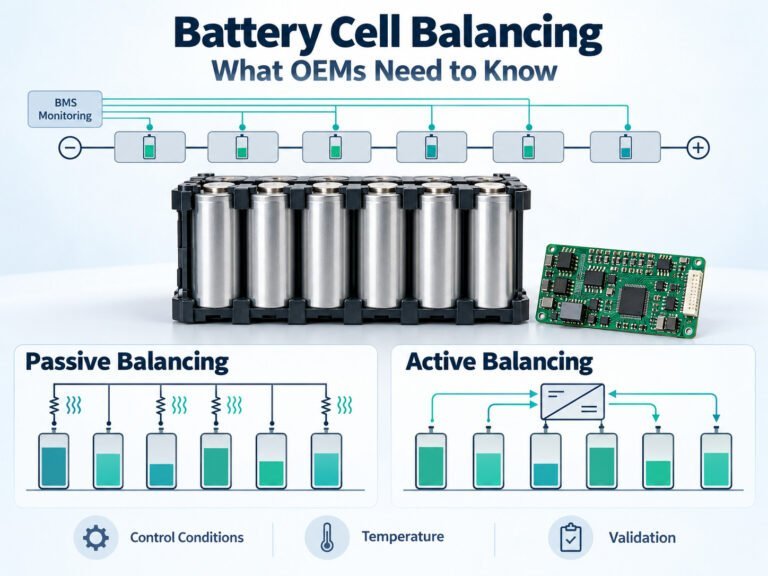
3. Équilibre les cellules de la batterie pour prolonger sa durée de vie
Un bloc-batterie est composé de plusieurs cellules, et il n'y en a pas deux qui soient exactement identiques.
Au fil du temps, les différences en matière de :
Résistance interne
Capacité
Comportement de la tension
peut entraîner un déséquilibre.
BMS résout ce problème grâce à :
Équilibrage passif
Équilibrage actif (systèmes avancés)
Cela améliore la régularité des performances de la batterie et prolonge sa durée de vie globale.
4. Garantit une puissance de sortie stable
Dans les applications à forte sollicitation, telles que les vélos électriques, les véhicules à guidage automatique (AGV) et les équipements industriels, des pics de courant soudains peuvent se produire.
Le BMS assure la protection du système de la manière suivante :
Limitation des surintensités
Prévention des chutes de tension
Stabilisation de la puissance de sortie
Cela garantit des performances fiables dans toutes les conditions de charge.
5. Permet une surveillance intelligente de la batterie
Les systèmes BMS modernes fournissent des données en temps réel telles que :
SOC (état de charge)
SOH (état de santé)
SOF (État de fonctionnement)
Ces indicateurs permettent aux utilisateurs et aux systèmes de connaître avec précision l'état de la batterie et sa capacité d'utilisation.
6. Permet la communication au niveau du système
Le système BMS avancé prend en charge des protocoles de communication tels que :
Bus CAN
RS485
Modbus
Cela permet l'intégration avec :
Véhicules électriques
Systèmes de stockage d'énergie
Robotique et systèmes industriels
Intégrer la batterie dans un écosystème énergétique intelligent.
Applications du BMS
Un système de gestion de batterie (BMS) de haute qualité est indispensable dans de nombreux secteurs :
🚲 Vélos électriques et trottinettes électriques
🤖 Robotique AGV et AMR
⚡ Systèmes de stockage d'énergie (ESS)
🚗 Véhicules électriques
🏭 Équipements industriels
🩺 Dispositifs médicaux
💡 Principaux avantages du BMS
Sécurité accrue des batteries
Durée de vie plus longue
Des performances stables
Taux de défaillance réduit
Commande intelligente des systèmes
FAQ
Quel est le rôle d'un BMS dans une batterie au lithium ?
Un système de gestion de batterie (BMS) surveille et contrôle la tension, le courant, la température et l'équilibre entre les cellules afin de garantir un fonctionnement sûr et efficace.
Une batterie au lithium peut-elle fonctionner sans BMS ?
Oui, mais ce n'est pas sans danger. Sans BMS, la batterie est exposée à des risques tels que la surchauffe, la surcharge et la défaillance.
Le système BMS permet-il d'améliorer l'autonomie de la batterie ?
Oui. En équilibrant les cellules et en évitant les conditions extrêmes, le système de gestion de la batterie (BMS) prolonge considérablement la durée de vie de la batterie.
Quels sont les secteurs qui utilisent des systèmes BMS ?
Les systèmes de gestion de batterie (BMS) sont largement utilisés dans la mobilité électrique, les systèmes de stockage d'énergie, la robotique et les applications industrielles.
Conclusion
Le système de gestion de batterie (BMS) n'est pas seulement un composant auxiliaire : c'est le cerveau des systèmes modernes de batteries au lithium.
Il transforme les batteries à haute énergie en solutions d'alimentation sûres, stables et fiables, adaptées aux applications industrielles et commerciales.
Sans BMS, les batteries au lithium présentent des risques et sont instables. Grâce au BMS, elles deviennent des systèmes énergétiques maîtrisés, capables d'alimenter l'avenir.
 English
  Chinese
  Japanese
  German
  French
  Korean
