
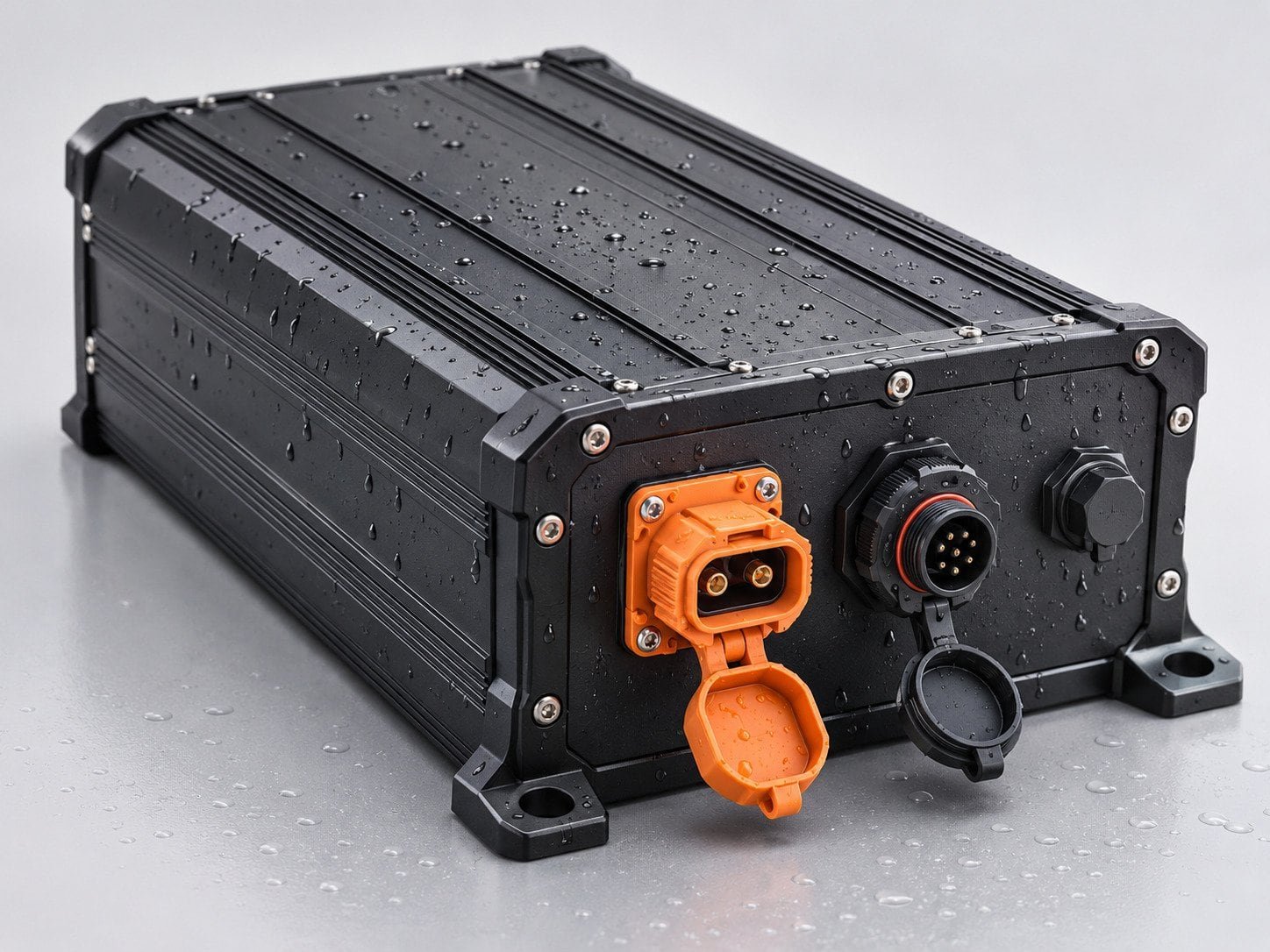
When developing a kundenspezifische Lithium-Batterie-Packs, environmental protection is an important consideration in battery enclosure design. Exposure to dust, rain, water splashes, and moisture can affect electrical connections, Battery Management System (BMS) components, and battery performance.
For applications such as electric bicycles, AGVs, AMRs, service robots, industrial equipment, and outdoor energy storage systems, selecting an appropriate Ingress Protection (IP) rating helps define the enclosure’s resistance to solid particles and water ingress.
Different operating environments require different protection levels. Understanding IP ratings allows OEM and ODM customers to define battery enclosure requirements, sealing methods, and testing conditions during product development.
Part 1. What Is an IP Rating for Lithium Battery Packs?
An IP rating, or Ingress Protection rating, is a classification system defined by IEC 60529. It describes the degree of protection provided by an electrical enclosure against access to hazardous parts, solid foreign objects, and water ingress.
An IP rating generally consists of two digits following the letters “IP.”
For example, IP67:
- IP: Ingress Protection
- 6: Dust-tight enclosure
- 7: Protection against the effects of temporary water immersion under specified test conditions.
The first digit indicates protection against solid particles and dust. The second digit indicates protection against water.
For lithium battery packs, the IP rating applies to the complete enclosure assembly, including housing joints, connectors, cable outlets, and sealing components.
A battery pack’s IP rating should be verified through testing of the final assembled configuration.
Part 2. Understanding IP Protection Levels
Protection Against Solid Objects and Dust
The first digit of an IP rating describes the enclosure’s protection against solid foreign objects.
| First Digit | Protection Description |
|---|---|
| IP0X | No specified protection |
| IP1X | Protection against objects 50 mm in diameter |
| IP2X | Protection against objects 12.5 mm in diameter |
| IP3X | Protection against objects 2.5 mm in diameter |
| IP4X | Protection against objects 1 mm in diameter |
| IP5X | Dust-protected enclosure |
| IP6X | Dust-tight enclosure |
For battery packs installed in factories, warehouses, agricultural machinery, or outdoor equipment, dust protection may be necessary to prevent contamination of internal electrical components.
Protection Against Water
The second digit indicates the enclosure’s resistance to water under defined test conditions.
| Second Digit | Protection Description |
|---|---|
| IPX0 | No specified water protection |
| IPX1 | Vertically dripping water |
| IPX2 | Dripping water with enclosure tilted up to 15° |
| IPX3 | Spraying water |
| IPX4 | Splashing water |
| IPX5 | Water jets |
| IPX6 | Powerful water jets |
| IPX7 | Temporary immersion in water |
| IPX8 | Continuous immersion under specified conditions |
| IPX9 | High-pressure, high-temperature water jets |
The protection level should be selected according to the equipment’s installation environment and potential exposure to water.
An immersion rating does not automatically establish compliance with every water-jet test. Applications involving immersion and pressure washing may require separate tests.
Part 3. IP54, IP65, IP67, and IP68 for Custom Battery Packs
Several IP ratings are commonly considered during custom lithium battery pack development.
IP54 Lithium Battery Packs
IP54 provides protection against harmful dust ingress and water splashes.
This protection level may be considered for equipment operating in indoor industrial environments where occasional moisture exposure is expected.
Typische Anwendungen sind:
- Indoor AGVs
- Warehouse AMRs
- Industrial automation equipment
- Battery-powered machinery
The suitability of IP54 depends on the equipment’s actual exposure to dust, water, and cleaning procedures.
IP65 Lithium Battery Packs
IP65 describes a dust-tight enclosure protected against water jets under specified test conditions.
For custom lithium battery packs used in outdoor equipment, IP65 may be considered when the battery is exposed to rain, dust, and water spray.
Applications may include:
- Elektrische Fahrräder
- Elektro-Roller
- Outdoor service robots
- Agricultural equipment
- Industrial mobile equipment
An IP65 enclosure requires attention to housing seals, cable interfaces, charging ports, and mechanical assembly.
IP67 Lithium Battery Packs
IP67 provides dust-tight protection and resistance to temporary immersion in water under standardized test conditions.
The IPX7 immersion test generally involves immersion to a depth of 1 meter for 30 minutes, according to the applicable test arrangement.
IP67 may be specified for battery packs used in environments involving water exposure or accidental temporary immersion.
Potential applications include:
- Mobile Roboter für den Außenbereich
- Industrial cleaning equipment
- Electric mobility equipment
- Battery-powered machinery operating in wet environments
IP67 does not mean the battery pack is suitable for unlimited underwater operation.
The design should also consider connector sealing, condensation, temperature changes, and maintenance requirements.
IP68 Lithium Battery Packs
IP68 indicates a dust-tight enclosure with protection against continuous immersion under conditions defined for the product.
The immersion depth and duration must be agreed upon and documented as part of the design and testing requirements.
IP68 may be considered for specialized battery applications involving sustained water exposure.
Examples include:
- Marine-related equipment
- Underwater monitoring devices
- Environmental monitoring systems
- Spezialisierte Industrieausrüstung
For IP68 battery pack projects, the required water depth, immersion duration, operating temperature, and connector arrangement should be confirmed before enclosure development.
Part 4. How IP Rating Requirements Affect Custom Battery Pack Design
The selected IP rating influences the mechanical structure, electrical interfaces, assembly process, and thermal management of a lithium battery pack.
Battery Enclosure Material
Custom battery enclosures may use aluminum, plastic, or application-specific housing structures.
Material selection should consider:
- Mechanische Festigkeit
- Environmental exposure
- Heat transfer
- Installation dimensions
- Weight requirements
- Chemical compatibility
- Manufacturing process
Aluminum enclosures can provide structural support and conduct heat from internal components.
Plastic enclosures can be produced using injection molding or other manufacturing processes according to the required dimensions and production volume.
The enclosure material and sealing design should be evaluated together.
Sealing Gaskets and Housing Joints
Sealing components help prevent water and dust from entering the battery enclosure.
Common sealing methods include:
- Silicone gaskets
- Rubber sealing rings
- Adhesive seals
- Sealing compounds
- Ultrasonic welding for compatible plastic structures
- Mechanically compressed enclosure seals
The sealing method depends on the enclosure material, mechanical structure, assembly process, and maintenance requirements.
For battery packs requiring enclosure disassembly, gasket design and compression control should be considered during development.
Waterproof Connectors and Cable Outlets
Connectors and cable outlets are important areas in waterproof battery pack design.
Even when the enclosure itself provides the specified protection, water may enter through charging connectors, discharge connectors, or cable interfaces.
A custom battery pack may require:
- Sealed charging connectors
- Waterproof discharge connectors
- Cable glands
- Sealed communication connectors
- Connector gaskets
- Protective caps for unused interfaces
The IP rating of an individual connector does not automatically establish the IP rating of the assembled battery pack.
Connector protection may also depend on whether the connector is mated, unmated, or fitted with a sealing cap.
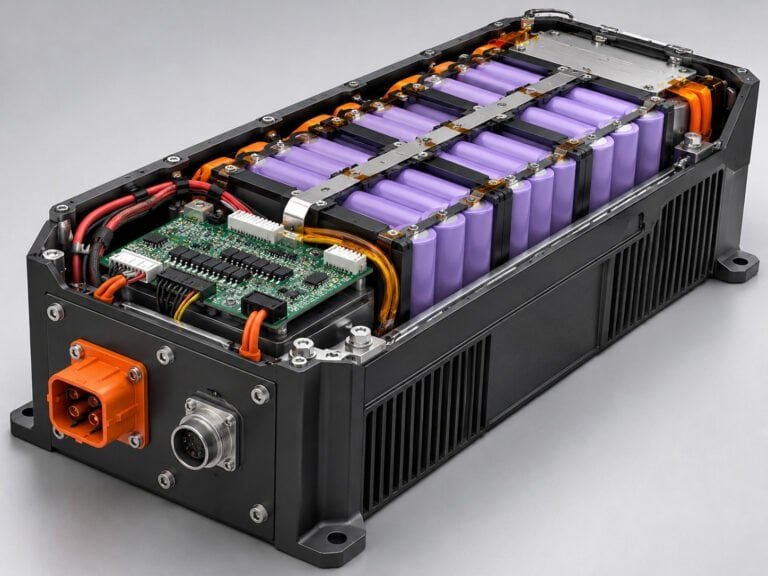
Battery Management System Protection
The Battery Management System monitors battery conditions and provides electrical protection functions.
For battery packs exposed to moisture, BMS protection measures may include:
- PCB conformal coating
- Moisture-resistant component placement
- Sealed electrical interfaces
- Corrosion-resistant connection materials
- Insulation design
- Überwachung der Temperatur
These measures complement enclosure sealing and do not replace IP testing.
Part 5. IP Rating and Battery Thermal Management
Waterproof enclosure design and battery thermal management should be evaluated together.
A sealed battery enclosure restricts air exchange between the internal battery compartment and the surrounding environment.
During charging and discharging, heat is generated by battery cells, electrical connections, and BMS components.
Without an appropriate thermal design, internal temperature can increase during operation.
Thermal management considerations include:
- Battery cell arrangement
- Kontinuierlicher Entladestrom
- Spitzenableitstrom
- BMS heat generation
- Enclosure heat transfer
- Thermal interface materials
- Equipment operating temperature
- Installation conditions
For example, a 48V 50Ah lithium battery pack designed for an outdoor AGV may require both IP67 enclosure protection and thermal evaluation under its specified discharge current.
In some applications, sealed pressure-equalization vents may also be considered to manage pressure changes while maintaining the required environmental protection.
The vent specification and installation must be included in the enclosure validation.
Part 6. Selecting IP Ratings for Different Battery Applications
The operating environment determines the protection requirements of a custom battery pack.
The following table provides preliminary design considerations for different applications.
| Anmeldung | IP Rating for Evaluation | Environmental Considerations |
|---|---|---|
| Indoor AGV / AMR | IP54 / IP65 | Dust, floor moisture, cleaning conditions |
| Electric Bicycle | IP65 / IP67 | Rain, splashing water, road dust |
| Elektro-Roller | IP65 / IP67 | Outdoor exposure, road spray |
| Outdoor Service Robot | IP65 / IP67 | Rain, dust, ground moisture |
| Industrial Cleaning Equipment | IP65 / IP67 | Water spray, cleaning liquids |
| Agricultural Equipment | IP65 / IP67 | Dust, mud, rain |
| Marine-Related Equipment | IP67 / IP68 | Water exposure, humidity, salt contamination |
| Indoor Energy Storage | Application-dependent | Installation environment, dust, moisture |
Note: These ratings are examples for initial engineering evaluation, not mandatory requirements for the listed applications. Final selection depends on installation conditions, equipment design, cleaning procedures, and applicable standards.
Electric Bicycle Battery Packs
E-bike batteries may be exposed to rain, road dust, and water splashes during daily operation.
When customizing an electric bicycle battery pack, engineers should evaluate the enclosure sealing structure, charging interface, discharge connector, and battery mounting arrangement.
Water exposure around removable battery interfaces should also be considered during development.
AGV and AMR Battery Packs
AGV and AMR batteries are commonly installed inside equipment used in warehouses, logistics facilities, and industrial environments.
IP requirements depend on the equipment enclosure, working conditions, and cleaning procedures.
For custom AGV battery packs, the design may also include CAN communication, customized connectors, BMS protection, and mounting structures according to the customer’s system requirements.
Service Robot Battery Packs
Service robots may operate indoors or outdoors.
Outdoor service robots can encounter rain, dust, surface moisture, and temperature changes.
Battery enclosure design should consider environmental exposure together with discharge current, charging requirements, and installation orientation.
Industrial and Marine Battery Packs
Industrial and marine-related applications may involve exposure to water, humidity, chemicals, or salt-containing environments.
In these applications, IP protection should be evaluated together with corrosion resistance, material compatibility, and electrical safety requirements.
An IP rating alone does not establish resistance to salt corrosion or chemical exposure.
Part 7. IP Rating Testing for Custom Lithium Battery Packs
IP testing helps determine whether the battery enclosure meets the protection level specified for the project.
Testing is generally conducted according to IEC 60529 or other applicable requirements.
Dust Ingress Testing
Dust testing evaluates the enclosure’s protection against solid particle ingress.
For an IP6X requirement, the enclosure is evaluated under specified dust test conditions to verify dust-tight performance.
Water Spray and Jet Testing
Water testing for IPX4, IPX5, and IPX6 evaluates the enclosure’s resistance to specified spraying, splashing, or water-jet conditions.
The test method depends on the required protection level.
Immersion Testing
IPX7 and IPX8 involve water immersion testing.
For IPX7, the enclosure is subjected to temporary immersion under standardized conditions.
For IPX8, the immersion conditions must be established according to the relevant project requirements and applicable standard.
Complete Battery Pack Verification
For custom lithium battery packs, testing should consider the final assembled product.
Relevant inspection points include:
- Enclosure joints
- Charging connectors
- Discharge connectors
- Communication interfaces
- Cable outlets
- Mounting interfaces
- Vent components
- Sealing surfaces
Environmental protection testing may also be combined with application-specific mechanical, vibration, thermal, and electrical testing.
Part 8. Information Required for Custom Waterproof Battery Packs
Before developing a custom lithium battery pack with an IP protection requirement, OEM customers should provide the following information:
- Application: E-bike, AGV, AMR, service robot, industrial equipment, or other application.
- Required IP Rating: IP54, IP65, IP67, IP68, or a project-specific requirement.
- Battery Specifications: Nominal voltage, capacity, continuous discharge current, and peak current.
- Installation Environment: Indoor, outdoor, humid, dusty, or water-exposed conditions.
- Mechanical Dimensions: Available installation space and mounting orientation.
- Connector Requirements: Charging, discharging, and communication interfaces.
- Betriebstemperatur: Ambient temperature range during charging and discharging.
- Testing Requirements: Applicable standards and required environmental validation.
For IP68 projects, customers should also specify the required immersion depth and duration.
These details support enclosure design, connector selection, sealing structure development, and prototype validation.
Part 9. Custom Lithium Battery Pack Manufacturing at Dongguan Yizhan Electronics Technology Co., Ltd.
Dongguan Yizhan Electronics Technology Co, Ltd., operating under the Erste Kraft brand, provides OEM and ODM custom lithium battery pack development and manufacturing services for electric mobility, robotics, industrial equipment, and energy storage applications.
With over 13 years of battery pack manufacturing experience, our company supports customers with battery cell selection, BMS customization, enclosure development, and battery pack assembly.
Our customization capabilities include:
- NMC and LiFePO4 battery pack configurations
- Individuell wählbare Spannung und Kapazität
- Application-specific BMS development
- CAN, UART, and RS485 communication options
- Plastic and aluminum battery enclosures
- Waterproof connector integration
- Customized sealing structures
- Environmental protection design
- Battery testing according to project requirements
IP protection requirements are evaluated according to the customer’s application and technical specifications.
The final IP rating is determined through design validation and the required testing of the assembled product.
Schlussfolgerung
Selecting an appropriate IP rating is an important part of custom lithium battery pack design.
IP54, IP65, IP67, and IP68 describe different enclosure protection conditions, and each rating corresponds to specific testing requirements.
For OEM battery projects, the IP rating should be determined according to the equipment’s operating environment, installation structure, connector configuration, and potential exposure to dust and water.
Battery enclosure protection should also be evaluated together with thermal management, electrical safety, and maintenance requirements.
Looking for a custom lithium battery pack with specific IP protection requirements?
Kontakt Dongguan Yizhan Electronics Technology Co., Ltd. (First Power) to discuss your battery voltage, capacity, enclosure dimensions, IP rating, BMS communication, and application requirements.
Our engineering team can evaluate a custom battery pack design according to your project specifications.
 English
 Chinese
 Japanese
 German
 French
 Korean

