
Landwirtschaftliche Sprühdrohnen sind zu einem wichtigen Werkzeug in der modernen Präzisionslandwirtschaft geworden. Sie helfen Landwirten dabei, die Effizienz beim Sprühen zu verbessern, die Arbeitskosten zu senken und eine präzisere Pflanzenpflege zu erreichen. Vom Ausbringen von Pflanzenschutzmitteln und Düngemitteln bis hin zur Pflanzenüberwachung werden landwirtschaftliche Drohnen zunehmend in landwirtschaftlichen Betrieben, Obstgärten und Anbauflächen eingesetzt.
Die Leistungsfähigkeit einer Sprühdrohne für die Landwirtschaft hängt jedoch in hohem Maße von ihrem Antriebssystem ab. Unter allen Komponenten ist der Akku eines der wichtigsten Teile, da er sich unmittelbar auf die Flugzeit, die Nutzlastkapazität, die Betriebseffizienz und die allgemeine Zuverlässigkeit auswirkt.
Bei der Auswahl des richtigen Akkus für eine Landwirtschaftsdrohne reicht es nicht aus, einfach nur einen Akku mit größerer Kapazität zu wählen. Faktoren wie Spannung, Entladungsrate, Akkuchemie, Gewicht, Ladegeschwindigkeit, Umgebungsbedingungen und Akkumangementsysteme müssen ebenfalls berücksichtigt werden.
In diesem Leitfaden wird erläutert, wie man den richtigen Akku für landwirtschaftliche Sprühdrohnen auswählt und welche Akku-Eigenschaften UAV-Hersteller bei der Entwicklung zuverlässiger Stromversorgungslösungen für Drohnen berücksichtigen sollten.
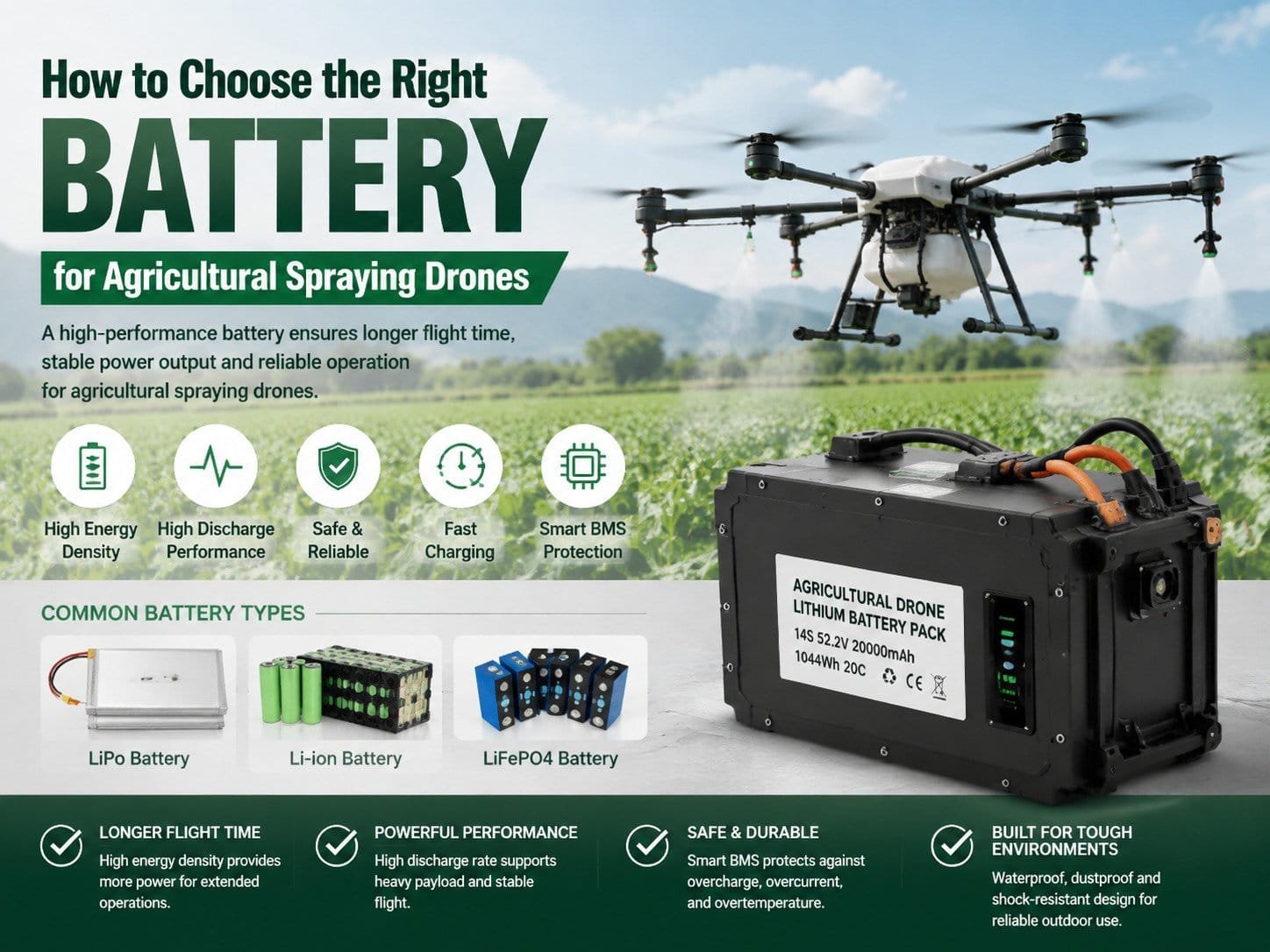
Teil 1. Warum die Wahl des Akkus für landwirtschaftliche Sprühdrohnen entscheidend ist
Landwirtschaftliche Drohnen funktionieren anders als Drohnen für den privaten Gebrauch. Sie transportieren in der Regel zusätzliche Nutzlasten, darunter:
- Pflanzenschutzmitteltanks
- Düngemittelbehälter
- Sprühpumpen
- Steuerungssysteme
- Sensoren und Kommunikationsgeräte
Im Vergleich zu leichten Fotodrohnen benötigen landwirtschaftliche UAVs eine deutlich höhere Leistung.
Eine geeignete Batterie muss folgende Eigenschaften aufweisen:
- Stabiler Spannungsausgang
- Hohe Dauerausgabekapazität
- Lange Betriebsdauer
- Zuverlässige Leistung unter Außenbedingungen
- Schnellladung für wiederholte Einsätze
Eine ungeeignete Batterie kann folgende Probleme verursachen:
- Kurze Flugdauer
- Plötzliche Spannungsabfälle
- Reduzierte Nutzlastkapazität
- Überhitzung der Batterie
- Verkürzte Lebensdauer
Bei professionellen landwirtschaftlichen Anwendungen ist die Wahl der richtigen Batterie ein entscheidender Faktor für die Steigerung der betrieblichen Effizienz.
Teil 2. Gängige Akkutypen für landwirtschaftliche Sprühdrohnen
Derzeit kommen in landwirtschaftlichen Drohnen hauptsächlich leistungsstarke Lithium-Akku-Technologien zum Einsatz.
2.1 Lithium-Polymer-Akku (LiPo)
Lithium-Polymer-Akkus finden in Hochleistungs-UAV-Anwendungen breite Verwendung, da sie eine hervorragende Leistungsabgabe bieten.
Vorteile:
- Hohe Entladungsrate
- Leichte Konstruktion
- Hohe Momentanleistung
- Geeignet für Flugbedingungen mit hoher Belastung
LiPo-Akkus können während folgender Vorgänge hohe Stromstärken liefern:
- Drohnen-Start-up
- Schnelles Klettern
- Spritzen unter hoher Belastung
- Starkwindausgleich
Nachteile:
- Geringere Zyklenlebensdauer im Vergleich zu einigen Lithium-Ionen-Lösungen
- Erfordert ein striktes Lade- und Lagerungsmanagement
- Höherer Wartungsaufwand
LiPo-Akkus werden häufig für landwirtschaftliche Drohnen verwendet, die maximale Leistungsfähigkeit erfordern.
2.2 Lithium-Ionen-Akku
Lithium-Ionen-Akkus werden für industrielle landwirtschaftliche UAV-Anwendungen immer beliebter.
Vorteile:
- Längere Lebensdauer des Zyklus
- Höhere Energiedichte
- Günstigere langfristige Betriebskosten
- Stabilere Leistung
Lithium-Ionen-Akkus eignen sich für:
- Kommerzielle landwirtschaftliche Betriebe
- Langzeitmissionen
- Professionelle UAV-Plattformen
Zu den gängigen zylindrischen Zellen zählen:
- 18650-Lithium-Ionen-Zellen
- 21.700 Lithium-Ionen-Zellen
Diese Zellen lassen sich je nach den Anforderungen der UAVs zu maßgeschneiderten Akkupacks zusammenstellen.
2.3 LiFePO4-Akku
Lithium-Eisenphosphat-Akkus (LiFePO₄) sind für ihre Sicherheit und ihre hohe Zyklenfestigkeit bekannt.
Vorteile:
- Ausgezeichnete thermische Stabilität
- Lange Lebensdauer
- Hohe Sicherheitsleistung
- Gute Zuverlässigkeit
Allerdings weisen LiFePO₄-Batterien im Vergleich zu einigen Lithium-Ionen-Chemien eine geringere Energiedichte auf, weshalb sie bei Anwendungen in der Luftfahrt, bei denen es auf geringes Gewicht ankommt, weniger verbreitet sind.
Sie eignen sich besser für:
- Landwirtschaftliche Bodenroboter
- Autonome Landmaschinen
- Ladestationen
- Energiespeichersysteme für die Landwirtschaft
Teil 3. Anforderungen an die Batteriespannung verstehen
Die Spannung ist einer der wichtigsten Parameter bei der Auswahl eines Akkus für eine landwirtschaftliche Drohne.
Die Batteriespannung muss übereinstimmen:
- Antriebssystem
- Elektronischer Drehzahlregler (ESC)
- Flugsteuerung
- Stromversorgung
Zu den gängigen Akkuspannungen für landwirtschaftliche Drohnen gehören:
| Drohnen-Typ | Typische Spannung |
|---|---|
| Kleines landwirtschaftliches Drohnenfluggerät | 22,2 V (6S) |
| Mittelgroße Sprühdrohne | 44,4 V (12S) |
| Große landwirtschaftliche Drohne | 48 V–52 V |
Ein System mit höherer Spannung kann bei gleicher Leistungsabgabe den Strombedarf senken, wodurch sich der Wirkungsgrad verbessert und die Wärmeentwicklung verringert wird.
Teil 4. Akkukapazität und Flugzeit
Die Batteriekapazität wird in Ah (Amperestunden) oder mAh gemessen.
Ein Akku mit größerer Kapazität sorgt zwar für eine längere Betriebsdauer, erhöht aber auch das Gewicht.
Das Verhältnis zwischen Kapazität und Flugleistung erfordert Ausgewogenheit.
Zu den Faktoren, die die Flugzeit beeinflussen, gehören:
- Gewicht der Drohne
- Nutzlastgewicht
- Sprühvolumen
- Fluggeschwindigkeit
- Wetterbedingungen
- Motoreffizienz
Zum Beispiel:
Eine 20-Ah-Batterie ermöglicht zwar eine längere Betriebsdauer als eine 10-Ah-Batterie, doch das zusätzliche Gewicht könnte den Effizienzgewinn wieder schmälern.
Ein professionelles Batteriedesign erfordert eine Optimierung zwischen:
- Energiekapazität
- Gewicht
- Leistungsabgabe
Teil 5. Anforderungen an hohe Entladungsraten
Drohnen für den Einsatz in der Landwirtschaft benötigen eine hohe Stromabgabe.
Während des Betriebs muss der Akku folgende Anforderungen erfüllen:
- Motorbeschleunigung
- Heben schwerer Lasten
- Dauersprühbetrieb
- Windwiderstand
Die Entladerate wird in der Regel als C-Rate angegeben.
Beispiel:
Eine 20-Ah-Batterie mit einer Entladungsrate von 10 C kann theoretisch Folgendes liefern:
20 Ah × 10 C = 200 A Dauerstrom
Bei landwirtschaftlichen UAV-Anwendungen trägt eine hohe Ausbringleistung dazu bei, Folgendes zu gewährleisten:
- Stabile Spannung
- Bessere Flugsteuerung
- Höhere Effizienz
Ein professioneller UAV-Akku sollte folgende Eigenschaften aufweisen:
- Zellen mit geringem Innenwiderstand
- Hochstromsteckverbinder
- Optimierte Strompfade
- Zuverlässige Schweißtechnik
Teil 6. Batteriemanagementsystem (BMS) für Batterien von landwirtschaftlichen Drohnen
Ein intelligentes Batteriemanagementsystem spielt eine wichtige Rolle beim Schutz von UAV-Batterien.
Ein ordnungsgemäß konzipiertes Gebäudemanagementsystem (BMS) überwacht:
Spannungsüberwachung
Einschließlich:
- Spannung einer einzelnen Zelle
- Gesamtspannung der Batterie
- Ungleichgewicht der Spannung
Stromüberwachung
Das BMS erfasst:
- Ladestrom
- Entladestrom
- Überstrombedingungen
Überwachung der Temperatur
Landwirtschaftliche Drohnen werden häufig im Freien unter heißen Bedingungen eingesetzt.
Die Temperaturüberwachung trägt dazu bei, Folgendes zu verhindern:
- Überhitzung
- Batterieschaden
- Leistungsabfall
Sicherheit Schutz
Ein BMS für UAV-Akkus bietet in der Regel folgende Funktionen:
- Schutz vor Überladung
- Schutz vor Überentladung
- Kurzschlussschutz
- Schutz vor Überhitzung
- Zellausgleich
Zu den Kommunikationsoptionen des Smart-BMS gehören:
- CAN
- UART
- RS485
Dadurch wird die Kommunikation zwischen dem Akku und dem Steuerungssystem der Drohne ermöglicht.
Teil 7. Umweltanforderungen für Akkus von Agrardrohnen
Landwirtschaftliche Drohnen kommen in anspruchsvollen Außenbereichen zum Einsatz.
Betrieb bei hohen Temperaturen
Während der landwirtschaftlichen Sommermonate können Batterien folgenden Belastungen ausgesetzt sein:
- Hohe Umgebungstemperaturen
- Dauerbetrieb
- Hochstromentladung
Akkusätze sollten Folgendes enthalten:
- Konzeption des Wärmemanagements
- Temperatursensoren
- Hitzebeständige Werkstoffe
Schutz vor Feuchtigkeit und Chemikalien
Bei Spritzarbeiten sind die Geräte folgenden Einflüssen ausgesetzt:
- Wassertropfen
- Dünger
- Agrarchemikalien
Bei der Auswahl eines geeigneten Akkus sollten folgende Aspekte berücksichtigt werden:
- Abgedichtetes Gehäuse
- Wasserdichte Anschlüsse
- Korrosionsbeständige Werkstoffe
Vibrationsfestigkeit
Die Akkus von Drohnen sind folgenden Vibrationen ausgesetzt:
- Motoren
- Propeller
- Flugverkehr
Die Konstruktion des Akkupacks sollte Folgendes umfassen:
- Robuste mechanische Konstruktion
- Zuverlässige Mobilfunkverbindung
- Stoßfeste Befestigungsmethoden
Teil 8. Schnellladen und Lebensdauer des Akkus
In der Landwirtschaft sind oft mehrere Flüge pro Tag erforderlich.
Eine praktische Batterielösung sollte Folgendes unterstützen:
- Schnelles Laden
- Mehrere Ladezyklen
- Schneller Batteriewechsel
- Präzise Überwachung des Batteriestatus
In professionellen landwirtschaftlichen Betrieben wirkt sich die Lebensdauer der Akkus direkt auf die Betriebskosten aus.
Eine längere Akkulaufzeit trägt dazu bei, Folgendes zu reduzieren:
- Austauschhäufigkeit
- Instandhaltungskosten
- Ausfallzeit
Teil 9. Maßgeschneiderte Akku-Konstruktionen für Hersteller von landwirtschaftlichen Drohnen
Verschiedene landwirtschaftliche Drohnenplattformen stellen unterschiedliche Anforderungen.
Ein professioneller Batteriehersteller kann maßgeschneiderte Lösungen anbieten, darunter:
Elektrotechnische Planung
Anpassungsmöglichkeiten:
- Spannung
- Kapazität
- Entladungsrate
- Steckertyp
- Kommunikationsprotokoll
Mechanische Konstruktion
Einschließlich:
- Batteriegehäuse
- Befestigungskonstruktion
- Wasserdichtes Design
- Stoßschutz
Zellauswahl
Verfügbare Optionen:
- 18650-Zellen mit hoher Entladerate
- 21.700 Lithium-Ionen-Zellen
- Lithium-Polymer-Zellen
- Maßgeschneiderte Lithium-Batteriemodule
Prüfverfahren
Eine professionelle Produktion von UAV-Akkus sollte Folgendes umfassen:
- Zellabgleich
- Schweißnahtprüfung
- Prüfung von Ladung und Entladung
- Alterungsprüfung
- Sicherheitsprüfung
Teil 10. So wählen Sie einen zuverlässigen Hersteller von Akkus für landwirtschaftliche Drohnen aus
Bei der Auswahl eines Batterielieferanten sollten UAV-Unternehmen folgende Aspekte berücksichtigen:
Technische Leistungsfähigkeit
Achten Sie auf Hersteller mit:
- Erfahrung in der Entwicklung von Akkupacks
- BMS-Entwicklungsfähigkeit
- Möglichkeiten zur individuellen Gestaltung
Qualitätskontrolle
Zu den wichtigen Faktoren zählen:
- Prüfung der Zellkonsistenz
- Automatisierte Produktionsanlagen
- Alterungstests
- Sicherheitsprüfung
Unterstützung bei der Zertifizierung
Je nach Zielmarkt können für Batterien folgende Anforderungen gelten:
- UN38.3
- CE
- IEC 62133
- RoHS
- MSDS
Ein zuverlässiger Partner im Bereich Batterietechnik kann UAV-Unternehmen dabei unterstützen, Produkte zu entwickeln, die den Anforderungen des Transportwesens und des Marktes gerecht werden.
Teil 11. Zukünftige Trends bei Akkus für landwirtschaftliche Drohnen
Die Technologie für landwirtschaftliche Drohnen entwickelt sich weiter.
Zu den zukünftigen Trends im Bereich Batterien gehören:
Höhere Energiedichte
Hersteller suchen:
- Längere Flugzeit
- Höhere Nutzlastkapazität
- Geringeres Batteriegewicht
Intelligentes Batteriemanagement
Zukünftige Batterien werden Folgendes bieten:
- Cloud-Überwachung
- Analyse des Akkustatus
- Vorausschauende Wartung
Modulare Batteriesysteme
Modulare Konstruktionen ermöglichen:
- Schnellerer Austausch
- Einfachere Wartung
- Flexible Kapazitätserweiterung
Schlussfolgerung
Die Auswahl des richtigen Akkus für landwirtschaftliche Sprühdrohnen erfordert eine sorgfältige Abwägung von Spannung, Kapazität, Entladungsrate, Akkuchemie, Sicherheitsmerkmalen und Betriebsumgebung.
Ein leistungsstarker UAV-Akku sollte folgende Eigenschaften aufweisen:
- Zuverlässige Leistungsabgabe
- Lange Betriebsdauer
- Schnellladefunktion
- Intelligentes Batteriemanagement
- Starker Umweltschutz
Für Hersteller und Betreiber von Agrardrohnen kann die Zusammenarbeit mit einem erfahrenen Hersteller von Lithium-Akku-Packs dazu beitragen, maßgeschneiderte Akkulösungen zu entwickeln, die die Leistung der Drohnen und die betriebliche Effizienz verbessern.
FAQ
Welcher Akku eignet sich am besten für landwirtschaftliche Sprühdrohnen?
LiPo-Akkus mit hoher Entladerate und maßgeschneiderte Lithium-Ionen-Akkupacks kommen häufig bei Sprühdrohnen für die Landwirtschaft zum Einsatz, da sie eine hohe Leistungsabgabe bei geringem Gewicht bieten.
Wie lange hält der Akku einer landwirtschaftlichen Drohne?
Die Flugzeit hängt von der Akkukapazität, der Größe der Drohne, der Nutzlast und den Wetterbedingungen ab. Viele landwirtschaftliche Drohnen haben pro Akku eine Flugzeit von etwa 15 bis 30 Minuten.
Welche Batteriespannung benötigt eine Sprühdrohne?
Zu den gängigen Akkusystemen für landwirtschaftliche Drohnen gehören Konfigurationen mit 22,2 V, 44,4 V sowie 48 V bis 52 V.
Können Lithium-Ionen-Akkus LiPo-Akkus in landwirtschaftlichen Drohnen ersetzen?
Ja. Lithium-Ionen-Akkus können eingesetzt werden, wenn eine längere Lebensdauer und eine höhere Energieeffizienz erforderlich sind.
Warum benötigt ein Drohnenakku ein intelligentes BMS?
Ein intelligentes BMS schützt die Batterie, indem es Spannung, Strom, Temperatur und den Zustand der Batterie überwacht und gleichzeitig die Sicherheit und Zuverlässigkeit erhöht.

 English
  Chinese
  Japanese
  German
  French
  Korean
