
Landwirtschaftliche Drohnen verändern die moderne Landwirtschaft, indem sie die Effizienz beim Sprühen verbessern, den Arbeitsaufwand verringern und die Präzisionslandwirtschaft unterstützen. Vom Pflanzenschutz über die Düngerausbringung bis hin zur Feldüberwachung ist die UAV-Technologie zu einem wichtigen Bestandteil intelligenter Landwirtschaftssysteme geworden.
Allerdings erfordern unterschiedliche landwirtschaftliche Anwendungen unterschiedliche Leistungsniveaus der Drohnen. Eine kleine Sprühdrohne für Obstplantagen, ein großflächig einsetzbares UAV für den Pflanzenschutz und eine Drohne zur landwirtschaftlichen Inspektion können völlig unterschiedliche Anforderungen hinsichtlich Leistung, Flugzeit, Nutzlastkapazität und Einsatzumgebung haben.
Das Akkusystem ist eine der wichtigsten Komponenten, die die Leistung einer Drohne bestimmen. Ein Standardakku erfüllt möglicherweise nicht immer die Anforderungen professioneller landwirtschaftlicher Betriebe. Mit maßgeschneiderten Akkupacks können Drohnenhersteller und Landmaschinenhersteller die Stromversorgungslösungen entsprechend den spezifischen Anwendungsanforderungen optimieren.
Ein professioneller, maßgeschneiderter Akku vereint geeignete Batteriezellen, ein optimiertes elektrisches Design, ein intelligentes BMS, mechanischen Schutz und zuverlässige Fertigungsprozesse, um eine stabile Stromversorgung für landwirtschaftliche UAV-Anwendungen zu gewährleisten.
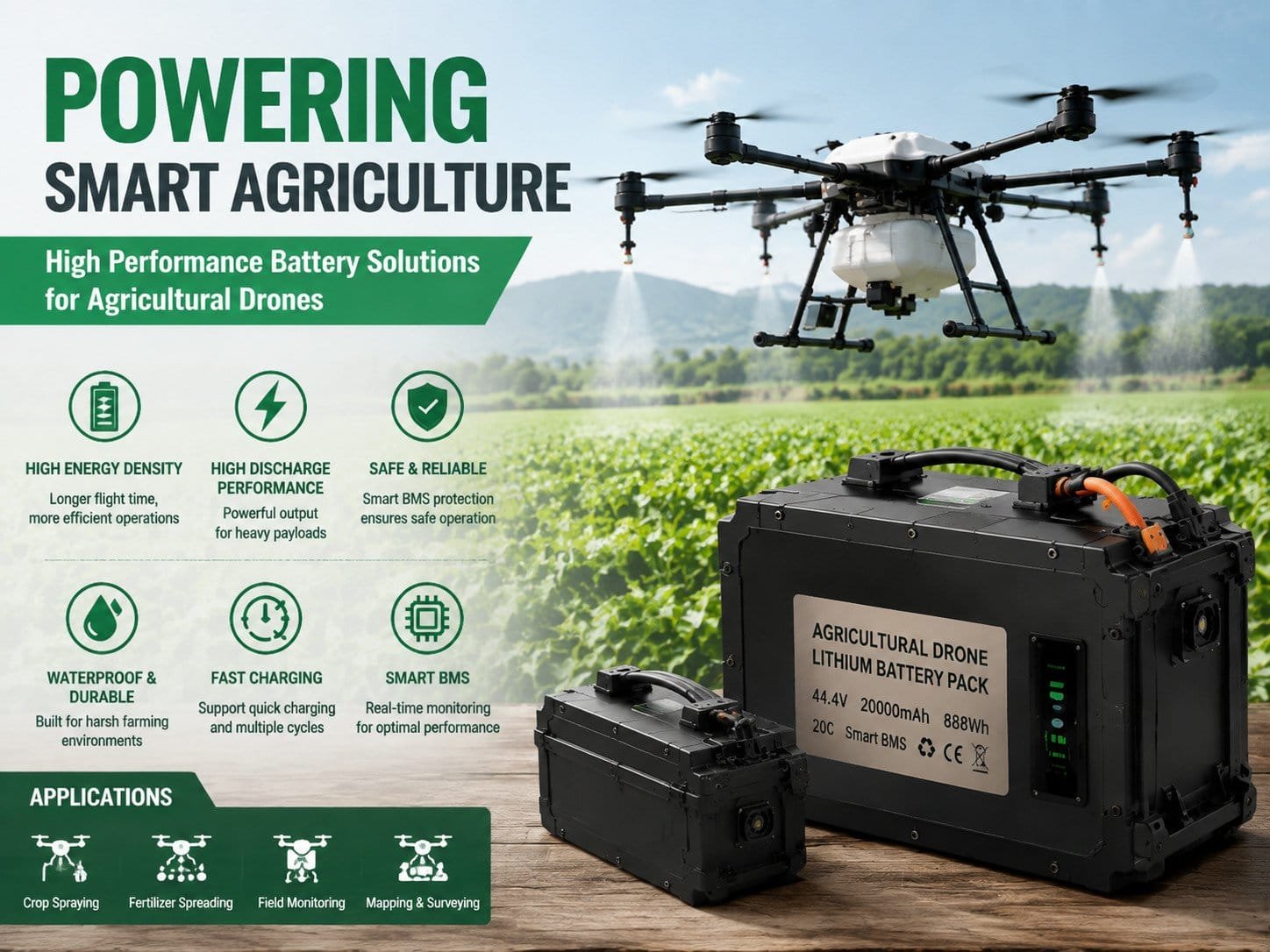
1. Warum landwirtschaftliche Drohnen maßgeschneiderte Akkus benötigen
Landwirtschaftliche Drohnen werden im Vergleich zu Drohnen für Endverbraucher unter anspruchsvollen Bedingungen eingesetzt.
Bei landwirtschaftlichen Einsätzen müssen die Akkus der UAV folgende Anforderungen erfüllen:
- Transport schwerer Lasten
- Dauerbetrieb des Motors
- Hochstrom-Spritzpumpen
- Lange Arbeitszeiten
- Veränderungen der äußeren Umweltbedingungen
Bei einer für allgemeine Anwendungen konzipierten Batterie können folgende Probleme auftreten:
- Unzureichende Flugzeit
- Spannungsabfall bei hoher Belastung
- Übermäßige Wärmeentwicklung
- Kurze Lebensdauer
Mit maßgeschneiderten Akkupacks können Hersteller den Akku entsprechend folgenden Kriterien optimieren:
- Größe der Drohne
- Anforderungen an die Nutzlast
- Flugdauer
- Betriebsumgebung
- Ladesystem
- Kommunikationsanforderungen
2. Unterschiedliche landwirtschaftliche Anwendungen erfordern unterschiedliche Batterielösungen
Landwirtschaftliche Drohnen kommen in vielen Bereichen der Landwirtschaft zum Einsatz, und jede Anwendung stellt unterschiedliche Anforderungen an die Batterie.
2.1 Drohnen zum Ausbringen von Pflanzenschutzmitteln
Das Besprühen von Kulturpflanzen ist eine der häufigsten Anwendungen von Drohnen in der Landwirtschaft.
Diese Drohnen sind in der Regel mit folgendem ausgestattet:
- Pflanzenschutzmitteltanks
- Sprühpumpen
- Steuerungssysteme
- Navigationsgeräte
Zu den Anforderungen an die Batterie gehören:
- Hohe Entladeleistung
- Stabiler Spannungsausgang
- Zuverlässiger Betrieb bei Dauersprühbetrieb
Ein Hochleistungs-Lithium-Akku liefert die erforderliche Energie für:
- Motorbeschleunigung
- Heben schwerer Lasten
- Stabiles Flugverhalten
2.2 Drohnen zum Ausbringen von Dünger
Drohnen zum Ausbringen von Dünger benötigen aufgrund ihrer höheren Nutzlast oft leistungsstärkere Antriebssysteme.
Zu den wichtigen Faktoren bei Batterien gehören:
- Höhere Energiekapazität
- Hohe Tragfähigkeit
- Längere Betriebszeit
Ein maßgeschneidertes Batteriedesign kann dabei helfen, Folgendes auszugleichen:
- Gewicht der Batterie
- Flugdauer
- Nutzlastkapazität
2.3 Drohnen für die Landwirtschaftsinspektion
Bei Inspektionsdrohnen liegt der Schwerpunkt eher auf Ausdauer und stabilem Betrieb.
Die Anwendungen umfassen:
- Ernteüberwachung
- Pflanzengesundheitsanalyse
- Feldkartierung
- Erhebung landwirtschaftlicher Daten
Diese Drohnen können folgende Prioritäten setzen:
- Längere Flugzeit
- Leichte Konstruktion
- Stabile Leistungsabgabe
3. Auswahl der richtigen Batteriechemie
Die Wahl der Batteriechemie wirkt sich direkt auf die Leistung der Drohne aus.
3.1 Lithium-Polymer-Akku mit hoher Entladungsrate
Lithium-Polymer-Akkus finden in Hochleistungs-UAV-Anwendungen breite Anwendung.
Vorteile:
- Hohe Entladungsrate
- Leichtbauweise
- Hohe Leistungsabgabe
Geeignet für:
- Landwirtschaftliche Drohnen für hohe Lasten
- Kurzzeitige Intensivmaßnahmen
3.2 Lithium-Ionen-Akku
Lithium-Ionen-Akkus kommen häufig zum Einsatz, wenn eine längere Lebensdauer und Energieeffizienz gefragt sind.
Vorteile:
- Höhere Energiedichte
- Längere Nutzungsdauer
- Günstigere langfristige Betriebskosten
Geeignet für:
- Kommerzielle landwirtschaftliche Drohnen
- Professionelle landwirtschaftliche Betriebe
Zu den gängigen Zellenformaten gehören:
- 18650-Lithium-Ionen-Zellen
- 21.700 Lithium-Ionen-Zellen
3.3 LiFePO₄-Akku
LiFePO4-Akkus sind für ihre Sicherheit und ihre lange Zyklenlebensdauer bekannt.
Vorteile:
- Ausgezeichnete thermische Stabilität
- Lange Lebensdauer
- Hohe Sicherheitsleistung
Sie eignen sich für:
- Landwirtschaftsroboter
- Bodenbearbeitungsgeräte
- Ladesysteme
4. Maßgeschneiderte Auslegung von Spannung und Kapazität
Jede landwirtschaftliche Drohnenplattform hat unterschiedliche elektrische Anforderungen.
Durch die individuelle Anpassung der Akkus können Hersteller geeignete Komponenten auswählen:
- Spannung
- Kapazität
- Stromausgang
- Batteriekonfiguration
Zu den gängigen UAV-Akkusystemen gehören:
| Anmeldung | Typische Spannung |
|---|---|
| Kleine landwirtschaftliche Drohne | 22,2 V |
| Mittelgroße Sprühdrohne | 44,4 V |
| Hochleistungs-Landwirtschafts-Drohne | 48 V–52 V |
Die Wahl der Batteriekapazität hängt ab von:
- Gewicht der Drohne
- Nutzlast
- Motoreffizienz
- Vorgaben zur Arbeitszeit
Ein Akku mit größerer Kapazität kann die Betriebszeit verlängern, doch ein zu hohes Gewicht kann die Flugeffizienz beeinträchtigen.
Bei der professionellen Entwicklung von Batterien liegt der Schwerpunkt darauf, das richtige Gleichgewicht zwischen folgenden Faktoren zu finden:
- Energie
- Gewicht
- Leistungsabgabe
5. Hohe Förderleistung für landwirtschaftliche Anwendungen
Landwirtschaftliche Drohnen benötigen Akkus, die einen hohen Strombedarf bewältigen können.
Im Betrieb müssen die Batterien folgende Anforderungen erfüllen:
- Drohnen-Start-up
- Schnelles Klettern
- Transport schwerer Lasten
- Windwiderstand
Batteriepacks mit hoher Entladeleistung bieten:
- Stabilere Spannung
- Bessere motorische Reaktion
- Verbesserte Flugzuverlässigkeit
Zu den wichtigen Auslegungsfaktoren gehören:
Zellen mit geringem Innenwiderstand
Ein geringerer Widerstand trägt dazu bei, Folgendes zu verringern:
- Wärmeerzeugung
- Spannungsverlust
- Energieverschwendung
Auslegung von Hochstromanschlüssen
Die Konstruktion des Akkupacks sollte Folgendes umfassen:
- Zuverlässige Steckverbinder
- Optimierte Verkabelung
- Leistungsstarke Schweißtechnik
6. Intelligentes BMS für das Batteriemanagement bei landwirtschaftlichen Drohnen
Ein Batteriemanagementsystem ist für professionelle UAV-Akkus unverzichtbar.
Ein intelligentes BMS überwacht:
Akkustatus
Einschließlich:
- Zellspannung
- Gesamtspannung
- Aktuell
- Temperatur
- SOC
- Zustand der Batterie
Schutzfunktionen
Ein umfassendes Gebäudemanagementsystem (BMS) bietet:
- Schutz vor Überladung
- Schutz vor Überentladung
- Überstromschutz
- Kurzschlussschutz
- Temperaturschutz
Kommunikationsfunktionen
Moderne Akkus können Folgendes unterstützen:
- CAN-Kommunikation
- UART-Kommunikation
- RS485-Kommunikation
Dadurch kann das UAV-System Batterieinformationen in Echtzeit abrufen.
7. Batteriekonstruktion für raue landwirtschaftliche Umgebungen
Landwirtschaftliche Drohnen werden oft unter schwierigen Bedingungen eingesetzt.
Temperaturbeständigkeit
Landwirtschaftliche Arbeiten können während der heißen Jahreszeiten stattfinden.
Bei der Auslegung von Batterien sollte Folgendes berücksichtigt werden:
- Wärmemanagement
- Überwachung der Temperatur
- Materialauswahl
Wasser- und Staubschutz
Bei Spritzarbeiten sind die Geräte folgenden Einflüssen ausgesetzt:
- Wassernebel
- Dünger
- Chemikalien
- Staub
Maßgeschneiderte Akkupacks können Folgendes umfassen:
- Abgedichtetes Gehäuse
- Wasserdichte Anschlüsse
- Schutzkonstruktionen
Schutz vor Vibrationen
Der Betrieb der Drohne verursacht kontinuierliche Vibrationen.
Ein zuverlässiger Akku erfordert:
- Starke mechanische Fixierung
- Stabile Mobilfunkverbindung
- Vibrationsbeständige Konstruktion
8. OEM- und ODM-Akku-Lösungen für Hersteller von Agrardrohnen
Hersteller von Agrardrohnen benötigen häufig maßgeschneiderte Akkulösungen anstelle von Standardprodukten.
Ein professioneller Batteriehersteller kann Folgendes anbieten:
Batterieauslegung
Einschließlich:
- Elektrotechnische Planung
- Tragwerksplanung
- BMS-Entwicklung
- Prototypentests
Fertigung
Zu den Produktionsprozessen gehören:
- Zelluntersuchung
- Zellabgleich
- Laserschweißen
- PACK-Baugruppe
- Alterungsprüfung
Anpassungsoptionen
Kunden können Folgendes individuell anpassen:
- Abmessungen der Batterie
- Kapazität
- Spannung
- Steckverbinder
- Kommunikationsprotokolle
- Etiketten und Verpackungen
9. Qualitätsprüfung von Akkus für landwirtschaftliche Drohnen
Eine zuverlässige Batterieproduktion erfordert eine strenge Qualitätskontrolle.
Zu den wichtigen Prüfverfahren gehören:
Zellenprüfung
Überprüfung:
- Konsistenz der Spannung
- Innerer Widerstand
- Kapazitätsleistung
PACK-Prüfung
Einschließlich:
- Prüfung von Ladung und Entladung
- Funktionsprüfung des BMS
- Kommunikationstests
- Sicherheitsprüfung
Alterungsprüfung
Batteriealterungstests dienen dazu, Folgendes zu überprüfen:
- Stabilität
- Leistungskonstanz
- Langfristige Zuverlässigkeit
10. So wählen Sie einen Hersteller für maßgeschneiderte Akkus für Agrardrohnen aus
Bei der Auswahl eines Batterielieferanten sollten Unternehmen im Bereich landwirtschaftlicher Drohnen Folgendes berücksichtigen:
Technische Kompetenz
Ein qualifizierter Lieferant sollte Folgendes bereitstellen:
- Unterstützung bei der Entwicklung von Batterien
- BMS-Lösungen
- Entwicklung von Prototypen
Erfahrung in der Fertigung
Zu den wichtigsten Funktionen gehören:
- Automatisierte Produktionsanlagen
- Professionelle Prüfsysteme
- Qualitätskontrollprozesse
Unterstützung bei der Zertifizierung
Je nach Markt können für Akkus folgende Anforderungen gelten:
- UN38.3
- CE
- IEC 62133
- RoHS
- MSDS
Ein zuverlässiger Partner im Bereich Batterietechnik hilft UAV-Unternehmen dabei, die Entwicklungszeit zu verkürzen und die Zuverlässigkeit ihrer Produkte zu verbessern.
Schlussfolgerung
Maßgeschneiderte Akkupacks bieten Herstellern von Agrardrohnen flexible Lösungen, die auf die unterschiedlichen Anforderungen in der Landwirtschaft zugeschnitten sind. Durch die Optimierung der Akkuchemie, der Spannung, der Kapazität, der Entladeleistung, der BMS-Funktionen und der mechanischen Konstruktion können maßgeschneiderte UAV-Akkus zuverlässige Energie für moderne landwirtschaftliche Betriebe liefern.
Da die intelligente Landwirtschaft weiter zunimmt, wird die Batterietechnologie eine immer wichtigere Rolle bei der Steigerung der Effizienz von Drohnen und der Unterstützung der automatisierten Landwirtschaft spielen.
Die Zusammenarbeit mit einem erfahrenen Hersteller von Lithium-Batteriepacks ermöglicht es Herstellern von Landmaschinen, sicherere, effizientere und anwendungsspezifische Batterielösungen zu entwickeln.
FAQ
Welcher Akku wird üblicherweise für landwirtschaftliche Drohnen verwendet?
In der Landwirtschaft kommen häufig Lithium-Polymer-Akkus mit hoher Ladegeschwindigkeit und maßgeschneiderte Lithium-Ionen-Akkus zum Einsatz, da diese eine hohe Leistungsabgabe und zuverlässige Leistung bieten.
Warum benötigen Agrardrohnen maßgeschneiderte Akkus?
Verschiedene Drohnen stellen unterschiedliche Anforderungen hinsichtlich Spannung, Kapazität, Entladungsrate, Gewicht und Betriebsumgebung. Maßgeschneiderte Akkus sorgen für eine optimierte Leistung.
Welche Faktoren beeinflussen die Akkulaufzeit von landwirtschaftlichen Drohnen?
Die Lebensdauer der Batterie hängt von den Lademethoden, der Betriebstemperatur, der Entladungsrate, den Lagerbedingungen und den Wartungsmaßnahmen ab.
Können Batteriehersteller die Konstruktionen von UAV-Batterien individuell anpassen?
Ja. Professionelle Batteriehersteller können Spannung, Kapazität, Anschlüsse, BMS-Kommunikation, Gehäusekonstruktion und Verpackung individuell anpassen.
 English
  Chinese
  Japanese
  German
  French
  Korean
