
Angesichts der zunehmenden Verbreitung von Energiespeichersystemen für Privathaushalte, Solarstromspeicherlösungen und netzunabhängigen Stromversorgungsanwendungen, 48-V-Batteriesysteme haben sich zu einer gängigen Spannungsplattform im Bereich der Energiespeicherung für Privathaushalte entwickelt. Darunter sind, 51,2-V-Lithium-Batteriesysteme erhalten bei neuen Projekten im Bereich der privaten Energiespeicherung zunehmend Beachtung.
Was sind also die Unterschiede zwischen 51,2-V- und 48-V-Heimspeicherbatterien? Welche Vorteile bietet ein 51,2-V-System? In diesem Artikel werden die Unterschiede aus verschiedenen Blickwinkeln erläutert, darunter Spannungsauslegung, Systemeffizienz, Sicherheit, Kompatibilität und Anwendungsszenarien.
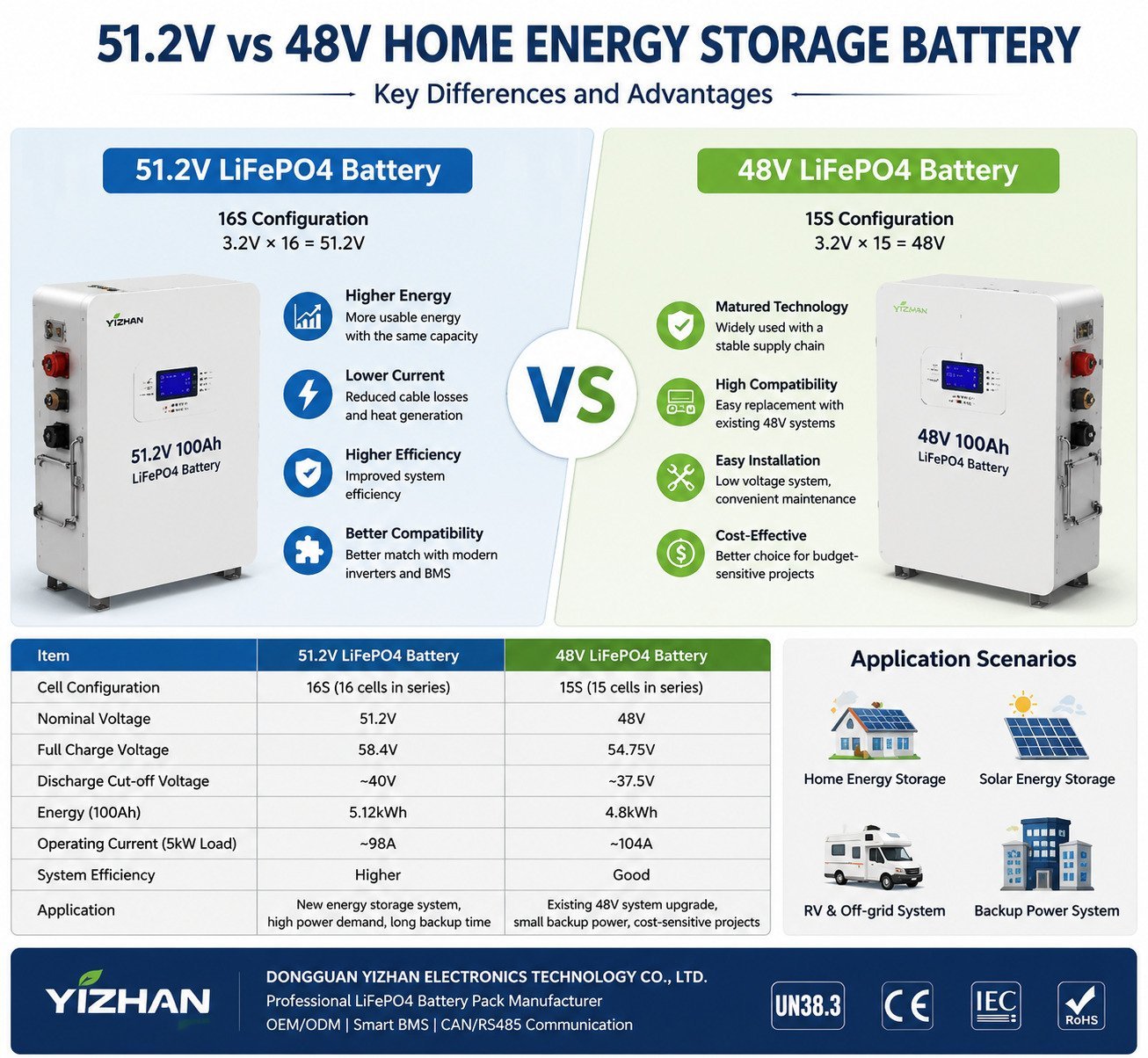
Teil 1: Was sind 48-V- und 51,2-V-Energiespeichersysteme für Privathaushalte?
Bei Energiespeicheranwendungen mit Lithium-Batterien, 48 V und 51,2 V beziehen sich auf die Nennspannung des Akkupacks.
48-V-Energiespeicherbatterie
Herkömmliche 48-V-Lithium-Batteriesysteme verwenden in der Regel:
- LiFePO4-Zellen der 15er-Serie (15S)
- Jede Zelle hat eine Nennspannung von etwa 3,2 V.
Berechnung:
3,2 V × 15 = 48 V
Zu den gängigen Kapazitäten gehören:
- 48 V, 50 Ah
- 48 V, 100 Ah
- 48 V, 200 Ah
Typische Anwendungsbereiche:
- Notstromversorgungssysteme für Privathaushalte
- Speicherung von Solarenergie
- Notstromversorgung für die Kommunikation
- Kleine netzunabhängige Energiesysteme
51,2-V-Energiespeicherbatterie
Ein 51,2-V-Batteriesystem verfügt in der Regel über:
- LiFePO4-Zellen der 16er-Serie (16S)
- Jede Zelle hat eine Nennspannung von etwa 3,2 V.
Berechnung:
3,2 V × 16 = 51,2 V
Zu den gängigen Spezifikationen gehören:
- 2 V, 50 Ah
- 2 V, 100 Ah
- 2 V, 200 Ah
- 2 V, 280 Ah
Heutzutage nutzen viele wandmontierte Batterien für Privathaushalte und rackmontierte Energiespeichersysteme die 51,2-V-Plattform.
Teil 2.Die wichtigsten Vorteile eines 51,2-V-Heimspeichersystems
1. Verbesserte Systemeffizienz
Ein Energiespeichersystem für Privathaushalte umfasst in der Regel:
Solarstromerzeugung → Aufladen der Batterie → Umwandlung durch den Wechselrichter → Stromverbrauch im Haushalt
Bei gleicher Ausgangsleistung lässt sich durch eine Erhöhung der Batteriespannung der Strom senken.
Formel:
Leistung (P) = Spannung (V) × Strom (I)
Beispielsweise bei einem 5-kW-Wechselrichter:
48-V-System:
5000 W ÷ 48 V ≈ 104 A
51,2-V-System:
5000 W ÷ 51,2 V ≈ 98 A
Ein 51,2-V-System arbeitet mit einer geringeren Stromstärke, was dazu beiträgt, Folgendes zu reduzieren:
- Kabelverluste
- Anschlussheizung
- Interne Batterieverluste
Dadurch lässt sich die Gesamtenergieeffizienz des Systems verbessern.
2. Bessere Kompatibilität mit modernen Wechselrichtern für Energiespeicher
Viele Hersteller von Wechselrichtern für Energiespeichersysteme konzipieren ihre Systeme auf der Grundlage von 51,2-V-LiFePO₄-Akkuplattformen.
Zu den gängigen Kommunikationsmöglichkeiten gehören:
- CAN-Kommunikation
- RS485-Kommunikation
- Modbus-Kommunikation
Ein intelligentes BMS kann Daten mit dem Wechselrichter austauschen, darunter:
- Ladezustand (SOC)
- Batteriespannung
- Lade- und Entladestrom
- Überwachung der Temperatur
- Störungsalarme
Dies ermöglicht ein intelligenteres Batteriemanagement und eine intelligentere Systemüberwachung.
3. Höhere Energieleistung bei gleicher Kapazität
Bei gleicher Nennkapazität bietet eine Batterie mit höherer Spannung mehr gespeicherte Energie.
48-V-Batterie mit 100 Ah:
Energie:
48 V × 100 Ah = 4800 Wh
≈ 4,8 kWh
51,2 V, 100 Ah Batterie:
Energie:
51,2 V × 100 Ah = 5120 Wh
≈ 5,12 kWh
Eine 51,2-V-Batterie kann bei gleicher Ah-Kapazität mehr nutzbare Energie liefern.
Im Bereich der Energiespeicherung für Privathaushalte kann dies folgende Vorteile bieten:
- Verlängerung der Notstromversorgungsdauer
- Die Anzahl der benötigten Batteriemodule reduzieren
- Platz bei der Installation sparen
4. Bessere Kompatibilität mit der LiFePO₄-Batterietechnologie
Die meisten Energiespeichersysteme für Privathaushalte nutzen LiFePO4-Batterien (Lithium-Eisenphosphat) aufgrund ihrer:
- Gute thermische Stabilität
- Langer Lebenszyklus
- Zuverlässige Sicherheitsleistung
- Eignung für die langfristige Energiespeicherung
Eine typische 16S-LiFePO₄-Konfiguration:
| Artikel | Spezifikation |
| Batteriechemie | LiFePO4 |
| Konfiguration der Zelle | 16S |
| Nennspannung | 51.2V |
| Volladespannung | 58.4V |
| Entladeschlussspannung | Etwa 40 V |
Dieser Spannungsbereich ist mit Niederspannungs-Wechselrichtern für Energiespeicher weitgehend kompatibel.
5. Geringere Wärmeentwicklung während des Betriebs
Im Langzeitbetrieb erzeugen Batteriesysteme durch den Stromfluss Wärme.
Formel:
Leistungsverlust = I²R
Ein höherer Strom führt zu größeren elektrischen Verlusten.
Da ein 51,2-V-System mit einer geringeren Stromstärke betrieben wird:
- Bei Batterieanschlüssen kommt es zu einem geringeren Temperaturanstieg
- Der Kabelbedarf wird reduziert
- Die Anforderungen an die Kühlung lassen sich vereinfachen
Dies ist vorteilhaft für:
- Aufbewahrungsschränke für den Wohnbereich
- Wandbatterien
- Energiespeichersysteme für den Außenbereich
Teil 3.Vorteile von 48-V-Heimspeichersystemen
Obwohl 51,2-V-Systeme immer beliebter werden, finden 48-V-Plattformen nach wie vor breite Anwendung.
1. Ausgereiftes Produkt-Ökosystem
48-V-Systeme finden breite Anwendung in:
- Notstromversorgung für die Kommunikation
- USV-Anlagen
- Solarenergieanlagen
- Energiespeicherung für gewerbliche Zwecke
Die Lieferkette und die zugehörigen Produkte sind gut etabliert.
2. Kompatibilität mit vorhandenen Geräten
Einige ältere Wechselrichter, Solarregler und Energiespeicher sind auf 48-V-Standards ausgelegt.
Bei Systemaufrüstungen kann eine 48-V-Batterie eine einfachere Kompatibilität mit vorhandenen Geräten gewährleisten.
3. Auslegung für niedrigere Spannung
48-V-Systeme arbeiten im Niederspannungs-Gleichstrombereich:
- Einfachere Installation
- Einfache Wartung
- Geeignet für Wohnbereiche
Teil 4.Vergleich von Heimspeichersystemen mit 48 V und 51,2 V
| Artikel | 48V-System | 51,2-V-System |
| Konfiguration der Zelle | 15S LiFePO4 | 16S LiFePO4 |
| Nennspannung | 48V | 51.2V |
| Zellanzahl | 15 Zellen | 16 Zellen |
| Energieausbeute | Nach unten | Höher |
| Betriebsstrom | Höher | Nach unten |
| Systemausfall | Höher | Nach unten |
| Kompatibilität mit Wechselrichtern | Weit verbreitet | Weit verbreitet |
| Marktanwendung | Erwachsen | Sich rasch ausbreitend |
| Gemeinsame Kapazität | 5 kWh–10 kWh | 5 kWh–15 kWh |
Teil 5.Wie entscheidet man sich zwischen einem 48-V- und einem 51,2-V-Heimspeicher?
Entscheiden Sie sich für ein 48-V-System, wenn:
✔ Sie verfügen bereits über ein 48-V-Wechselrichtersystem
✔ Sie benötigen eine kleine Notstromlösung
✔ Sie modernisieren eine bestehende Solaranlage
✔ Sie wünschen sich eine einfachere Integration in herkömmliche Anlagen
Entscheiden Sie sich für ein 51,2-V-System, wenn:
✔ Sie bauen ein neues Energiespeichersystem für Privathaushalte auf
✔ Sie integrieren eine Photovoltaikanlage und einen Batteriespeicher
✔ Sie benötigen eine Notstromversorgung mit höherer Leistung
✔ Sie verwenden Batterien für die Wand- oder Rackmontage
✔ Sie benötigen eine intelligente BMS-Überwachung und -Kommunikation
Die Rolle des BMS in 51,2-V-Energiespeichersystemen
Eine hochwertige Energiespeicherbatterie ist in der Regel mit einem intelligenten Batterie-Management-System (BMS) um Folgendes bereitzustellen:
- Überwachung der Zellspannung
- Überwachung der Temperatur
- Schutz vor Überladung
- Schutz vor Überentladung
- Überstromschutz
- Kurzschlussschutz
- Management der Zellbilanzierung
Zu den unterstützten Kommunikationsprotokollen gehören:
- CAN
- RS485
- Modbus
Diese Funktionen ermöglichen die Kommunikation der Batterie mit Wechselrichtern und Energiemanagementsystemen (EMS).
Fazit: 51,2 V entwickelt sich zu einer wichtigen Plattform für die Energiespeicherung im Haushalt
Sowohl 48-V- als auch 51,2-V-Heimspeichersysteme verfügen über ausgereifte Anwendungsszenarien.
Die 48-V-Plattform ist aufgrund ihrer langen Geschichte und ihres etablierten Ökosystems nach wie vor weit verbreitet. Unterdessen, 51,2-V-LiFePO4-Heimspeichersysteme dienen dank ihrer höheren Nennspannung, ihres geringeren Betriebsstroms und ihrer verbesserten Energieausnutzung zunehmend als beliebte Wahl für neue Speicherprojekte im Wohnbereich.
Bei der Auswahl einer Energiespeicherlösung für Privathaushalte sollten Nutzer Folgendes berücksichtigen:
- Kompatibilität mit Wechselrichtern
- Erforderliche Speicherkapazität
- Installationsumgebung
- Kommunikationsanforderungen
- Zukünftige Expansionspläne
Die Wahl der richtigen Spannungsplattform trägt dazu bei, ein zuverlässigeres und effizienteres Energiespeichersystem zu schaffen.
Yizhan – Lösungen für Energiespeicherbatterien für den Hausgebrauch
Die Dongguan Yizhan Electronics Technology Co., Ltd. (FirstPower) ist auf maßgeschneiderte Lithium-Batterie-PACK-Lösungen für die Energiespeicherung in Privathaushalten, für Solarstromspeicher und für industrielle Anwendungen spezialisiert.
Unsere Lösungen bieten Unterstützung bei:
- Individuelle Anpassung von 48-V-/51,2-V-Energiespeicherbatterien
- Speichersysteme für Privathaushalte mit einer Kapazität von 5 kWh bis 15 kWh
- Entwicklung intelligenter BMS
- CAN / RS485 Kommunikation
- OEM/ODM-Dienstleistungen
- 3, Unterstützung bei der CE- und IEC-Zertifizierung
Für maßgeschneiderte Lösungen im Bereich der Energiespeicherbatterien für Privathaushalte wenden Sie sich bitte an Yizhan Electronics.
FAQ
1. Was ist der Unterschied zwischen einer 48-V- und einer 51,2-V-Heimspeicherbatterie?
Der Hauptunterschied liegt in der internen Zellenkonfiguration.
Eine typische 48-V-LiFePO4-Batterie verwendet 15 in Reihe geschaltete Zellen (15S):
3,2 V × 15 = 48 V
Ein 51,2-V-LiFePO4-Akku verwendet 16 in Reihe geschaltete Zellen (16S):
3,2 V × 16 = 51,2 V
Das 51,2-V-System liefert eine etwas höhere Spannung, wodurch sich die Energieabgabe verbessern und der Betriebsstrom bei gleichem Leistungsbedarf senken lässt.
2. Warum werden 51,2-V-LiFePO4-Batterien für die Energiespeicherung im Haushalt immer beliebter?
51,2-V-LiFePO₄-Batterien finden zunehmend Anwendung in Energiespeichersystemen für Privathaushalte, da sie folgende Vorteile bieten:
- Höhere Energieabgabe bei gleicher Ah-Kapazität
- Geringerer Betriebsstrom
- Geringere Kabelverluste
- Bessere Kompatibilität mit modernen Speicher-Wechselrichtern
- Flexible Erweiterungsmöglichkeiten
Sie werden häufig in der Solarenergiespeicherung, in Notstromsystemen und in netzunabhängigen Anwendungen eingesetzt.
3. Ist eine 51,2-V-Batterie besser als eine 48-V-Batterie?
Sowohl 48-V- als auch 51,2-V-Batterien haben ihre jeweiligen Vorteile.
Eine 51,2-V-Batterie kann Folgendes liefern:
- Höhere Systemspannung
- Betrieb mit geringerem Strom
- Verbesserte Energieeffizienz
- Bessere Unterstützung für Anwendungen mit höherer Leistung
Eine 48-V-Batterie kann die bessere Wahl sein, wenn ein bestehendes 48-V-System ausgetauscht werden soll oder wenn die Kompatibilität mit älteren Geräten im Vordergrund steht.
Die beste Wahl hängt vom Wechselrichter, den Anwendungsanforderungen und der Anlagenauslegung ab.
4. Kann eine 51,2-V-Batterie mit einem 48-V-Wechselrichter betrieben werden?
Viele Wechselrichter der 48-V-Klasse für Energiespeichersysteme sind mit 51,2-V-LiFePO4-Batterien kompatibel. Die Kompatibilität sollte jedoch stets anhand folgender Kriterien überprüft werden:
- Spannungsbereich des Wechselrichters
- Einstellungen für die Ladespannung
- Kommunikationsprotokoll
- BMS-Kompatibilität
Es wird empfohlen, vor der Installation die technischen Daten des Wechselrichterherstellers zu überprüfen.
5. Wie hoch ist die nutzbare Energie einer 51,2-V-Batterie mit 100 Ah?
Die theoretische Energieberechnung lautet:
Spannung × Kapazität = Energie
51,2 V × 100 Ah = 5120 Wh
Daher liefert eine 51,2-V-Batterie mit 100 Ah ungefähr:
5,12 kWh gespeicherte Energie
Die tatsächlich nutzbare Energie hängt von den Einstellungen des Batteriemanagements, der Entladetiefe (DOD) und dem Wirkungsgrad des Systems ab.
6. Warum kommen in Energiespeichersystemen für Privathaushalte LiFePO₄-Batterien zum Einsatz?
LiFePO4-Batterien finden in der Energiespeicherung für Privathaushalte breite Anwendung, da sie folgende Vorteile bieten:
- Gute thermische Stabilität
- Langer Lebenszyklus
- Zuverlässige Sicherheitseigenschaften
- Stabile Leistung beim täglichen Laden und Entladen
- Geringer Wartungsaufwand
Sie eignen sich für langfristige Anwendungen wie Solarstromspeicherung und Notstromversorgung.
 English
  Chinese
  Japanese
  German
  French
  Korean
