LEV Battery Regulations Guide | EU, US, China, Japan & Korea Requirements (2026)

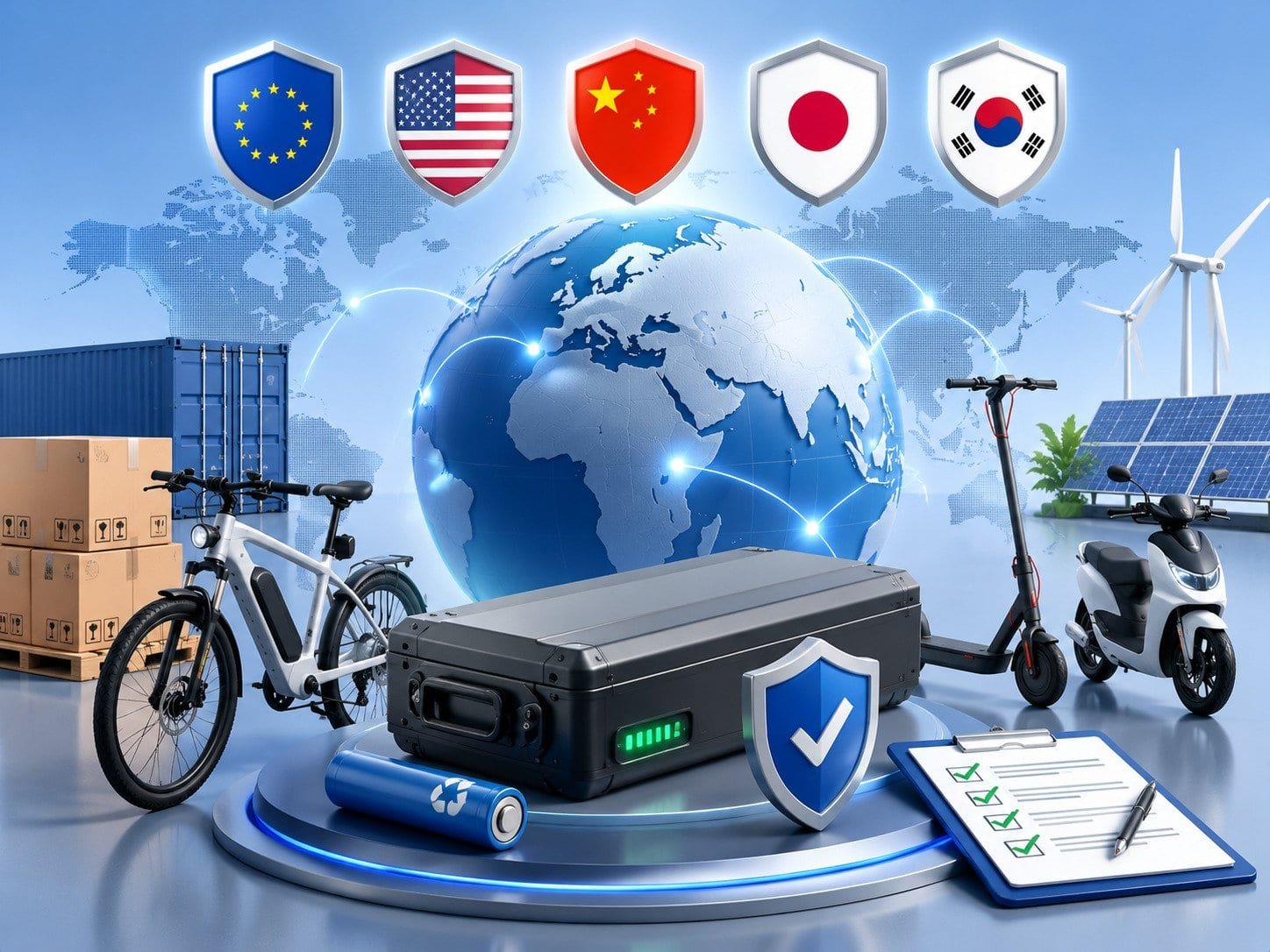
LEV (Light Electric Vehicle) batteries—covering e-bikes, e-scooters, and light mobility systems—are now one of the most regulated lithium battery categories globally.

In 2026, compliance is driven by three major forces:

  • Safety (fire & thermal runaway prevention)
  • Sustainability (carbon footprint & recycling)
  • Traceability (digital product identity & documentation)

Global regulators are no longer only checking the battery itself—they are controlling the entire lifecycle system.

LEV Battery Regulations Guide

Part 1. EU LEV Battery Regulations (Strictest Global Standard)

The European Union applies the most advanced LEV battery framework under EU Battery Regulation (EU 2023/1542).

Key Standards

  • EN 50604-1 (LEV battery safety standard)
  • IEC 62133-2 (portable lithium battery safety)
  • UN38.3 (transport safety requirement)

 Key Requirements

 1. Safety Certification

LEV batteries must pass:

  • Mechanical abuse tests
  • Electrical safety validation
  • Thermal runaway prevention tests

 2. Carbon & Sustainability

  • Carbon footprint declaration (gradually mandatory)
  • Recycled material content tracking
  • Lifecycle environmental reporting

 3. Digital Battery Passport (2027+)

Each battery must include:

  • QR code identification
  • Material composition data
  • Supply chain traceability
  • Recycling & dismantling info

 EU Summary

👉 EU requires full lifecycle digital compliance, not just product safety

Part 2.US LEV Battery Regulations (Safety + Transport Focus)

The United States focuses heavily on fire safety risk control and transport compliance.

 Key Standards

  • UL 2271 (LEV battery pack safety standard)
  • UL 2849 (e-bike system level certification)
  • UL 2054 (battery pack general safety)
  • UN38.3 (transport requirement)

📌 Key Requirements

🚚 1. Transport Compliance

  • UN38.3 mandatory for all shipments
  • Strict airline SOC limits (typically ≤30%)
  • Dangerous goods classification required

 2. Safety Certification

  • UL 2271 evaluates battery pack safety
  • UL 2849 evaluates full e-bike system safety (battery + motor + charger)

 US Summary

👉 US prioritizes fire prevention + transport risk control

Part 3.Japan LEV Battery Regulations (Ultra Safety-Oriented Market)

Japan is one of the most conservative LEV markets globally.

 Key Standards

  • PSE certification (mandatory)
  • IEC 62133-2 (commonly referenced)
  • Strict internal safety validation

Key Requirements

  • High cell consistency requirements
  • Strong fire safety expectations
  • 严格的质量控制体系

Japan Summary

👉 Japan = zero-risk tolerance market

Part 4.South Korea LEV Battery Regulations (Electrical Safety Focus)

South Korea enforces strict compliance under KC certification.

Key Requirements

  • KC certification mandatory
  • Thermal stability testing
  • Overcharge / short circuit protection validation

 Key Focus Areas

  • Electrical safety reliability
  • 防止热失控
  • BMS protection performance

 Korea Summary

👉 Korea prioritizes electrical safety + thermal stability

Global LEV Compliance Summary (2026 Trend)

Across all major markets, LEV battery regulations are converging into three global pillars:

 Safety First

  • UL / EN / IEC standards dominate global certification

 Traceability Systems

  • QR codes + digital product identity systems

Sustainability Requirements

  • Carbon footprint + recycling responsibility

 Final Insight

The LEV battery industry in 2026 is no longer just a hardware business.

It is becoming:

⚡ A certified safety system industry
🌱 A sustainability-regulated product ecosystem

 Need Help with LEV Battery Export Compliance?

Navigating LEV battery regulations across the EU, US, China, Japan, and South Korea can be complex, especially with constantly evolving certification and safety requirements.

If you are planning to develop or export LEV battery systems (e-bikes, e-scooters, or light mobility batteries) to these markets, we can support you with:

🔋 Compliance-ready battery pack solutions
📄 Certification guidance (UN38.3, UL 2271, EN 50604-1, KC, PSE)
🌍 Export documentation support
⚙️ OEM/ODM customized LEV battery development

👉 If you need to export LEV batteries to Europe, the United States, China, Japan, or Korea, feel free to contact us for technical support and solution consultation.

We are ready to help you ensure safe, compliant, and market-ready battery systems for global deployment.

A complete 2026 guide to LEV lithium battery regulations across EU, US, China, Japan, and South Korea. Learn certification standards like EN 50604-1, UL 2271, UN38.3, and KC/PSE requirements.
2026-06-25
+
Explore why modern warehouses are rapidly adopting lithium battery for forklifts, AGVs, and logistics equipment. Learn benefits, cost savings, safety improvements, and automation compatibility.
2026-06-24
+
This guide helps shipyards evaluate marine lithium battery manufacturers, covering UN38.3, IEC, UL certifications, battery cell quality, BMS systems, and marine application experience to ensure safe and reliable energy system selection.
2026-06-24
+
Professional sailboat lithium battery retrofit solutions for shipyards and yacht conversion projects. High-performance LiFePO4 marine battery systems with smart BMS, CAN communication, and IP67 protection for reliable offshore energy integration.
2026-06-23
+