
Lithium battery packs are widely used in electric vehicles, industrial equipment, robotics, medical devices, marine applications, energy storage systems, and other electronic equipment.
Different applications require different battery specifications. A suitable lithium battery pack design needs to consider electrical performance, mechanical structure, safety requirements, operating environment, and production requirements.
When working with a lithium battery manufacturer for a custom battery pack project, understanding the key design factors can help improve product compatibility and reduce development time.

1. Define the Battery Application Requirements
The first step in lithium battery customization is understanding the application scenario.
Different devices have different requirements for battery performance.
例如
- Electric bicycles and electric motorcycles require suitable energy capacity, lightweight design, and weather resistance.
- AGV and AMR robots require stable power output, long cycle life, and communication functions.
- Medical equipment requires reliable operation and safety compliance.
- Agricultural drones require lightweight design and suitable discharge performance.
- Energy storage systems require long-term operation and stable charging and discharging performance.
Before designing a battery pack, manufacturers usually need information about:
- Equipment type
- Working conditions
- 运行时间
- 负载要求
- 安装空间
- 环境条件
A clear application definition helps determine the appropriate battery solution.
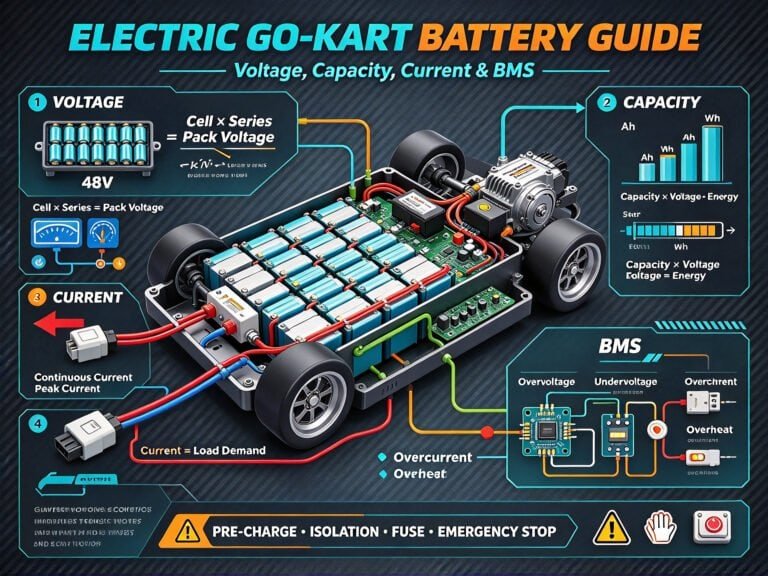
2. Select the Appropriate Battery Voltage
Voltage is one of the basic parameters of a lithium battery pack.
The battery voltage must match the electrical system of the equipment.
Common lithium battery pack voltages include:
- 12V
- 24V
- 36V
- 48V
- 60V
- 72V
例如
A 48V electric vehicle battery pack commonly uses a 13-series lithium battery configuration, with a fully charged voltage of approximately 54.6V.
When selecting voltage, manufacturers need to confirm:
- Device rated voltage
- Controller voltage range
- 电机要求
- 充电器规格
- BMS 配置
Incorrect voltage selection may affect equipment operation and battery performance.
3. Determine Battery Capacity and Energy Requirements
Battery capacity directly affects operating time.
Capacity is usually measured in Ah (Ampere-hour), while total energy is measured in Wh (Watt-hour).
The calculation formula is:
能量 (Wh) = 电压 (V) × 容量 (Ah)
例如
A 48V 20Ah battery pack:
48V × 20Ah = 960Wh
The required capacity depends on:
- Expected operating time
- 设备功耗
- 载荷条件
- 充电频率
- 可用安装空间
A battery pack design should balance capacity, size, and weight according to the application.
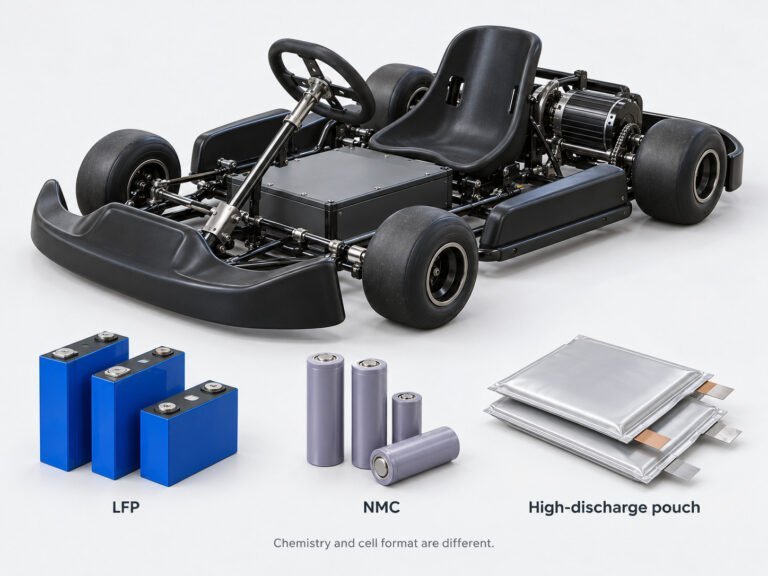
4. Choose the Right Battery Cell Type
Battery cells are an important part of a lithium battery pack.
Different cell chemistries provide different characteristics.
Lithium-ion NMC Battery Cells
NMC (Nickel Manganese Cobalt) cells are commonly used in applications requiring higher energy density.
典型的应用包括
- 电动自行车
- 电动摩托车
- 便携式设备
- Lightweight devices
磷酸铁锂(LiFePO4)电池电芯
Lithium iron phosphate (LiFePO4) cells are widely used in applications requiring stable operation and long cycle life.
典型的应用包括
- 工业设备
- AGV 和 AMR 机器人
- Marine batteries
- 储能系统
Lithium Polymer Battery Cells
Lithium polymer cells offer flexible shape designs and are often used in applications with limited space.
典型的应用包括
- 无人机
- Portable electronics
The selection of battery cells should consider energy requirements, safety, operating environment, and product design.
5. Design the Battery Management System (BMS)
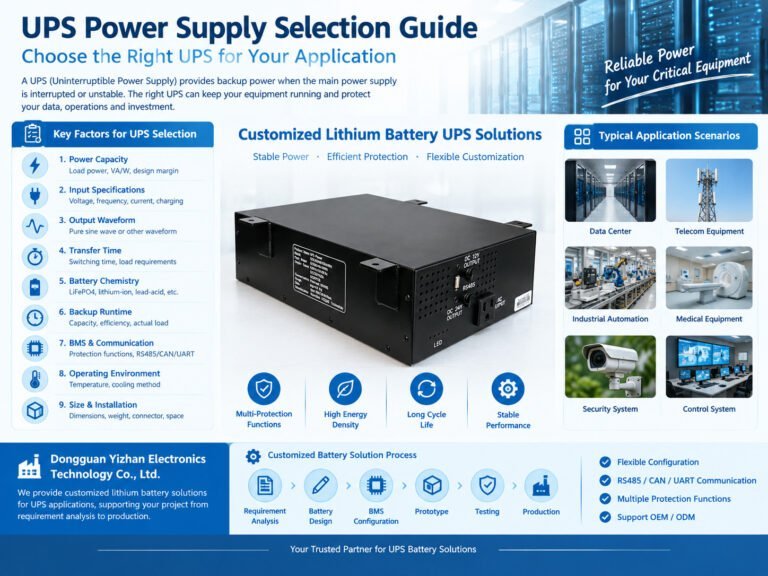
The Battery Management System (BMS) controls and monitors lithium battery operation.
A properly configured BMS can provide protection functions and battery monitoring.
BMS的常见功能包括:
- 过充电保护
- 过放电保护
- 过流保护
- 短路保护
- 温度监测
- 电池电压监测
- State of charge (SOC) calculation
For intelligent applications, the battery pack may require communication functions:
- CAN总线
- RS485
- UART
- Modbus通信
For industrial robots, electric vehicles, and smart devices, BMS communication can help integrate the battery with the equipment control system.
6. Consider Battery Pack Structure and Size
The mechanical design of a battery pack needs to match the equipment installation space.
重要的设计因素包括:
- 电池尺寸
- 安装方法
- 外壳材料
- 连接器位置
- 电缆布线
- Heat dissipation design
Common battery pack structures include:
- Plastic housing
- Aluminum housing
- Metal enclosure
- Waterproof sealed design
For e-bike applications, customized designs may include:
- Down tube batteries
- 后机架电池
- 座管电池
- Integrated frame batteries
A suitable structure helps improve installation compatibility and product reliability.
7. Evaluate Charging and Discharging Requirements
Charging and discharging performance should match the equipment operating conditions.
重要参数包括:
- 连续放电电流
- 峰值放电电流
- 充电电流
- Charging time requirements
Different applications have different power demands.
例如
- Electric vehicles may require higher current output during acceleration.
- Robots may require stable current supply during continuous operation.
- Drones may require suitable discharge performance during flight.
Battery design should consider both normal operation and peak load conditions.
8. Consider Operating Temperature Conditions
Temperature affects lithium battery performance and service life.
Battery customization should consider:
- Working temperature range
- Charging temperature range
- Storage temperature range
For outdoor or industrial applications, additional designs may be required:
- Thermal insulation
- Heating system
- 温度监测
- Special BMS settings
Understanding the operating environment helps select suitable battery materials and protection solutions.
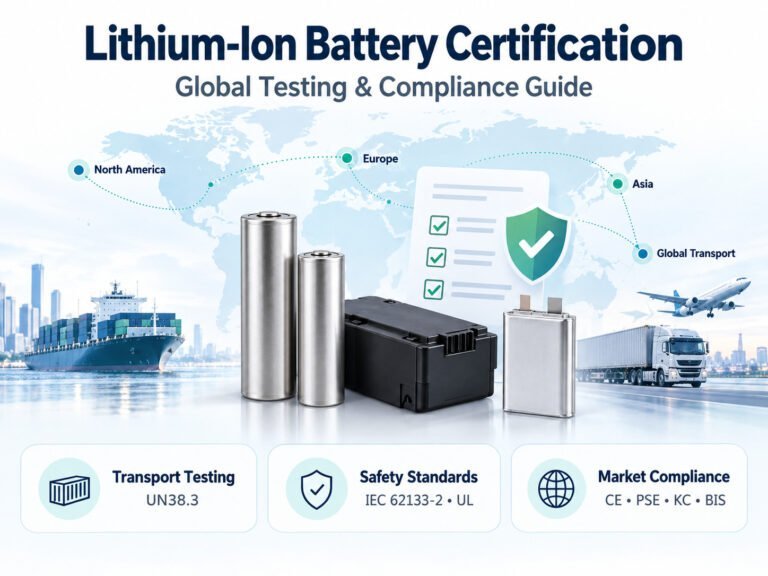
9. Battery Safety Certifications and Regulations
Different markets have different requirements for lithium battery products.
Common certifications and standards include:
- UN38.3 for transportation testing
- IEC 62133-2 for battery safety
- CE for European market requirements
- UL2271 for light electric vehicle battery applications
- FCC for electronic equipment
- RoHS for environmental requirements
For international projects, certification requirements should be considered during the early design stage.
This helps avoid redesign costs after product development.
10. Waterproof and Protection Requirements
Many lithium battery packs are used in outdoor environments.
Depending on the application, the battery enclosure may require protection against:
- 灰尘
- Water
- 湿度
- 振动
- Mechanical impact
Common protection ratings include:
- IP65
- IP67
- IP68
For applications such as electric motorcycles, marine equipment, and outdoor robots, enclosure protection is an important design factor.
11. Battery Testing and Quality Control
A complete battery manufacturing process includes multiple testing procedures.
Typical quality control steps include:
- 进货手机检验
- Cell voltage and resistance sorting
- 焊接检验
- BMS测试
- 充放电测试
- 老化测试
- 最终检查
Battery consistency is important for pack performance and long-term operation.
Professional battery manufacturers usually perform verification tests before mass production.
12. Select a Suitable OEM Lithium Battery Manufacturer
Choosing the right manufacturing partner is an important part of custom battery development.
A suitable OEM battery manufacturer should have experience in:
- 电池组设计
- 细胞选择
- BMS integration
- Structural engineering
- 原型开发
- 认证支持
- Mass production
The manufacturer should be able to provide technical support from initial design to final production.
Information Required for Custom Lithium Battery Pack Development
Before starting a custom battery project, customers usually need to provide:
| 项目 | Description |
|---|---|
| 应用 | Device type and usage scenario |
| 电压 | Required battery voltage |
| 容量 | Required Ah or Wh |
| Size limitation | 电池安装空间 |
| Current requirement | Working and peak current |
| 交流 | CAN、RS485、UART 等。. |
| Environment | Temperature and waterproof requirements |
| 认证 | Required market standards |
| Quantity | Prototype or mass production |
结论
Custom lithium battery pack development requires consideration of multiple factors, including application requirements, voltage, capacity, battery cells, BMS design, mechanical structure, safety standards, and manufacturing capability.
A well-designed battery solution should match the equipment requirements and operating environment while meeting safety and quality requirements.
Working with an experienced lithium battery OEM manufacturer can help companies develop battery packs suitable for different applications, from electric mobility and industrial robots to medical devices and energy storage systems.
常见问题
What information is needed for a custom lithium battery pack?
Customers usually need to provide application details, voltage, capacity, dimensions, current requirements, operating environment, and certification requirements.
开发一款定制电池组需要多长时间?
Development time depends on battery complexity, testing requirements, and certification needs. Prototype development usually includes design, sample production, and performance verification.
What battery cells can be used for custom battery packs?
Common options include NMC lithium-ion cells, LiFePO4 cells, and lithium polymer cells. The selection depends on application requirements.
Why is BMS important for lithium battery packs?
BMS monitors battery conditions and provides protection functions such as overcharge, over-discharge, over-current, and temperature protection.
 English
  Chinese
  Japanese
  German
  French
  Korean
