
Choosing the correct battery voltage is an important part of robot power system design. For AGVs, AMRs, cleaning robots, inspection robots, warehouse robots, and other mobile equipment, 24V, 36V, and 48V battery systems are commonly considered during product development.
However, battery voltage should not be selected simply by comparing numbers. The motor, controller, power consumption, operating time, peak current, installation space, charging system, BMS, and communication requirements all need to work together.
For OEM and ODM projects, the battery pack should be designed around the actual operating conditions of the robot.
Dongguan Yizhan Electronics Technology Co., Ltd. provides customized lithium battery pack solutions for robots, AGVs, AMRs, industrial equipment, and other applications. The customization process can cover cell configuration, voltage, capacity, BMS, housing, connectors, communication interfaces, and mechanical structure.
This guide explains the differences between 24V, 36V, and 48V robot batteries and the technical factors that should be considered before selecting a battery pack.
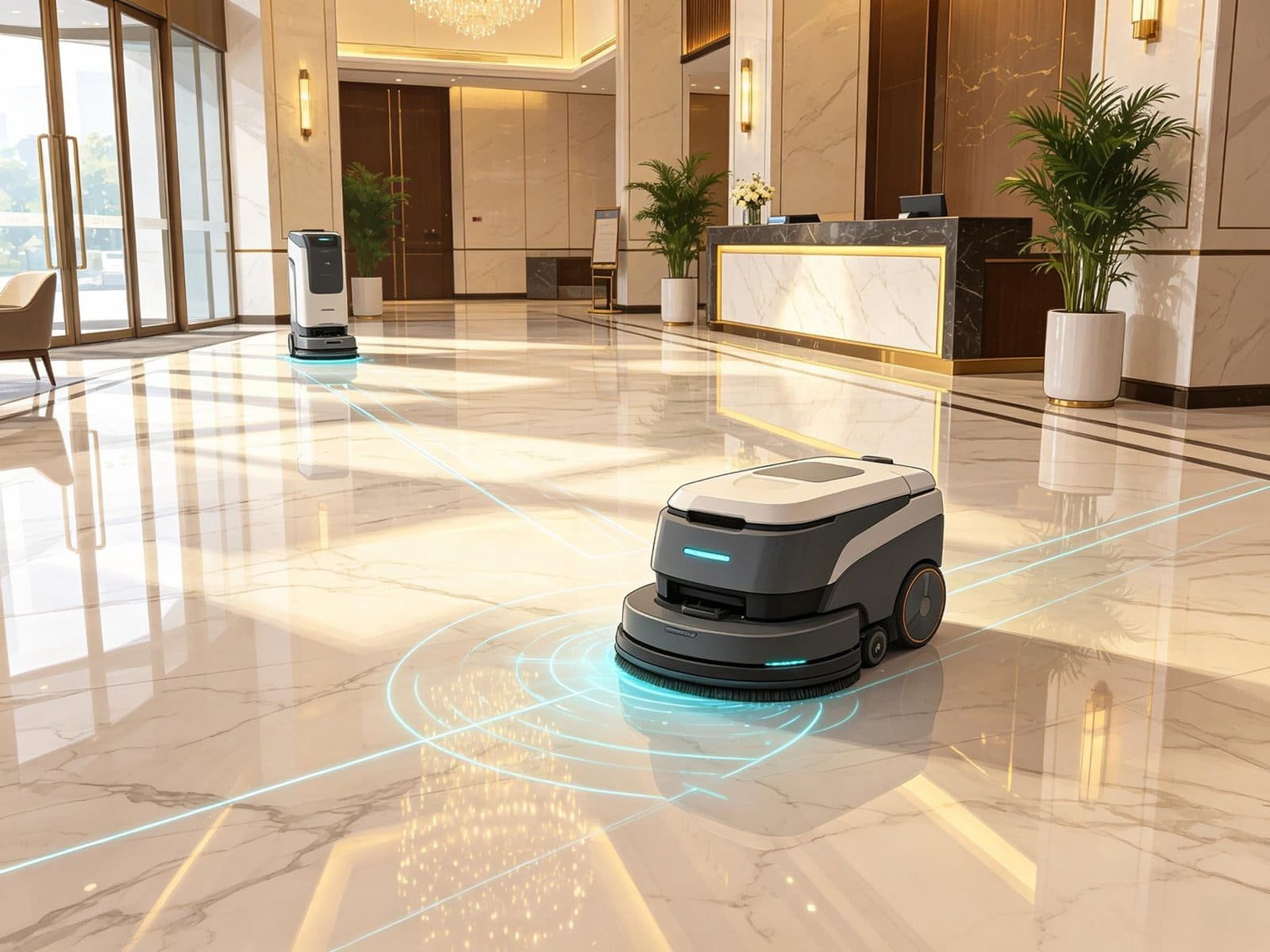
1. What Does Robot Battery Voltage Mean?
Battery voltage represents the electrical potential of the battery system.
A lithium battery pack is normally assembled from multiple individual cells connected in series and parallel. The series configuration determines the nominal voltage, while the parallel configuration affects capacity and current capability.
For example, a battery pack can be configured to provide a target voltage and capacity according to the robot’s electrical architecture.
The relationship between voltage, current, and power can be expressed as:
Power (W) = Voltage (V) × Current (A)
If a robot requires approximately 1,000W of electrical power, the theoretical current would be:
| 电池电压 | Current at 1,000W |
|---|---|
| 24V | Approximately 41.7A |
| 36V | Approximately 27.8A |
| 48V | Approximately 20.8A |
These values are simplified calculations. Actual current depends on motor efficiency, controller efficiency, acceleration, mechanical load, operating conditions, and other electrical components.
This relationship is important because the battery pack, BMS, wiring, connectors, fuse, and controller all need to accommodate the required current.
2. 24V Robot Battery
24V battery systems are commonly considered for mobile equipment with relatively moderate power requirements.
Potential applications include:
- Cleaning robots
- Small AGVs
- 服务机器人
- 检测机器人
- Mobile platforms
- Small warehouse robots
- Autonomous equipment
A 24V lithium battery pack can be designed with different capacities depending on the required operating time and available installation space.
For example, a custom battery pack may be designed around:
- 24V nominal voltage
- 定制的Ah容量
- Lithium-ion or LiFePO4 cells
- Customized BMS
- CAN, UART, or RS485 communication
- 定制连接器
- Custom housing
- 温度监测
For compact robots, mechanical design can be as important as electrical specifications. The battery may need to fit underneath the robot, inside a battery compartment, or into a removable battery tray.
Therefore, the available battery space should be measured before the final pack design is confirmed.
3. 36V Robot Battery
36V systems are another option for mobile robots and industrial equipment.
A 36V battery can support equipment designed around a 36V motor and controller system. Applications may include:
- AGV
- AMR
- 仓库机器人
- Autonomous cleaning equipment
- Mobile material-handling equipment
- Inspection platforms
- Industrial mobile equipment
When a robot has a defined 36V electrical architecture, the battery pack needs to be designed to match the controller, charger, motor, and other electrical components.
The battery capacity can then be selected according to the required runtime.
例如
36V × 40Ah = 1,440Wh
This means the nominal battery energy is approximately 1.44kWh.
Actual usable energy depends on the battery chemistry, BMS settings, discharge current, temperature, operating conditions, and other system factors.
4. 48V Robot Battery
48V battery systems are commonly used in equipment where the electrical architecture requires a 48V-class battery.
Potential applications include:
- Industrial AGVs
- AMR
- 仓库机器人
- Material-handling robots
- Autonomous transport equipment
- Heavy-duty mobile platforms
- Industrial cleaning machines
At the same power level, a higher system voltage can reduce the current required by the electrical system.
例如
48V × 50A = 2,400W
This relationship is useful when engineers are designing the motor, controller, wiring, connectors, and battery pack as a complete system.
However, the battery voltage must always match the electrical architecture of the robot. A 48V battery should not simply be installed in a system designed for another voltage without confirming compatibility with the motor controller, charger, BMS, and other components.
5. 24V vs 36V vs 48V Robot Battery
The three voltage systems can be compared from an engineering perspective.
| Factor | 24V | 36V | 48V |
|---|---|---|---|
| Typical system use | Small and medium mobile equipment | AGV, AMR and mobile equipment | Industrial mobile equipment |
| Current at the same power | 更高 | 中型 | 较低 |
| Motor compatibility | Depends on system design | Depends on system design | Depends on system design |
| BMS设计 | Load-dependent | Load-dependent | Load-dependent |
| Capacity options | Custom | Custom | Custom |
| 交流 | CAN/UART/RS485 options | CAN/UART/RS485 options | CAN/UART/RS485 options |
| Housing | Custom | Custom | Custom |
| 连接器 | Custom | Custom | Custom |
There is no single voltage that applies to every robot.
The correct selection should start with the robot’s electrical architecture rather than the battery itself.
6. How to Calculate Robot Battery Capacity
Voltage alone does not determine how long a robot can operate.
Battery energy can be estimated using:
能量 (Wh) = 电压 (V) × 容量 (Ah)
例如
- 24V × 50Ah = 1,200Wh
- 36V × 50Ah = 1,800Wh
- 48V × 50Ah = 2,400Wh
If a robot consumes an average of 600W, a simplified runtime calculation for a 48V 50Ah battery would be:
2,400Wh ÷ 600W = 4 hours
This is a theoretical calculation rather than a guaranteed operating time.
Actual robot runtime can be affected by:
- Motor load
- Payload
- 行驶速度
- Acceleration and braking
- Floor conditions
- Inclines
- Operating cycle
- 电池温度
- Battery discharge rate
- Controller efficiency
- 电机效率
- BMS cutoff settings
- Usable depth of discharge
For OEM projects, runtime testing under real operating conditions is recommended.
7. Peak Current Is Important for Robot Battery Design
Robot batteries are not exposed to a constant load in many applications.
During acceleration, climbing, turning, starting, or carrying a heavy load, the motor can temporarily require significantly more current than during steady movement.
Therefore, battery design should consider both:
连续放电电流
和
峰值放电电流
For example, a robot might require:
- 30A continuous current
- 60A peak current
The BMS, cells, wiring, connectors, fuse, and protection system should be selected according to these requirements.
A battery pack with sufficient Ah capacity may still be unsuitable if its discharge capability does not meet the robot’s peak current demand.
This is one reason why battery capacity alone should not be used to evaluate a robot battery design.
8. BMS Requirements for Robot Battery Packs
The Battery Management System is an important part of a customized robot battery pack.
BMS 可以监控和管理以下参数:
- 细胞电位
- 电池组电压
- 当前
- 温度
- 电量状态
- 充电状态
- Discharging status
Depending on the application, protection functions can include:
- 过充电保护
- 过放电保护
- 过流保护
- 短路保护
- 过温保护
- Under-temperature protection
- 细胞平衡
Industrial robots may also require communication between the battery and the main controller.
Common communication options include:
CAN
UART
RS485
The communication protocol should be defined during the battery design stage because the BMS firmware, connector, wiring, and controller interface may all depend on the selected protocol.
9. Lithium-Ion vs LiFePO4 for Robot Batteries
Both lithium-ion and LiFePO4 battery technologies can be considered for robot applications.
Lithium-Ion Battery Packs
Lithium-ion cells can be considered when the project has strict requirements for:
- 电池容量
- 重量
- Energy capacity
- Compact mechanical design
The specific cell type should be selected according to voltage, capacity, current, cycle requirements, temperature range, and available installation space.
LiFePO4 Battery Packs
LiFePO4 is frequently considered for industrial applications where the project requires:
- Frequent charge and discharge
- Long operating cycles
- Stable thermal characteristics
- Industrial-duty operation
The choice between lithium-ion and LiFePO4 should be based on the complete application requirements rather than battery chemistry alone.
10. Robot Battery Size and Mechanical Design
Electrical specifications are only one part of battery customization.
A robot battery also needs to physically fit the equipment.
Important mechanical parameters include:
- 长度
- 宽度
- 高度
- 重量
- Mounting holes
- Battery tray
- Handle
- 连接器位置
- Cable exit direction
- Housing material
- 防护要求
- Ventilation requirements
For removable robot batteries, the pack may also require a quick-release mechanism or dedicated battery mounting structure.
For fixed installations, the housing may be designed around the available internal space.
This is particularly important for AGV and AMR applications because battery placement can affect weight distribution, center of gravity, maintenance access, and available space for other components.
11. Charging Requirements
The battery charger must match the battery pack.
The charging system should be evaluated according to:
- 电池化学
- 电池组电压
- 充电电压
- 充电电流
- BMS 要求
- 连接器
- Charging communication
- 充电温度
- 充电时间
For example, a 24V-class battery and a 48V-class battery require different charging systems.
The charging profile also depends on the selected cell chemistry and battery configuration.
For robots operating continuously in warehouses or factories, charging strategy can be an important part of the overall battery system design.
Depending on the equipment, the project may use:
- Standard charging
- 快速充电
- 自动充电
- Docking-station charging
- Removable battery replacement
The battery supplier should confirm charging parameters during the design stage.
12. How to Choose Between 24V, 36V and 48V
The selection process can be organized into several steps.
Step 1: Confirm the Motor Voltage
Check the rated voltage of the motor and motor controller.
The battery voltage should be compatible with the complete drive system.
Step 2: Determine Power Consumption
Calculate the robot’s continuous and peak power requirements.
This provides the basis for estimating current requirements.
Step 3: Determine Required Runtime
Estimate how many hours the robot needs to operate between charging cycles.
Then calculate the required battery energy.
Step 4: Check Installation Space
Measure the available battery compartment.
A battery specification that cannot fit the equipment cannot be used without mechanical changes.
Step 5: Define Peak Current
Determine the current required during:
- Startup
- 加速度
- 攀岩
- Heavy loading
- 转动
- Emergency operation
Step 6: Select Battery Chemistry
Evaluate lithium-ion and LiFePO4 according to energy density, cycle requirements, operating temperature, weight, dimensions, and application conditions.
Step 7: Define BMS Functions
Specify:
- 保护功能
- Current rating
- 温度传感器
- SOC估算
- 通信协议
- Data requirements
Step 8: Confirm Testing Requirements
Before mass production, the battery should be evaluated according to the application’s technical requirements.
Testing may include capacity testing, charge/discharge testing, BMS protection testing, voltage consistency testing, aging testing, temperature testing, vibration testing, and communication testing.
13. What Information Should You Give a Robot Battery Manufacturer?
For a custom robot battery project, providing complete technical information can make the design process more efficient.
A battery manufacturer may need:
- Robot application
- Robot model
- 电机功率
- Required battery voltage
- Required capacity
- 连续电流
- 峰值电流
- Target runtime
- 充电方式
- 可用安装空间
- Battery weight requirement
- 连接器类型
- 通信协议
- 工作温度
- Waterproof or dustproof requirements
- Sample quantity
- Estimated annual quantity
Photos, drawings, existing battery samples, wiring diagrams, and equipment specifications can also help engineers understand the project.
14. Custom Robot Battery Pack OEM/ODM Process
For OEM and ODM projects, battery development normally involves several stages.
需求分析
The engineering team reviews the robot’s electrical, mechanical, environmental, and communication requirements.
电池配置
The cell configuration is developed according to voltage, capacity, current, and available space.
BMS Design
The BMS is selected or customized according to protection requirements, current requirements, temperature monitoring, and communication.
Structural Design
The battery housing, mounting structure, connector position, cable routing, and other mechanical details are developed.
Prototype
Prototype battery packs are produced for installation and functional testing.
测试
The battery undergoes electrical, mechanical, thermal, and communication tests according to the project requirements.
批量生产
After the prototype is approved, the production process can move to the required batch size.
Dongguan Yizhan Electronics Technology Co., Ltd. supports customized lithium battery pack development from R&D and design through sampling and mass production. Custom options can include battery voltage, capacity, BMS, connectors, cables, housing, labels, and other structural requirements.
15. Robot Battery Testing and Quality Control
A robot battery needs to operate as part of a complete equipment system.
Testing can therefore include both battery-level and application-related evaluations.
Typical battery tests include:
- Capacity test
- Charge test
- Discharge test
- Voltage consistency test
- 内部电阻测试
- BMS protection test
- Over-current test
- Short-circuit protection test
- Temperature protection test
- 老化试验
- 通信测试
For mobile robots, mechanical testing can also be considered.
Depending on the application, vibration and impact conditions may need to be evaluated because robots can operate on warehouse floors, ramps, uneven surfaces, or industrial environments.
Environmental requirements such as dust and water protection should also be defined during the design stage.
16. 24V, 36V or 48V: Start With the Robot, Not the Battery
The choice between 24V, 36V, and 48V should be based on the robot’s complete power system.
一个切实可行的选拔流程是:
Robot → Motor → Controller → Power Requirement → Battery Voltage → Capacity → BMS → Mechanical Design → Testing
For example, if the robot is designed around a 24V motor controller, changing to a 48V battery is not simply a matter of installing a battery with twice the voltage.
The controller, motor, charger, wiring, connectors, BMS, protection system, and other electrical components may all require compatibility checks.
For this reason, custom battery development should begin with the equipment specifications.
17. Custom Robot Battery Solutions From Dongguan Yizhan
Dongguan Yizhan Electronics Technology Co., Ltd. develops customized lithium battery packs for robot and industrial equipment applications.
The company supports OEM and ODM battery projects involving:
- Robot battery packs
- AGV 电池
- AMR batteries
- Cleaning robot batteries
- Industrial equipment batteries
- Li-ion battery packs
- LiFePO4 battery packs
- 定制 BMS
- CAN 通信
- UART通信
- RS485通信
Customization can cover voltage, capacity, cell configuration, BMS, housing, connector, cable, labeling, and mechanical structure.
For a new robot battery project, customers can provide the equipment model, motor power, target voltage, capacity requirement, current requirement, installation dimensions, runtime target, and communication requirements. The engineering team can then use these parameters to develop the battery configuration and technical proposal.
常见问题
Is 24V or 48V better for a robot battery?
There is no universal voltage for all robots. The required voltage depends on the robot’s motor, controller, power architecture, current requirements, and application conditions.
Can I replace a 24V robot battery with a 36V battery?
Not without checking system compatibility. The motor controller, motor, charger, BMS, wiring, and other electrical components need to support the new voltage.
How do I calculate robot battery capacity?
Use the basic formula:
电池能量(Wh)= 电压(V)× 容量(Ah)
The required capacity should then be adjusted according to actual power consumption, runtime, usable battery energy, temperature, and operating conditions.
What BMS is suitable for an AGV battery?
The BMS should be designed according to the battery cell configuration, continuous current, peak current, temperature requirements, protection functions, and communication protocol.
Can robot battery packs be customized?
Yes. Custom robot battery packs can be developed according to voltage, capacity, dimensions, current, BMS, connector, communication, housing, and other equipment requirements.
Can Yizhan manufacture both 24V and 48V robot batteries?
Customized battery configurations can be developed according to the electrical and mechanical requirements of the target equipment. The final configuration should be confirmed through the robot’s technical specifications.
结论
Selecting a robot battery is not simply a choice between 24V, 36V, and 48V.
The correct battery configuration needs to match the robot’s motor, controller, power consumption, operating time, continuous and peak current, installation space, charging system, BMS, communication protocol, and environmental requirements.
For OEM and ODM projects, a customized battery pack can integrate these requirements into one system, covering cell selection, electrical configuration, BMS, mechanical structure, connectors, communication, testing, and production.
For robot developers, AGV manufacturers, AMR manufacturers, and industrial equipment companies, providing complete equipment specifications at the beginning of the project can help battery engineers develop a suitable power solution.
Dongguan Yizhan Electronics Technology Co., Ltd. supports customized lithium battery pack development for robot and industrial applications, from requirement analysis and design to prototype development, testing, and mass production.

 English
  Chinese
  Japanese
  German
  French
  Korean
