
The European Union is introducing new requirements for battery sustainability, traceability, labeling, and digital information. One important requirement is the 电池护照, a digital record designed to provide structured information about certain batteries placed on the EU market.
Under Regulation (EU) 2023/1542 concerning batteries and waste batteries, Battery Passport requirements will apply from February 18, 2027 to electric vehicle batteries, light means of transport (LMT) batteries, and industrial batteries with a capacity above 2 kWh.
For battery manufacturers, importers, distributors, and equipment manufacturers, preparing the required information is becoming an important part of EU market compliance.
For OEM and ODM battery projects, Battery Passport preparation also affects how battery specifications, production records, testing data, material information, and product identification are managed.
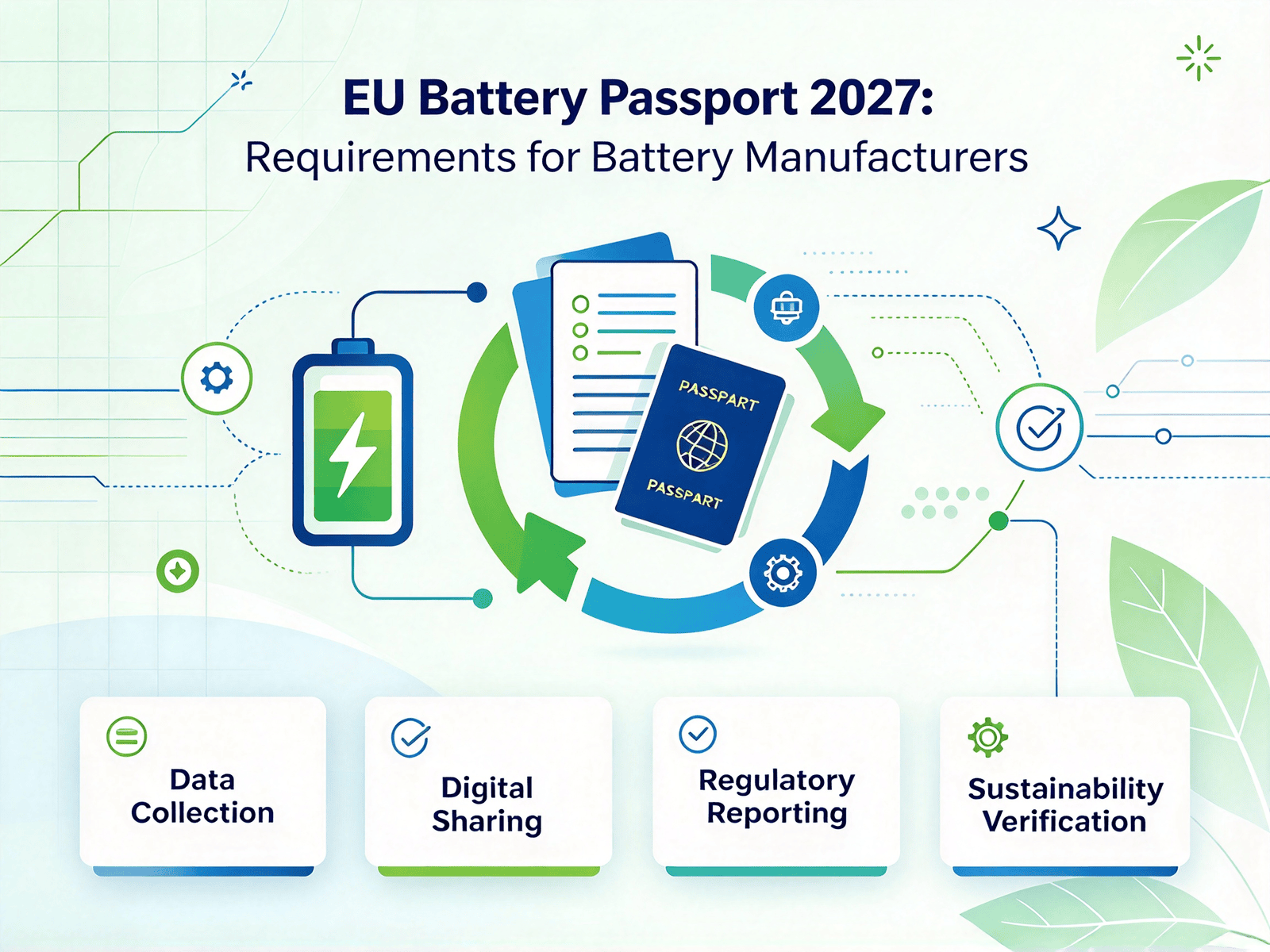
What Is an EU Battery Passport?
A Battery Passport is a digital record associated with an individual battery or battery model. It provides structured information about the battery throughout its lifecycle.
The Battery Passport is accessed through a data carrier such as a QR code and is connected to a unique battery identifier.
Depending on the user’s access rights, the available information may include:
- 电池识别
- Manufacturer information
- Manufacturing date and location
- Battery category
- Technical specifications
- Performance and durability information
- Material and composition information
- Sustainability information
- Carbon footprint information
- Supply-chain information
- Repair and reuse information
- Recycling-related information
- Compliance information
The Battery Passport is not simply a product webpage. It is designed as a structured digital information system that supports traceability and data access throughout the battery lifecycle.
When Will Battery Passport Become Mandatory?
The key date for battery manufacturers is:
February 18, 2027
From this date, the Battery Passport requirement applies to certain battery categories placed on the EU market or put into service.
The scope includes:
Electric Vehicle Batteries
Batteries designed for electric vehicles fall within the Battery Passport requirements.
LMT Batteries
LMT means light means of transport. This category includes batteries used in products such as electric bicycles, electric scooters, and other light electric mobility applications.
Industrial Batteries Above 2 kWh
Certain industrial batteries with a capacity exceeding 2 kWh are also covered.
For manufacturers supplying European customers, identifying the battery category and applicable requirements during the product development stage can help avoid data gaps later.
Does the Battery Passport Apply to E-Bike Batteries?
Yes, eBike batteries can fall within the LMT battery category.
This is particularly relevant for manufacturers producing batteries for:
- 电动自行车
- 电动滑板车
- 货运自行车
- LMT vehicles
- Other light electric mobility products
An eBike battery project therefore involves more than selecting voltage and capacity.
For example, a 48V eBike battery may require information related to its:
- 电池型号
- Serial number
- Manufacturing information
- 单元配置
- 电池容量
- 能源
- BMS
- 性能
- 安全防护
- 生产批次
- Testing records
- Sustainability information
- Applicable compliance documentation
The specific data requirements depend on the battery category and applicable EU rules.
What Information Should Battery Manufacturers Prepare?
Battery Passport compliance requires manufacturers to organize information from different stages of the battery lifecycle.
1. Battery Identification
Each applicable battery needs an identification system that allows the digital record to be associated with the physical battery.
Typical project data may include:
- 电池型号
- Unique identifier
- Serial number
- Battery category
- Manufacturing date
- Manufacturing location
For customized battery packs, the identification system should be considered during the production and labeling process.
2. Technical Information
Technical information can include parameters such as:
- 额定电压
- 额定容量
- 能源
- 电池化学
- 重量
- 单元配置
- 工作温度
- 充电参数
- Discharge parameters
- BMS information
- 通信协议
For an OEM battery project, these specifications should remain consistent between the approved engineering documentation, production records, product labels, and digital battery data.
3. Performance and Durability Data
Battery performance information is another important part of lifecycle data.
Depending on the applicable requirements, manufacturers may need to manage information related to:
- 容量
- 能源
- Power capability
- Cycle performance
- State of health
- Expected service conditions
- Performance and durability parameters
Testing methods and reporting requirements should be determined according to the applicable battery category and EU requirements.
4. Material and Composition Information
Battery sustainability requirements also increase the importance of material-related information.
Manufacturers may need to organize information concerning:
- 电池化学
- Active materials
- Components
- Critical raw materials
- Recycled content where applicable
- Material sourcing information
For battery manufacturers, this means that supply-chain data from cell and component suppliers can become part of the overall compliance workflow.
Battery Carbon Footprint and Sustainability Data
The EU Battery Regulation introduces requirements related to battery carbon footprint and sustainability.
For applicable battery categories, manufacturers need to establish processes for collecting and managing relevant environmental information.
This can involve data associated with:
- Raw materials
- Cell production
- Battery manufacturing
- 能源消耗
- 交通运输
- Product lifecycle
- End-of-life treatment
For OEM battery projects, manufacturers should therefore consider sustainability data at the beginning of product development rather than treating it as a separate document after production.
QR Code and Digital Battery Information
The Battery Passport is connected to a data carrier such as a QR code.
The QR code provides a practical connection between the physical battery and its digital information.
A future battery label may contain information such as:
Battery Model: XXXX
电压 48V
Capacity: 20 安培
能源: 960 瓦时
Serial Number: XXXXXXXX
QR Code: 电池护照
Scanning the QR code can provide access to the applicable digital battery information based on the user’s access rights.
For manufacturers, the important point is that the QR code itself is not the complete Battery Passport. It functions as a gateway to the relevant digital record.
Why Battery Traceability Matters for OEM Battery Projects
OEM battery manufacturing involves multiple components and production stages.
A typical customized battery may include:
Battery Design → Cell Selection → BMS Design → Prototype → Testing → Production → Quality Inspection → Shipment
Each stage can generate information that may need to be connected with the final battery record.
For example, a battery manufacturer may maintain:
- Cell supplier information
- 细胞模型
- Cell batch
- BMS version
- 生产批次
- Assembly records
- Testing records
- Final inspection results
- Serial number
- Shipment information
Connecting these records can help manufacturers maintain consistent product information and support lifecycle traceability.
How Battery Manufacturers Can Prepare for Battery Passport
Battery Passport preparation does not start with a QR code. It starts with data management.
A practical preparation process can include five steps.
Step 1: Identify Applicable Battery Categories
First, determine whether the product is an EV battery, LMT battery, industrial battery, or another category covered by the EU Battery Regulation.
For eBike manufacturers, LMT classification should be reviewed carefully.
Step 2: Create a Battery Data Structure
Build a standardized data structure for each battery model.
例如
Basic Information
- 模型
- Serial number
- 制造商
- Manufacturing date
Technical Information
- 电压
- 容量
- 能源
- 化学
- 细胞模型
- BMS
Production Information
- 工厂
- 生产批次
- Cell batch
- Quality records
Compliance Information
- Applicable standards
- Test reports
- Declarations
- Certification documents
Sustainability Information
- Material information
- Carbon footprint information
- Recycled content where applicable
- End-of-life information
Step 3: Connect Battery IDs With Production Records
Each battery or applicable product record should have an identification method that connects the physical product with its digital information.
For customized battery production, this can be integrated into:
- Label printing
- Production management
- 最终检查
- Warehouse management
- Shipment records
Step 4: Prepare QR Code and Digital Access
The QR code should connect to the appropriate Battery Passport system.
The digital system should support:
- Unique identification
- Structured information
- Data updates
- Access control
- Data security
- Lifecycle information
Step 5: Review Data With EU Customers
OEM battery projects often involve several parties.
The battery manufacturer may produce the battery, while the European customer may place the final product on the market.
Therefore, responsibilities for Battery Passport data should be clarified during the project.
This is particularly important for private-label and OEM products.
Battery Passport and Battery OEM/ODM Manufacturing
Battery Passport requirements can affect the battery development process itself.
At the quotation stage, an OEM customer may provide:
- 应用
- 电压
- 容量
- 尺寸
- 当前
- 连接器
- 通信协议
- Expected quantity
For an EU-market project, additional information may need to be considered.
This can include:
- Battery category
- Intended application
- Manufacturing information
- Cell information
- BMS information
- Compliance requirements
- Sustainability data
- Traceability requirements
A battery manufacturer with an established data collection process can incorporate these requirements into product development and production management.
How Yizhan Electronics Supports Customized Battery Projects
东莞一展电子科技有限公司 focuses on customized lithium battery pack development and manufacturing for equipment and mobility applications.
Our OEM/ODM process covers:
Requirement Analysis → Battery Design → Prototype → Testing → Mass Production → Quality Inspection
Depending on the project, we can support customized requirements including:
- 电压
- 容量
- 电池尺寸
- 细胞选择
- BMS
- 通信接口
- 连接器
- 电缆
- 住房
- Label
- 包装
For EU-oriented projects, battery technical information and compliance documentation can be incorporated into the project documentation process.
Our battery applications include eBike, AGV/AMR, robots, medical equipment, UPS, golf carts, industrial equipment, cleaning equipment, marine equipment, and other specialized devices.
For customers developing batteries for the European market, Battery Passport requirements can be considered together with the applicable requirements of EU Battery Regulation 2023/1542.
What Should EU Battery Buyers Ask Their Battery Supplier?
When sourcing a customized lithium battery from a manufacturer, buyers can ask:
- Can the supplier provide complete battery identification information?
- Can production batches be traced?
- Can cell and BMS information be documented?
- Can battery testing records be maintained?
- Can technical information be updated when required?
- Can the manufacturer support EU Battery Regulation requirements?
- Can the supplier provide relevant compliance documentation?
- Can the battery data be connected to a QR-code-based digital system?
- Can the supplier support OEM/ODM labeling and serialization?
- Can responsibilities for Battery Passport data be clearly defined?
These questions can help establish the data requirements before mass production begins.
常见问题
What is the EU Battery Passport?
The EU Battery Passport is a digital record containing structured information about certain batteries placed on the EU market. It is designed to support battery traceability, transparency, sustainability, and lifecycle management.
When is the EU Battery Passport mandatory?
The Battery Passport requirements apply from February 18, 2027 to applicable EV batteries, LMT batteries, and industrial batteries above 2 kWh.
Are eBike batteries included?
eBike batteries can fall within the LMT battery category and therefore can be subject to Battery Passport requirements.
Does every lithium battery need a Battery Passport?
No. The Battery Passport requirement applies to specific battery categories defined by the EU Battery Regulation. The applicability should be determined according to the battery type, capacity, application, and relevant regulatory requirements.
Is a QR code the Battery Passport?
No. The QR code is a data carrier that provides access to the digital Battery Passport. The Battery Passport itself is the structured digital information associated with the battery.
Can an OEM battery manufacturer support Battery Passport preparation?
An OEM battery manufacturer can prepare and manage relevant technical, production, testing, and traceability data. The exact responsibilities depend on the supply-chain structure and which economic operator is responsible under EU regulations.
结论
The EU Battery Passport introduces a digital approach to battery information and traceability.
For battery manufacturers supplying eBike, LMT, EV, and industrial applications, preparation involves more than creating a QR code. Manufacturers need to establish processes for battery identification, technical data, production records, testing information, sustainability data, and lifecycle traceability.
For OEM and ODM battery projects, these requirements can be incorporated into the product development and manufacturing workflow from the beginning.
As the February 18, 2027 implementation date approaches, battery manufacturers and EU equipment companies can begin reviewing their existing data systems and identifying information gaps for applicable battery products.



 English
  Chinese
  Japanese
  German
  French
  Korean
