
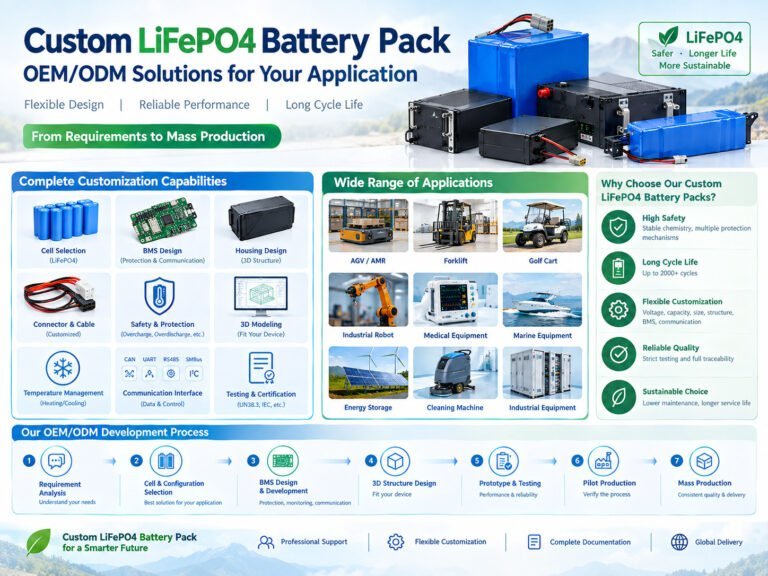
A lithium iron phosphate battery ( LiFePO4 Battery or LFP Battery ) is a lithium-ion battery that uses lithium iron phosphate as the positive electrode material and graphite as the negative electrode material.
Due to their excellent safety, long cycle life, and stable performance, lithium iron phosphate batteries have been widely used in:
- Home Energy Storage System (ESS)
- Solar energy storage
- Electric Vehicles (EVs)
- Electric ships
- Golf cart
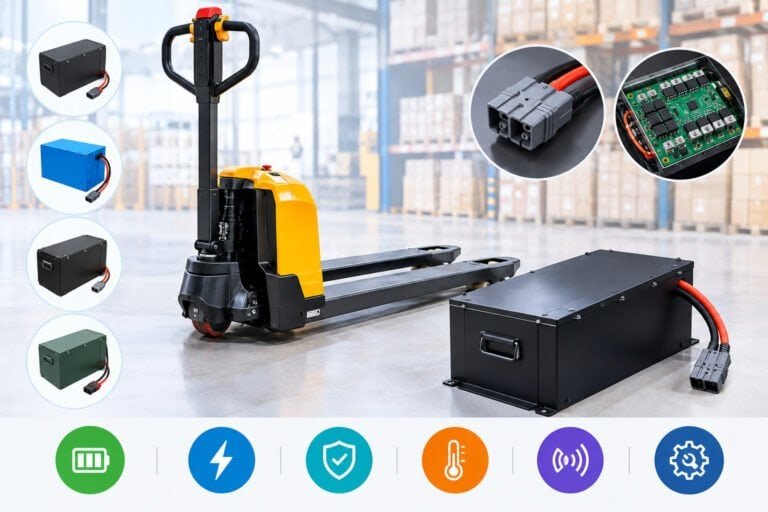
- AGV/AMR robots
- forklift
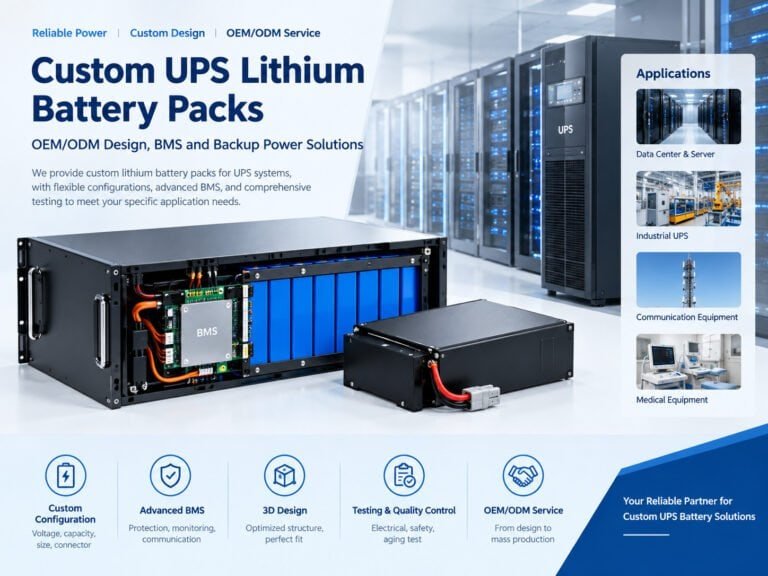
- UPS backup power
- Communication base station
- Industrial equipment
Compared to traditional lead-acid batteries and some ternary lithium batteries (NMC), LiFePO4 is becoming an important technological route in the new energy field.

Part 1. Main Advantages of Lithium Iron Phosphate Batteries
1.1. High safety: More stable chemical structure
Safety is one of the biggest advantages of lithium iron phosphate.
Lithium iron phosphate materials have a stable olivine crystal structure and exhibit greater stability under high temperature, overcharge, and mechanical shock conditions.
Main features:
✅ High thermal stability
✅ Less prone to thermal runaway
✅ Free of high-risk elements such as cobalt
✅ Suitable for large-capacity energy storage applications
Therefore, LiFePO4 is particularly suitable for:
- Ships
- RV
- Home energy storage
- Industrial equipment
These are scenarios with high safety requirements.
1.2. Ultra-long cycle life, reducing long-term costs.
Battery life directly affects the user’s operating costs.
Ordinary lead-acid batteries:
- The number of cycles is approximately 300-500.
- Limited deep discharge capability
Lithium iron phosphate batteries:
- Cycle life is typically 3000-6000 cycles.
- High-quality products can reach over 8000 times.
- Supports 80%-100% depth of discharge
For example:
A home energy storage system that is used daily can operate stably for 8-15 years with LiFePO4 batteries, significantly reducing the frequency of replacement.
1.3. High energy efficiency
Although lithium iron phosphate batteries have a lower gravimetric energy density than some ternary lithium batteries, they have a higher practical usable capacity.
Advantages include:
- Discharge platform stability
- Slow voltage drop
- More effective capacity can be released.
For energy storage, electric vehicles, and industrial equipment, stable output is more important than simply pursuing high energy density.
1.4. Excellent charge and discharge performance
LiFePO4 batteries support high-rate charge and discharge:
Advantages:
⚡ Fast charging
⚡ High power output
⚡ Suitable for frequent use
For example:
AGV robots, forklifts and other equipment require a lot of charging and discharging every day, and lithium iron phosphate can meet the needs of high-frequency use.
1.5. Lighter and more space-saving
Compared to lead-acid batteries:
| project | lead-acid batteries | LiFePO4 battery |
| weight | Heavy | Reduced by approximately 30%-60% |
| Used capacity | Approximately 50% | 80%-100% |
| Cycle life | 300-500 times | More than 3000 times |
| maintain | Maintenance required | Basic maintenance-free |
For applications with limited space, such as ships, RVs, and electric vehicles, LiFePO4 can provide higher space utilization.
Part 2. Main Application Areas of Lithium Iron Phosphate Batteries
2.1. Home energy storage system
With the widespread application of solar energy, home energy storage has become an important market for LiFePO4.
application:
- Photovoltaic energy storage
- Offline system
- backup power
- Peak-valley electricity pricing and energy storage
Advantages:
✅ Long lifespan
✅ High safety
✅ Supports daily charge/discharge cycles
2.2. Electric vehicles and low-speed vehicles
LiFePO4 is widely used in:
- electric vehicles
- electric bicycle
- electric motorcycles
- Golf cart
- sightseeing bus
Features:
- Stable output
- Low maintenance
- Long battery life
2.3. Ship and marine energy storage
The marine environment places higher demands on batteries:
- Moisture-proof
- earthquake resistance
- Long-term power supply
- High reliability
LiFePO4 is suitable for:
- yacht
- electric boat
- Auxiliary power supply for fishing boats
- Shipborne energy storage system
In conjunction with an intelligent BMS, it can monitor in real time:
- Voltage
- Current
- temperature
- SOC remaining power
2.4. AGVs, AMR robots, and industrial equipment
Smart manufacturing is driving the growth in demand for robot batteries.
Advantages of LiFePO4:
- Supports fast charging
- Long cycle life
- Low maintenance costs
- Stable output
application:
- Automated Guided Vehicles (AGVs)
- Autonomous Mobile Robots (AMRs)
- Automated forklift
- Warehouse equipment
2.5. UPS backup power supply
Traditional UPS systems typically use lead-acid batteries, while LiFePO4 is becoming an upgrade option.
Advantages:
- Longer backup time
- Less maintenance
- Smaller footprint
- Lower lifecycle cost
Applicable to:
- Data Center
- Communication equipment
- medical equipment
- Industrial Control Systems
Part 3. How to properly maintain lithium iron phosphate batteries?
Although LiFePO4 is a low-maintenance battery, its lifespan can be further extended with proper use.
3.1. Avoid prolonged overcharging and over-discharging.
suggestion:
- Maintain SOC between 20% and 90%
- Avoid storing at 0% charge for extended periods.
- Use the matching charger
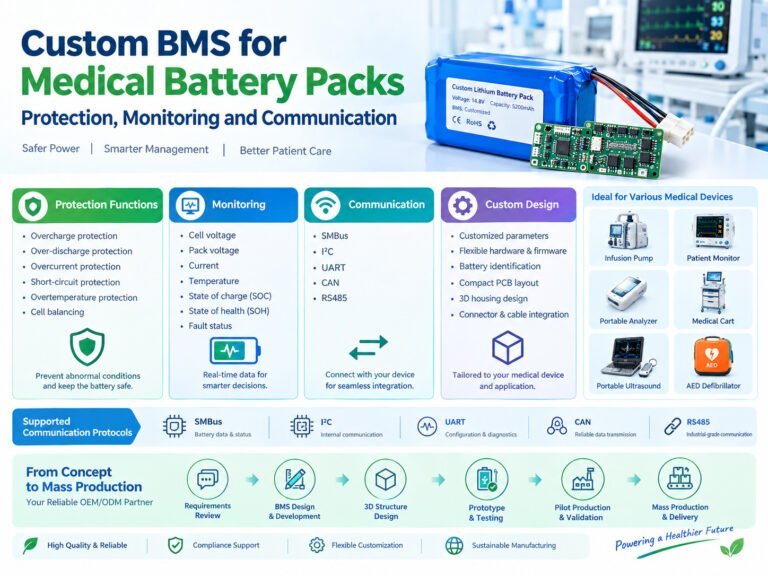
Intelligent BMS can help prevent:
- overcharge
- Over-relaxation
- Overcurrent
- Overheating
3.2. Use the correct charging equipment.
LiFePO4 requires a dedicated charging mode.
Do not use a regular lead-acid charger as a substitute.
recommend:
- Constant current/constant voltage (CC/CV) charging
- Matching battery voltage
- Supports BMS communication
3.3. Pay attention to the temperature environment.
Recommended job scope:
Discharge:
- -20℃~60℃
Charge:
- 0℃~45℃
Low temperature environment:
- Optional battery with heating function
High temperature environment:
- Pay attention to ventilation and heat dissipation.
3.4. Check battery status regularly.
Recommended checks:
- Battery appearance
- Terminal blocks
- BMS Status
- Voltage consistency
For battery packs:
Things to pay attention to:
- Individual voltage difference
- Internal resistance change
- Capacity decay
Part 4. Comparison of Lithium Iron Phosphate Batteries with Other Batteries
| parameter | LiFePO4 | Ternary lithium NMC | lead acid |
| Security | ⭐⭐⭐⭐⭐ | ⭐⭐⭐ | ⭐⭐ |
| Cycle life | 3000-6000 times | 1000-2000 times | 300-500 times |
| weight | light | lightest | heaviest |
| cost | medium | higher | Low |
| Maintenance requirements | Low | medium | high |
| Energy storage applications | excellent | generally | less |
Part 5. Future Development Trends
With the global energy transition, lithium iron phosphate batteries are experiencing rapid growth.
Future trends include:
5.1. Higher capacity battery cells
For example:
- 100Ah
- 150Ah
- 280Ah
- 314Ah+
To meet the needs of large-scale energy storage.
5.2. Intelligent Management
Future batteries will incorporate more of the following:
- AI predictions
- Cloud monitoring
- Intelligent BMS
- Remote diagnostics
5.3. More industry applications
LiFePO4 will be in:
- robot
- Ships
- Industrial vehicles
- Home Energy
Continue to expand the scope of application.
Summary: Why choose lithium iron phosphate batteries?
Lithium iron phosphate batteries have the following advantages:
✅ Superior safety
✅ Ultra-long cycle life
✅ High efficiency
✅ Low maintenance cost
✅ Wide range of applications
It has become an important solution in the fields of new energy storage and power.
Whether for home energy storage, electric vehicles, ships, robots, or industrial equipment, LiFePO4 offers a safer, more reliable, and more economical energy option.
LiFePO4 lithium iron phosphate battery FAQ
1. What are the advantages of lithium iron phosphate (LiFePO4) batteries compared to lead-acid batteries?
Compared to traditional lead-acid batteries, lithium iron phosphate batteries have a longer cycle life, higher energy efficiency, and lower maintenance costs.
Key advantages include:
- The cycle life can reach 3000-6000 times or more.
- Supports higher depth of discharge (80%-100% DOD)
- Lighter weight, saving installation space
- Faster charging speed
- No electrolyte needs to be added, and maintenance is simple.
Therefore, LiFePO4 batteries are widely used in energy storage systems, electric vehicles, ships, robots, and industrial equipment.
2. Are lithium iron phosphate batteries safe?
Yes, lithium iron phosphate batteries have high safety performance.
Due to the use of stable lithium iron phosphate cathode material, its thermal stability is superior to many other lithium battery systems, making it less prone to thermal runaway. Furthermore, professional LiFePO4 batteries are equipped with a smart BMS, which provides:
- Overcharge protection
- Over-discharge protection
- Overcurrent protection
- Short circuit protection
- Temperature protection
Therefore, it is ideal for applications with high safety requirements, such as marine, home energy storage, and industrial applications.
3. What is the lifespan of a lithium iron phosphate battery?
High-quality LiFePO4 batteries can typically last 8-15 years.
Its cycle life typically reaches:
- 3000-6000 cycles
- High-quality products can be recycled more than 8,000 times.
Actual lifespan depends on the usage environment, depth of charge and discharge, temperature, and the quality of the battery management system (BMS).
4. Can lithium iron phosphate batteries be used in marine and ocean applications?
Yes. Lithium iron phosphate batteries are very suitable for marine energy systems, for example:
- electric boat
- yacht
- Auxiliary power supply for fishing boats
- Marine energy storage systems
Compared to traditional batteries, LiFePO4 has the following advantages:
- Higher security
- Lighter weight
- Longer service life
- Better seismic performance
Combining waterproof design with intelligent BMS, it can meet the long-term operational requirements in complex marine environments.
5. How to properly maintain a lithium iron phosphate battery?
Although LiFePO4 batteries have low maintenance costs, their lifespan can be further extended with proper use:
- Use the matching dedicated charger
- Avoid prolonged overcharging or complete discharge.
- Maintain a suitable operating temperature
- Regularly check the BMS running status
- Check battery connection cables and connectors.
Proper maintenance can help lithium iron phosphate batteries maintain long-term stable performance.
 English
  Chinese
  Japanese
  German
  French
  Korean
