
Medical equipment requires a stable and dependable power source. For portable and battery-powered medical devices, the battery is not simply an energy-storage component. Its voltage stability, protection system, communication functions, mechanical design, charging performance, and safety characteristics can all affect the operation of the equipment.
For medical device manufacturers, OEM/ODM lithium battery development provides a way to design the battery around the equipment rather than adapting the equipment to an off-the-shelf battery.
Custom lithium battery packs can be developed according to the device’s voltage, capacity, operating time, dimensions, discharge requirements, communication protocol, connector, charging method, and target-market requirements.
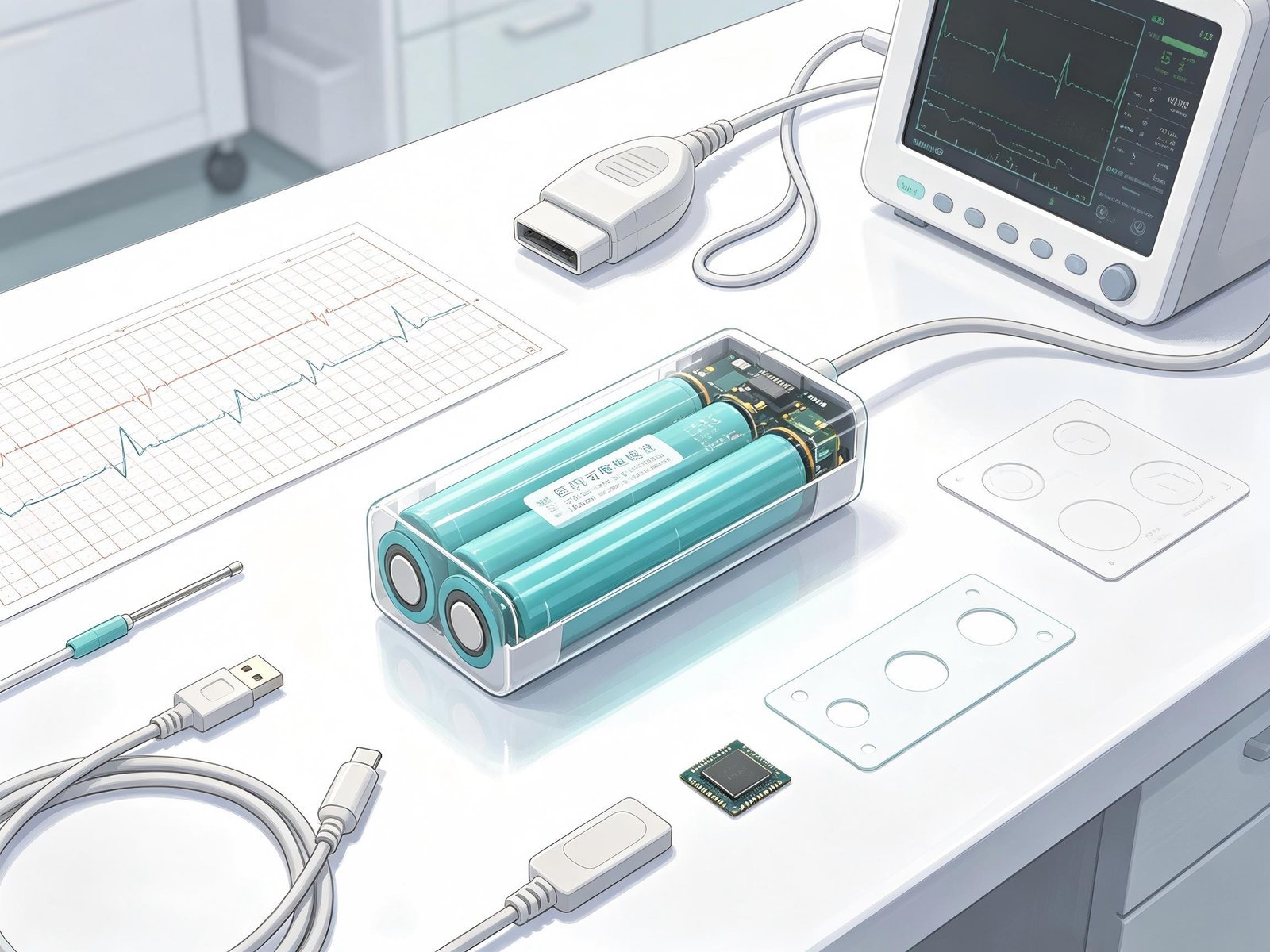
What Are OEM/ODM Lithium Battery Solutions for Medical Equipment?
OEM and ODM medical battery solutions are customized rechargeable lithium battery packs designed for specific medical devices.
An OEM battery solution is generally developed according to the customer’s existing product design and technical specifications. An ODM solution can involve a broader level of engineering support, including battery architecture, cell selection, BMS development, enclosure design, communication functions, prototyping, testing, and production.
Depending on the application, a customized medical battery pack may include:
- 리튬 이온 전지
- LiFePO4 셀
- 18650 cylindrical cells
- 21700 cylindrical cells
- 배터리 관리 시스템(BMS)
- 보호 회로
- NTC 온도 센서
- Fuel gauge
- Smart communication interface
- 맞춤형 커넥터
- Custom wiring
- Plastic or metal enclosure
- 충전 인터페이스
- Battery status indicators
The final configuration should be determined by the electrical, mechanical, environmental, and regulatory requirements of the medical device.
Medical Equipment That Can Use Custom Lithium Batteries
Custom lithium battery packs can be designed for a wide range of portable and battery-powered healthcare equipment.
Portable Patient Monitoring Equipment
Patient monitors may require continuous and stable power during transportation, emergency situations, or bedside operation.
Battery design may focus on:
- 안정적인 전압 출력
- 긴 작동 시간
- Accurate state-of-charge information
- 저온 작동
- Battery status communication
- Reliable charging and protection
Portable Oxygen Concentrators
Portable oxygen concentrators typically require batteries capable of supplying stable power to compressors and control electronics.
Battery engineers need to consider:
- Continuous and peak power demand
- Operating duration
- Pack weight
- 사용 가능한 설치 공간
- 열 관리
- 충전 시간
- 배터리 보호
Ventilators and Respiratory Equipment
For portable ventilators and other respiratory equipment, battery backup can help maintain operation when external power is unavailable.
The battery system may require:
- Stable output voltage
- Accurate remaining-runtime estimation
- 과충전 및 과방전 방지
- 단락 보호
- 온도 모니터링
- Communication with the main control system
Infusion Pumps
Infusion pumps are compact devices with specific space and power requirements.
A custom battery can be designed around:
- 컴팩트한 크기
- Low weight
- 필수 작동 시간
- 커넥터 위치
- 충전 인터페이스
- 배터리 상태 모니터링
- Device communication requirements
Portable Diagnostic Equipment
Portable ultrasound systems, diagnostic instruments, and other healthcare terminals can benefit from customized lithium battery packs that balance energy capacity, size, and weight.
Rehabilitation and Home-Care Equipment
Battery-powered rehabilitation equipment and home-care devices may require customized solutions based on operating frequency, charging cycles, enclosure limitations, and user requirements.
Why Custom Battery Design Matters for Medical Equipment
Medical equipment often has limited internal space and specific electrical requirements. An off-the-shelf battery may not provide the required dimensions, connector position, voltage, capacity, or communication interface.
A custom battery solution allows the battery to be developed around the equipment.
1. Customized Voltage and Capacity
The battery configuration can be designed according to the equipment’s operating voltage and required energy.
For example, the battery may be configured to meet a specific voltage and capacity target rather than using a standard commercial battery.
2. Customized Dimensions
Medical devices can have highly constrained internal layouts.
The battery enclosure can be developed according to:
- 길이
- 너비
- 높이
- 장착 지점
- 케이블 배선
- 커넥터 위치
- Internal clearance
This is particularly important for handheld and portable equipment.
3. Customized BMS
The BMS is one of the key components of a rechargeable medical battery pack.
Depending on the equipment, the BMS may provide:
- 과충전 방지
- 과방전 방지
- 과전류 보호
- 단락 보호
- 온도 보호
- 셀 밸런싱
- State-of-charge monitoring
- Battery fault detection
- Communication with the host device
Communication interfaces can include UART, RS485, CAN, SMBus, or other protocols depending on the device architecture.
4. Battery Communication
For smart medical equipment, the battery may need to communicate with the device controller.
Battery data can include:
- 전압
- 현재
- 온도
- 충전 상태
- State of health
- 잔여 용량
- Cycle count
- Battery fault status
The communication protocol and data structure should be defined during the battery development stage.
Choosing the Right Lithium Battery Chemistry
Different medical applications may require different lithium battery chemistries.
Lithium-Ion Battery
Lithium-ion batteries can provide a combination of energy density, compact size, and established cell availability. They can be considered for portable medical equipment where weight, operating time, and available installation space are important design factors.
The battery configuration should be selected according to the equipment’s voltage, current, capacity, operating temperature, cycle-life requirements, and mechanical design.
LiFePO4 배터리
LiFePO4 batteries are known for their thermal stability and cycle-life characteristics. They can be considered for applications where safety, durability, and service life are important design considerations.
However, LiFePO4 batteries generally have a lower nominal cell voltage than conventional lithium-ion cells, so the series configuration and charging system need to be designed accordingly.
Chemistry selection should be based on the complete device requirements rather than assuming one chemistry is suitable for every medical application.
Medical Battery Safety and Certification
Battery compliance should be considered from the beginning of product development.
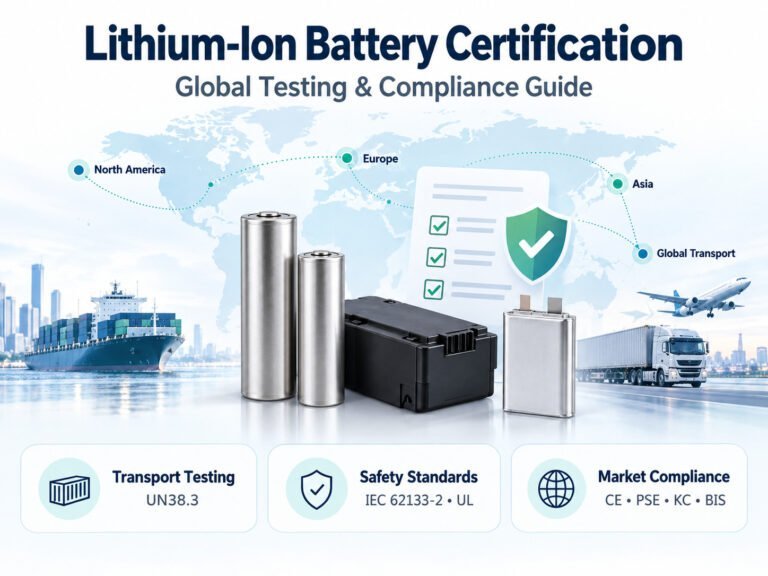
Depending on the application and target market, commonly relevant standards and requirements may include:
- IEC 62133-2
- UL 1642
- UN 38.3
- IEC 60601-1, where applicable to the complete medical electrical equipment
- CE requirements for applicable European markets
- RoHS
- Applicable regional battery regulations
The exact requirements depend on the battery architecture, medical device classification, target market, transportation method, and final product configuration.
Battery certification should therefore be planned together with the medical device development process rather than treated as a final production step.
EU Battery Requirements for Medical Devices
For products placed on the European market, manufacturers should consider the requirements of Regulation (EU) 2023/1542, along with other applicable legislation.
The EU Battery Regulation introduces requirements covering areas such as battery sustainability, labeling, information, conformity assessment, and battery management.
Certain battery removability and replaceability requirements also contain specific considerations for medical devices and safety-critical equipment.
This means medical equipment manufacturers should evaluate battery architecture together with the intended use and regulatory requirements of the complete product.
OEM/ODM Medical Battery Development Process
A structured development process can reduce compatibility problems during mass production.
Step 1: Define Device Requirements
The battery manufacturer evaluates:
- 정격 전압
- 작동 전압
- 용량
- 정류 전류
- 피크 전류
- 운영 시간
- 충전 요건
- 치수
- 무게
- 작동 온도
- 보관 온도
- Connector requirements
- 통신 프로토콜
Step 2: Select Cells
Cells are selected according to the application’s electrical and mechanical requirements.
주요 매개변수로는 다음이 있습니다:
- 세포 화학
- 공칭 전압
- 용량
- 내부 저항
- Discharge capability
- 주기 수명
- 작동 온도
- 셀 일관성
- 추적성
For cylindrical-cell battery packs, cell matching is also important for maintaining pack consistency.
Step 3: Design the Battery Pack
Engineers develop the electrical and mechanical structure of the battery.
This may include:
- 셀 구성
- BMS
- 보호 회로
- 온도 센서
- 퓨즈
- 커넥터
- 배선
- 주택
- 장착 구조
The pack structure should also consider heat generation, insulation, vibration, and the installation environment.
Step 4: Develop the BMS
For smart medical equipment, BMS hardware and firmware can be configured according to the host device.
Protection thresholds, SOC calculation, communication protocols, alarms, and fault-management functions should be verified against the equipment requirements.
Step 5: Prototype Development
Prototype batteries allow the medical device manufacturer to verify:
- Physical compatibility
- Electrical performance
- 충전 특성
- Runtime
- 커뮤니케이션
- Thermal performance
- Installation
- User operation
The prototype stage can also identify potential problems with connectors, mounting structures, cable routing, and battery enclosure design.
Step 6: Testing and Validation
테스트에는 다음이 포함될 수 있습니다:
- 용량 테스트
- 충전 및 방전 테스트
- 내부 저항 테스트
- 에이징 테스트
- 온도 시험
- 과충전 방지
- 과방전 방지
- 단락 보호
- 과전류 보호
- 기계적 시험
- 통신 테스트
Testing requirements should be defined according to the battery and complete medical device design.
Step 7: Certification and Documentation
Depending on the project, documentation may include:
- 배터리 사양
- Cell documentation
- BMS specifications
- Safety test reports
- UN38.3 문서
- Material documentation
- SDS/MSDS
- Traceability records
- Production inspection records
- Certification-related documents
The battery manufacturer should work with the medical device manufacturer to identify which documents and tests are applicable to the final product.
Step 8: Mass Production
After design verification and required approvals, the battery can move into controlled mass production.
Production quality control may include:
- 반입 셀 검사
- 세포 매칭
- 용접 검사
- BMS 테스트
- 용량 테스트
- 에이징 테스트
- 기능 테스트
- 최종 검사
- Production traceability
What Information Should Medical Device Manufacturers Provide?
To develop a suitable OEM/ODM battery solution, manufacturers should ideally provide:
- Equipment model
- Required battery voltage
- Target capacity or operating time
- 최대 연속 전류
- 피크 전류
- 배터리 치수
- Connector information
- 충전 방법
- 통신 프로토콜
- 작동 온도
- 보관 온도
- Expected cycle life
- 설치 방법
- 목표 시장
- Required certifications
If the battery specification has not yet been finalized, the battery manufacturer can work from the equipment’s power consumption and operating profile.
How to Select a Medical Equipment Battery Manufacturer
When evaluating an OEM/ODM battery supplier, look beyond battery price.
Consider the manufacturer’s ability to support the complete development process.
Engineering Capability
The supplier should be able to support:
- 세포 선택
- Electrical design
- BMS 개발
- 기계 설계
- Prototyping
- 테스트
- Production engineering
A supplier with experience in customized battery development can help identify potential compatibility issues during the design stage.
Quality Management
Medical battery projects require consistent production and traceability.
Manufacturers should evaluate the supplier’s:
- Quality management system
- Incoming inspection
- Production controls
- 시험 절차
- Traceability system
- Final inspection process
The quality system should be appropriate for the project requirements.
Certification Experience
Ask whether the supplier has experience preparing battery documentation and testing for the target market.
Certification planning should begin during the battery design stage because changes to the cell, BMS, enclosure, or electrical configuration can affect testing requirements.
사용자 지정 기능
The supplier should be able to customize:
- 전압
- 용량
- 치수
- BMS
- 커넥터
- 커뮤니케이션
- 첨부 파일
- 배선
- Charging solution
- Battery labeling
Production and Testing
A suitable manufacturer should have defined inspection and testing procedures from incoming cells through finished battery packs.
This helps maintain consistency between prototype batteries and mass-produced units.
OEM/ODM Medical Battery Solutions from FirstPower
FirstPower provides customized lithium battery pack development based on medical equipment requirements.
OEM/ODM services can cover:
- 세포 선택
- 배터리 팩 설계
- Lithium-ion battery solutions
- LiFePO4 배터리 솔루션
- 사용자 지정 전압 및 용량
- Compact battery structures
- BMS 사용자 지정
- CAN, RS485, UART and other communication options
- 커넥터 맞춤 설정
- 프로토타입 개발
- 배터리 테스트
- 인증 지원
- 대량 생산
잠재적인 응용 분야는 다음과 같습니다:
- Patient monitoring equipment
- Portable oxygen concentrators
- Respiratory equipment
- 인공 호흡기
- 주입 펌프
- Portable diagnostic equipment
- 재활 장비
- Home-care equipment
- Other battery-powered medical devices
The battery specification, chemistry, BMS configuration, and certification plan are developed according to the actual device requirements.
결론
A lithium battery for medical equipment should be designed as part of the complete product system.
The right OEM/ODM development process begins with the equipment’s power requirements and continues through cell selection, battery architecture, BMS development, mechanical integration, prototype testing, certification planning, and controlled production.
For medical device manufacturers, early battery engineering can help reduce redesign risks and improve compatibility between the battery and the final equipment.
If you are developing a battery-powered medical device, providing the equipment’s voltage, capacity, dimensions, current requirements, communication protocol, and target market is a practical starting point for developing a customized lithium battery solution.
자주 묻는 질문
Q1: Can lithium batteries be customized for medical equipment?
Yes. Battery packs can be customized according to voltage, capacity, dimensions, connector, BMS, communication protocol, charging requirements, and operating conditions.
Q2: Which lithium battery chemistry is suitable for medical equipment?
Lithium-ion and LiFePO4 batteries can both be used in different applications. Chemistry selection should be based on the equipment’s energy, power, size, temperature, cycle-life, and safety requirements.
Q3: Can the BMS communicate with medical equipment?
Yes. Depending on the equipment architecture, smart BMS solutions can support communication interfaces such as UART, RS485, CAN, or other protocols.
Q4: What certifications are required for medical lithium batteries?
Requirements vary by application and market. IEC 62133-2, UL 1642, UN38.3, CE-related requirements, and other applicable standards may need to be considered.
Q5: Can the battery manufacturer help with certification?
A battery supplier can provide technical documentation, test samples, battery specifications, and support applicable battery testing. However, certification requirements for the complete medical device depend on the final product and target market.
Q6: Can medical battery packs be made in custom shapes?
Yes. Cylindrical and prismatic cells can be considered for different mechanical designs, and the finished battery enclosure can be customized to fit the equipment.
Q7: Can medical equipment batteries support CAN or RS485 communication?
Yes. Smart BMS solutions can be configured with communication interfaces such as CAN, RS485, UART, or other protocols according to the equipment’s communication requirements.
Q8: What should I provide when requesting a custom medical battery?
Useful information includes the required voltage, capacity, operating current, peak current, battery dimensions, connector, charging method, operating temperature, communication protocol, expected runtime, target market, and certification requirements.
 English
  Chinese
  Japanese
  German
  French
  Korean
