
自律走行ロボット(AMR)は、現代の倉庫、スマートファクトリー、物流センター、および製造現場において、重要な役割を果たしつつあります。従来の無人搬送車(AGV)とは異なり、AMRはセンサー、カメラ、AIアルゴリズム、およびインテリジェント制御システムを用いて、自律的に移動することができます。.
効率的なAMRシステムの背後には、信頼性の高いエネルギー源があります。バッテリーは、以下の点に直接影響を与えます:
- 稼働時間
- 充電効率
- 積載能力
- 安全性能
- 保守要件
- システム全体の生産性
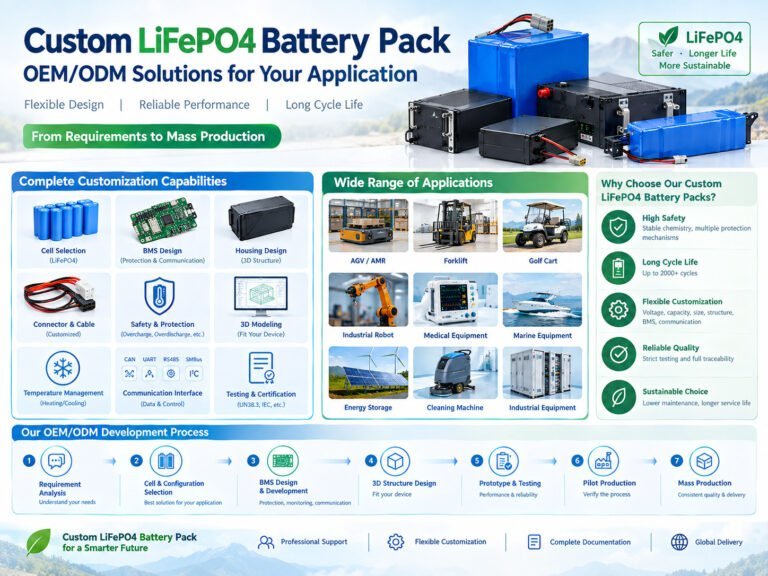
さまざまな電池技術の中でも、, LiFePO4(リン酸鉄リチウム)電池 その長いサイクル寿命、優れた熱安定性、信頼性の高い性能、そして頻繁な充電操作への耐性により、産業用AMR用途において好まれる選択肢となっています。.
本ガイドでは、AMRロボット用のLiFePO4バッテリーを選定する際に考慮すべき重要な要素について解説します。これには、バッテリーの化学組成、電圧の選定、容量の算出、BMSの機能、安全基準、およびカスタマイズ要件などが含まれます。.

第1部。とは何か AMRロボットのバッテリー?
AMRロボットのバッテリーとは、自律移動ロボットに安定した電力を供給するために設計された、充電式のエネルギー貯蔵システムです。.
民生用バッテリーとは異なり、産業用AMRバッテリーには以下の要件を満たすことが求められます:
- 長時間労働
- 頻繁な充電サイクル
- 大電流出力
- 連続運転
- 過酷な産業環境
通常、AMR用バッテリーパックの構成は以下の通りです:
1.1 LiFePO4 電池セル
電池セルは、エネルギーを蓄える基本単位です。.
LiFePO4セルの一般的な仕様には、以下のものがあります:
| セル・タイプ | 電圧 | 標準的な容量 |
|---|---|---|
| プリズマティック・セル | 3.2V | 50Ah~280Ah |
| 円筒形セル | 3.2V | カスタマイズ済み |
| 大判セル | 3.2V | 100Ah以上 |
必要な電圧と容量を得るために、複数のセルが直列および並列に接続されています。.
例を挙げよう:
- 24V LiFePO4バッテリーパック
- 36V LiFePO4バッテリーパック
- 48V LiFePO4バッテリーパック
- 72V LiFePO4バッテリーパック
第2部:AMRロボットにLiFePO4バッテリーを選ぶ理由とは?
2.1 高い安全性
安全性は、産業用ロボットにとって最も重要な要件の一つです。.
AMRは、主に次のような場所で稼働しています:
- 倉庫
- 工場
- 病院
- 制作ワークショップ
LiFePO4は、安定した分子構造と高い熱安定性を備えています。.
他のリチウム系電池と比較すると、, LiFePO4バッテリー 以下を提供する:
- 耐熱性の向上
- 安定した化学的性能
- 異常な状況下でのリスク低減
- 産業環境下での信頼性の高い稼働
ロボットが人や設備の周囲で継続的に稼働する用途においては、バッテリーの安全性は極めて重要な考慮事項となります。.
2.2 長いサイクル寿命
AMRロボットは通常、毎日稼働しており、場合によっては24時間体制で稼働することもあります。.
頻繁な充放電には、優れたサイクル寿命を持つバッテリーが必要です。.
高品質なLiFePO4バッテリーパックには、次のような特徴があります:
- 数千回の充放電サイクル
- 安定した容量保持
- 交換頻度の低減
従来の鉛蓄電池と比較して、LiFePO4電池は、電池の交換やメンテナンスの頻度を大幅に削減することができます。.
2.3 急速充電機能
現代の倉庫では、設備の高い稼働率が求められています。.
AMRロボットでは、よく次のようなものが使用されます:
機会充電
ロボットは、短い休止時間中に自動的に充電を行います。.
ドックでの自動充電
バッテリー残量が少なくなると、ロボットは充電ステーションに戻ります。.
バッテリー交換システム
オペレーターは、消耗したバッテリーを完全に充電されたパックと交換します。.
LiFePO4バッテリーは、頻繁な充電にも耐えられるため、これらの動作モードに対応しています。.
2.4 安定した大電流出力
AMRロボットは、以下の状況において動的な電力供給を必要とします:
- 開始
- 加速
- 旋回
- 重い荷物を運ぶ
- スロープの登り
バッテリーは、著しい電圧降下を伴わずに安定した電流を供給できなければなりません。.
LiFePO4バッテリーパックは、産業用モーションシステムにおいて信頼性の高い放電性能を発揮します。.
第3部:AMRバッテリーの電圧に関する一般的な解決策
適切な電圧の選定は、バッテリー設計における最初のステップの一つです。.
3.1 AMRロボット用24V LiFePO4バッテリー
24Vバッテリーシステムは、一般的に次のような用途に使用されます:
- 小型AMRロボット
- 屋内配送ロボット
- 検査ロボット
- サービスロボット
メリット
- コンパクトなサイズ
- 軽量化
- 軽作業に適しています
代表的な仕様:
- 24V 20Ah
- 24V 40Ah
- 24V 60Ah
3.2 AMRロボット用48V LiFePO4バッテリー
48Vは、産業用AMRシステムにおいて最も一般的なソリューションの一つです。.
アプリケーション
- 倉庫用AMR
- マテリアルハンドリング用ロボット
- 工場用物流ロボット
- スマート交通システム
代表的なモデル:
- 48V 30Ah
- 48V 50Ah
- 48V 100Ah
メリット
- パワーと効率のバランスが良好
- 多くの産業用モーターシステムに対応しています
- 中~重荷重に適しています
3.3 ヘビーデューティーAMR用72V LiFePO4バッテリー
72Vシステムは、以下の用途に使用されます:
- 高積載型AMR
- 自律走行フォークリフト
- 屋外用移動ロボット
メリット:
- 出力の向上
- 過酷な使用環境に適しています
- 稼働時間の延長に対応
第4部:AMRバッテリーの容量の計算方法
バッテリーの容量によって、充電するまでのロボットの稼働時間が決まります。.
主な要因としては、以下のものが挙げられます:
- モーターの消費電力
- 積載重量
- 勤務時間
- 動作環境
- 効率の向上
基本的な計算:
バッテリー容量(Ah)=消費電力 × 稼働時間 ÷ バッテリー電圧
例
AMRロボット:
- 消費電力:500W
- 稼働時間:8時間
- バッテリー電圧:48V
必要なエネルギー:
500W × 8時間 = 4000Wh
バッテリー容量:
4000Wh ÷ 48V ≈ 83Ah
適切な解決策としては、次のようなものが考えられます:
48V 100Ah LiFePO4 バッテリーパック
第5部 AMR用バッテリー管理システム(BMS)の重要な機能
BMSは、バッテリーパックのインテリジェントな制御センターです。.
プロ仕様のAMR用バッテリーには、以下の機能を備えたスマートBMSが搭載されている必要があります:
5.1 保護機能
含む:
- 過充電保護
- 過放電保護
- 過電流保護
- 短絡保護
- 過熱保護
- 低温保護
5.2 通信機能
産業用AMRシステムでは、多くの場合、バッテリー駆動による通信が必要となります。.
一般的なプロトコル:
- CAN通信
- RS485
- UART
- Modbus
BMSでは、以下のような情報を提供することができます:
- SOC(充電状態)
- SOH(健康状態)
- 電圧
- 現在
- 温度
- 残り実行時間
これにより、ロボットコントローラは動作を最適化することができます。.
第6部:AMRバッテリーパックの設計上の考慮事項
信頼性の高いAMR用バッテリーには、専門的なPACK設計が不可欠です。.
6.1 機械構造の設計
バッテリー収納ケースについては、以下の点を考慮する必要があります:
- ロボットの設置スペース
- 耐衝撃性
- 振動対策
- 放熱
- 保守用アクセス
6.2 熱管理
LiFePO4電池は熱安定性に優れていますが、産業用途では以下の要件が必要となる場合があります:
- 温度モニタリング
- 冷却設計
- 寒冷地向け暖房システム
特に以下の対象者向け:
- 冷蔵倉庫用ロボット
- 屋外用AMR
- 低温環境
6.3 防水・防塵保護
産業環境には、以下のようなものが含まれる場合があります:
- ダスト
- 水分
- 油による汚染
バッテリーパックには、以下のものが必要になる場合があります:
- IP65保護等級
- IP67保護等級
- IP68保護等級
第7部 AMRバッテリーの試験要件
出荷前に、専門メーカーは包括的な試験を実施すべきである。.
細胞レベルでの試験
含む:
- キャパシティ・テスト
- 内部抵抗試験
- 電圧安定性試験
- 外観検査
PACKレベル試験
含む:
電気 テスト
- 充放電試験
- BMS機能試験
- 通信テスト
安全試験
- 短絡試験
- 過充電試験
- 温度試験
信頼性試験
- 振動試験
- エージングテスト
- サイクルテスト
これらの試験は、長期運用における安定した性能を確保するのに役立ちます。.
第8部:AMRロボット向けLiFePO4電池と鉛蓄電池の比較
| 項目 | LiFePO4バッテリー | 鉛蓄電池 |
|---|---|---|
| 重量 | 軽量 | 重い |
| サイクル・ライフ | ロング | ショート |
| 充電速度 | もっと速く | 遅い |
| メンテナンス | 低い | より高い |
| エネルギー効率 | より高い | 下へ |
| 自動充電 | 適している | 限定 |
| スペースの有効活用 | もっと良い | 大きい |
最新の自動化システムにおいて、リチウム電池技術は、スマート物流機器との互換性を高めています。.
第9部:AMR LiFePO4バッテリーメーカーの選び方
バッテリーのサプライヤーを選ぶ際には、以下の点を考慮してください:
9.1 技術力
適格なサプライヤーは、以下を提供すべきです:
- バッテリーの設計
- 電気工学
- BMS開発
- 構造のカスタマイズ
9.2 認証能力
一般的な資格には以下のようなものがある:
- UN38.3
- IEC 62133
- CE
- RoHS
- UL規格
- EMC試験
9.3 OEM/ODMによるカスタマイズ
AMRメーカーは、多くの場合、カスタマイズされたソリューションを必要としています:
- 特殊寸法
- カスタム電圧
- カスタム容量
- 通信プロトコル
- バッテリーコネクタ
専門メーカーであれば、試作から量産に至るまで、バッテリーに関する包括的なソリューションを提供することができます。.
第10部 AMRロボット用バッテリーの今後の動向
インテリジェントなバッテリー管理
将来のAMR用バッテリーには、以下の機能が統合される予定です:
- 遠隔監視
- クラウドデータ分析
- 予知保全
- スマート診断
モジュール式バッテリー設計
モジュール型ソリューションは、以下の機能をサポートします:
- 迅速な交換
- 柔軟な生産能力の拡大
- メンテナンスが容易
エネルギー効率の向上
バッテリーシステムは今後も改良が進んでいくでしょう:
- エネルギーの利用
- 充電速度
- 熱管理
- 安全設計
結論
AMRロボットの性能を発揮させるには、適切なLiFePO4バッテリーの選定が不可欠です。適切なバッテリーソリューションでは、以下の要素のバランスをとることが求められます:
- 電圧要件
- 必要な容量
- 安全性能
- サイクル寿命
- 通信機能
- 環境条件
AMRメーカーやオートメーション企業にとって、経験豊富なリチウム電池サプライヤーと提携することは、長期的な産業用運用を支える、信頼性の高いカスタマイズされたバッテリーシステムの開発に役立ちます。.
よくある質問:AMRロボット用LiFePO4バッテリー
Q1:なぜAMRロボットにはLiFePO4電池が一般的に使用されているのですか?
LiFePO4電池は、優れた安全性、長いサイクル寿命、安定した放電性能を備え、頻繁な充電にも対応しているため、産業用自動化機器に適しています。.
Q2:AMRロボットには通常、どの電圧のバッテリーが使われていますか?
一般的な解決策としては、次のようなものがあります:
- 24V
- 36V
- 48V
- 72V
適切な電圧は、モーターの仕様やロボットの設計によって異なります。.
Q3: AMRのLiFePO4バッテリーの寿命はどれくらいですか?
バッテリーの寿命は、使用条件、充電方法、およびメンテナンスによって異なります。産業用LiFePO4バッテリーパックは、長期にわたる繰り返し充放電に耐えるよう設計されています。.
Q4: AMRバッテリーはカスタマイズできますか?
はい。バッテリーメーカーは、以下の点をカスタマイズすることができます:
- 電圧
- 定員
- サイズ
- コネクタ
- 通信プロトコル
- BMSの機能
Q5: AMRバッテリーはCAN通信に対応していますか?
はい。産業用AMRバッテリーパックは、一般的にCAN、RS485、UART、およびModbus通信に対応しています。.
 English
  Chinese
  Japanese
  German
  French
  Korean
