
乳児用パルスオキシメーターは、乳児や幼児の酸素飽和度(SpO₂)および脈拍数を測定するために設計された、コンパクトな医療用モニタリング機器です。.
携帯型医療機器への需要が高まる中、メーカー各社は、よりコンパクトな設計、より長い稼働時間、そして信頼性の高い電源ソリューションに注力しています。.
バッテリーパックは、デバイスの性能に影響を与える主要な構成要素の一つです。適切な 乳児用パルスオキシメータの電池 安定した出力、安全保護機能、長いサイクル寿命、および医療機器の要件への適合性を確保する必要があります。.
医療機器メーカーにとって、適切な カスタムリチウムイオンバッテリーパックのサプライヤー これは製品開発における重要なステップです。.
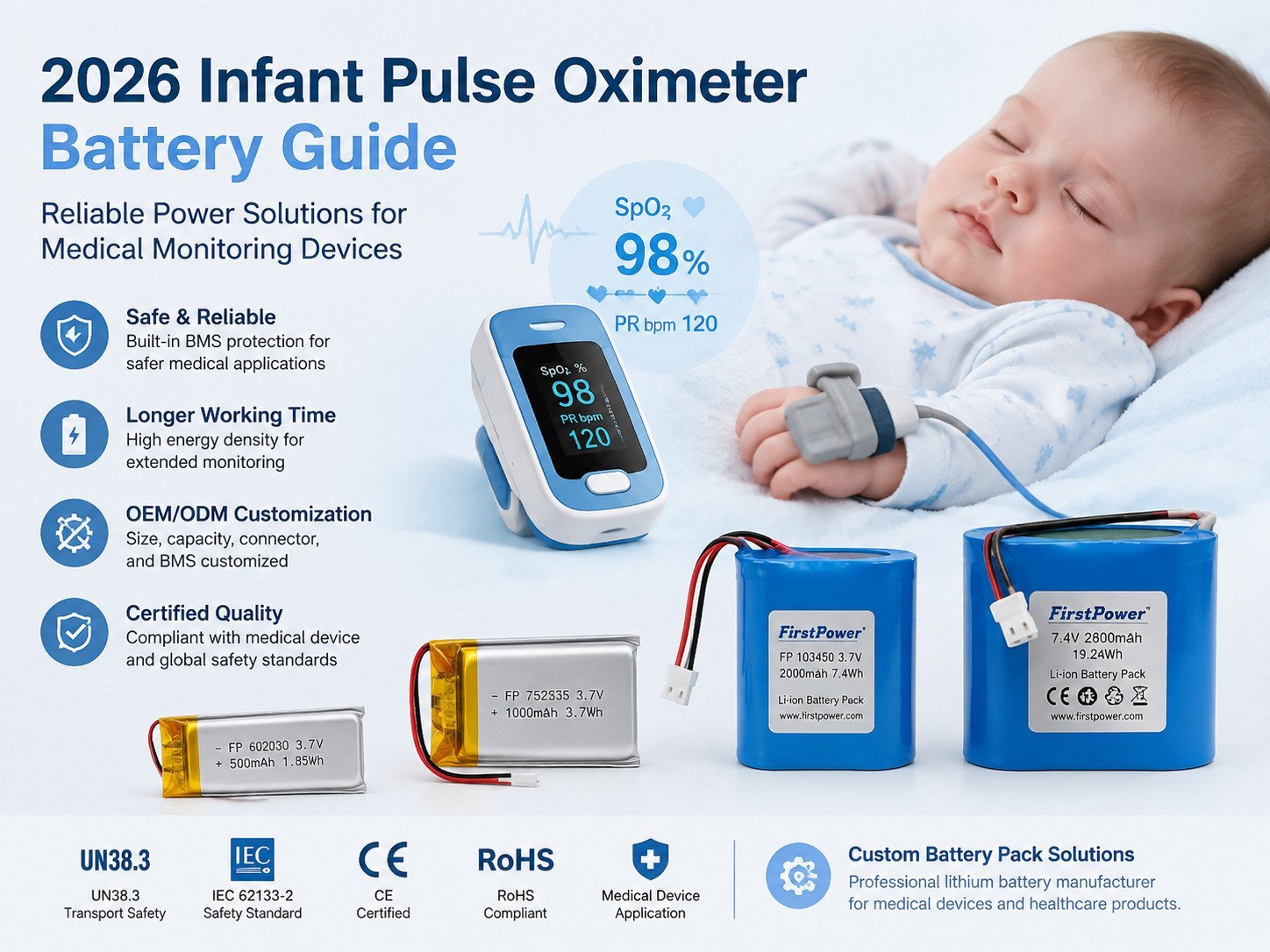 乳児用パルスオキシメーターにはどのような種類の電池が使われていますか?
乳児用パルスオキシメーターで最も一般的に使用されているバッテリー技術には、次のようなものがあります:
- リチウムポリマー電池(Li-Po)
- リチウムイオン電池パック
- 18650バッテリーパック
- LiFePO4バッテリーパック
バッテリーの種類ごとに、デバイスの設計、サイズ要件、および動作条件に応じて、それぞれ異なる利点があります。.
乳児用パルスオキシメータ用リチウムポリマー電池
リチウムポリマー電池は、その柔軟な設計により、携帯型医療機器で広く使用されています。.
利点は以下の通り:
コンパクトなサイズ
医療用ウェアラブルデバイスでは、内部のスペースが限られていることがよくあります。Li-Poバッテリーは、さまざまな形状や厚さに合わせてカスタマイズすることが可能です。.
軽量構造
軽量設計により、携帯型監視装置の総重量を軽減することができます。.
カスタマイズされた容量
バッテリーメーカーは、以下の要素に基づいてさまざまな容量の製品を設計することができます:
- デバイスの消費電力
- 労働時間に関する要件
- 製品のサイズ制限
主な用途:
- 乳幼児用ウェアラブルモニター
- 乳児用パルスオキシメーター
- 携帯型医療機器
パルスオキシメータに適したバッテリー容量の選び方は?
バッテリーの容量は、デバイスの稼働時間に直接影響します。.
基本的な計算:
バッテリー容量(mAh)= 動作電流(mA)× 動作時間(h)
例えば、こうだ:
パルスオキシメータの消費電力はおよそ:
- 100mAの動作電流
- 労働時間10時間
理論上のバッテリー必要量:
100mA × 10時間 = 1000mAh
ただし、バッテリーの選定にあたっては、以下の点も考慮する必要があります:
- バッテリーの経年劣化
- 温度条件
- 充電効率
- 安全保護限界
医療機器用バッテリーパックにおいて、BMSが重要な理由は何か?
バッテリー管理システム(BMS)は、充電式リチウムイオンバッテリーパックの不可欠な構成要素です。.
乳児用パルスオキシメータの用途において、BMSはバッテリーの安全性と信頼性の向上に貢献します。.
BMSの主な機能には、以下のものが含まれます:
過充電保護
過大な充電電圧を防止します。.
過放電保護
過放電によるバッテリーの損傷を防ぐのに役立ちます。.
過電流保護
異常な電流状態から保護します。.
温度モニタリング
バッテリーパックが適切な温度範囲内で動作できるようにします。.
乳児用パルスオキシメータの電池に関する安全要件
医療機器には、安定かつ信頼性の高いバッテリー性能が求められます。.
バッテリーの安全性に関して重要な考慮事項は以下の通りです:
高品質なバッテリーセル
バッテリーメーカーは、以下の点を評価すべきである:
- 細胞の一貫性
- 内部抵抗
- 容量許容差
- サプライヤーの信頼性
バッテリーパックの保護設計
カスタマイズされた医療用バッテリーパックには、以下のものが含まれる場合があります:
- 保護回路の設計
- 断熱材
- 構造物の保護
- 安全性試験
バッテリーの試験手順
専門のバッテリーメーカーは通常、以下の作業を行います:
- 細胞の検査
- PACKの組立試験
- 充放電試験
- エージングテスト
- 保護機能テスト
乳児用パルスオキシメータの電池には、どのような認証が必要ですか?
認証要件は、用途や販売先市場によって異なります。.
一般的な要件には、次のようなものがあります:
UN38.3
リチウム電池の輸送に関する規制を遵守するために必要です。.
IEC 62133-2
リチウム電池の安全性試験に関する一般的な規格。.
CE
欧州市場に参入する製品には、一般的にこれが求められます。.
RoHS
有害物質に関する規制への準拠を確実にします。.
その他の地域ごとの要件としては、以下のようなものがあります:
- UL認証
- PSE
- KC
乳幼児用医療機器向けのカスタムリチウム電池パックソリューション
医療機器メーカーは、標準的なバッテリーではなく、カスタマイズされたバッテリーソリューションを必要とすることがよくあります。.
プロのバッテリーOEMサプライヤーが提供できるものは以下の通りです:
バッテリーの設計
含む:
- バッテリー寸法
- 電圧構成
- 容量の選定
BMS開発
含む:
- 保護機能
- 通信オプション
- バッテリー監視
機械的なカスタマイズ
含む:
- コネクタの選定
- ケーブルの設計
- ラベルのカスタマイズ
- パッケージデザイン
信頼できる乳児用パルスオキシメーター用バッテリーメーカーの選び方とは?
バッテリーのサプライヤーを選定する際、メーカーは以下の点を評価すべきです:
1. バッテリー製造の経験
サプライヤーが以下の分野での経験があるかどうかを確認してください:
- 医療機器
- 携帯用機器
- カスタムリチウムイオンバッテリーパック
2. 品質管理体制
主な機能は以下の通りです:
- 入荷セル検査
- 自動組み立て
- エージング試験
- 最終検査
3. OEM/ODM対応能力
適切なサプライヤーは、以下の要件を満たしている必要があります:
- プロトタイプ開発
- 小ロット生産
- 量産
- カスタムバッテリーソリューション
2026年の乳児用パルスオキシメーター用バッテリーの今後の動向
小型バッテリーの設計
医療機器はますます小型化が進んでおり、それに伴い次のような需要が生まれています:
- 薄型の電池
- 柔軟な電池構造
- エネルギー密度の高いソリューション
スマートバッテリー管理
将来のバッテリーシステムには、以下のようなものが含まれる可能性があります:
- バッテリー状態の監視
- 通信機能
- インテリジェントな電力管理
稼働時間の延長
メーカー各社は、以下の点の改善に注力しています:
- バッテリー効率
- 充電性能
- 継続的な監視機能
よくあるご質問
Q1:乳児用パルスオキシメーターには、一般的にどのような電池が使われていますか?
ほとんどの乳児用パルスオキシメーターでは、コンパクトなサイズ、安定した出力、および充電可能な性能を備えていることから、リチウムポリマー電池またはリチウムイオン電池パックが使用されています。.
Q2:乳児用パルスオキシメータの電池はどのくらい持ちますか?
バッテリーの駆動時間は、容量、デバイスの消費電力、ディスプレイの種類、および通信機能によって異なります。必要な稼働時間に応じて、カスタマイズされたバッテリーパックを設計することが可能です。.
Q3:医療機器用にバッテリーパックをカスタマイズすることは可能ですか?
はい。バッテリーメーカーは、医療機器の設計に応じて、電圧、容量、外形寸法、コネクタ、およびBMS機能をカスタマイズすることができます。.
Q4:医療機器に使用されるリチウム電池には、どのような認証が必要ですか?
一般的な要件としては、UN38.3、IEC 62133-2、CE、RoHSなどが挙げられます。その他の要件は、対象市場によって異なります。.
Q5:標準的なバッテリーではなく、カスタム仕様のリチウムイオンバッテリーパックを選ぶ理由は何ですか?
カスタムバッテリーパックにより、メーカーは以下の点を最適化することができます:
- デバイスのサイズ
- バッテリーの性能
- 安全対策
- 製品設計の柔軟性
結論
乳児用パルスオキシメーターに適した電池を選ぶには、電池の化学組成、容量、安全保護機能、認証、およびカスタマイズ性を慎重に検討する必要があります。.
医療機器メーカーにとって、経験豊富な企業と提携することは カスタムリチウムバッテリーパックメーカー 信頼性が高く、用途に特化した電源ソリューションの構築を支援します。.

 English
  Chinese
  Japanese
  German
  French
  Korean
