
As global marine electrification and hybrid propulsion systems continue to grow, lithium batteries have become the core power source for marine energy storage and propulsion systems.
However, marine environments are far more demanding than land-based applications. High humidity, salt corrosion, continuous vibration, and long-term load operation require significantly higher safety and system reliability standards.
For shipyards, selecting the right lithium battery manufacturer is not just procurement—it is selecting a long-term energy system partner.

Part 1.Why Marine Lithium Battery Procurement Must Be Specialized
Marine applications have unique operational challenges:
- Long-duration continuous discharge (cruising / hotel loads)
- High humidity and salt spray exposure
- Strong vibration and mechanical shock
- Limited onboard installation space
- High safety requirements due to offshore operation
Therefore, standard EV or stationary storage batteries cannot directly replace marine-grade systems.
Part 2.Five Key Evaluation Criteria for Marine Lithium Battery Manufacturers
1. Certifications and Compliance Capability (Market Entry Requirement)
A qualified manufacturer must have complete international certifications:
- UN38.3 (mandatory for transportation safety)
- IEC 62619 / IEC 62133 (battery safety standards)
- UL 1973 (energy storage system safety)
- CE / RoHS / REACH (market compliance)
- IP67 / IP68 waterproof rating
- Salt spray and vibration test reports
👉 No UN38.3 = cannot ship
👉 No IEC/UL = uncontrolled safety risk
2. Battery Cell Quality and Supply Chain Control
Battery cells determine system lifespan and safety boundaries.
Leading manufacturers typically use:
- High-end cells from CATL
- Industrial-grade cells from EVE Energy
- Strict A-grade cell screening systems
- Batch consistency control (capacity and internal resistance matching)
- ≥3000 cycle life design
👉 Marine systems are highly sensitive to batch inconsistency, which can affect overall system stability.
3. BMS System and Marine Communication Capability
Marine lithium batteries are not just energy storage—they are intelligent energy systems.
Required capabilities include:
- CAN / RS485 / Modbus communication
- Marine system integration (some support NMEA 2000)
- Accurate SOC / SOH algorithms
- Multi-layer safety protection (overcharge, over-discharge, temperature, short circuit)
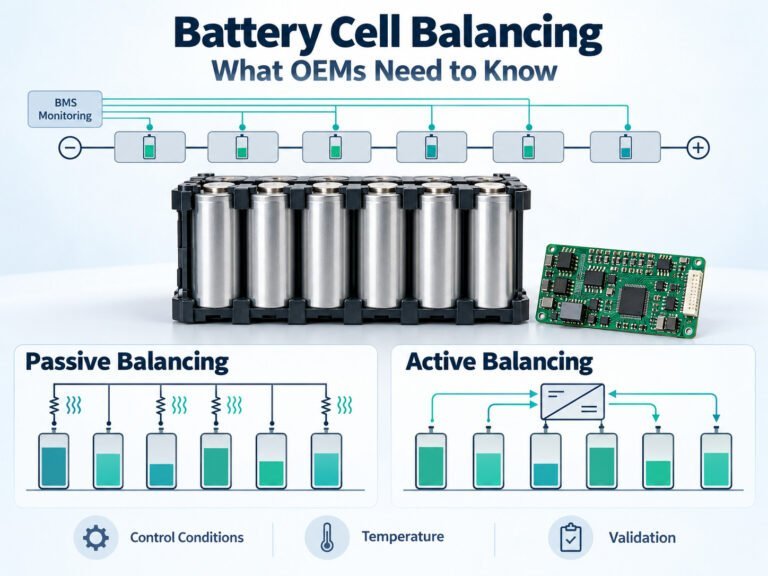
- Active balancing technology
👉 The BMS is the “brain” of the marine battery system.
4. Engineering Customization for Marine Applications
Different vessel types require different solutions:
- Sailboats: lightweight design + long endurance
- Yachts: stable power supply + silent operation
- Fishing vessels: high power output + long runtime
- Workboats: durability + fast maintenance
Manufacturers should support:
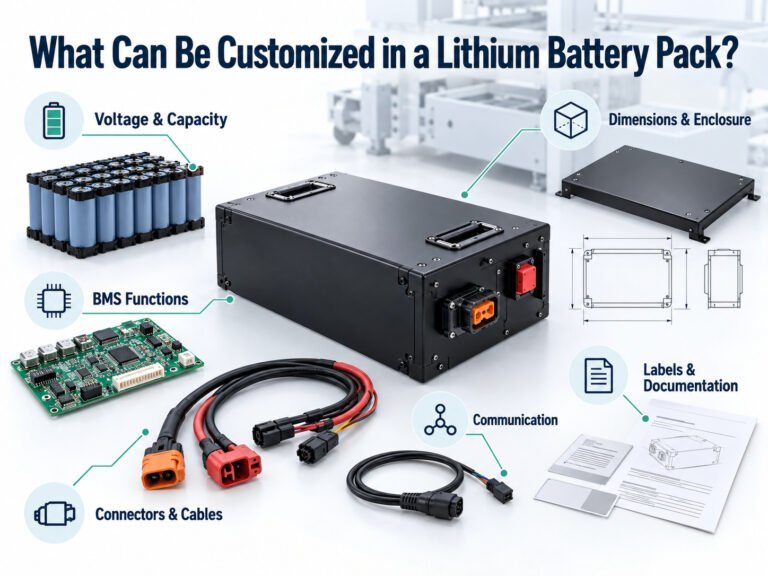
- Voltage customization (24V–96V+)
- Capacity scaling (Ah customization)
- Enclosure and structural adaptation
- Waterproof engineering optimization
5. Mass Production and Global Delivery Capability
Marine projects often have long cycles and large batch requirements:
- Stable production capacity and delivery assurance
- Full traceability system per batch
- Overseas warehouse or local service support
- Project-based delivery capability
- Long-term supply stability
👉 Supply interruption is one of the biggest risks for shipyards.
Part 2.Practical Supplier Screening Method for Shipyards
A three-step evaluation approach is recommended:
Compliance Check
Verify UN38.3 + IEC/UL certifications
Technical Capability Check
Assess whether the manufacturer provides system-level marine solutions
Project Experience Check
Confirm real marine application cases and operational data
Part 3.Characteristics of a Qualified Marine Lithium Battery Manufacturer
A reliable supplier should have:
- Complete international certifications (UN38.3 + IEC + UL)
- Stable high-quality cell supply chain (CATL / EVE)
- Industrial-grade BMS development capability
- Proven marine project experience
- Strong customization engineering capability
- Global delivery and service system
Conclusion
Marine lithium battery procurement is not a simple product selection—it is a system-level safety decision.
A qualified manufacturer provides not just batteries, but a complete energy solution:
⚓ Safe and controllable energy systems
⚡ Verifiable technical standards
🚤 Long-term reliable marine operation solutions
FAQ
Q1: What certifications are required for marine lithium batteries?
Marine lithium batteries typically require UN38.3, IEC 62133 or IEC 62619 certifications, as well as IP67 waterproof rating. Export projects may also require CE, RoHS, and UL certifications.
Q2: What is the difference between marine lithium batteries and standard energy storage batteries?
Marine lithium batteries focus on salt corrosion resistance, waterproofing, vibration resistance, and long-term stable output, while standard storage batteries are designed for fixed environments.
Q3: Why is BMS important for marine lithium batteries?
The BMS manages protection, balancing, and communication. It is the core control system of marine energy storage and directly affects safety and lifespan.
Q4: What is the most important factor in shipyard battery procurement?
Safety certification, cell quality, system stability, and marine project experience are the four most critical factors.
Q5: Can marine lithium battery systems be customized?
Yes. Professional manufacturers typically support customization of voltage, capacity, dimensions, and communication protocols for different vessel applications.
 English
  Chinese
  Japanese
  German
  French
  Korean
