
Choosing a lithium battery pack for equipment requires more than selecting a voltage and capacity. The battery needs to work with the equipment’s electrical system, physical structure, operating environment, and charging system.
Different applications also have different requirements. An AGV may need frequent charging and CAN communication, while an electric motorcycle may require high discharge current and weather protection. A medical device may have specific size and safety requirements, while an energy storage system may focus on capacity and cycle performance.
Selecting the right battery pack starts with understanding the complete requirements of the equipment.
This guide explains the main factors to consider when selecting or customizing a lithium battery pack.

1. Understand the Equipment’s Power Requirements
The first step is to understand how much power the equipment requires during normal and peak operation.
Zu den wichtigen Parametern gehören:
- Rated power
- Operating voltage
- Dauerstrom
- Spitzenstrom
- Betriebszeit
- Daily usage frequency
For example, a motor-driven device may require a higher current during startup or acceleration than during normal operation.
A battery pack should therefore be designed based on both continuous and peak power requirements.
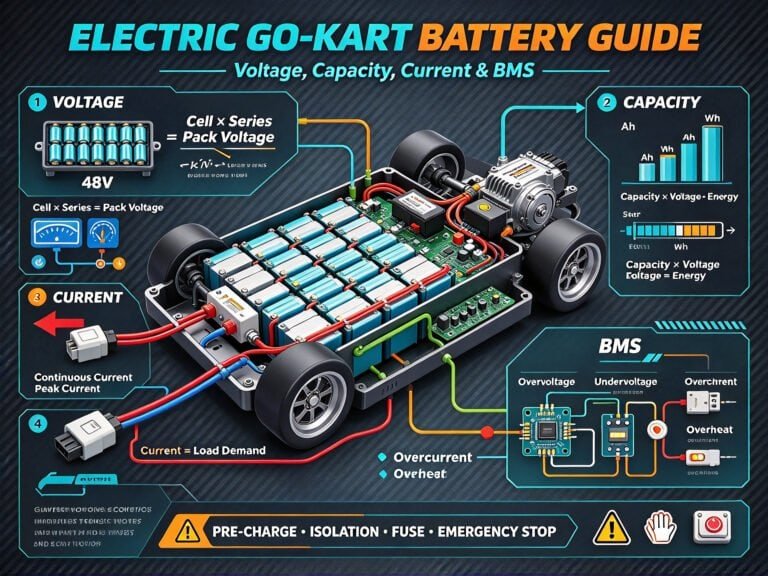
Calculate Battery Energy Requirements
Battery energy can be estimated using:
Energie (Wh) = Spannung (V) × Kapazität (Ah)
For example, a 48V 20Ah battery pack has a nominal energy capacity of approximately:
48 × 20 = 960Wh
The actual operating time depends on equipment power consumption, operating conditions, load, and battery system efficiency.
2. Select the Correct Battery Voltage
Battery voltage must be compatible with the equipment’s electrical system.
Common lithium battery pack voltage ranges include:
- 12V
- 24V
- 36V
- 48V
- 52V
- 60V
- 72V
The battery voltage should be checked against:
- Motor voltage
- Controller voltage
- Equipment input voltage
- Charger output voltage
- BMS-Konfiguration
For example, a lithium battery pack designed for a 48V system may use a 13-series configuration with a full-charge voltage of approximately 54.6V when using standard lithium-ion cells.
The nominal voltage and full-charge voltage should both be considered when confirming system compatibility.
3. Determine the Required Battery Capacity
Capacity is generally measured in ampere-hours (Ah).
A higher capacity battery can provide more stored energy, but it can also increase the battery’s size and weight.
Capacity selection should consider:
- Required operating time
- Equipment power consumption
- Verfügbarer Einbauraum
- Maximum allowable battery weight
- Ladehäufigkeit
For equipment operating for long periods, a larger battery capacity may be required.
For portable equipment, the design may need to balance capacity with weight and dimensions.
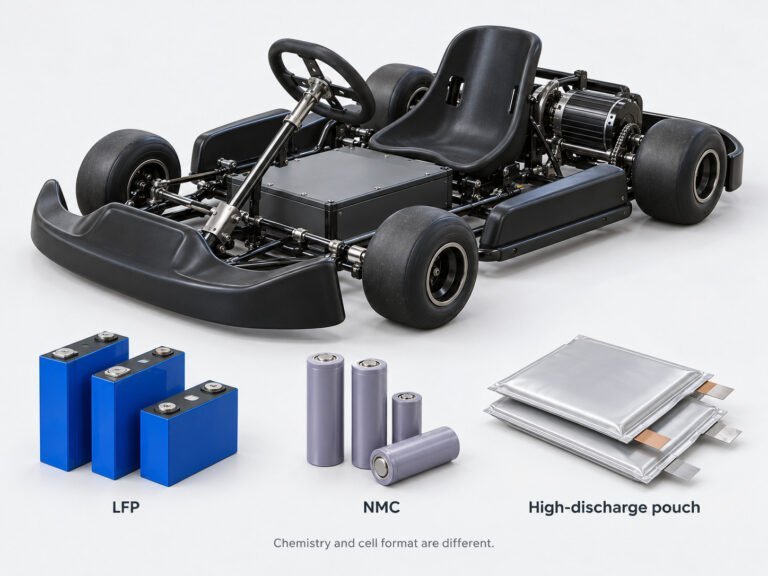
4. Choose the Appropriate Battery Chemistry
Different battery chemistries have different characteristics.
NMC Lithium-ion Batteries
NMC cells are commonly used where energy density and compact battery design are important.
Potential applications include:
- E-Fahrräder
- Elektrische Motorräder
- Scooters
- Tragbare Geräte
LiFePO4-Batterien
LiFePO4 cells are commonly used in applications requiring stable operation and repeated charging and discharging.
Potential applications include:
- AGV
- AMR
- Industrielle Ausrüstung
- Marine systems
- Energiespeicherung
Lithium Polymer Batteries
Lithium polymer cells offer flexible packaging and can be used for products with specific shape or space requirements.
Potential applications include:
- Drohnen
- Portable electronics
- Compact equipment
Battery chemistry should be selected according to the complete application rather than a single performance parameter.
5. Check Continuous and Peak Discharge Current
Battery capacity alone does not determine whether a battery can power equipment correctly.
The battery pack must also provide sufficient current.
Two important parameters are:
- Kontinuierlicher Entladestrom
- Spitzenableitstrom
For example, electric motors may require a short period of high current during startup.
Industrial equipment may require stable continuous current during extended operation.
The BMS discharge rating and battery cell discharge capability should both match the equipment requirements.
6. Consider Battery Size and Installation Space
A battery pack must physically fit inside or onto the equipment.
Before designing the battery, measure:
- Länge
- Breite
- Höhe
- Befestigungspunkte
- Anschlussposition
- Cable exit location
- Available clearance
Mechanical requirements can significantly affect battery configuration.
For example, an e-bike battery may need to fit inside a down tube, rear rack, or seat tube.
Industrial equipment may require a custom metal enclosure with specific mounting brackets.
Providing a mechanical drawing or installation space information to the battery manufacturer can help with battery pack design.
7. Select the Appropriate BMS
The Battery Management System (BMS) is an important part of a lithium battery pack.
A BMS may monitor:
- Zellspannung
- Pack-Spannung
- Ladestrom
- Entladestrom
- Temperatur
- Ladezustand
Common protection functions include:
- Schutz vor Überladung
- Schutz vor Überentladung
- Überstromschutz
- Kurzschlussschutz
- Temperaturschutz
For equipment requiring battery communication, the BMS may also support:
- CAN
- CAN-FD
- RS485
- UART
- Modbus
The BMS should be selected according to the equipment’s electrical and communication requirements.
8. Consider the Operating Environment
The battery’s operating environment can affect battery design.
Important environmental factors include:
- Ambient temperature
- Luftfeuchtigkeit
- Water exposure
- Staub
- Vibration
- Mechanical shock
- Betrieb im Innen- oder Außenbereich
For outdoor equipment, the battery enclosure may require additional protection against water and dust.
For industrial equipment, vibration resistance and mechanical mounting may require additional consideration.
For cold environments, charging and discharging temperature limits should be evaluated during the design stage.
9. Evaluate Charging Requirements
The battery pack should be compatible with the charging system.
Important charging parameters include:
- Charger output voltage
- Ladestrom
- Ladeverfahren
- Aufladezeit
- Charging temperature range
- Charging connector
The charger and BMS settings should be matched to the battery configuration.
For applications with frequent operation, charging time may also be an important design parameter.
10. Consider Battery Communication Requirements
Some equipment requires the battery to communicate with the main controller.
A smart battery system may provide information such as:
- Ladezustand (SOC)
- Batteriespannung
- Aktuell
- Temperatur
- Fehlerinformationen
- Verbleibende Kapazität
Communication protocols may include CAN, RS485, UART, or Modbus.
This function is commonly considered for:
- AGV
- AMR
- Roboter
- Industrielle Ausrüstung
- Elektrische Fahrzeuge
Communication requirements should be confirmed before the BMS is selected.
11. Check Safety and Certification Requirements
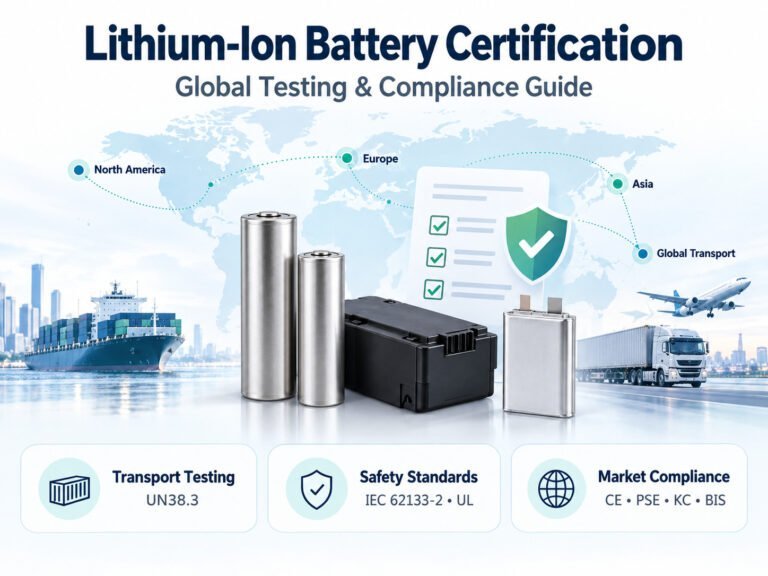
Battery requirements can vary depending on the destination market and application.
Common standards and certifications may include:
- UN38.3
- IEC 62133-2
- CE
- UL2271
- FCC
- RoHS
Transportation requirements should also be considered when shipping lithium batteries internationally.
For OEM projects, certification requirements should ideally be identified during the product development stage.
This can reduce the risk of changing the battery design after prototype development.
12. Consider Battery Protection and Enclosure Design
The battery enclosure protects the internal cells, BMS, wiring, and other components.
Depending on the application, the enclosure may need to address:
- Staubschutz
- Water protection
- Impact protection
- Wärmeableitung
- Mechanische Befestigung
Common housing materials include:
- Plastic
- Aluminum
- Steel
- Custom composite structures
For outdoor applications, an appropriate IP protection level may be required.
13. Evaluate Cell Consistency and Battery Pack Quality
A battery pack normally contains multiple cells connected in series and parallel.
Cell consistency is therefore important.
Manufacturers may evaluate:
- Zellspannung
- Innerer Widerstand
- Kapazität
- Cell appearance
Cells with suitable consistency can be selected and grouped before battery assembly.
Battery pack production may also include:
- Schweißnahtprüfung
- BMS testing
- Charging and discharging tests
- Alterungstests
- Final electrical inspection
14. Consider the Expected Service Conditions
Battery selection should take the expected usage pattern into account.
Bedenken Sie Folgendes:
- Tägliche Öffnungszeiten
- Ladehäufigkeit
- Entladungstiefe
- Expected service period
- Storage conditions
For example, an AGV operating several shifts per day may have different battery requirements from equipment used only a few hours per week.
The expected usage pattern can influence cell chemistry, capacity, BMS settings, and thermal design.
15. Work With a Battery Manufacturer During Product Development
For a custom battery project, it can be useful to involve the battery manufacturer during the equipment development stage.
A battery manufacturer can support:
- Auslegung der Batteriespezifikationen
- Zellauswahl
- Reihen- und Parallelschaltung
- Auswahl des BMS
- Tragwerksplanung
- Auswahl der Steckverbinder
- Prototypenfertigung
- Batterieprüfung
- Certification preparation
- Massenproduktion
Early communication allows electrical and mechanical requirements to be considered together.
16. What Information Should You Provide to a Battery Manufacturer?
When requesting a custom battery solution, providing detailed technical information can make the design process more efficient.
Useful information includes:
| Requirement | Beispiel |
|---|---|
| Anmeldung | AGV, robot, e-bike, medical equipment |
| Nennspannung | 24V, 48V, 51.2V, 72V |
| Kapazität | 20Ah, 50Ah, 100Ah |
| Dauerstrom | 20A |
| Spitzenstrom | 40 A |
| Betriebszeit | 8 hours |
| Ladestrom | 10A |
| Abmessungen der Batterie | Benutzerdefinierte Abmessungen |
| Kommunikation | CAN, RS485 |
| Betriebstemperatur | Custom range |
| Schutz | IP67 |
| Zertifizierung | UN38.3, CE, UL, etc. |
If some parameters are not available, equipment power consumption, operating time, and installation dimensions can still provide useful information for preliminary battery design.
17. Common Mistakes When Selecting a Battery Pack
Several issues can occur when battery selection focuses only on voltage and capacity.
Choosing Capacity Without Checking Current
A battery may have sufficient Ah capacity but still be unsuitable if its discharge current is not sufficient for the equipment.
Ignoring Installation Space
A battery with suitable electrical specifications may not fit into the equipment.
Selecting a BMS Without Checking Communication
If the equipment requires CAN or RS485 communication, the BMS needs to support the required protocol.
Considering Certification Too Late
Certification requirements can influence cell selection, BMS design, enclosure design, and testing.
Ignoring the Operating Environment
Temperature, water, dust, vibration, and mechanical shock can all affect battery pack design.
Schlussfolgerung
Selecting the right battery pack requires consideration of both electrical and mechanical requirements.
Key factors include:
- Spannung
- Kapazität
- Continuous and peak current
- Chemie der Batterie
- Zellkonfiguration
- BMS
- Physical dimensions
- Ladevorgaben
- Betriebsumgebung
- Kommunikationsfunktionen
- Sicherheitsbescheinigungen
For equipment manufacturers, a custom battery pack can be designed around the actual product requirements rather than using a standard battery with fixed specifications.
By providing detailed equipment information to a lithium battery manufacturer, the battery design can be evaluated from the electrical, mechanical, environmental, and compliance perspectives before prototype production.
FAQ
How do I know what battery voltage my equipment needs?
Check the equipment’s rated input voltage, motor or controller specifications, and existing battery specifications. The battery’s nominal and full-charge voltage should both be considered.
How do I calculate the battery capacity I need?
Battery energy can be estimated using voltage × capacity. The required capacity then depends on equipment power consumption, expected operating time, and operating conditions.
Should I choose NMC or LiFePO4?
The choice depends on the application. NMC may be suitable when energy density and compact design are important, while LiFePO4 may be considered for applications requiring stable operation and repeated cycling.
What information does a battery manufacturer need?
Useful information includes voltage, capacity, current, operating time, dimensions, charging requirements, temperature range, communication protocols, and certification requirements.
Can the battery pack be customized to fit my equipment?
Yes. Custom battery packs can be designed around specific electrical specifications, installation dimensions, connectors, mounting structures, and communication requirements.

 English
  Chinese
  Japanese
  German
  French
  Korean
