
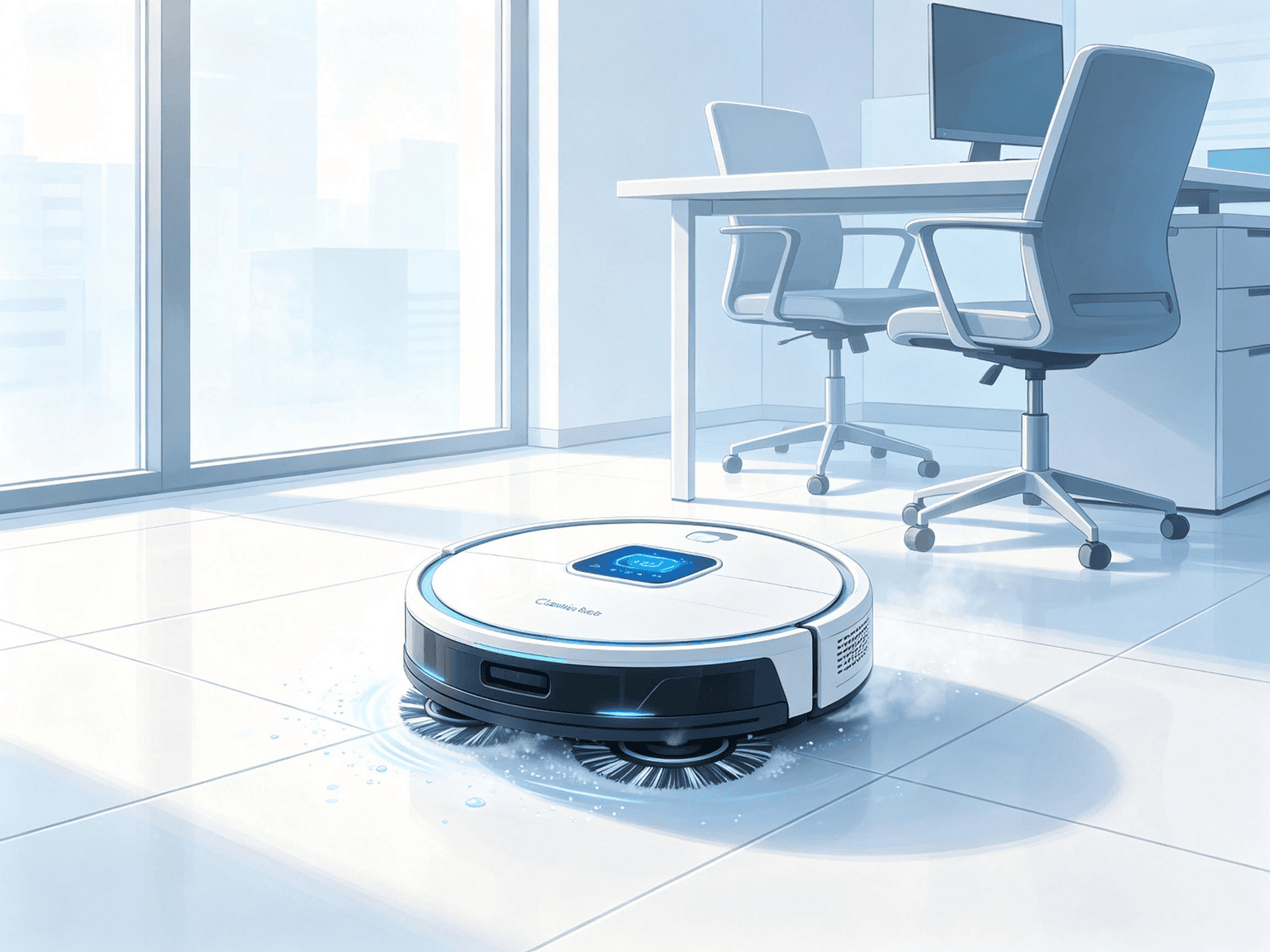
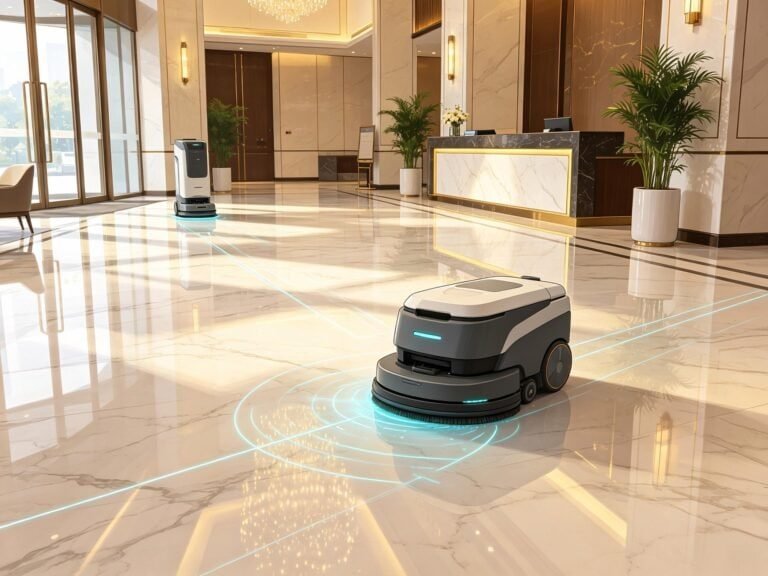
Cleaning robots are used in commercial, industrial, healthcare, hospitality, and other working environments. Their battery systems need to support driving motors, cleaning brushes, vacuum systems, pumps, sensors, controllers, and communication modules throughout the operating cycle.
For cleaning robot manufacturers, battery selection involves more than choosing a specific voltage and capacity. The battery pack needs to match the robot’s power consumption, required runtime, peak current, charging system, installation space, BMS communication, operating environment, and production requirements.
Dongguan Yizhan Electronics Technology Co, Ltd. develops customized lithium battery packs and LiFePO4 battery packs for robots, AGVs, industrial equipment, e-bikes, medical equipment, and other applications. Yizhan provides OEM/ODM battery development covering cell configuration, BMS design, structural design, prototype production, testing, and mass production.
Part 1.What Is a Cleaning Robot Battery Pack?
A cleaning robot battery pack is a rechargeable power system designed around the electrical and mechanical requirements of a cleaning robot.
Depending on the equipment architecture, the battery may supply power to:
- Antriebsmotoren
- Brush motors
- Vacuum motors
- Water pumps
- Main control boards
- Navigation systems
- Sensoren
- Kommunikationsmodule
- Displays
- Safety systems
- Other auxiliary equipment
A complete lithium battery pack normally includes battery cells, a battery management system (BMS), electrical connections, protection components, wiring, connectors, and a mechanical enclosure.
For OEM cleaning robot projects, these components need to work as one power system rather than being selected independently.
Part 2.How to Calculate Cleaning Robot Battery Capacity
Battery capacity is commonly specified in ampere-hours (Ah), while battery energy is expressed in watt-hours (Wh).
Die grundlegende Beziehung lautet:
Batterieenergie (Wh) = Spannung (V) × Kapazität (Ah)
Zum Beispiel:
24 V × 40 Ah = 960 Wh
A 24V 40Ah battery therefore has a nominal energy rating of 960Wh.
However, the robot cannot necessarily use the entire nominal energy during every operating cycle. Actual usable energy can be affected by:
- Motorlast
- Average power consumption
- Peak current
- Batterietemperatur
- BMS-Einstellungen
- Batteriealterung
- Charging and discharging efficiency
- Required energy reserve
For this reason, battery capacity should be calculated from the robot’s actual operating requirements.
Part 3.How to Estimate Cleaning Robot Runtime
Runtime is related to battery energy and the robot’s average power consumption.
A basic calculation is:
Runtime (hours) ≈ Battery Energy (Wh) ÷ Average Power Consumption (W)
For example, if a cleaning robot uses a 24V 40Ah battery:
24 V × 40 Ah = 960 Wh
If the robot consumes an average of 300W:
960Wh ÷ 300W ≈ 3.2 hours
This is a theoretical calculation. Actual runtime can vary because cleaning robots do not normally operate at a constant power level.
Power consumption can change during:
- Start
- Beschleunigung
- Drehen
- Rampenklettern
- Brush operation
- Vacuum operation
- Water pumping
- Obstacle handling
- Navigation
- Standby operation
A battery design should therefore consider the complete operating cycle rather than using a single motor power value.
Part 4.Why Cleaning Robot Battery Voltage Matters
The battery voltage needs to match the robot’s electrical system.
Depending on the equipment, customized battery systems may use 12V, 24V, 36V, 48V, or other voltage configurations.
Battery voltage affects the current required for a given power level.
For example, a 1,000W load would theoretically require:
1,000W ÷ 24V ≈ 41.7A
At 48V:
1,000W ÷ 48V ≈ 20.8A
The actual current depends on system efficiency and operating conditions.
Voltage selection can therefore influence:
- Motor operation
- Continuous current
- Peak current
- Cable specifications
- Auswahl der Steckverbinder
- BMS-Konfiguration
- Charger selection
- Batterieaufbau
The battery manufacturer should evaluate these parameters together when developing an OEM battery pack.
Part 5.Continuous Current and Peak Current
Battery capacity does not define the complete electrical performance of a cleaning robot battery.
The battery pack also needs to support the current required by the robot.
For example, drive motors can require additional current during:
- Startup
- Beschleunigung
- Rampenklettern
- Drehen
- Obstacle crossing
Brush and vacuum motors can also create changes in the instantaneous power demand.
The battery design should therefore define both:
Kontinuierlicher Entladestrom
und
Spitzenableitstrom
The BMS needs to be configured according to the cell configuration, current requirements, protection strategy, and equipment operating conditions.
Part 6.BMS Requirements for Cleaning Robots
The Battery Management System is an important part of a custom robot battery.
A BMS can monitor and manage parameters such as:
- Zellspannung
- Pack-Spannung
- Ladestrom
- Entladungsstrom
- Batterietemperatur
- Ladezustand (SOC)
- Ladezustand
- Protection status
Zu den Schutzfunktionen können gehören:
- Schutz vor Überladung
- Schutz vor Überentladung
- Überstromschutz
- Kurzschlussschutz
- Schutz vor Überhitzung
- Überwachung der Temperatur
- Zellausgleich
For intelligent cleaning robots, communication between the battery and the robot controller may also be required.
Yizhan can develop customized BMS configurations according to the equipment requirements, including communication options such as CAN, UART, and RS485.
The communication protocol should be confirmed before battery development so that the battery can exchange the required information with the robot controller.
Part 7.Cleaning Robot Battery Charging Requirements
The battery charger needs to match the battery chemistry, voltage, charging voltage, charging current, BMS configuration, and charging method.
For lithium battery systems, charging generally involves a constant-current stage followed by a constant-voltage stage.
A simple charging-time estimation is:
Charging Time ≈ Battery Capacity ÷ Charging Current
Zum Beispiel:
40Ah ÷ 10A ≈ 4 hours
The actual charging time can be different because charging current changes during the charging process.
Cleaning robots may use different charging methods, including:
- Manual charging
- Plug-in charging
- Automatic docking
- Ladestationen
- Scheduled charging
For autonomous cleaning robots, the battery may need to work with the charging station and robot controller as part of an integrated charging system.
Charging requirements may include:
- Charge enable/disable control
- Ladezustand
- Überwachung der Temperatur
- Fehlersuche
- Charging communication
- Automatic docking compatibility
Part 8.Lithium-Ion or LiFePO4 for Cleaning Robots?
The battery chemistry should be selected according to the robot’s requirements.
Lithium-ion batteries can be considered when the project requires a compact battery configuration and specific energy characteristics.
LiFePO4 batteries can be considered for applications where cycle requirements, thermal characteristics, safety considerations, and operating conditions are important design factors.
The selection depends on:
- Required voltage
- Required capacity
- Verfügbarer Einbauraum
- Gewicht der Batterie
- Continuous current
- Peak current
- Runtime
- Cycle requirements
- Betriebstemperatur
- Ladevorgaben
- Target production volume
Yizhan develops both customized lithium-ion and LiFePO4 battery packs for different equipment applications.
Part 9.Mechanical Design of Cleaning Robot Battery Packs
A cleaning robot battery is not only an electrical component. Its physical structure needs to fit the equipment.
Important mechanical parameters include:
- Battery length
- Battery width
- Battery height
- Mounting holes
- Anschlussposition
- Cable outlet
- Enclosure structure
- Internal cell arrangement
- Gewicht der Batterie
- Kühlungsanforderungen
- Waterproof requirements
Cleaning robots can operate around water, cleaning solutions, dust, vibration, and repeated mechanical movement.
Therefore, the battery enclosure and sealing structure should be designed according to the actual working environment.
Yizhan provides customized battery structural design and 3D design support for OEM/ODM battery projects, allowing the battery structure to be developed around the customer’s available installation space.
Part 11.Cleaning Robot Battery Safety and Testing
Battery safety involves cell selection, pack structure, BMS configuration, manufacturing processes, charging compatibility, and testing.
Depending on the target application and market, lithium battery projects may involve requirements such as:
- UN38.3
- IEC 62133-2
- CE
- UL
- EN standards
- RoHS
- EMC requirements
- Market-specific requirements
The applicable requirements depend on the final battery design, equipment category, destination market, and transportation conditions.
Yizhan’s manufacturing and quality systems include ISO 9001, ISO 14001, and IATF 16949, according to its company information. The company also lists UN38.3, CE, EN, UL, and IEC-related compliance for its battery products.
Battery testing can include:
- Prüfung der Kapazität
- Lade-/Entladeprüfung
- BMS protection testing
- Spannungsprüfung
- Current testing
- Temperaturprüfung
- Alterungsprüfung
- Kommunikationstests
- Waterproof testing where required
- Endkontrolle
The exact test program should be established according to the battery design and customer requirements.
Part 12.Custom Cleaning Robot Battery Pack OEM/ODM Process
For cleaning robot manufacturers, the battery development process can begin with the equipment specifications.
Step 1: Requirement Analysis
Yizhan’s engineering team can review:
- Robot type
- Working voltage
- Motorleistung
- Average current
- Peak current
- Required runtime
- Abmessungen der Batterie
- Ladeverfahren
- Kommunikationsprotokoll
- Betriebstemperatur
- Waterproof requirements
- Sample quantity
- Expected annual volume
Photos, drawings, original battery samples, and equipment specifications can help define the battery design.
Step 2: Cell Configuration
The battery configuration is designed according to voltage, capacity, current, dimensions, and application requirements.
Cell type and configuration are selected based on the project rather than applying one standard configuration to all cleaning robots.
Step 3: BMS Design
The BMS is configured according to:
- Zellkonfiguration
- Ladespannung
- Continuous current
- Peak current
- Protection parameters
- Temperature requirements
- Kommunikationsprotokoll
Step 4: Structural Design
The battery housing and internal structure are developed around the available installation space.
Yizhan can provide customized structure and 3D design support during the OEM/ODM development process.
Step 5: Prototype Development
A prototype battery can be produced for compatibility testing with the robot.
Testing can include electrical performance, BMS functions, charging, communication, mechanical installation, and operating conditions.
Step 6: Mass Production
After the design is confirmed, the battery can move into production according to the customer’s order requirements.
Production quality control covers cell matching, welding, BMS assembly, wiring, aging, electrical testing, and final inspection.
Part 14.What Information Is Needed for a Cleaning Robot Battery Quotation?
When requesting a custom cleaning robot battery quotation, the following information can help the engineering team evaluate the project:
| Parameter | Beispiel |
|---|---|
| Anmeldung | Autonomous Floor Cleaning Robot |
| Akku-Spannung | 24V |
| Kapazität | 40Ah |
| Motor Power | 500W |
| Continuous Current | Application dependent |
| Peak Current | Application dependent |
| Required Runtime | 3 hours |
| Methode der Aufladung | Docking Station |
| Ladestrom | 10A |
| Kommunikation | CAN / UART / RS485 |
| Battery Size | Custom |
| Anschluss | Custom |
| Betriebstemperatur | Application dependent |
| Waterproof Requirement | Application dependent |
| Sample Quantity | Custom |
| Annual Quantity | Custom |
If some technical parameters are not available, the original battery, equipment photos, motor specifications, charger information, and installation dimensions can be provided for an initial evaluation.
Part 15.Why Work with Dongguan Yizhan Electronics Technology Co., Ltd.?
Dongguan Yizhan Electronics Technology Co., Ltd. focuses on customized lithium battery and LiFePO4 battery pack development and manufacturing.
Its application portfolio includes robots, AGVs, e-bikes, golf carts, medical devices, and other industrial and commercial equipment.
For cleaning robot battery projects, Yizhan can support:
- Individuell wählbare Spannung und Kapazität
- Lithium-ion and LiFePO4 battery packs
- Benutzerdefiniertes BMS
- CAN / UART / RS485 communication
- Aufbau der Batterie
- 3D design support
- Custom connectors and cables
- Entwicklung von Prototypen
- Batterieprüfung
- OEM-/ODM-Fertigung
- Massenproduktion
The company’s manufacturing facility in Dongguan integrates R&D, battery assembly, testing, and production activities. Its official website also provides information about production equipment, R&D facilities, testing equipment, and battery aging equipment.
FAQ
What battery is used in a cleaning robot?
Cleaning robots can use customized lithium-ion or LiFePO4 battery packs. The suitable battery depends on the robot’s voltage, capacity, power consumption, current requirements, runtime, installation space, and charging system.
How do I calculate cleaning robot battery capacity?
Start with the robot’s average power consumption and required operating time.
Required Energy = Average Power × Runtime
Battery capacity can then be calculated according to the selected battery voltage and the usable energy requirements.
Can Yizhan customize cleaning robot batteries?
Yes. Dongguan Yizhan Electronics Technology Co., Ltd. provides OEM/ODM lithium battery pack customization, including voltage, capacity, BMS, structure, connectors, cables, and communication functions.
Can the cleaning robot battery communicate with the robot controller?
Yes. Depending on the robot’s control system, the battery can be configured with CAN, UART, RS485, or other required communication functions.
Can the battery be designed for automatic charging?
Yes. The battery system can be developed according to the robot’s charging station, docking system, charger, BMS, and controller requirements.
What information should I provide for a cleaning robot battery quotation?
Useful information includes voltage, capacity, motor power, continuous and peak current, required runtime, battery dimensions, charger specifications, connector type, communication protocol, operating temperature, and estimated order quantity.
Schlussfolgerung
A cleaning robot battery pack needs to be designed around the complete equipment system.
Voltage and capacity are only part of the battery specification. Runtime, continuous and peak current, BMS functions, charging requirements, communication, mechanical structure, environmental conditions, and compliance requirements also need to be considered.
For OEM and ODM cleaning robot projects, early cooperation between the robot manufacturer and battery engineering team can help establish the battery configuration before prototype production.
Dongguan Yizhan Electronics Technology Co, Ltd. provides customized lithium battery and LiFePO4 battery pack solutions for robots and other equipment applications, covering battery configuration, BMS design, structural design, prototype development, testing, and production.
If you are developing a cleaning robot, autonomous vacuum, floor scrubber, service robot, or other robotic equipment, contact Yizhan with your equipment specifications, battery dimensions, required runtime, and original battery information for a customized battery solution.

 English
  Chinese
  Japanese
  German
  French
  Korean
