
As lithium battery technology continues to develop, safety has become one of the most important factors when choosing a battery solution for electric vehicles, industrial equipment, robotics, and energy storage systems.
Among various lithium battery chemistries, LiFePO4 (Lithium Iron Phosphate) batteries are widely recognized for their excellent thermal stability, long cycle life, and reliable safety performance.
But are LiFePO4 batteries completely safe?
The answer is:
LiFePO4 batteries are one of the safest lithium battery technologies available today, but battery safety depends on more than just chemistry. Cell quality, battery management systems (BMS), structural design, and manufacturing processes all play critical roles.
As a professional lithium battery manufacturer, Dongguan Yizhan Electronics Technology Co., Ltd. provides customized LiFePO4 battery packs designed for industrial equipment, AGV robots, forklifts, marine applications, and energy storage systems.

Part 1.Why Are LiFePO4 Batteries Considered Safer?
1.Stable Chemical Structure of Lithium Iron Phosphate
The biggest advantage of LiFePO4 batteries comes from their stable cathode material structure.
Unlike some lithium battery chemistries that may release oxygen during extreme overheating conditions, LiFePO4 materials have stronger chemical bonds, reducing the risk of rapid combustion during thermal stress.
This makes LiFePO4 batteries suitable for applications requiring:
- Long operating hours
- High charging frequency
- High safety requirements
- Harsh industrial environments
Typical applications include:
- Electric forklifts
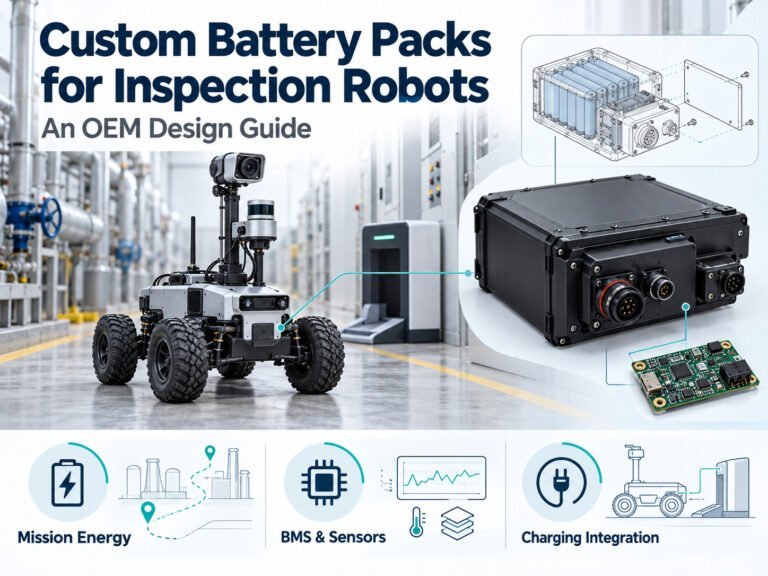
- AGV and AMR robots
- Golf carts
- Marine batteries
- Solar energy storage
- Industrial equipment
Part 2.Can LiFePO4 Batteries Catch Fire?
A common misunderstanding is:
“LiFePO4 batteries cannot catch fire.”
This statement is incorrect.
The correct explanation is:
LiFePO4 batteries have a lower risk of thermal runaway compared with many other lithium battery chemistries, but proper design and protection systems are still essential.
Potential risks may come from:
Overcharging
Improper charging conditions may cause:
- Excessive voltage
- Heat generation
- Internal chemical reactions
A reliable battery pack should include:
- Overcharge protection
- Voltage monitoring
- Smart BMS control
Physical Damage
Severe impact or mechanical damage may cause:
- Internal short circuits
- Cell deformation
- Abnormal heating
For industrial applications, battery packs should include:
- Shock-resistant housing
- Vibration testing
- Protective structures
Poor Manufacturing Quality
Battery safety is strongly related to manufacturing quality.
Low-quality battery packs may have problems such as:
- Poor cell matching
- Weak welding points
- Incorrect wiring design
- Insufficient protection systems
A safe battery requires professional engineering from cell selection to final assembly.
Part 3.The BMS: The Key Protection System of a LiFePO4 Battery
The Battery Management System (BMS) works as the “brain” of a lithium battery pack.
A high-quality BMS continuously monitors:
Electrical Safety
- Overcharge protection
- Over-discharge protection
- Over-current protection
- Short-circuit protection
Temperature Safety
- High-temperature protection
- Low-temperature charging protection
- Thermal monitoring
Battery Performance
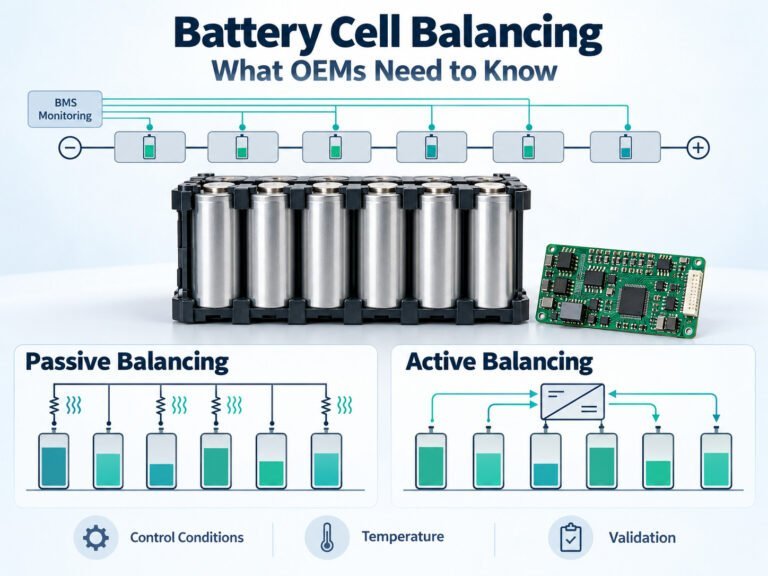
- Cell balancing
- SOC calculation
- Communication monitoring
For advanced industrial applications, smart BMS solutions can support:
- CAN
- RS485
- UART
- Modbus communication
This allows users to monitor battery status remotely and improve operational efficiency.
Part.4 LiFePO4 Battery Safety Depends on Battery Pack Design
A battery cell alone does not represent a complete battery solution.
A professional LiFePO4 battery pack manufacturer must consider:
Cell Selection
High-quality battery packs require:
- Grade-A cells
- Cell consistency testing
- Capacity matching
- Internal resistance matching
Thermal Management
Battery packs should have:
- Heat dissipation design
- Temperature sensors
- Proper spacing between cells
Mechanical Protection
Depending on the application, battery packs may require:
- IP67/IP68 waterproof protection
- Vibration resistance
- Impact protection
- Custom enclosure design
Part.5 LiFePO4 Battery vs Other Lithium Battery Chemistries
| Feature | LiFePO4 Battery | NMC Lithium Battery |
|---|---|---|
| Thermal Stability | Excellent | Good |
| Safety Performance | Very High | Medium |
| Cycle Life | 2000-5000 cycles | Around 1000-3000 cycles |
| Energy Density | Medium | Higher |
| Cost | Lower | Higher |
| Best Applications | Industrial, Storage, EV | High-range EV |
For applications where reliability and long service life are priorities, LiFePO4 is often the preferred solution.
Part 6.Advantages of LiFePO4 Batteries for Industrial Applications
Longer Cycle Life
Compared with traditional lead-acid batteries, LiFePO4 batteries provide:
- Longer service life
- Reduced replacement frequency
- Lower total ownership cost
High Efficiency
LiFePO4 batteries offer:
- Stable voltage output
- Fast charging capability
- High discharge performance
They are ideal for:
- Forklift operations
- AGV continuous operation
- Robotics systems
Reduced Maintenance Requirements
Compared with lead-acid batteries, lithium solutions eliminate:
- Water refilling
- Acid leakage risks
- Frequent maintenance
Part 7.How to Choose a Safe LiFePO4 Battery Manufacturer?
When sourcing a lithium battery supplier, consider:
1. Evaluate the Manufacturer’s R&D Capability
Strong R&D Capability Ensures Safer Battery Design
Battery safety starts from the design stage.
A professional LiFePO4 battery manufacturer should have an experienced engineering team capable of designing battery solutions based on different application requirements.
A strong R&D system should include:
Battery System Design
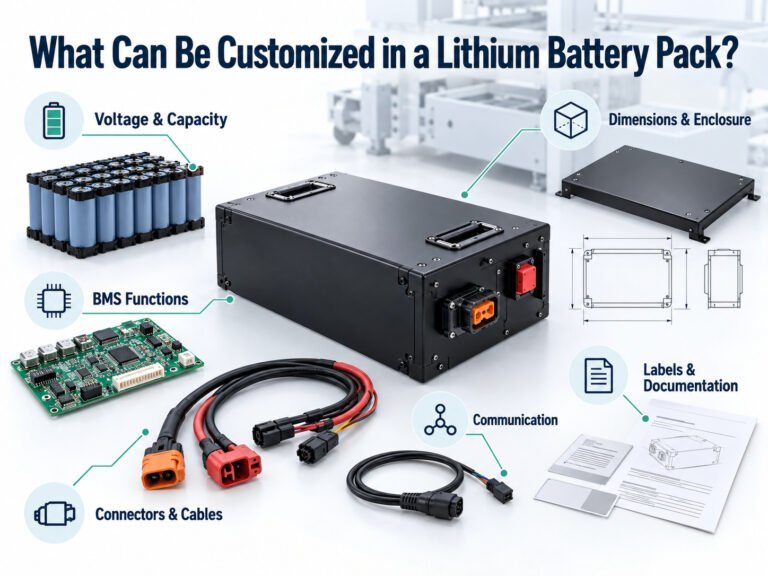
The manufacturer should be able to customize:
- Battery voltage and capacity
- Battery size and structure
- Discharge performance
- Charging requirements
- Communication protocols
Different applications require different battery designs.
For example:
- Forklifts require high continuous discharge capability
- AGV robots require stable cycling performance
- Marine batteries require waterproof and corrosion-resistant designs
- Energy storage systems require long-term reliability
BMS Development Capability
The BMS is one of the most important components affecting battery safety.
A reliable manufacturer should have experience in:
- Battery protection strategy design
- SOC/SOH calculation
- Cell balancing technology
- CAN communication
- RS485 communication
- Smart monitoring systems
A well-designed BMS can effectively prevent:
- Overcharging
- Over-discharging
- Over-current
- Short circuits
- Abnormal temperature conditions
Battery Structure and Thermal Design
Professional manufacturers should consider:
- Internal cell arrangement
- Heat dissipation
- Mechanical protection
- Waterproof design
- Vibration resistance
Especially for industrial applications, battery packs need to operate reliably under harsh environments.
2. Check Manufacturing Capability and Production Standards
Professional Manufacturing Creates Consistent Battery Quality
A safe LiFePO4 battery depends not only on good cells but also on advanced manufacturing processes.
A reliable manufacturer should have:
Automated Production Equipment
Advanced production lines help improve:
- Assembly accuracy
- Welding consistency
- Production efficiency
- Quality stability
Key manufacturing processes include:
- Cell sorting
- Laser welding
- Module assembly
- BMS installation
- Battery pack assembly
Strict Cell Management
Battery manufacturers should control:
- Cell supplier selection
- Cell grading
- Voltage consistency
- Internal resistance matching
- Capacity matching
Poor cell consistency can lead to:
- Uneven aging
- Reduced battery capacity
- Shortened service life
- Increased safety risks
Professional Production Environment
A qualified lithium battery factory should have:
- Clean production areas
- Standardized assembly processes
- Experienced technicians
- Traceability management
A complete production management system ensures every battery pack meets consistent quality requirements.
3. Verify the Complete Battery Testing System
Testing Determines Battery Safety and Reliability
A trustworthy LiFePO4 battery manufacturer should have a complete testing process covering the entire production cycle.
Testing should include:
Incoming Material Inspection
Before production:
- Battery cell inspection
- BMS inspection
- Material quality verification
Production Testing
During manufacturing:
- Welding inspection
- Voltage testing
- Insulation testing
- Wiring inspection
Battery Performance Testing
Before shipment:
Capacity Testing
Ensures the battery reaches the designed capacity.
Aging Testing
Simulates real operating conditions to verify:
- Battery stability
- Charging and discharging performance
- Long-term reliability
Safety Testing
Includes:
- Overcharge testing
- Over-discharge testing
- Short-circuit testing
- Temperature testing
- Vibration testing
Certification Capability
For global markets, manufacturers should provide relevant certifications, including:
- UN38.3
- IEC 62133-2
- CE
- RoHS
- UL2271
- EN50604
Certifications demonstrate that battery products meet international safety requirements.
4. Evaluate After-Sales Service and Technical Support
Reliable Support Creates Long-Term Partnership
Battery projects usually require continuous technical support after delivery.
A professional LiFePO4 battery manufacturer should provide:
Technical Support
Including:
- Installation guidance
- Battery parameter adjustment
- BMS communication support
- Troubleshooting assistance
Customized Service Capability
Different customers have different requirements.
A reliable supplier should support:
- OEM battery production
- ODM battery design
- Custom battery structures
- Software communication customization
Long-Term Quality Support
Good after-sales service should include:
- Quick response mechanism
- Problem analysis
- Replacement solutions
- Technical documentation support
For international customers, local service capability and efficient communication are important factors when selecting a battery partner.
Part 8.Why Choose Yizhan Electronics for LiFePO4 Battery Solutions?
Dongguan Yizhan Electronics Technology Co., Ltd. specializes in customized lithium battery solutions for global customers.
Our capabilities include:
✅ LiFePO4 battery pack customization
✅ OEM & ODM battery solutions
✅ Smart BMS integration
✅ Industrial battery design
✅ Battery testing and aging verification
✅ Support for multiple certifications
Applications include:
- AGV & AMR robots
- Forklifts
- Golf carts
- Marine equipment
- Industrial machines
- Energy storage systems
From battery design and prototype development to mass production, Yizhan Electronics helps customers build safe and reliable lithium battery solutions.
Conclusion: Are LiFePO4 Batteries Safe?
LiFePO4 batteries are a lithium battery technology with excellent safety performance, stable chemistry, and reliable operating characteristics.
Their safety advantages come from:
✔ Stable chemical structure
✔ Excellent thermal stability
✔ Long cycle life
✔ Advanced BMS protection
✔ Professional battery pack engineering
However, battery safety is never determined by chemistry alone.
Choosing a reliable lithium battery manufacturer with strict quality control and engineering experience is the key to achieving long-term, safe battery performance.
FAQ
Q1: Are LiFePO4 batteries safer than lithium-ion batteries?
Yes. LiFePO4 batteries generally provide better thermal stability and lower thermal runaway risk compared with many lithium-ion battery chemistries.
Q2: Can LiFePO4 batteries explode?
Under normal operating conditions with proper protection, LiFePO4 batteries have a very low risk of explosion. However, severe abuse conditions such as overcharging, physical damage, or manufacturing defects may create safety risks.
Q3: How long do LiFePO4 batteries last?
High-quality LiFePO4 batteries typically provide 2,000 to 5,000 charge cycles depending on usage conditions, design, and battery management.
Q4: Are LiFePO4 batteries suitable for industrial equipment?
Yes. Their long cycle life, stable performance, and safety characteristics make them suitable for forklifts, AGVs, robots, marine equipment, and energy storage systems.
Q5: How does BMS improve LiFePO4 battery safety?
BMS protects the battery by monitoring voltage, current, temperature, and cell balance while preventing abnormal operating conditions.
 English
  Chinese
  Japanese
  German
  French
  Korean
