
When requesting a custom lithium battery pack quotation, providing clear technical specifications is an important step in the OEM and ODM battery development process.
A custom battery pack is designed according to the electrical requirements, mechanical dimensions, operating conditions, and communication interfaces of the customer’s equipment.
For applications such as electric bicycles, electric scooters, AGVs, AMRs, service robots, industrial equipment, and energy storage systems, battery requirements can vary according to the equipment design and operating environment.
A quotation for a custom lithium battery pack involves evaluating battery cells, series-parallel configuration, Battery Management System (BMS), enclosure structure, electrical connectors, testing requirements, and production quantity.
This article explains the information OEM customers should prepare when requesting a custom battery pack quotation.
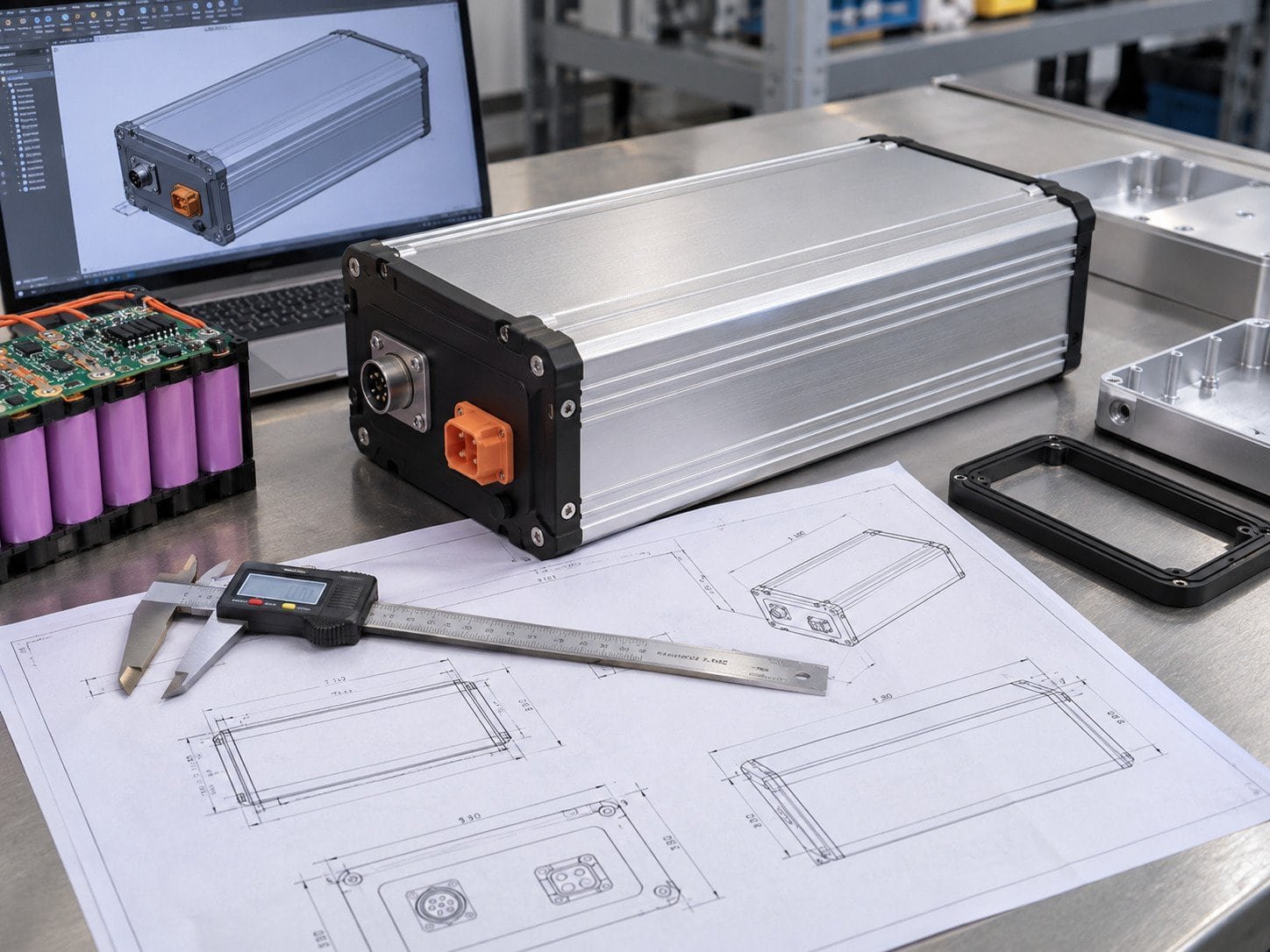
1. Battery Application and Equipment Information
The first step is to explain where and how the battery will be used.
Different applications have different power demands, installation conditions, and electrical requirements.
Common custom battery pack applications include:
- 전기 자전거
- 전동 스쿠터
- 전기 오토바이
- 무인 운반차(AGV)
- 자율 주행 모바일 로봇(AMR)
- 서비스 로봇
- 산업 기계
- 전동 지게차
- Floor-cleaning equipment
- 의료 장비
- 에너지 저장 시스템
Customers should provide information about the equipment’s operating functions and power requirements.
For example, an AGV battery may require CAN communication and a defined peak discharge current during acceleration.
An electric bicycle battery may require a specific enclosure structure, discharge connector, and motor controller compatibility.
Understanding the application helps the battery manufacturer evaluate the appropriate electrical configuration and mechanical design.
2. Required Battery Voltage
Battery voltage is a basic parameter in custom lithium battery pack design.
Customers should specify the required nominal voltage and, where applicable, the operating voltage range.
Common voltage classes include:
- 12V
- 24V
- 36V
- 48V
- 52V
- 60V
Actual battery voltage depends on the selected cell chemistry and series configuration.
예를 들어
| 배터리 화학 | 구성 | Typical Nominal Voltage |
|---|---|---|
| Ternary Lithium-Ion | 10S | 36V |
| Ternary Lithium-Ion | 13S | 46.8V |
| Ternary Lithium-Ion | 14S | 50.4V |
| LiFePO4 | 8S | 25.6V |
| LiFePO4 | 16S | 51.2V |
These are illustrative voltage configurations based on typical cell nominal voltages. Actual values depend on the selected cell model.
Customers should also confirm the equipment controller’s allowable voltage range.
For equipment requiring a specific charging voltage, the charger specification should be provided during the quotation stage.
3. Battery Capacity and Energy Requirements
Battery capacity determines the amount of electrical charge the battery can deliver under specified conditions.
Capacity is usually expressed in ampere-hours (Ah), while energy is expressed in watt-hours (Wh).
The relationship between nominal voltage, capacity, and nominal energy is:
Energy (Wh) = Nominal Voltage (V) × Capacity (Ah)
예를 들어
A 48V-class battery with a nominal voltage of 46.8V and a capacity of 20Ah has a nominal energy of approximately:
46.8V × 20Ah = 936Wh
The actual usable energy depends on the battery’s discharge conditions, voltage limits, temperature, and cell characteristics.
When requesting a quotation, customers should provide either:
- Required battery capacity in Ah
- Required nominal energy in Wh
- Equipment power consumption and target operating time
If the required capacity is not yet determined, information about the equipment’s power demand and operating cycle can be used for an initial battery capacity assessment.
4. Continuous Discharge Current
Continuous discharge current describes the current the battery is required to supply during sustained equipment operation.
It affects the selection of:
- 배터리 셀
- Parallel cell configuration
- BMS
- Power cables
- 커넥터
- 버스바
- Electrical protection components
For example, a 48V battery pack used in industrial equipment may require a continuous discharge current of 30A.
The selected battery cells and electrical components must be evaluated according to this requirement.
Customers should provide the continuous operating current specified by the equipment manufacturer or motor controller.
Motor rated power alone may not establish the required continuous battery current under every operating condition.
5. Peak Discharge Current and Duration
Peak discharge current is another required parameter for custom battery pack design.
Peak current may occur during:
- 모터 시동
- 가속
- 등반
- Lifting operations
- Payload movement
- Temporary high-power operation
A battery pack may require a continuous current of 30A and a peak current of 100A for 3 seconds.
These values describe different operating conditions and must be evaluated separately.
When requesting a quotation, customers should specify:
- 연속 방전 전류
- 최대 방전 전류
- 피크 전류 지속 시간
- Pulse repetition frequency, where applicable
Peak current requirements affect cell selection, BMS protection settings, electrical connections, and thermal management.
A battery pack’s voltage and capacity alone do not establish its allowable peak discharge current.
6. Battery Cell Chemistry and Cell Brand
Battery cell chemistry affects voltage configuration, mechanical design, electrical performance, and material cost.
Common lithium battery chemistries include:
Ternary Lithium-Ion Batteries
Ternary lithium-ion batteries, including nickel manganese cobalt (NMC) chemistry, are used in applications such as electric mobility, robotics, and portable industrial equipment.
세포 선정 시 다음 사항을 고려해야 합니다:
- 공칭 전압
- 용량
- 연속 방전 전류
- Pulse discharge capability
- 작동 온도
- Cycle life specifications
- 세포 크기
Common cylindrical formats include 18650 and 21700.
LiFePO4 배터리
LiFePO4 batteries are used in industrial equipment, AGVs, AMRs, electric forklifts, and energy storage applications.
Cell selection should consider the required voltage, capacity, current, operating temperature, and mechanical dimensions.
Cell Manufacturer Requirements
Customers may specify cell manufacturers such as:
- EVE
- 삼성
- LG
- BAK
If a specific cell brand or model is required, this should be included in the RFQ.
If the cell model has not been determined, the battery manufacturer can evaluate available options according to the project specifications.
Final cell selection should follow the approved electrical requirements and cell manufacturer’s technical documentation.
7. Battery Management System Requirements
The Battery Management System monitors battery operating conditions and provides electrical protection functions according to the selected design.
BMS specifications affect component selection, engineering development, and quotation cost.
Customers should confirm the required BMS functions.
Electrical Protection
Typical protection requirements may include:
- 과충전 방지
- 과방전 방지
- 과전류 보호
- 단락 보호
- 온도 보호
- 셀 밸런싱
Protection thresholds must be defined according to the battery cell specifications and electrical design.
Continuous and Peak Current Ratings
The BMS should be evaluated against the required continuous discharge current and peak current profile.
예를 들어
- Continuous discharge: 30A
- Peak discharge: 100A for 3 seconds
The BMS hardware, protection settings, and thermal behavior must be considered during design evaluation.
Communication Requirements
Some industrial equipment and robot battery packs require communication interfaces.
일반적인 옵션으로는 다음이 있습니다:
- CAN
- UART
- RS485
Customers should provide the communication protocol where available.
관련 정보에는 다음이 포함될 수 있습니다:
- Communication bit rate
- CAN identifiers
- Message structure
- Required battery data
- Connector pin assignments
- Fault reporting requirements
The customer should also clarify whether communication is required only for battery information monitoring or for additional system functions.
SOC and SOH Requirements
Some applications require reporting of:
- SOC(충전 상태)
- 건강 상태 (SOH)
- 배터리 전압
- Battery current
- 배터리 온도
- 고장 상태
These functions should be included in the BMS specification when required.
8. Battery Dimensions and Installation Space
Mechanical dimensions are an important part of custom battery pack development.
Customers should provide the available battery installation space.
Required information includes:
- Maximum length
- Maximum width
- Maximum height
- Installation orientation
- Mounting positions
- Connector positions
- Cable routing requirements
- Battery removal requirements
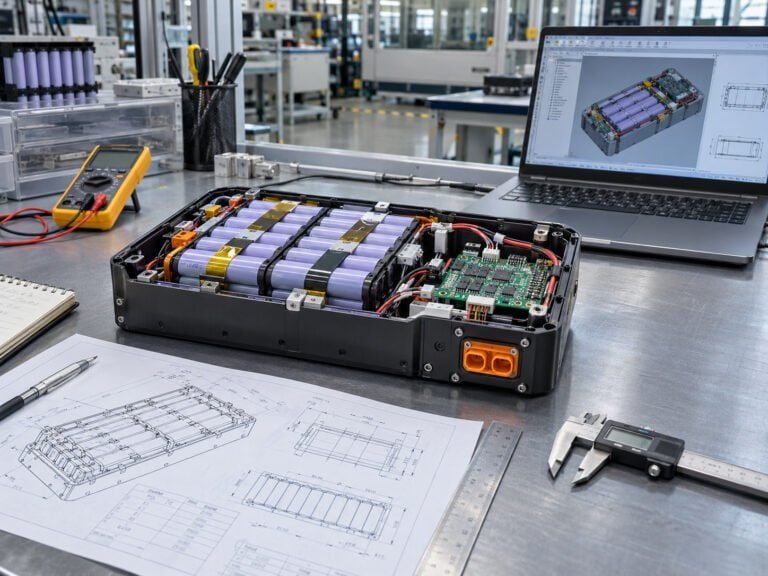
Mechanical Drawings
For equipment with limited installation space, customers can provide:
- STEP files
- STP files
- 2D drawings
- PDF drawings
- Battery compartment photographs
Mechanical drawings help define the cell arrangement, BMS position, enclosure structure, and connector layout.
Enclosure Requirements
Customers should confirm whether the battery requires:
- Plastic enclosure
- Aluminum enclosure
- Metal housing
- Heat-shrink sleeve
- Removable battery structure
- Slide-in mounting structure
If a customized enclosure requires tooling, the tooling scope and related cost should be confirmed during the quotation process.
9. Charging and Discharging Connectors
Electrical connectors are part of the battery pack specification.
Customers should identify the required connector types and wiring arrangements.
Common connector options include:
- XT30
- XT60
- XT90
- 앤더슨 커넥터
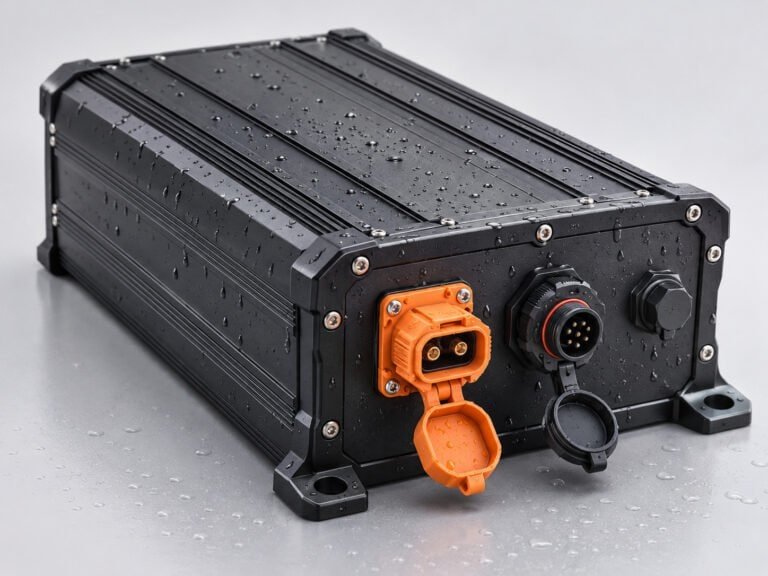
- Circular industrial connectors
- 방수 커넥터
- Customized multi-pin connectors
Connector selection depends on electrical current, voltage, cable specifications, environmental conditions, and mechanical installation.
For custom battery packs, the following details should be confirmed:
- Charging connector model
- Discharging connector model
- Communication connector model
- 케이블 길이
- Cable size
- 커넥터 위치
- Pin assignments
- Required mating connector
If the customer has a connector drawing or datasheet, it should be provided with the RFQ.
10. Charging Requirements and Charger Compatibility
Charging requirements should be confirmed before battery pack development.
Customers should provide:
- 충전 전압
- 충전 전류
- 충전기 사양
- 충전 커넥터
- 충전 온도 범위
- Communication requirements, where applicable
For example, a battery project may require a charger with a specified output voltage and current.
The charging voltage and current must comply with the selected battery cell specifications and BMS design.
For systems using CAN communication between the battery and charger, the communication requirements and control responsibilities should be defined.
If a charger is required as part of the project, customers should include this requirement in the quotation request.
11. Operating Temperature and Environmental Requirements
Battery operating conditions affect cell selection, enclosure design, BMS configuration, and testing requirements.
Customers should specify the environmental conditions where the battery will be used.
작동 온도
Provide:
- Minimum ambient operating temperature
- Maximum ambient operating temperature
- 충전 온도 범위
- Storage temperature requirements, where applicable
Charging and discharging temperature limits should be evaluated separately.
Waterproof and Dust Protection
If the battery is used outdoors or in a dusty environment, an IP rating may be required.
Examples include:
- IP54
- IP65
- IP67
- IP68
IP ratings describe enclosure protection under defined test conditions.
The required rating must be evaluated according to the complete battery design and verified through applicable testing.
Mechanical Environment
Customers should also identify requirements involving:
- 진동
- 기계적 충격
- Equipment movement
- Installation orientation
- 습도
- Dust exposure
Environmental requirements should reflect the equipment’s actual operating conditions.
12. Certification and Target Market Requirements
Certification and regulatory requirements may affect battery design, testing scope, project cost, and development planning.
When requesting a quotation, customers should identify the destination market and applicable standards.
Examples of battery-related standards include:
| 표준 | Application or Purpose |
|---|---|
| UN38.3 | Lithium battery transportation testing |
| IEC 62133-2 | Safety requirements for portable sealed secondary lithium cells and batteries |
| IEC 62619 | Safety requirements for industrial secondary lithium cells and batteries |
| EN 50604-1 | Safety requirements for lithium-ion battery systems in applicable light electric vehicle applications |
| UL 2271 | Safety requirements for batteries used in light electric vehicle applications |
| IEC 60529 | Enclosure ingress protection classification |
The applicable standards depend on the battery’s intended application, product classification, destination market, and certification scope.
Customers should specify the required documentation and testing requirements during the quotation stage.
If the project requires new testing or certification, the related scope and costs should be confirmed separately.
13. Prototype Quantity, MOQ and Production Forecast
Production quantity affects material purchasing, component procurement, manufacturing arrangements, and quotation cost.
Customers should provide the expected project quantities.
Important information includes:
Prototype Quantity
Number of samples required for equipment integration and testing.
Initial Production Quantity
Expected order quantity after sample approval.
Annual Demand
Estimated annual purchasing quantity.
Production Schedule
Target dates for sample evaluation and production.
For example, a customer may request:
- Prototype: 5 units
- Initial production: 200 units
- Estimated annual demand: 2,000 units
These figures are illustrative and do not represent First Power’s minimum order quantity.
Custom components such as BMS boards, connectors, and enclosure tooling may have separate purchasing requirements.
Production quantity and component MOQ should be evaluated during the quotation process.
14. Delivery Address and Shipping Requirements
Delivery requirements are also necessary for a commercial quotation.
Customers should provide:
- Destination country
- Delivery city or address
- Shipping method, if specified
- Required Incoterms
- Packaging requirements
- Delivery schedule
Lithium batteries are subject to transportation regulations and dangerous goods requirements according to the battery classification and shipping method.
Freight costs and transportation documentation depend on the shipment configuration, destination, and applicable regulations.
The delivery information allows the manufacturer to determine the scope of the commercial quotation.
15. Custom Battery Pack RFQ Checklist
OEM customers can use the following checklist when preparing a custom lithium battery pack inquiry.
| 항목 | 필수 정보 |
|---|---|
| 애플리케이션 | Equipment type and operating conditions |
| 공칭 전압 | V |
| 배터리 용량 | Ah or Wh |
| 연속 방전 전류 | A |
| 피크 방전 전류 | A and duration |
| 배터리 화학 | Ternary Lithium-Ion / LiFePO4 |
| 셀 브랜드 | Required brand or open to evaluation |
| BMS Requirements | Protection functions and communication |
| CAN / UART / RS485 | Protocol and communication requirements |
| 배터리 크기 | Length × Width × Height |
| 첨부 파일 | Plastic, aluminum, metal, or sleeve |
| 커넥터 | Charging, discharging, communication |
| 충전기 | Voltage, current, connector |
| 작동 온도 | Charging and discharging ranges |
| IP 등급 | If required |
| 인증 | Applicable standards and destination market |
| Prototype Quantity | Number of samples |
| Production Quantity | Initial order and annual demand |
| Delivery Destination | Country and address |
The RFQ can begin with available specifications. Parameters that have not yet been finalized should be identified for engineering evaluation.
16. Custom Lithium Battery Pack Manufacturing at Dongguan Yizhan Electronics Technology Co., Ltd.
동관 이잔 전자 기술 유한 공사(동관 이잔 전자 기술 유한 공사), provides OEM and ODM custom lithium battery pack development and manufacturing services.
Our battery pack business covers electric mobility, robotics, industrial equipment, and energy storage applications.
Our customization scope includes:
- Ternary lithium-ion and LiFePO4 battery pack configurations
- 사용자 지정 전압 및 용량
- 배터리 셀 선정
- BMS customization according to project requirements
- CAN, UART, and RS485 communication options
- Customized plastic and aluminum enclosures
- Charging and discharging connector customization
- NTC temperature monitoring
- 배터리 팩 조립
- Technical documentation and project testing coordination
For custom battery projects, electrical specifications, mechanical dimensions, BMS functions, environmental conditions, and production quantities are considered during technical evaluation.
The proposed battery configuration and commercial quotation are based on the confirmed project requirements.
결론
Preparing a custom lithium battery pack quotation requires information about the battery’s electrical specifications, mechanical dimensions, operating conditions, BMS functions, and production requirements.
Voltage and capacity are basic parameters, but continuous discharge current, peak current, charging conditions, connectors, and communication requirements are also necessary for technical evaluation.
For OEM and ODM projects, providing mechanical drawings, equipment specifications, target market information, and purchasing quantities helps define the development and quotation scope.
Need a custom lithium battery pack quotation for your equipment?
연락처 동관 이잔 전자 기술 유한공사 (퍼스트 파워) with your battery requirements, drawings, estimated order quantity, and delivery destination.
Our team can review your specifications and discuss a custom lithium battery pack configuration based on your project requirements.
이메일: joy.yu@szfirstpower.com
 English
 Chinese
 Japanese
 German
 French
 Korean

