
産業用機器は、ますますスマート化、自動化、そして省エネ化が進んでいます。電動フォークリフトや倉庫用車両から、AGVロボット、AMRシステム、清掃機、船舶用機器、エネルギー貯蔵システムに至るまで、信頼性の高い電力供給は生産性に影響を与える重要な要素となっています。.
従来の鉛蓄電池は、長年にわたり産業用途で広く使用されてきました。しかし、稼働時間の延長、充電時間の短縮、メンテナンスの手間削減、安全性の向上といった要求が高まるにつれ、より多くの企業が LiFePO4バッテリーパック(リン酸鉄リチウムバッテリーパック).
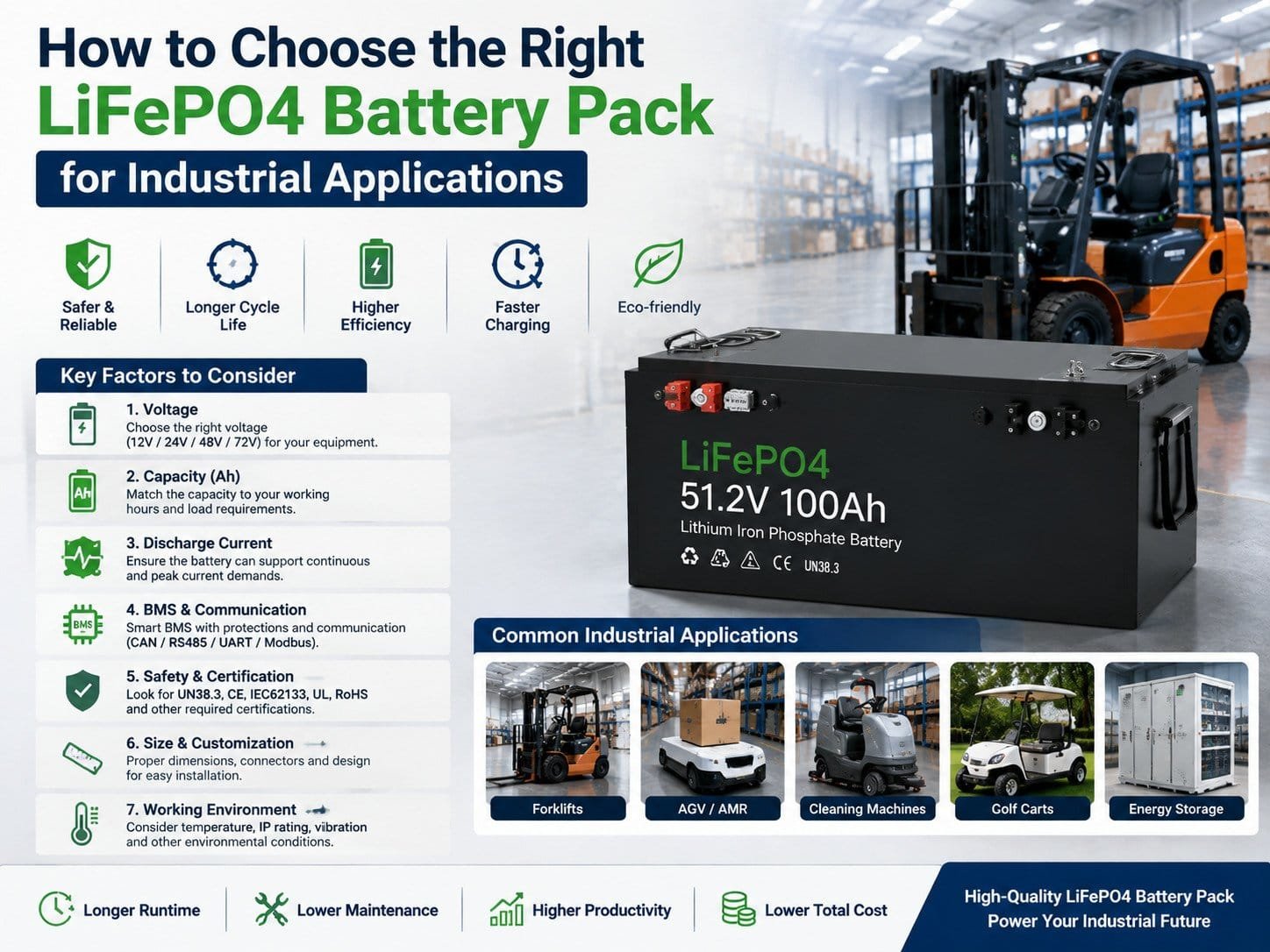
適切なLiFePO4バッテリーパックを選ぶということは、単に容量の大きいバッテリーを選ぶことではありません。適切な産業用リチウムイオンバッテリーソリューションを検討する際には、以下の点を考慮する必要があります:
- 電圧要件
- バッテリー容量
- 放電性能
- 動作環境
- バッテリー管理システム(BMS)
- 通信要件
- 安全認証
- 機械設計
- 長期的な運用コスト
このガイドでは、産業用途に適したLiFePO4バッテリーパックの選び方について解説します。.
1. まず、アプリケーションの要件を把握しましょう
LiFePO4バッテリーパックを選ぶ前に、まずそのバッテリーがどのように使用されるかを把握することが重要です。.
産業用途によって、必要な電力要件は異なります。.
例えば、こうだ:
| 申し込み | 主砲の要件 |
|---|---|
| フォークリフト | 大電流放電、長時間稼働 |
| AGV/AMRロボット | 安定した出力、通信機能 |
| ゴルフカート | 長射程、軽量設計 |
| 洗浄機 | 頻繁な充電サイクル |
| 舶用機器 | 防水性および耐食性 |
| エネルギー貯蔵 | 長寿命と安全性 |
フォークリフト用に設計されたバッテリーは、動作条件や電気的要件が異なるため、小型ロボットには適さない場合があります。.
2. 適切なバッテリー電圧を選択する
LiFePO4バッテリーパックを選定する際、電圧は最も重要なパラメータの一つです。.
一般的な産業用リチウム電池の電圧には、次のようなものがあります:
- 12.8V LiFePO4バッテリー
- 25.6V LiFePO4バッテリー
- 38.4V LiFePO4バッテリー
- 51.2V LiFePO4 バッテリー
- 72V LiFePO4バッテリー
バッテリー電圧は、機器システムに合わせて設定する必要があります。.
一般的な用途
12V LiFePO4バッテリー
対象:
- 小型デバイス
- バックアップ電源システム
- 電子機器
24V LiFePO4バッテリー
対象:
- 電気自動車
- 小型産業用機器
- 洗浄機
48V/51.2V LiFePO4バッテリー
対象:
- フォークリフト
- ゴルフカート
- AGVロボット
- 産業用車両
72V LiFePO4バッテリー
対象:
- 大型車両
- 高出力機器
- 産業機械
3. 適切なバッテリー容量(Ah)を選ぶ
バッテリーの容量によって、機器の稼働時間が決まります。.
容量の単位は次の通りです:
Ah(アンペア時)
Ah定格が高いほど、一般的に次のようなことを意味します:
- 実行時間が長くなる
- より多くの蓄積エネルギー
- 稼働時間の延長
必要な容量は、以下の要因によって異なります:
- 機器の消費電力
- 1日あたりの労働時間
- 荷重条件
- 充電頻度
例
倉庫用AGVの稼働状況:
- 1日8時間
- 平均電流:20A
必要な容量:
20A × 8時間 = 160Ah
適切なバッテリー設計においては、以下の点を考慮するとよいでしょう:
48V 160Ah LiFePO4 バッテリーパック。.
4. 連続放電電流およびピーク放電電流を確認する
産業用機器は、起動時や加速時に高出力を必要とすることがよくあります。.
したがって、バッテリーの選定にあたっては、以下の点を考慮すべきです:
連続放電電流
バッテリーが継続的に供給できる最大電流。.
ピーク放電電流
以下の期間における短時間の電流出力:
- モーターの起動
- 過重な負荷
- 加速
例えば、こうだ:
フォークリフトは、重い荷物を持ち上げる際に、より大きなピーク電流を必要とする場合があります。.
専門のバッテリーサプライヤーは、以下の点を評価すべきです:
- モーター出力
- コントローラの仕様
- 最大許容荷重
5. 適切な電池セルの種類を選ぶ
LiFePO4バッテリーパックは、さまざまなセル形式を用いて製造されています。.
円筒形セル
例を挙げよう:
- 18650
- 21700
メリット
- 高い一貫性
- 柔軟な設計
- コンパクトな用途に適しています
使用箇所:
- ロボット
- 動力機器
- 携帯端末
プリズム型LiFePO4セル
メリット
- 大容量
- シンプルな構造
- スペースの有効活用
使用箇所:
- フォークリフト
- エネルギー貯蔵
- 船舶用バッテリー
- 産業用車両
6. バッテリー管理システム(BMS)に注意を払う
BMSは、リチウムイオンバッテリーパックの「頭脳」です。.
高品質なBMSには、以下の機能があります:
安全保護
含む:
- 過充電保護
- 過放電保護
- 過電流保護
- 短絡保護
- 温度保護
バッテリー監視
スマートBMSでは、以下の項目を監視できます:
- 電圧
- 現在
- 温度
- SOC(充電状態)
- SOH(健康状態)
通信機能
産業用途では、以下の要件が必要となる場合があります:
- CAN通信
- RS485通信
- UART
- Modbus
これにより、バッテリーは以下のものと通信できるようになります:
- 車両用コントローラ
- 産業用システム
- 遠隔監視プラットフォーム
7. 運用環境を考慮する
産業現場は、厳しい環境となる場合があります。.
バッテリーパックを選定する前に、以下の点を評価してください:
温度条件
LiFePO4の通常の動作:
充電:
0°C~45°C
排出:
-20°C~60°C
過酷な環境向け:
選択してください:
- 低温用蓄熱電池
- 温度制御型BMS
防塵・防水
屋外や産業現場での使用については、以下の点を考慮してください:
- IP65
- IP67
- IP68
保護レベル。.
用途は以下の通り:
- 屋外用ロボット
- 船舶用機器
- 産業用車両
8. バッテリーのサイズと機械的設計
バッテリーパックは、機器に物理的に収まるものでなければなりません。.
カスタマイズには、以下のようなものが含まれます:
- バッテリー筐体の設計
- 取付構造
- コネクタの種類
- ケーブルの長さ
- 通信インターフェース
OEMプロジェクトにおいて、バッテリーの設計では以下の点を考慮する必要があります:
- 設置スペース
- 重量配分
- 熱管理
- 安全対策
9. 安全認証およびコンプライアンス
産業用リチウム電池の用途においては、認証が重要となります。.
一般的な資格には以下のようなものがある:
UN38.3
リチウム電池の輸送には必須です。.
CE
多くの欧州市場で必須となっています。.
IEC 62133
バッテリーの安全基準。.
UL認証
北米市場において重要な点です。.
RoHS
有害物質の規制。.
包括的な認証能力を備えたメーカーを選定することで、コンプライアンス上のリスクを低減することができます。.
10. 電池メーカーの能力を評価する
適切なサプライヤーを選ぶことは、バッテリーを選ぶことと同じくらい重要です。.
LiFePO4バッテリーの専門メーカーは、以下のものを提供すべきです:
OEM/ODM対応能力
含む:
- カスタム電圧
- カスタム容量
- 特注筐体
- カスタムコネクタ
- カスタム通信プロトコル
生産能力
重要な製造工程:
- 細胞選別
- レーザー溶接
- バッテリーアセンブリ
- エージング試験
- 性能テスト
品質管理
信頼できるサプライヤーは、以下のことを行うべきです:
- セルの照合
- 充放電試験
- 温度試験
- 安全点検
- エージング試験
11. LiFePO4 バッテリーパックの用途
フォークリフト用リチウム電池
メリット
- 稼働時間の延長
- 急速充電
- メンテナンスの軽減
- より高い効率
AGVおよびAMR用バッテリーパック
要件:
- 高いサイクル寿命
- コンパクト設計
- スマートなコミュニケーション
ゴルフカート用リチウム電池
メリット:
- 航続距離の延長
- 軽量化
- 長寿命
産業用ロボットのバッテリー
要件:
- 安定した電圧
- 高い信頼性
- オーダーメイドデザイン
船舶用LiFePO4バッテリー
主な機能:
- 防水設計
- 耐食性
- 長寿命
12. 産業用LiFePO4バッテリー選定時のよくある間違い
間違いその1:バッテリーの価格だけを比較すること
最も安いバッテリーは、長期的に見れば必ずしも最高の価値をもたらすとは限りません。.
考えてみてください:
- サイクル寿命
- 保証
- 安全性
- パフォーマンス
間違いその2:BMSの品質を軽視すること
適切なBMSが搭載されていないバッテリーでは、次のような現象が発生する可能性があります:
- 保護が不十分
- コミュニケーション上の問題
- 寿命の短縮
間違いその3:不適切な容量の選択
小さすぎる:
- 実行時間が短い
- 頻繁な充電
大きすぎます:
- コストの高さ
- 体重の増加
適正な容量は、実際の使用量に見合うものでなければなりません。.
よくある質問:LiFePO4バッテリーパックの選定
Q1: 産業用途に最適なLiFePO4バッテリーはどれですか?
最適なバッテリーは、電圧、容量、放電電流、使用環境、通信要件など、機器の要件によって異なります。.
Q2:産業用LiFePO4バッテリーの寿命はどれくらいですか?
高品質な産業用LiFePO4バッテリーパックは、使用条件にもよりますが、通常2000~5000サイクルの充放電が可能となります。.
Q3:LiFePO4電池は鉛蓄電池の代わりになるのでしょうか?
はい。多くの産業用途において、適切な電圧、充電器、およびBMSとの互換性が確保されていれば、鉛蓄電池からLiFePO4への切り替えが可能です。.
Q4:産業用LiFePO4バッテリーには、カスタマイズ設計が必要ですか?
多くの用途において、正しい寸法、出力、および通信互換性を確保するためには、カスタマイズされたソリューションが推奨されます。.
Q5:産業用リチウム電池にはどのような認証が必要ですか?
対象市場に応じて、UN38.3、CE、IEC 62133、UL、RoHSなどの認証が一般的です。.
結論
正しい選択 産業用LiFePO4バッテリーパック 電気的性能、動作条件、安全要件、および将来の拡張ニーズについて、慎重な評価を行う必要があります。.
適切に設計されたリチウム電池ソリューションは、産業用機器において以下の成果をもたらすことができます:
- 稼働時間の延長
- メンテナンス費用の削減
- 生産性の向上
- 信頼性の向上
フォークリフト、AGV、AMR、産業用車両、船舶システム、あるいはエネルギー貯蔵向けのバッテリーソリューションをお探しの場合でも、経験豊富な カスタムLiFePO4バッテリーメーカー バッテリーパックがお客様の具体的な用途要件を満たすことを保証します。.
 English
  Chinese
  Japanese
  German
  French
  Korean
