
L'industrie mondiale des chariots de golf se développe dans de nombreux domaines. Il s'agit notamment des installations de loisirs, des centres de villégiature, des communautés privées, des parcs industriels, des zones logistiques et des flottes de véhicules utilitaires. Une technologie clé a beaucoup évolué : la batterie.
Les batteries au lithium de haute performance remplacent rapidement les batteries traditionnelles au plomb-acide, qui constituaient autrefois l'option dominante. La technologie au lithium est désormais le premier choix pour les voiturettes de golf personnelles et les flottes commerciales. Elle offre une longévité, une efficacité et une sécurité accrues.
Ce rapport explore quatre angles critiques qui façonnent le paysage mondial des batteries de voiturettes de golf :
- Qu'est-ce qui fait la meilleure batterie au lithium pour voiturette de golf ?
- Quels sont les éléments à prendre en compte par les acheteurs lorsqu'ils choisissent des batteries de voiturettes de golf ?
- Batteries de voiturettes de golf au plomb ou au lithium : quelle est la meilleure solution aujourd'hui ?
- Comment choisir le meilleur fabricant de batteries lithium pour voiturettes de golf ?
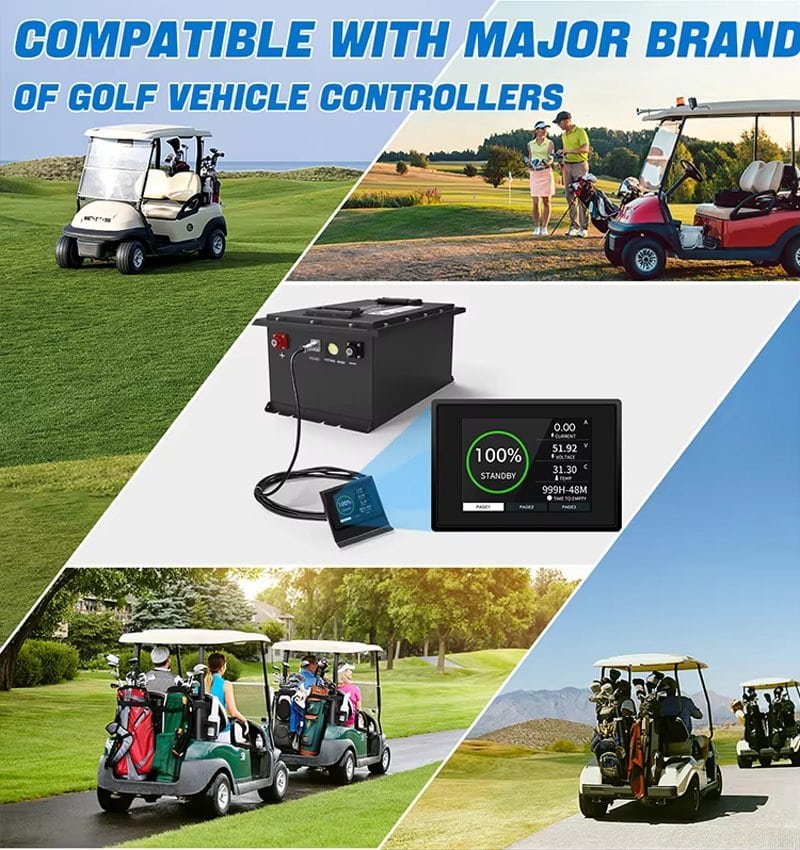
1. Qu'est-ce qui définit la "meilleure" batterie au lithium pour voiturette de golf ?
La "meilleure" batterie n'est plus définie par sa seule capacité. Les acheteurs devenant plus sophistiqués et les scénarios d'application se diversifiant, les normes relatives aux batteries au lithium pour voiturettes de golf de première qualité ont évolué vers une évaluation multidimensionnelle :
(A) Longue durée de vie
Une batterie au lithium de qualité supérieure devrait fournir :
- 4000-6000 cycles de charge (en fonction de la chimie et de l'utilisation)
- 5 à 10 ans de durée de vie réelle
- Dégradation minimale de la capacité, même en cas d'utilisation intensive
Par rapport aux 300 à 500 cycles de l'acide au plomb, le lithium fournit Une longévité décupléece qui permet de réduire considérablement les coûts pendant toute la durée de vie de l'appareil.
(B) Puissance de sortie élevée
Les voiturettes de golf sont aujourd'hui utilisées non seulement sur les terrains de golf, mais aussi pour les loisirs :
- Logistique industrielle
- Véhicules utilitaires et d'entretien
- Transport touristique
- Navettes pour les communautés résidentielles
Tous les besoins forte accélération, capacité à grimper les côtes et décharge régulière - Les batteries au lithium sont nettement plus performantes que les batteries au plomb.
(C) Léger et efficace
Les piles au lithium pèsent 60-70% moins que les batteries plomb-acide.
Cela signifie que :
- Accélération plus rapide
- Réduction de la charge du véhicule
- Consommation d'énergie réduite
- Une plus grande autonomie de conduite
Le poids plus faible réduit également l'usure des moteurs, des contrôleurs et des pneus, ce qui prolonge encore la durée de vie de l'équipement.
(D) Smart BMS intégré
Une batterie de chariot de golf au lithium de qualité professionnelle doit comprendre un BMS intelligent pour la protéger :
- Surcharge
- Surdécharge
- Surintensité
- Court-circuit
- Contrôle de la température
- Équilibrage de la batterie
Cela garantit la sécurité, la stabilité et la fiabilité à long terme, ce qui est particulièrement important pour les flottes commerciales opérant quotidiennement.
(E) Compatibilité avec le système Drop-in
Les meilleures batteries au lithium pour voiturettes de golf remplacement ponctuel avec les installations plomb-acide existantes :
- Même tension
- Même schéma de connexion
- Compatible avec la plupart des contrôleurs de voiturettes de golf
Cela permet de réduire les coûts d'installation et de faciliter la mise à niveau de la flotte.
(F) Certifications de sécurité
Les principaux fabricants proposent des certifications telles que
- UN38.3
- CE
- IEC62619
- UL2580 / UL2271 (pour les applications de mobilité)
Les distributeurs, les parcs de location et les acheteurs à grande échelle exigent de plus en plus ces certifications.
2. Guide d'achat des batteries de voiturettes de golf : À quoi les acheteurs doivent-ils prêter attention ?
Lors de l'achat de piles, en particulier en vrac, les acheteurs ne doivent pas se contenter d'évaluer le prix. Vous trouverez ci-dessous les éléments essentiels à prendre en compte :
(A) Configuration de la tension et de la capacité de la batterie
La plupart des voiturettes de golf utilisent :
- Systèmes 36V
- Systèmes 48V
Choisir la capacité en fonction de :
- Terrain
- Fréquence d'utilisation
- Exigences en matière de charge
- Attentes en matière d'autonomie de conduite
Par exemple :
- 48V 105Ah Le lithium est une option haut de gamme pour les chariots à longue durée de vie.
- 48V 50Ah-80Ah convient aux chariots de loisirs standard
(B) Chimie de la batterie
Les chariots de golf utilisent généralement LiFePO4, préféré pour :
- Sécurité élevée
- Longue durée de vie
- Meilleure stabilité thermique
- Tolérance de température plus large
LiFePO4 est la chimie dominante pour les flottes commerciales et de location.
(C) Structure étanche et robuste
Les opérations extérieures et utilitaires exposent les batteries à
- Pluie
- Poussière
- Boue
- Vibrations
- Températures élevées/basses
C'est pourquoi les acheteurs doivent rechercher
- Indice d'étanchéité IP67
- Boîtier anti-collision
- Structure de support interne renforcée
(D) Compatibilité du système de charge
Les acheteurs doivent confirmer :
- Compatibilité avec le chargeur existant
- Si un chargeur rapide spécifique au lithium est nécessaire
- Protection contre la surcharge
La sécurité de la recharge est l'une des considérations les plus importantes pour les grandes flottes.
(E) Garantie et assistance après-vente
Les fournisseurs réputés fournissent :
- Garantie de 3 à 5 ans
- Service de remplacement rapide
- Support technique
- Surveillance de l'état de la batterie (en option)
Un mauvais système de service après-vente peut saper même la meilleure batterie.
3. Batteries de voiturettes de golf au plomb-acide ou au lithium - Quelle est la meilleure solution ?
La comparaison n'est plus étroite ; le marché se tourne résolument vers le lithium. Vous trouverez ci-dessous une comparaison professionnelle fondée sur des données :
① Durée du cycle
- Plomb-acide: 300-500 cycles
- Lithium: 3000-6000 cycles
Le lithium dure 6 à 10 fois plus longtemps.
② Poids
- Plomb-acide : extrêmement lourd
- Lithium : 60-70% briquet
La vitesse, l'autonomie et la maniabilité s'en trouvent directement améliorées.
③ Efficacité énergétique
- Efficacité du plomb-acide : 70-75%
- Efficacité du lithium : 95%+
Cela signifie que les chariots de golf au lithium peuvent parcourir une plus grande distance en utilisant la même énergie.
④ Maintenance
Le plomb-acide nécessite :
- Arrosage régulier
- Nettoyage
- Ventilation
- Risque de fuite d'acide
Les piles au lithium nécessitent zéro maintenance.
⑤ Efficacité de chargement
Supports en lithium :
- Chargement plus rapide
- Chargement partiel sans dommage
- Sortie de tension stable
L'acide-plomb souffre d'un "effet mémoire" et doit être rechargé à fond en permanence.
⑥ Impact environnemental
Lithium :
- Ne contient pas d'acide
- Empreinte carbone réduite
- Est plus recyclable
Conclusion : Le lithium gagne dans toutes les catégories
Le coût total de la durée de vie du lithium est beaucoup plus élevé que celui de l'acier. inférieur que celle du plomb-acide. Le lithium est donc le meilleur choix pour les golfeurs individuels et les flottes commerciales.
4. Comment choisir le meilleur fabricant de batteries au lithium pour voiturettes de golf ?
Le choix du bon fabricant est tout aussi important que celui de la bonne batterie. Vous trouverez ci-dessous des critères d'évaluation professionnels utilisés par les acheteurs de l'industrie, les distributeurs et les marques mondiales :
(A) Force et expérience de fabrication
Un fabricant fiable doit avoir :
- Équipe d'ingénieurs professionnels
- Lignes de production automatisées
- Procédures strictes d'inspection de la qualité
- Expérience de la fourniture à des clients internationaux
La capacité de l'usine détermine directement l'homogénéité du produit.
(B) Système de sécurité de la batterie
Les fabricants doivent démontrer
- Tests de pénétration des clous réussis
- Essais de vibration
- Tests de chute
- Cycles à haute/basse température
- Tests de vieillissement
Ceci est particulièrement important pour les clients commerciaux.
(C) Capacité de certification
Les acheteurs mondiaux doivent rechercher
- Rapport UN38.3
- CE/CB
- Capacité UL2580 / UL2271
- Gestion de la production ISO
- FICHE DE DONNÉES DE SÉCURITÉ
Les piles certifiées sont plus sûres à expédier, à assurer et à vendre.
(D) Capacité de R&D et solutions personnalisées
De nombreux chariots sont nécessaires :
- Tension personnalisée
- Boîtier sur mesure
- Protocole de communication personnalisé (CAN/RS485/UART)
- Structure anti-vibration
- Packs de grande capacité pour une utilisation commerciale
Les meilleurs fabricants proposent personnalisation complète.
(E) Fiabilité de la chaîne d'approvisionnement
En particulier pour les clients étrangers, le bon fabricant doit fournir :
- Approvisionnement stable en matières premières
- Capacité de production à long terme
- Livraison rapide
- Entrepôts d'outre-mer (le cas échéant)
- Des normes strictes en matière d'emballage
La stabilité de la chaîne d'approvisionnement équivaut à la stabilité de l'entreprise.
(F) Service après-vente
Un fabricant digne de confiance propose :
- Support technique
- Service de garantie rapide
- Support de débogage à distance
- Outils de surveillance des batteries
La capacité de service après-vente est un élément clé de différenciation.
5. Conclusion : Le lithium est l'avenir des systèmes d'alimentation des chariots de golf
Alors que l'industrie mondiale des chariots de golf continue de se développer dans les secteurs du tourisme, de la logistique, de l'hôtellerie et des opérations commerciales, la demande en chariots de golf est en pleine expansion :
- Systèmes énergétiques à haut rendement
- Batteries longue durée
- Solutions sans entretien
- Des normes de sécurité élevées
accélère le passage de l'acide au plomb au lithium.
Les batteries au lithium pour voiturettes de golf offrent des avantages considérables :
✔ Durée de vie de 10×
✔ 70% plus léger
✔ Efficacité accrue
✔ Chargement plus rapide
✔ Plus grande autonomie
✔ Coût inférieur pour la durée de vie de l'appareil
✔ Pas de maintenance
En choisissant le bon fabricant, les acheteurs sont sûrs de recevoir ce qu'il faut :
- Structure sûre de la batterie
- Produits certifiés
- Fiabilité à long terme
- Personnalisation de l'ingénierie
- Un service après-vente professionnel


 English
  Chinese
  Japanese
  German
  French
  Korean
