
Driven by the rapid growth of electric bicycles, robotics, and energy storage systems, the demand for high-quality lithium batteries is set to explode in 2026. Choosing the right Hersteller von Lithium-Batterien is critical to ensuring the safety, reliability, and long-term performance of your batteries.
This guide offers valuable insights for businesses seeking a reliable manufacturing partner.
Part 1 . Evaluate Manufacturing Experience
Battery pack manufacturing is an inherently complex process that requires a comprehensive design evaluation tailored to the specific application scenario. One of the primary factors to consider is the manufacturer’s experience in lithium battery production. Established manufacturers offer distinct advantages:
A proven track record in large-scale production
Extensive experience in providing customized battery solutions for applications such as e-bikes, AGVs, and robotics
Robust R&D capabilities capable of innovating new chemical technologies and Battery Management System (BMS) technologies
Extensive experience ensures that the manufacturer understands the challenges associated with cell selection, assembly, and quality control, thereby mitigating risks for the client.
1.1Evaluating the R&D Team
When selecting a lithium battery manufacturer, evaluating their R&D team is paramount. A strong team ensures that the manufacturer can design battery solutions that are simultaneously innovative, safe, and high-performing.
Key Evaluation Criteria Include:
Team Expertise
Assess whether the team members include engineers specializing in electrochemistry, electronics, thermal management, and mechanical design.
Experienced engineers are capable of effectively addressing complex challenges such as cell balancing, thermal optimization, and system integration.
Innovation Capabilities and Intellectual Property
An exceptional R&D team often holds patents or proprietary technologies, serving as a clear testament to their innovative prowess.
Look for innovative achievements, such as unique battery design schemes or proprietary Battery Management System (BMS) algorithms.
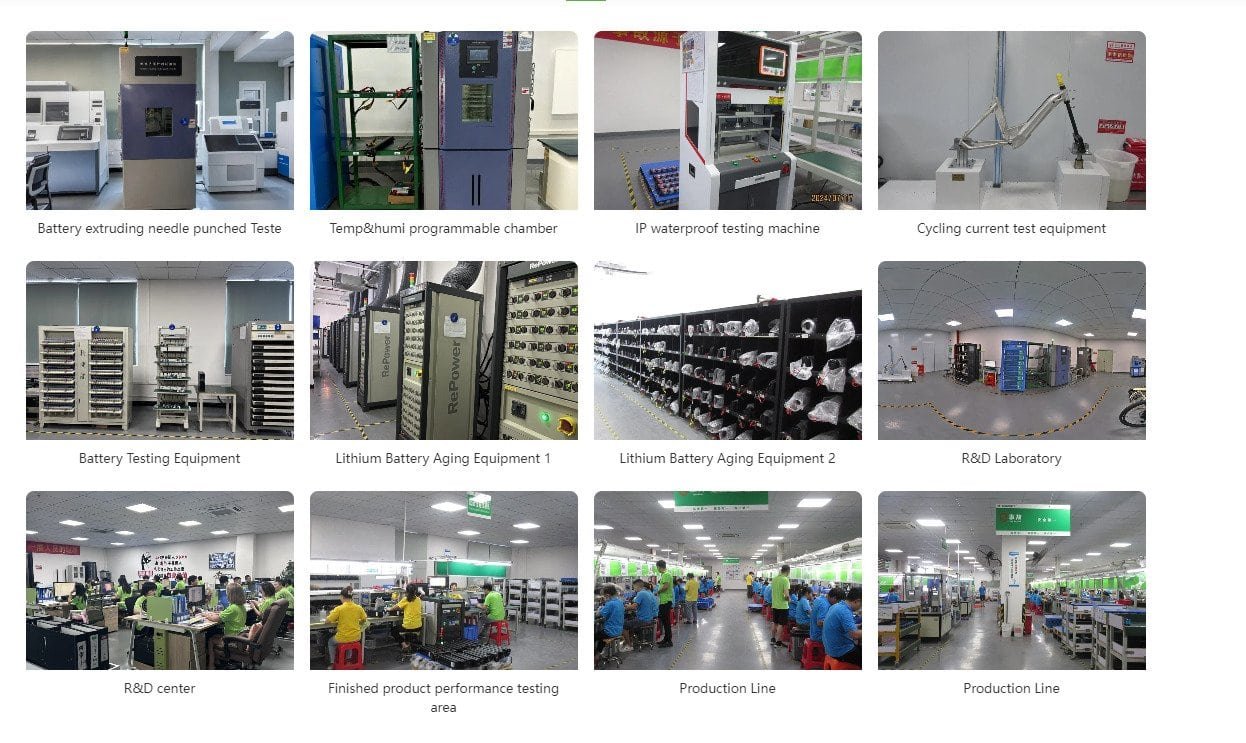
Laboratory and Testing Capabilities
Possessing in-house simulation and testing laboratories is crucial for validating new designs and ensuring product safety.
Advanced testing capabilities should encompass areas such as cycle life testing, thermal analysis, and electrical safety verification. Cross-Industry Experience
Teams with experience in sectors such as automotive, robotics, energy storage, or electric mobility often possess a broader perspective, enabling them to develop battery solutions that are both versatile in function and reliable in performance.
Manufacturers backed by a robust R&D team are capable of effectively optimizing battery performance, extending cycle life, enhancing safety, and delivering tailored solutions for a wide range of application scenarios.
Part 2 .Manufacturing Capability Assessment
Evaluating Manufacturing and Production Capabilities
A manufacturer’s production capacity determines its ability to meet current and future market demands. Key factors to consider include:
Produktionskapazität
Assess whether the manufacturer can efficiently handle the following stages:
Prototyping — for initial testing and design validation
Pilot Production — small-batch trial runs to optimize manufacturing processes
Mass Production — ensuring the timely delivery of large-volume orders
Manufacturers with scalable production capabilities can effectively support product business growth and ensure long-term supply stability.
Manufacturing Equipment
The production of modern lithium batteries relies heavily on advanced equipment to ensure product quality and consistency.
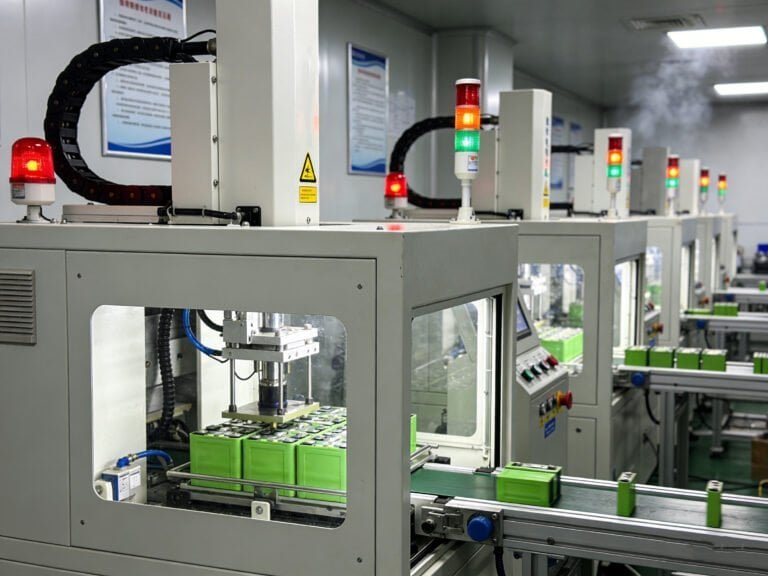
Yizhan Battery Assembly Lines — enabling highly efficient battery assembly operations
Yizhan Laser Welding Equipment — providing high-precision welding processes
Yizhan Proprietary Quality Assessment Software — instantly detecting and identifying product defects
Vertical integration capabilities not only enhance product compatibility but also streamline the system integration process, resulting in more reliable and optimized battery solutions.
The manufacturer you select should be capable of supporting both small-scale prototyping and large-scale production. Key considerations include:
Monthly Production Capacity
Lead Times and On-Time Delivery Track Record
Future Production Expansion Capabilities
Yizhan features advanced automated assembly lines and rigorous quality inspection processes, enabling us to handle orders ranging from hundreds to tens of thousands of units.
Part 3. Verify Certifications and Compliance
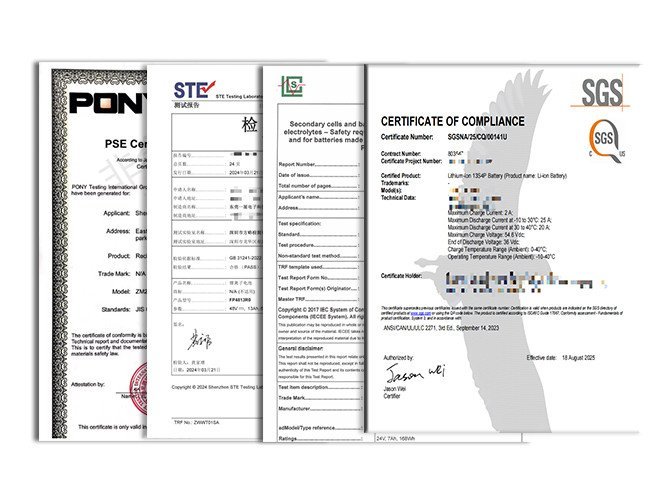
Safety and compliance are paramount in Lithium-Batterie manufacturing. Reputable manufacturers hold the following certifications:
UL2271 / UL2580 — Safety certifications for e-bikes and energy storage systems
EN50604 / EN15194 — European safety standards for electric mobility
ISO9001 & ISO14001 — Certifications for quality management and environmental responsibility
Ensuring that all products comply with international safety and quality standards facilitates smooth and risk-free export operations. 4. Quality Assurance and Testing
Reliable lithium batteries require rigorous quality control and testing:
Cell sorting and matching
Laser welding and spot welding inspection
Battery Management System (BMS) functional testing
Aging and cycle testing to ensure battery longevity
Part 4.Comprehensive After-Sales Support
Even with products of superior quality, after-sales support remains crucial. Ensure that your manufacturer provides:
Technical guidance on installation and maintenance
Warranty and repair services
Rapid response for inquiries and troubleshooting
Part 5.Before selecting a supplier, ask the following questions:
Which cell suppliers or battery brands do you partner with?
Is your company’s Battery Management System (BMS) developed in-house, or is it sourced from a third-party supplier?
What international certifications (e.g., UL, CE, EN50604, UN38.3, IEC62133, etc.) have your battery packs obtained?
What is your company’s current production capacity? What is the typical lead time for large-volume orders?
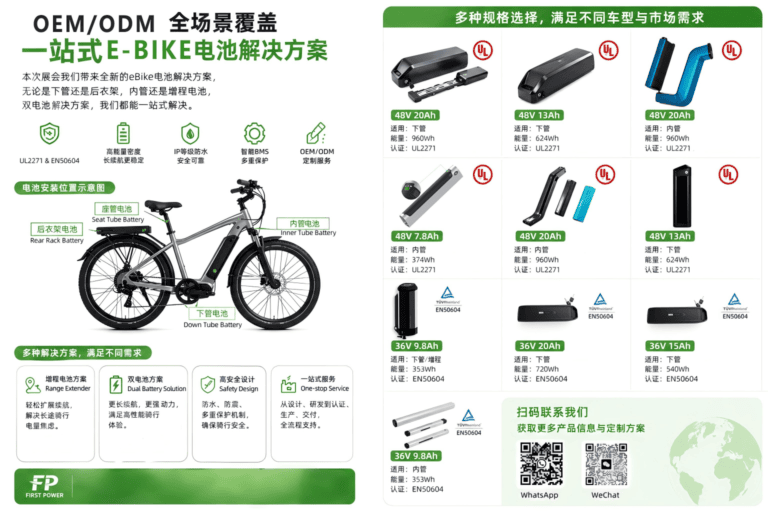
Does your company offer OEM and ODM development services for battery packs?
What inspection processes are conducted during production and prior to shipment?
What level of technical support and after-sales service can be expected?
How does your company handle product quality issues and warranty claims?
Can your company provide case studies of past projects or customer references?
What measures has your company implemented to ensure the long-term reliability and safety of its products?
Schlussfolgerung
In 2026, selecting the right lithium battery manufacturer requires a careful evaluation of their experience, certifications, production capabilities, quality assurance, customization options, and after-sales support.
Dongguan Yizhan Electronics Technology Co., Ltd. boasts over a decade of professional experience, global certifications, advanced production capabilities, and a customer-centric service philosophy, dedicated to providing safe, reliable, and high-performance lithium batteries for a wide range of applications.
Partnering with a trusted manufacturer ensures that your business remains competitive in the rapidly evolving lithium battery market.
Call to Action:
Kontakt today to discuss your specific requirements!

 English
  Chinese
  Japanese
  German
  French
  Korean
