
Inspection robots are increasingly used for industrial inspection, power infrastructure monitoring, warehouse operations, solar farms, tunnels, factories, and other environments where continuous and automated inspection is required.
The battery is a critical part of an inspection robot because it powers not only the drive motors but also cameras, sensors, LiDAR, thermal imaging systems, communication modules, onboard computers, and other electronics.
For this reason, selecting an inspection robot battery is not simply a matter of choosing a battery with a larger capacity. The battery pack needs to match the robot’s electrical architecture, power requirements, operating environment, available installation space, communication system, and charging method.
A custom lithium battery pack can be designed around these requirements.
This guide explains the key factors involved in designing and selecting a lithium battery pack for inspection robots, including battery chemistry, voltage, capacity, BMS, communication protocols, mechanical design, environmental protection, testing, and certification.
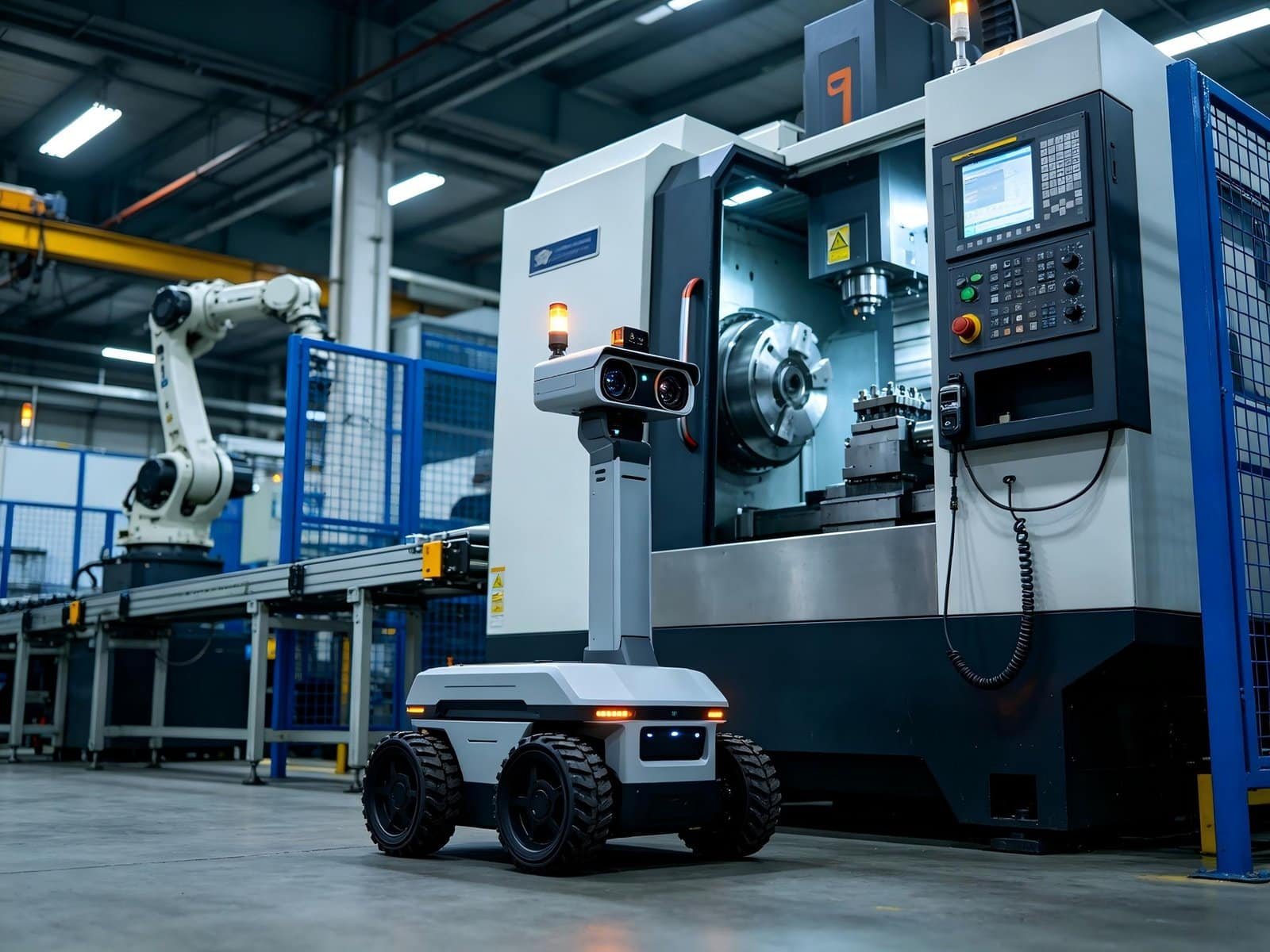
What Is an Inspection Robot Lithium Battery Pack?
An inspection robot lithium battery pack is a rechargeable battery system designed to provide electrical power for autonomous or semi-autonomous inspection robots.
Depending on the robot design, the battery pack may supply power to:
- Antriebsmotoren
- Steuerungssysteme
- Industrial computers
- Kameras
- Thermal imaging cameras
- LiDAR
- Radar
- Sensoren
- Module für die drahtlose Kommunikation
- GPS or positioning systems
- Beleuchtungssysteme
- Data acquisition equipment
A complete battery pack generally consists of:
- Batteriezellen
- Batterie-Management-System (BMS)
- Electrical protection components
- Busbars or interconnections
- Wiring harnesses
- Steckverbinder
- Enclosure
- Mechanical mounting components
- Kommunikationsschnittstelle
The battery architecture should be designed according to the robot’s electrical and mechanical requirements rather than selected independently.
Why Do Inspection Robots Need Custom Battery Packs?
Inspection robots can have significantly different operating requirements.
For example, a warehouse inspection robot may operate indoors on relatively smooth floors, while a substation inspection robot may operate outdoors and require resistance to temperature changes, dust, and moisture.
A pipeline inspection robot may have strict space limitations, while a large industrial inspection platform may require a higher-capacity battery.
The main reasons for customization include:
1. Different Operating Voltages
Robots may use 24V, 36V, 48V, 51.2V, 60V, 72V, or other system voltages.
The battery pack needs to match the robot’s motor controllers, DC/DC converters, control electronics, and other electrical components.
2. Different Energy Requirements
Battery capacity determines how much energy is available to the robot.
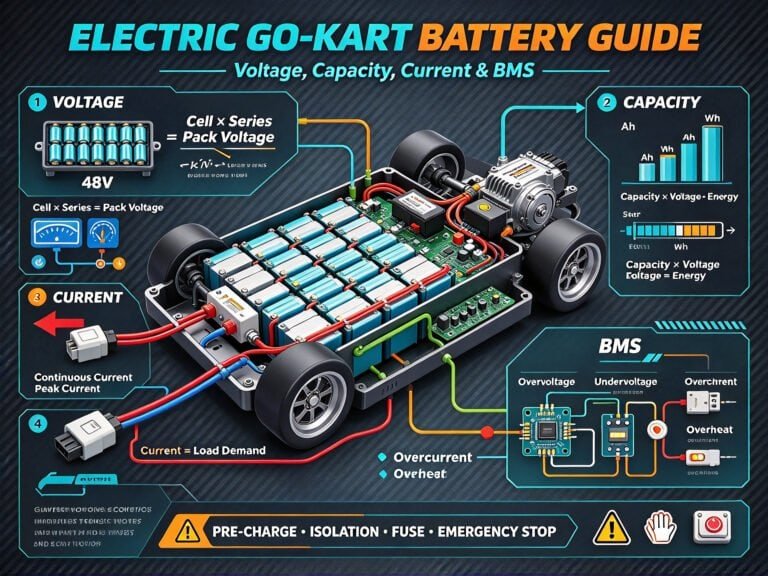
The basic energy calculation is:
Batterieenergie (Wh) = Spannung (V) × Kapazität (Ah)
Zum Beispiel:
51.2V × 30Ah = 1,536Wh
However, actual operating time depends on average power consumption, battery utilization, environmental conditions, load, driving conditions, and system efficiency.
3. Limited Installation Space
Inspection robots often have compact internal structures.
The battery may need to fit into a dedicated compartment or under the robot chassis.
Therefore, battery dimensions, connector position, cable routing, mounting points, and enclosure shape may all need to be customized.
4. Communication Requirements
Modern inspection robots may need real-time battery information.
The BMS can communicate information such as:
- SOC
- SOH
- Spannung
- Aktuell
- Temperatur
- Ladezustand
- Discharging status
- Fehlerinformationen
Depending on the robot controller, communication may use CAN, CAN FD, RS485, UART, or other interfaces.
How to Choose the Right Battery Chemistry
Lithium-ion battery chemistry should be selected according to the robot’s performance and operating environment.
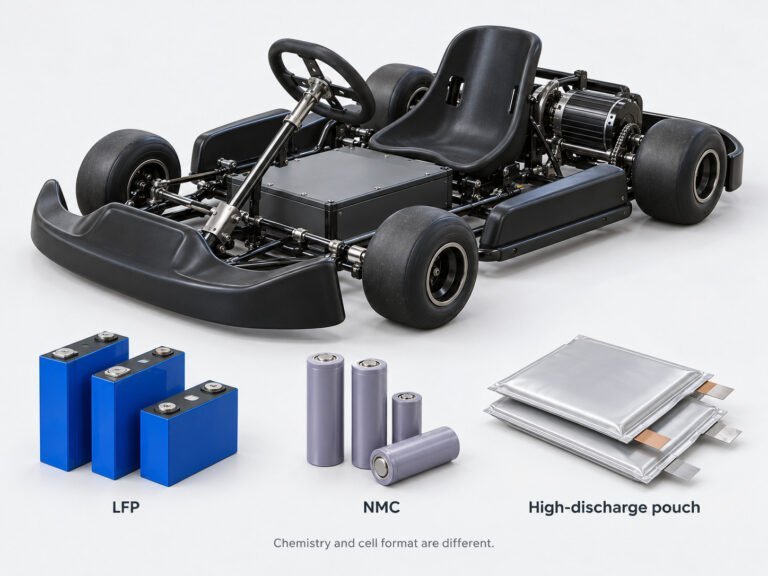
LiFePO4-Akku
Lithium iron phosphate, commonly called LiFePO4 or LFP, is frequently considered for industrial mobile equipment.
Zu den möglichen Vorteilen zählen:
- Gute thermische Stabilität
- Langer Lebenszyklus
- Stabile Entladungseigenschaften
- Suitable for frequent cycling
- Good suitability for industrial applications
LiFePO4 can be considered for:
- Industrial inspection robots
- Substation inspection robots
- Lagerroboter
- AGVs
- Outdoor inspection platforms
The trade-off is that LiFePO4 generally has lower energy density than some other lithium-ion chemistries.
NMC Lithium-Ion Battery
Nickel manganese cobalt oxide, or NMC, offers higher energy density than LiFePO4 in many battery designs.
This can be useful when:
- Battery space is limited
- Weight needs to be minimized
- Higher energy density is required
NMC batteries may therefore be considered for compact inspection robots where battery volume and weight are important design constraints.
The final chemistry should be selected based on the robot’s electrical, mechanical, thermal, safety, and regulatory requirements.
How to Calculate Battery Capacity for an Inspection Robot
Battery sizing should begin with the robot’s actual power consumption.
Suppose a robot has an average power consumption of:
300W
and the required operating time is:
6 hours
The theoretical energy requirement is:
300W × 6h = 1,800Wh
A practical battery design needs additional consideration for:
- Battery operating window
- Conversion losses
- Motoreffizienz
- Temperatur
- Aging
- Peak power
- Safety margin
- Actual operating conditions
Therefore, the battery should not simply be sized at exactly 1,800Wh.
A battery engineer should evaluate the complete power profile before determining the final capacity.
Peak Power and Continuous Power Are Different
One common mistake in battery selection is looking only at average power.
Inspection robots may have significantly higher instantaneous power requirements when:
- Start
- Accelerating
- Climbing slopes
- Crossing obstacles
- Changing direction
- Operating multiple motors
- Activating high-power equipment
For example, a robot may have an average consumption of 300W but require substantially higher current during acceleration.
The battery pack and BMS therefore need to support both:
Dauerstrom
und
Spitzenstrom
The selected cells, BMS, wiring, connectors, fuse, and other components should all be evaluated against the expected current profile.
BMS Design for Inspection Robot Batteries
The Battery Management System is an important part of a custom lithium battery pack.
A BMS can provide functions such as:
- Schutz vor Überladung
- Schutz vor Überentladung
- Überstromschutz
- Kurzschlussschutz
- Schutz vor Überhitzung
- Überwachung der Zellspannung
- Überwachung der Temperatur
- Zellausgleich
- SOC estimation
- SOH-Überwachung
For an intelligent inspection robot, a communication-enabled BMS can provide battery information to the robot’s main controller.
This allows the robot system to make decisions based on battery status.
For example, when the battery reaches a predefined low-SOC threshold, the robot may be programmed to return to a charging station.
CAN and RS485 Communication for Robot Batteries
Communication compatibility should be considered during battery development.
CAN
CAN is widely used in industrial and automotive electronic systems.
A CAN-enabled BMS can provide information such as:
- Batteriespannung
- Battery current
- SOC
- Temperatur
- Fault codes
- Ladezustand
RS485
RS485 can also be used in industrial equipment and battery communication systems.
Depending on the control architecture, RS485 may be combined with protocols such as Modbus RTU.
The communication protocol should be defined during the battery design stage so that the BMS firmware and robot controller can be properly matched.
Mechanical Design of a Custom Robot Battery
Electrical specifications are only one part of battery customization.
The mechanical structure also needs to match the robot.
Important design parameters include:
- Batterielebensdauer
- Batteriebreite
- Batteriehöhe
- Befestigungslöcher
- Anschlussposition
- Cable outlet position
- Handle design
- Enclosure material
- Waterproofing requirements
- Stoßschutz
- Internal component layout
For example, a battery may need to be installed beneath the robot chassis.
In this situation, the battery enclosure may need to have a low-profile design while maintaining adequate mechanical protection.
Environmental Requirements for Inspection Robots
The operating environment should be defined before selecting the battery enclosure and protection strategy.
Indoor Inspection Robots
Indoor robots may operate in:
- Lagerhallen
- Fabriken
- Rechenzentren
- Commercial buildings
The battery may primarily need to address mechanical vibration, charging frequency, and continuous operation.
Outdoor Inspection Robots
Outdoor robots may encounter:
- Regen
- Staub
- Luftfeuchtigkeit
- Temperature changes
- Direct sunlight
- Vibration
- Uneven terrain
The battery enclosure may therefore require an appropriate IP protection level depending on the actual application.
IP67, for example, indicates a specific level of protection against dust ingress and temporary water immersion under defined test conditions. The required IP rating should be selected based on the actual environment rather than treated as a universal requirement.
Battery Cells for Inspection Robot Applications
Cell selection should consider more than nominal capacity.
Zu den wichtigen Parametern gehören:
- Nennspannung
- Kapazität
- Kontinuierlicher Entladestrom
- Spitzenableitstrom
- Innerer Widerstand
- Lebensdauer des Zyklus
- Betriebstemperatur
- Cell dimensions
- Konsistenz der Zellen
- Manufacturer specifications
For multi-cell battery packs, cell consistency is particularly important.
Cells used in the same pack should be appropriately matched according to voltage, internal resistance, capacity, and other relevant parameters.
This helps improve pack consistency and supports more predictable battery performance.
Charging Requirements
Charging specifications should be defined together with the battery design.
Zu den wichtigen Parametern gehören:
- Charger output voltage
- Ladestrom
- Aufladezeit
- Charging temperature range
- Charging connector
- BMS charging protection
- Kommunikation beim Laden
Some inspection robots are designed to return automatically to a charging station.
In these applications, battery charging behavior and the robot’s charging system need to be compatible.
For robots that operate continuously, fast charging or opportunity charging may also be considered.
Safety Considerations for Custom Robot Battery Packs
Battery safety needs to be considered throughout the design and manufacturing process.
A professional battery development process should evaluate:
- Zellauswahl
- Elektrischer Schutz
- BMS-Konfiguration
- Thermal behavior
- Mechanical protection
- Kurzschlussschutz
- Überstromschutz
- Charging protection
- Wiring design
- Auswahl der Steckverbinder
- Enclosure design
- Manufacturing quality
The safety strategy should be based on the complete battery system rather than relying on a single component.
Testing a Custom Inspection Robot Battery
Before mass production, prototype battery packs should undergo appropriate testing.
Depending on the application, testing may include:
Electrical Testing
- Prüfung der Kapazität
- Lade-/Entladeprüfung
- Spannungsprüfung
- Laufende Tests
- Prüfung des BMS-Schutzes
Mechanical Testing
- Vibrationsprüfung
- Impact testing
- Prüfung von Steckverbindern
- Mounting structure testing
Umweltprüfungen
- Prüfung bei hohen Temperaturen
- Prüfung bei niedrigen Temperaturen
- Temperature cycling
- Humidity testing
- Water and dust protection testing where applicable
Communication Testing
- CAN-Kommunikation
- RS485-Kommunikation
- BMS data accuracy
- Fault reporting
- SOC communication
The exact test program should be determined according to the battery design, robot application, target market, and applicable standards.
Lithium Battery Certifications for Inspection Robots
Certification requirements depend on the battery design, destination market, transportation method, and end application.
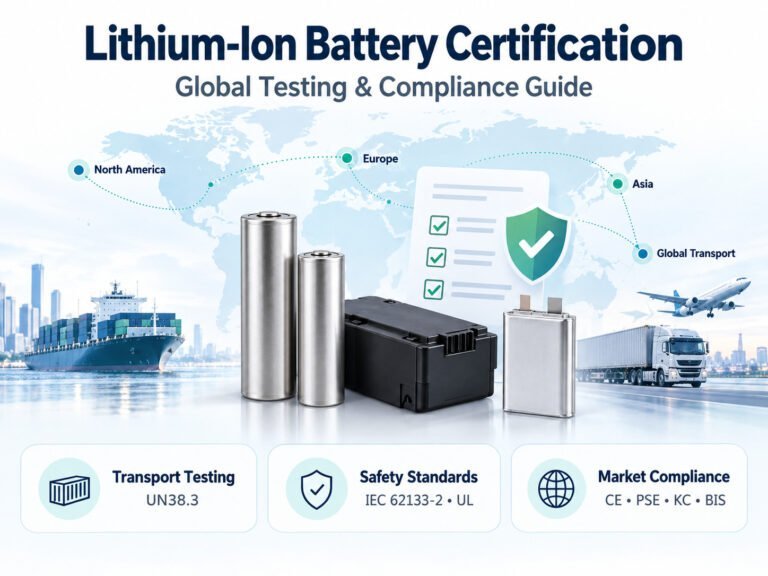
For lithium battery packs intended for international transportation, UN 38.3 is an important transportation testing requirement.
Other requirements may apply depending on the target market and product configuration.
For example, manufacturers may need to consider applicable requirements relating to:
- CE
- RoHS
- IEC-Normen
- UL-Normen
- EMV-Anforderungen
- Regional battery regulations
- Transportation regulations
For European products, manufacturers and importers should also evaluate the requirements of the EU-Batterieverordnung (EU) 2023/1542 where applicable.
Certification planning should ideally begin during product development rather than after the battery has already entered mass production.
How to Customize a Lithium Battery Pack for an Inspection Robot
A practical customization process can be divided into several stages.
Step 1: Define the Robot’s Electrical Requirements
Collect:
- Betriebsspannung
- Average power
- Maximum power
- Dauerstrom
- Spitzenstrom
- Required operating time
- Aufladezeit
Step 2: Define the Mechanical Requirements
Provide:
- Abmessungen des Batteriefachs
- Mounting drawings
- Connector requirements
- Cable requirements
- Gewichtsbeschränkungen
Step 3: Select Battery Chemistry
Evaluate LiFePO4, NMC, or another suitable chemistry according to:
- Energiedichte
- Sicherheitsanforderungen
- Zyklusvorgaben
- Betriebstemperatur
- Gewicht
- Available space
Step 4: Design the BMS
Determine:
- Dauerstrom
- Spitzenstrom
- Schutzfunktionen
- Kommunikationsprotokoll
- SOC/SOH requirements
- Überwachung der Temperatur
Step 5: Build a Prototype
A prototype allows the battery supplier and robot manufacturer to verify:
- Physical fit
- Electrical compatibility
- Kommunikation
- Laufzeit
- Aufladen
- Thermal behavior
Step 6: Perform Testing
Testing should be conducted according to the application and applicable standards.
Step 7: Move to Mass Production
After design validation, production processes can be established for consistent battery assembly, inspection, testing, and traceability.
What Information Should You Provide to a Battery Manufacturer?
When requesting a quotation for a custom inspection robot battery, providing detailed technical information can significantly improve the accuracy of the proposed design.
A useful RFQ should include:
| Parameter | Beispiel |
|---|---|
| Chemie der Batterie | LiFePO4 |
| Nennspannung | 51.2V |
| Kapazität | 30Ah |
| Dauerstrom | Anwendungsabhängig |
| Spitzenstrom | Anwendungsabhängig |
| Kommunikation | CAN |
| Betriebstemperatur | Anwendungsabhängig |
| Ladespannung | Anwendungsabhängig |
| Strom des Ladegeräts | Anwendungsabhängig |
| Abmessungen der Batterie | Benutzerdefiniert |
| Anschluss | Benutzerdefiniert |
| Enclosure | Benutzerdefiniert |
| IP requirement | Anwendungsabhängig |
| Quantity | Prototype / Mass production |
| Target market | EU / US / Other |
The more complete the technical information, the easier it is for the battery manufacturer to evaluate the appropriate cell, BMS, enclosure, and protection design.
Why Battery Design Should Start With the Robot
An inspection robot battery should not be treated as an isolated component.
The battery interacts with:
- Motor controllers
- Hauptsteuerplatinen
- Ladegeräte
- Sensoren
- Communication systems
- Mechanical structures
- Thermal systems
- Sicherheitssysteme
A battery that performs well in one robot may not be suitable for another robot with different power, space, or environmental requirements.
For OEM robot manufacturers, early battery integration can also reduce redesign work during later development stages.
Custom Inspection Robot Battery Pack Manufacturing
A battery manufacturer supporting inspection robot OEM projects may provide several stages of development:
Requirement analysis → Cell selection → Electrical design → BMS development → Mechanical design → Prototype → Testing → Certification support → Mass production
The scope of support can vary between manufacturers.
For a custom battery project, it is useful to evaluate the supplier’s:
- Battery design capability
- Cell sourcing and traceability
- BMS-Entwicklungsfähigkeit
- Prototype capability
- Production process
- Testing equipment
- Quality management system
- Certification experience
- OEM/ODM experience
- After-sales technical support
These factors can be more useful for supplier evaluation than simply comparing the quoted battery price.
FAQ: Inspection Robot Lithium Battery
What battery is suitable for an inspection robot?
LiFePO4 and NMC lithium-ion batteries can both be considered. The appropriate chemistry depends on the robot’s energy density, weight, cycle life, safety, temperature, and space requirements.
Can the battery communicate with the inspection robot?
Yes. A smart BMS can be configured with communication interfaces such as CAN or RS485, depending on the robot’s control architecture.
Can the inspection robot battery be customized?
Yes. A battery pack can be customized according to voltage, capacity, dimensions, BMS, connector, communication protocol, enclosure, and other technical requirements.
What voltage is commonly used for inspection robots?
There is no single standard voltage for all inspection robots. 24V, 36V, 48V, 51.2V, 60V, and 72V systems may be used depending on the robot architecture.
How long can an inspection robot operate on one battery?
Runtime depends on battery energy and the robot’s actual average power consumption.
A basic estimation is:
Runtime ≈ Battery Energy (Wh) ÷ Average Power Consumption (W)
Actual runtime will vary according to operating conditions and system efficiency.
Is LiFePO4 suitable for outdoor inspection robots?
LiFePO4 can be suitable for many industrial applications, but the complete battery system still needs to be designed for the required temperature range, enclosure protection, charging conditions, and environmental exposure.
Schlussfolgerung
The right lithium battery for an inspection robot depends on much more than voltage and capacity.
A reliable battery design should consider the complete system, including battery chemistry, energy requirements, peak current, BMS, communication, mechanical dimensions, charging, environmental conditions, safety, testing, and applicable certification requirements.
For OEM inspection robot manufacturers, working with a battery supplier during the early stages of robot development can help align the battery with the robot’s electrical and mechanical architecture.
A custom battery pack can then be developed around the actual requirements of the inspection robot rather than forcing the robot design to accommodate a standard battery.
For manufacturers developing inspection robots for factories, substations, warehouses, solar farms, tunnels, or other industrial environments, a properly engineered lithium battery pack can become an integral part of the robot’s overall power system.
 English
  Chinese
  Japanese
  German
  French
  Korean
