What kind of battery do electric scooters use?

With the widespread use of electric scooters in urban commuting, leisure, and shared mobility, their core power component—the battery—has become a focus of attention for users and businesses. The battery not only determines the scooter’s range and power performance but also directly affects safety and lifespan.
This guide, based on years of battery research and development experience, provides a detailed analysis of suitable battery types and selection guidelines for electric scooters.

What kind of battery do electric scooters use?

Part 1. Basic Knowledge of Electric Scooter Batteries

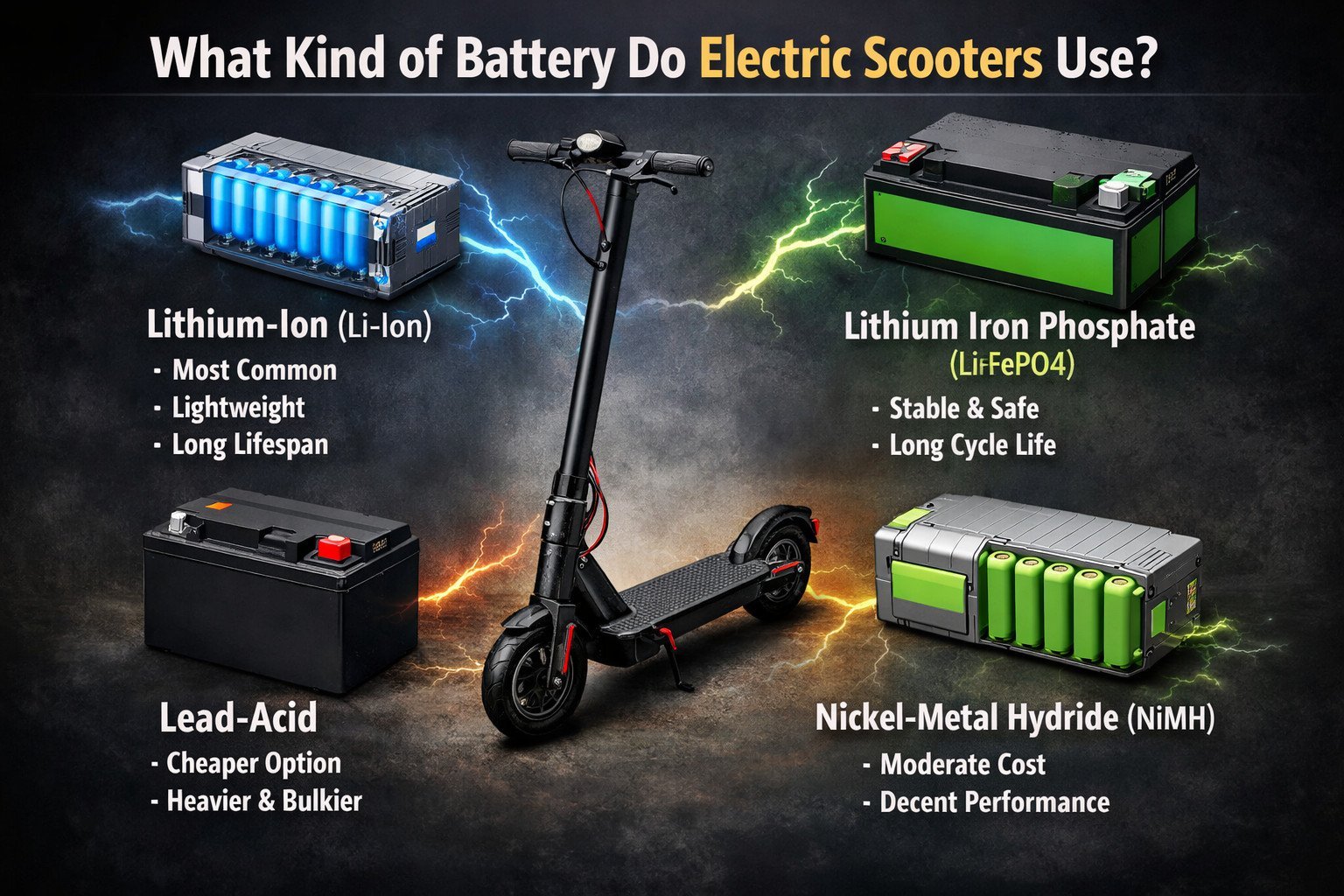
Common battery types for electric scooters include:

Lithium-ion Cylindrical Battery

Typical models: 18650, 21700

Advantages: High energy density, long cycle life, suitable for high power output

Applications: Mid-to-high-end electric scooters and shared mobility models

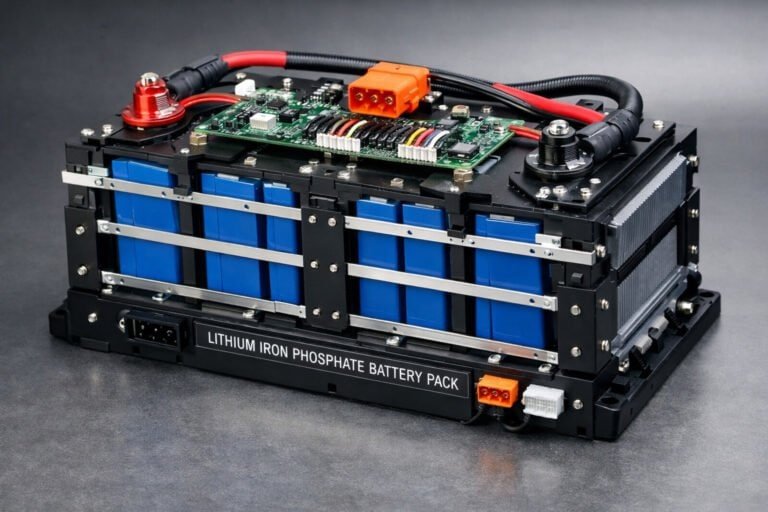
リン酸鉄リチウム電池(LiFePO4)

Advantages: High safety, long lifespan, high temperature resistance

Disadvantages: Slightly larger size, lower energy density than ternary lithium batteries

Applications: Long-range scooters, heavy-duty models

Pouch Cell (LiPo)

Advantages: Lightweight design, high flexibility

Disadvantages: Requires intelligent BMS management

Applications: Portable and lightweight scooters

Technical Tip: The battery’s voltage, capacity, and power output must match the scooter’s controller and motor design; otherwise, it will affect performance or safety.

Part 2.Core Parameters of Electric Scooter Batteries

1. Voltage

36V battery: Suitable for ordinary commuter scooters

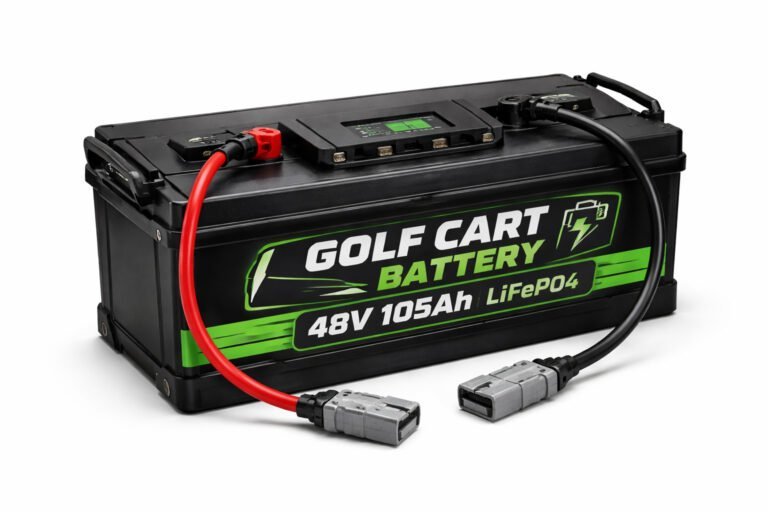
48V battery: Suitable for long-range or high-power scooters

60V battery: Suitable for high-power, long-distance, or heavy-load scooters

Case Study: A test by Yizhan Electronics found that a 48V battery provides stable power in high-power scooters, while a 36V battery in the same model lacks sufficient power, resulting in reduced climbing and acceleration performance.

2. Capacity (Ah)

Higher capacity means longer range.

Consideration must be given to size and overall vehicle weight; excessively large capacity will increase the scooter’s weight and affect portability.

3. BMS Intelligent Protection System

BMS is the core system for ensuring battery safety and extending its lifespan. Its functions include:

過充電/過放電保護

短絡保護

温度モニタリング

Battery balancing

Data recording and communication

Part 3. Key Factors in Choosing a Supplier

Technical Capabilities and Experience

Yizhan Electronics has over ten years of experience in lithium battery R&D and manufacturing, specializing in electric scooters and customized solutions.

カスタマイズ機能

OEM/ODM customization of voltage, capacity, appearance, and brand labeling.

Safety and Certification

Products have passed international certifications such as CE, UL, and EN 50604.

Quality Management and Supply Chain Stability

Full process control including cell selection, PACK assembly, aging testing, and factory inspection.

Part 4. Case Study: The Impact of Different Batteries on Scooter Performance

バッテリータイプ 電圧 定員 Range Applicable Models
Cylindrical Lithium Battery 36V 7.8Ah 20–25 km Portable Commuter Vehicles
Ternary Soft-Pack Battery 48V 10Ah 30–35 km High-Range Scooters
Lithium Iron Phosphate Battery 48V 12Ah 35–40 km Long-Range/Shared Vehicles

Conclusion: Battery selection should be based on a comprehensive assessment of scooter design, range requirements, weight requirements, and safety standards.

 FAQ (Frequently Asked Questions)

Q1: Can electric scooters use ordinary 36V batteries?

Answer: Ordinary 36V batteries are suitable for low-to-medium power scooters; high-power or long-range models are recommended to use 48V or customized batteries.

Q2: Which is better for scooters: cylindrical batteries or pouch batteries?

Answer: Cylindrical batteries offer stable power and long lifespan; pouch batteries are lightweight and have strong shape adaptability. Choose the optimal solution based on the overall vehicle design.

Q3: How important is BMS in electric scooters?

Answer: BMS protects battery safety, extends lifespan, and prevents overcharging, over-discharging, and short circuits; it is an essential system.

Q4: What should companies pay attention to when purchasing scooter batteries?

Answer: Confirm voltage, capacity, BMS functions, and supplier qualifications; request samples for testing; and sign a warranty agreement.

Q5: Can different brands of batteries be mixed?

Answer: Mixing different brands is not recommended. Differences in cells, voltage, and BMS may trigger vehicle protection mechanisms or pose safety hazards.

Choosing the right battery is a core element in ensuring the power, range, and safety of electric scooters. When purchasing batteries, businesses must consider voltage, capacity, cell type, and BMS intelligent protection.

Dongguan Yizhan Electronics Technology Co., Ltd., with over ten years of industry experience, customization capabilities, intelligent BMS technology, and international certifications, is a reliable partner for electric scooter companies seeking to purchase and customize batteries. Through professional selection, your scooter products will receive safe, reliable power support and long-lasting performance.


What kind of battery do electric scooters use? Learn about lithium-ion, lead-acid, and other battery types, and discover why lithium batteries are the preferred choice for modern electric scooters.
2026-02-11
+
Discover the 5 key design considerations for urban commuter electric bicycles, including comfort, battery range, safety, durability, and smart features for daily city riding.
2026-02-10
+
Learn practical tips to avoid overcharging and deep discharging lithium batteries. Proper charging habits and battery management can extend battery lifespan, improve safety, and ensure stable performance
2026-02-09
+
Discover the key advantages of marine lithium batteries, including high energy density, long cycle life, advanced BMS safety, and environmental benefits. A professional insight from Dongguan Yizhan Electronics Technology Co., Ltd.
2026-02-06
+