
Over the past two years, Rad Power Bikes, once the largest direct-to-consumer eBike brand in the United States, has become a cautionary tale for the global two-wheel industry.
Battery fires, large-scale recalls, regulatory penalties, and ultimately bankruptcy restructuring—all within less than three years.
A clear warning signal exists.
The message from regulators, platforms, insurers, and consumers is now unmistakable:
The global eBike market has entered a “battery zero-tolerance era!
1. Why the Rad Battery Crisis Was Not an Accident
From a battery manufacturer’s standpoint, Rad’s collapse was not caused by bad luck.
Multiple structural risks amplified at the same time.
1.1 Loss of Control Over Battery Supply Chain Consistency
Public investigations showed that some Rad battery packs used cells from lower-quality suppliers. Not enough checking for consistency between batches occurred.
From a manufacturing perspective, this creates several hidden dangers:
- Variations in cell capacity, internal resistance, and discharge behavior
- Uneven aging inside the same battery pack
- Localized overheating that accelerates thermal runaway
When cell consistency is not strictly controlled, even a “normal-looking” battery can become a fire risk over time.

1.2 Battery and Vehicle Systems Were Not Validated as a Whole
According to the U.S. Consumer Product Safety Commission (CPSC), several critical compliance gaps existed:
- Batteries were not manufactured in accordance with UL 2271
- Complete eBike systems did not meet UL 2849
- Some BMS protection strategies were insufficient
- Chargers were not fully matched to battery specifications
From a manufacturer’s view, this reflects a common industry misunderstanding:
Battery safety is not a component issue—it is a system issue.
A safe battery can still become dangerous if paired with the wrong controller, motor, charger, or software logic.
1.3 After-Sales Systems Could Not Support Rapid Sales Growth
As Rad expanded aggressively through a DTC model, its after-sales and recall infrastructure failed to scale accordingly.
- Slow identification of affected batches
- Delayed battery replacement or recall execution
- Repeated incidents escalating into regulatory intervention
In the battery industry, we see this pattern often:
👉 When battery issues are not contained early, they quickly turn into public safety events.
1.4 Brand Growth Outpaced Quality System Maturity
Based on our manufacturing experience, the main problem was not just one bad battery model. A quality system could not handle the large number of users.
In the U.S. and EU markets, this imbalance is no longer tolerated.
2. Eight Critical Lessons for eBike Brands — From a Battery Manufacturer’s View
At Dongguan Yizhan Electronics, we work closely with eBike brands across North America and Europe. Based on both our production experience and industry incidents, the following lessons are essential.
Lesson 1: Choosing a Battery Is Choosing Risk Exposure
Between 2025 and 2026, global markets are moving toward de facto mandatory enforcement of:
- UL 2271 (battery safety)
- UL 2849 (complete eBike system safety)
Battery selection must prioritize:
- Tier-1 branded cells (Samsung, LG, Panasonic) or verified Grade-A cells from leading Chinese manufacturers
- Complete documentation: UN 38.3, MSDS, UL 2271 or equivalent test reports
- Factories with full IQC → process control → OQC → retention sample systems
🚫 Batteries to avoid at all costs:
- Rebranded workshop-level packs
- Cells without batch consistency data
- Packs that have not passed short-circuit, overcharge, nail penetration, thermal chamber, and drop tests
From a manufacturer’s perspective: battery cost savings are never worth the downstream risk.
Lesson 2: Battery Safety Must Be Verified at the Vehicle System Level
Many brands test batteries independently. Regulators do not.
System-level validation must include:
- UL 2849 testing for the complete eBike
- Compatibility verification between motor, controller, BMS, battery, and charger
A battery that is safe on paper can become unsafe in the wrong system architecture.
Lesson 3: Battery Supplier Audits Are Not Optional
From the manufacturing side, a serious battery supplier should be able to demonstrate:
- In-house IQC and electrical safety labs
- Aging rooms and lifecycle testing
- Batch traceability and consistency reports
- Original, verifiable test documentation
- Proven export experience to the U.S. and EU
If a supplier cannot explain their quality process clearly, the risk will eventually transfer to the brand.
Lesson 4: Product Listings Must Clearly Communicate Battery Safety
By 2025, platforms such as Amazon and Walmart strictly require:
- Battery specifications
- Safety certifications
- Maximum output power
- Speed class
- Approved charger model
- Safety warnings
Incomplete listings increasingly lead to delisting, penalties, or sales bans.
Lesson 5: Beware of “High Specs + Low Price” Models
From incident analyzing, the highest-risk products often include:
- Enormous battery packs (>55–60 cells)
- High-current discharge designs
- Unusually cheap 20Ah–30Ah batteries
- 1,500–2,000W claims with unclear legal positioning
In many cases, battery cost is where compromises are hidden.
Lesson 6: Chargers Are a Primary Safety Component
In several Rad-related incidents, chargers were part of the risk chain.
A compliant charger must meet:
- UL 1310 / DOE VI
- Local plug and certification requirements
- Over-voltage, over-current, over-temperature, and short-circuit protection
- Strict supplier consistency—no casual substitutions
Lesson 7: After-Sales Battery Support Must Be Built in Advance
Responsible brands typically establish:
- Local service centers in North America or Europe
- Spare battery and key component inventory
- Defined battery replacement timelines
- 48-hour response mechanisms for battery safety issues
Fast response dramatically reduces incident escalation.
Lesson 8: Recall Preparedness Is a Core Brand Responsibility
Regulatory bodies such as:
- U.S. CPSC
- EU RAPEX
- UK OPSS
expect brands to act immediately.
From our experience, brands with a predefined recall SOP can significantly reduce legal, financial, and reputational damage.
From Dongguan Yizhan Electronics‘ view, the Rad Power Bikes case starts a cycle of cleaning up the industry.
- Safer products justify higher prices
- Stronger compliance ensures longer survival
- Local after-sales capability defines real brands
The future of eBikes is no longer about price competition alone.
The topic concerns safety systems.
Manufacturing discipline
Regulatory readiness
And long-term brand credibility
For eBike brands, now is the time to upgrade battery strategy—not after the first incident.
Yizhan Electronics, a battery manufacturer, believes safety is not just a feature. A responsibility exists for everyone in the supply chain.
FAQ:
Q1: Why is UL 2271 becoming critical for eBike batteries
A:UL 2271 is no longer just a “recommended” standard. Quickly becoming a basic requirement for eBike batteries in the U.S. market.
From our experience as a battery manufacturer, UL 2271 evaluates not only battery performance, but also:
Electrical safety under abuse conditions
Thermal runaway resistance
Short-circuit, overcharge, and mechanical impact behavior
Long-term reliability under real-world usage
Regulators, online platforms, insurers, and even logistics providers increasingly refuse non-UL-compliant battery systems.
At Dongguan Yizhan Electronics, we design and make our eBike battery packs to meet UL 2271 standards. We have test reports available for verification.
Q2: What certifications should a compliant eBike battery have for export markets?
A:From a manufacturer’s perspective, a serious export-grade eBike battery should include:
UL 2271 – Battery safety certification (or equivalent test standard)
UN 38.3 – Mandatory for lithium battery transportation
MSDS – Material Safety Data Sheet for customs, logistics, and compliance
Batch-level traceability documentation
At Yizhan Electronics, our battery documentation package is complete, standardized, and consistent across production batches, ensuring smooth customs clearance and regulatory audits.
Q3: What type of battery cells does Yizhan Electronics use?
A:Battery safety starts with cell quality.
We exclusively use:
– Tier-1 global brands like Samsung, LG, and Panasonic use high-quality cells.
Leading Chinese manufacturers also include Grade-A cells.
Inspectors examine these cells when they arrive, a process known as incoming inspection (IQC).
Every batch of cells undergoes:
Capacity and internal resistance matching
Consistency screening
Traceability recording
We do not use mixed-grade, surplus, or unverified cells.
From a manufacturing standpoint, cell quality is the foundation of long-term battery safety.
Q4: How does Yizhan Electronics ensure battery consistency between batches?
A:One of the hidden causes of battery incidents is batch inconsistency, not single-unit failure.
Our production process includes:
IQC inspection for every incoming cell batch
Cell grouping based on capacity, voltage, and resistance
Controlled assembly parameters
OQC testing before shipment
Retention samples for traceability and post-market evaluation.
This system significantly reduces pack imbalance and thermal risk over the battery’s lifecycle.
Q5: Can customers audit or visit the Yizhan Electronics factory?
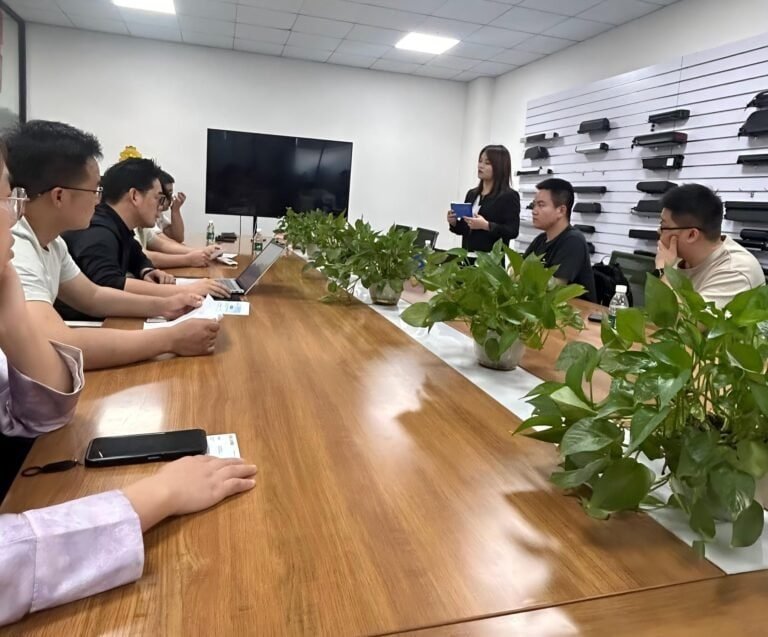
A:Yes,We welcome customer factory audits and on-site inspections.
For international OEM and brand partners, we support:
On-site factory visits
Production line walkthroughs
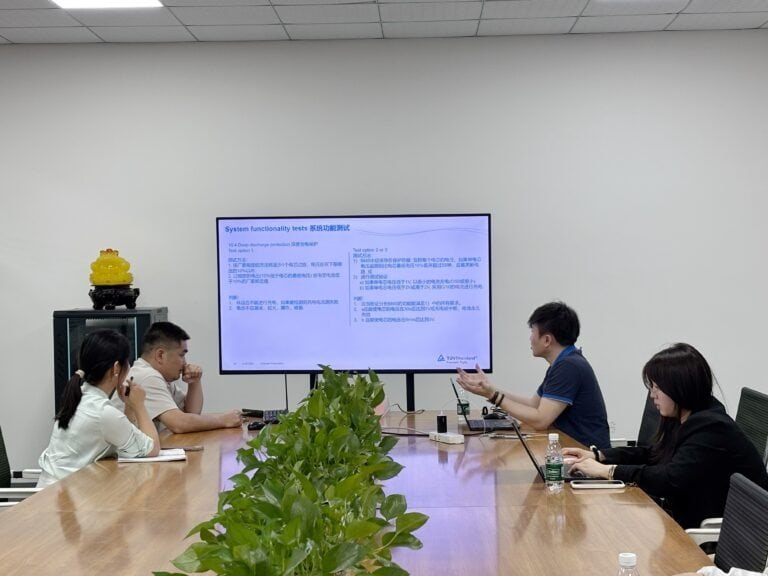
Quality system and testing process reviews
Documentation and certification verification
We believe transparency is a critical part of building long-term partnerships—especially in safety-sensitive industries like eBikes.
Q6: Does Yizhan Electronics support UL 2849 system-level compliance?
A:Yes,UL 2271 focuses on the battery. We also help customers with UL 2849 system-level certification by providing:
Battery system matching data
BMS logic coordination
Charger compatibility recommendations
Test support documentation
From our perspective, battery safety only truly exists at the system level.
Q7: How does Yizhan Electronics handle battery safety issues or recalls?
A:We believe battery manufacturers must be part of the solution—not silent suppliers.
Our internal procedures include:
Batch traceability and recall readiness
Defined escalation and response workflows
Technical support for root-cause analyzing.
Cooperation with brand-side recall or corrective actions
This approach helps our customers contain risk early and protect brand reputation.
Q8: What makes Yizhan Electronics different from low-cost battery suppliers?
A:From a manufacturing and compliance standpoint, the key differences are:
Certified production processes, not temporary test reports
Brand-cell-only policy (or verified Grade-A alternatives)
Transparent documentation and audit support
Long-term focus on safety, consistency, and regulatory readiness
We do not see ourselves as the cheapest choice. Instead, we are a reliable battery partner. We focus on compliance for brands that want to grow sustainably in the U.S. and EU markets.


 English
  Chinese
  Japanese
  German
  French
  Korean
