
Over the past two years, Rad Power Bikes—once the largest direct-to-consumer eBike brand in the U.S.—has become the most cautionary tale in the global two-wheel industry.
Battery fires. Large-scale recalls. Massive fines. And eventually, bankruptcy restructuring.
What’s most striking is not the downfall itself—but the speed.
From a DTC e-commerce success story to collapse in less than three years.
For eBike sellers, this is not gossip.
It is a mirror.
A mirror reflecting a hard truth:
Western markets have entered a “zero-tolerance era” for battery safety.
Regulators, platforms, insurers, and consumers are no longer forgiving.
Below, we break down where Rad’s battery system failed—and more importantly,
what eBike brands and sellers must do to survive and scale safely in today’s market.
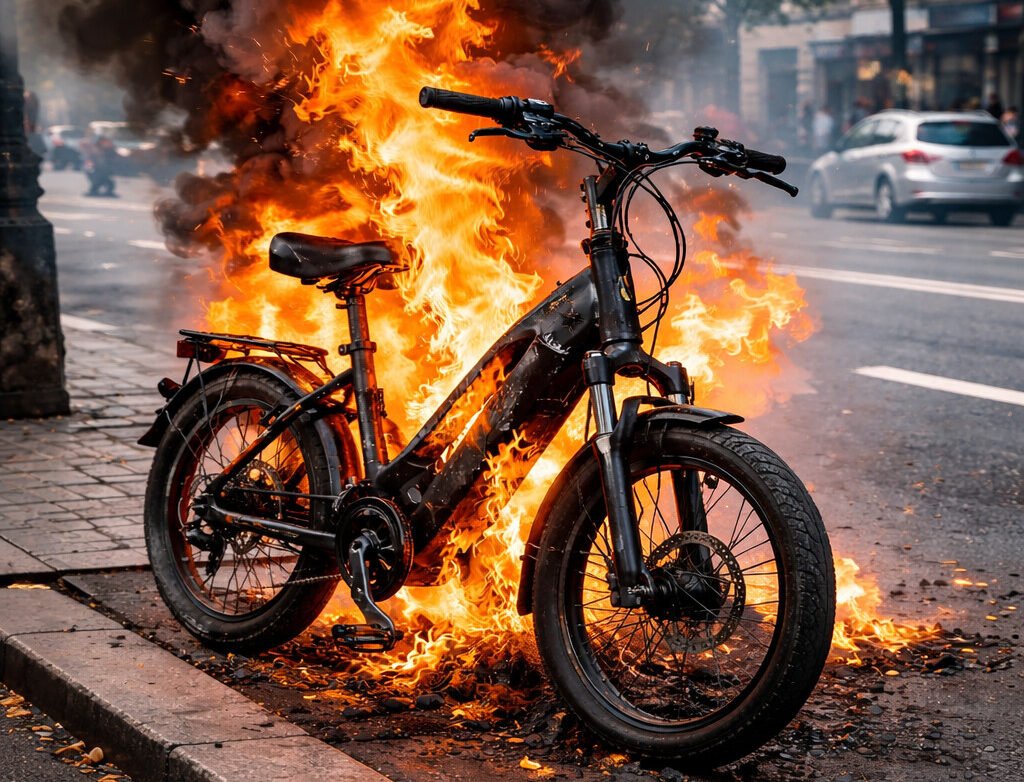
01. Where Did the Rad Battery System Fail?
Rad’s incidents were not “bad luck.”
They were amplified industry risks exposed by scale.
1. Loss of Control in the Battery Supply Chain
Some battery cells were sourced from non-top-tier suppliers, with:
-
Inconsistent quality
-
Weak batch validation
-
Insufficient incoming inspection
This dramatically increased the risk of thermal runaway at scale.
2. Lack of Export-Grade Safety Compliance for Complete eBikes
The U.S. Consumer Product Safety Commission (CPSC) explicitly cited that:
-
Batteries were not manufactured in compliance with UL 2271
-
Complete eBike systems did not meet UL 2849
-
Certain production batches had insufficient BMS protection
-
Chargers were not properly matched to batteries
In short:
Neither the battery nor the full system met modern export safety standards.
3. After-Sales Systems Could Not Match Rapid Sales Growth
When problems emerged:
-
Recalls were slow
-
Repairs were delayed
-
Replacement logistics failed
This allowed isolated incidents to escalate into widespread safety crises.
4. DTC Hyper-Growth Without a Mature Quality System
As user volume exploded, small battery risks became systemic failures.
Scale does not forgive weak quality systems—it exposes them.
02. Eight Critical Lessons for eBike Sellers (Read This Carefully)
1. Choosing a Battery Is Choosing Your Survival
Western markets are moving rapidly toward mandatory enforcement of UL 2271 and UL 2849.
Platforms, state governments, and insurance providers are tightening requirements.
You must prioritize batteries with:
-
Tier-1 cells (Samsung, LG, Panasonic — or certified A-grade cells from leading Chinese manufacturers)
-
Documentation complète : UN 38.3, MSDS, UL 2271 or equivalent
-
A factory quality system covering IQC → process control → OQC → retained samples
Avoid at all costs:
-
White-label workshop batteries
-
18650 / 21700 cells without consistency testing
-
Batteries lacking abuse tests (short circuit, overcharge, nail penetration, thermal chamber, drop tests)
One rule:
Never save money on the battery. It is the primary risk source.
2. Always Perform “Battery + Vehicle System” Validation
Many sellers test only the battery.
Regulators test the entire system.
You must validate:
-
UL 2849 complete eBike system compliance
-
Compatibility among motor, controller, battery, BMS, and charger
A safe battery in a mismatched system can still cause fires.
3. Audit Suppliers—Price Alone Is a Trap
A proper supplier audit should verify:
-
IQC capability, in-house lab, and aging rooms
-
Batch consistency documentation
-
Original, verifiable test reports (not copies or summaries)
-
Expérience avérée de l'exportation vers les États-Unis et l'UE
The less a factory understands quality systems, the more hidden risk it passes to you.
4. Product Listings Must Clearly Disclose Safety Information
By 2025, Amazon and Walmart strictly enforce battery safety disclosuresy compris :
-
Caractéristiques de la batterie
-
Certifications de sécurité
-
Puissance de sortie maximale
-
Speed classification
-
Approved charger models
-
Avertissements de sécurité
Unclear listings lead to delisting, brand penalties, or sales bans.
5. Avoid High-Risk, Low-Price Configurations
Accident-prone categories include:
-
Ultra-large battery packs (>55–60 cells)
-
High-current modification-oriented models
-
Suspiciously cheap “20–30Ah flagship batteries”
-
1,500–2,000W high-power eBikes with inconsistent legal claims
If the price is low but the specs are high,
the battery is usually where corners were cut.
6. Chargers Are Not Accessories—They Are Safety Devices
Rad’s incidents also involved charger risks.
Chargers must meet:
-
UL 1310 / DOE Level VI
-
Local plug compliance (UL for U.S., CE + EN for EU)
-
Protection contre les surtensions, les surintensités, les surchauffes et les courts-circuits
Never casually switch charger suppliers.
7. Build After-Sales Infrastructure Before Problems Happen
Key requirements:
-
Service centers in North America and Europe
-
Stock of common replacement parts
-
Clear local replacement and repair cycles
-
Battery-related issues responded to within 48 hours
The faster your response, the smaller your risk.
8. Prepare Recall and Risk-Response SOPs in Advance
Western recall systems are strict:
-
CPSC (U.S.)
-
RAPEX (EU)
-
OPSS (UK)
A pre-defined recall SOP can dramatically reduce legal exposure and financial loss when incidents occur.
03. Conclusion: 2026 Is the Great Reset of the eBike Industry
The Rad Power Bikes case is not an exception.
It marks the beginning of industry purification.
-
The safer brands will command higher prices
-
The more compliant brands will survive longer
-
Brands with local after-sales capabilities in the U.S. and EU will truly scale
2026 is no longer about price wars.
It is about:
-
Sécurité
-
Quality
-
Brand responsibility
If you don’t want to be the next Rad,
now is the moment to upgrade—before the market forces you to.



 English
  Chinese
  Japanese
  German
  French
  Korean
