
Avec l'utilisation généralisée des scooters électriques pour les déplacements urbains, les loisirs et la mobilité partagée, leur principal composant énergétique, la batterie, est devenu un point d'attention pour les utilisateurs et les entreprises. La batterie détermine non seulement l'autonomie et la puissance du scooter, mais elle a aussi une incidence directe sur la sécurité et la durée de vie.
Ce guide, qui s'appuie sur des années d'expérience en matière de recherche et de développement de batteries, fournit une analyse détaillée des types de batteries appropriés et des directives de sélection pour les scooters électriques.
Partie 1. Connaissances de base Batteries pour scooters électriques
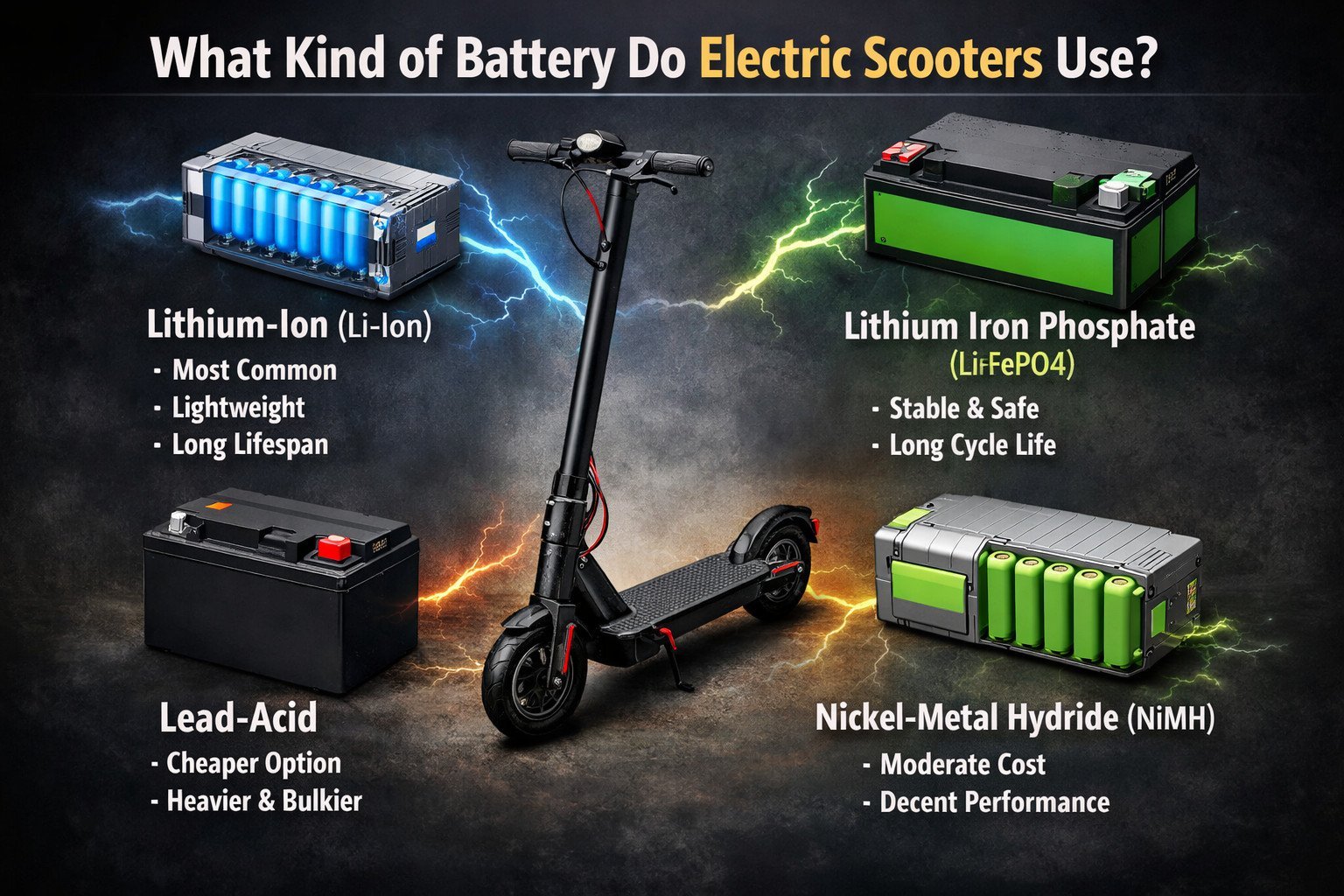
Les types de batteries les plus courants pour les scooters électriques sont les suivants :
Batterie cylindrique lithium-ion
Modèles typiques : 18650, 21700
Avantages : Densité énergétique élevée, longue durée de vie, convient pour les puissances élevées.
Applications : Scooters électriques de milieu et de haut de gamme et modèles de mobilité partagée
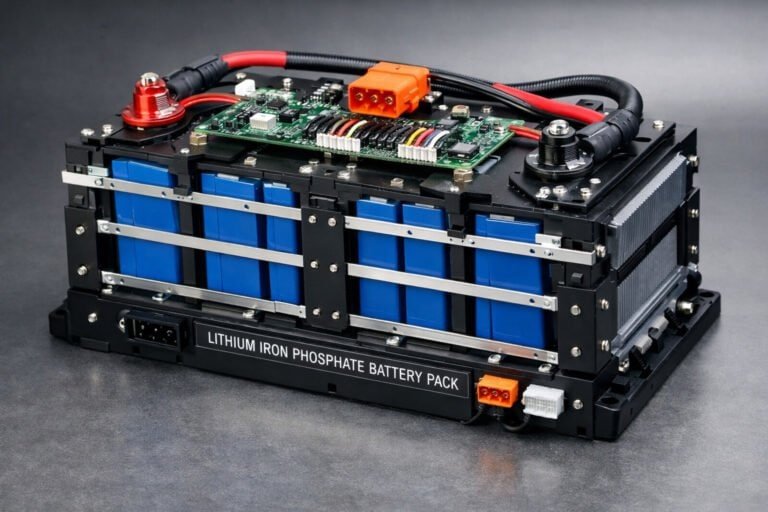
Batterie au phosphate de fer lithié (LiFePO4)
Avantages : Sécurité élevée, longue durée de vie, résistance aux températures élevées
Inconvénients : Taille légèrement supérieure, densité énergétique inférieure à celle des piles ternaires au lithium.
Applications : Scooters à longue portée, modèles lourds
Cellule de poche (LiPo)
Avantages : Conception légère, grande flexibilité
Inconvénients : Nécessite une gestion intelligente de la GTB
Applications : Scooters portables et légers
Conseil technique : La tension, la capacité et la puissance de sortie de la batterie doivent correspondre à la conception du contrôleur et du moteur du scooter ; sinon, cela affectera la performance ou la sécurité.
Partie 2 : Paramètres de base des batteries de scooters électriques
1. La tension
Batterie de 36V : convient aux scooters de banlieue ordinaires
Batterie 48V : convient aux scooters à grande autonomie ou à forte puissance
Batterie de 60V : convient aux scooters de grande puissance, de longue distance ou à forte charge.
Étude de cas : Un test réalisé par Yizhan Electronics a révélé qu'une batterie de 48 V fournit une puissance stable dans les scooters de grande puissance, alors qu'une batterie de 36 V dans le même modèle n'a pas une puissance suffisante, ce qui réduit les performances de montée et d'accélération.
2. Capacité (Ah)
Une plus grande capacité signifie une plus grande autonomie.
Il faut tenir compte de la taille et du poids total du véhicule ; une capacité excessivement grande augmentera le poids du scooter et affectera sa portabilité.
3. Système de protection intelligent BMS
Le BMS est le système central qui assure la sécurité de la batterie et prolonge sa durée de vie. Ses fonctions sont les suivantes
Protection contre la surcharge et la surdécharge
Protection contre les courts-circuits
Contrôle de la température
Équilibrage de la batterie
Enregistrement et communication des données
Partie 3. Facteurs clés dans le choix d'un fournisseur
Capacités techniques et expérience
Yizhan Electronics a plus de dix ans d'expérience dans la R&D et la fabrication de batteries au lithium, et se spécialise dans les scooters électriques et les solutions personnalisées.
Capacités de personnalisation
Personnalisation OEM/ODM de la tension, de la capacité, de l'apparence et de l'étiquetage de la marque.
Sécurité et certification
Les produits ont obtenu les certifications internationales CE, UL et EN 50604.
Gestion de la qualité et stabilité de la chaîne d'approvisionnement
Contrôle complet du processus, y compris la sélection des cellules, l'assemblage du PACK, les tests de vieillissement et l'inspection en usine.
Partie 4. Étude de cas : L'impact de différentes batteries sur les performances des scooters
| Type de batterie | Tension | Capacité | Gamme | Modèles applicables |
| Batterie cylindrique au lithium | 36V | 7.8Ah | 20-25 km | Véhicules portables de transport en commun |
| Batterie souple ternaire | 48V | 10Ah | 30-35 km | Scooters haut de gamme |
| Batterie au phosphate de fer lithié | 48V | 12Ah | 35-40 km | Véhicules à longue portée/partagés |
Conclusion : Le choix de la batterie doit être basé sur une évaluation complète de la conception du scooter, des exigences en matière d'autonomie, de poids et des normes de sécurité.
FAQ (Foire aux questions)
Q1 : Les scooters électriques peuvent-ils utiliser des batteries ordinaires de 36 V ?
Réponse : Les batteries ordinaires de 36 V conviennent aux scooters de puissance faible à moyenne ; les modèles de grande puissance ou de grande autonomie sont recommandés pour utiliser des batteries de 48 V ou des batteries personnalisées.
Q2 : Quelle est la meilleure solution pour les scooters : les batteries cylindriques ou les batteries à poche ?
Réponse : Les batteries cylindriques offrent une puissance stable et une longue durée de vie ; les batteries à poche sont légères et s'adaptent très bien à la forme du véhicule. Choisissez la solution optimale en fonction de la conception globale du véhicule.
Q3 : Quelle est l'importance du BMS dans les scooters électriques ?
Réponse : Le BMS assure la sécurité de la batterie, prolonge sa durée de vie et empêche les surcharges, les décharges excessives et les courts-circuits ; il s'agit d'un système essentiel.
Q4 : À quoi les entreprises doivent-elles prêter attention lorsqu'elles achètent des batteries de scooter ?
Réponse : Confirmez la tension, la capacité, les fonctions du BMS et les qualifications du fournisseur ; demandez des échantillons pour les tester et signez un accord de garantie.
Q5 : Peut-on mélanger différentes marques de piles ?
Réponse : Il n'est pas recommandé de mélanger différentes marques. Les différences de cellules, de tension et de BMS peuvent déclencher les mécanismes de protection du véhicule ou présenter des risques pour la sécurité.
Le choix de la bonne batterie est un élément essentiel pour garantir la puissance, l'autonomie et la sécurité des scooters électriques. Lors de l'achat de batteries, les entreprises doivent tenir compte de la tension, de la capacité, du type de cellule et de la protection intelligente du BMS.
Dongguan Yizhan Electronics Technology Co, Ltd, avec plus de dix ans d'expérience dans l'industrie, des capacités de personnalisation, une technologie BMS intelligente et des certifications internationales, est un partenaire fiable pour les entreprises de scooters électriques qui cherchent à acheter et à personnaliser des batteries. Grâce à une sélection professionnelle, vos produits de scooter bénéficieront d'une alimentation sûre et fiable et d'une performance durable.
 English
  Chinese
  Japanese
  German
  French
  Korean
