
Dans l'industrie du vélo électrique, la batterie est la principale source d'énergie de l'ensemble du véhicule. Ses performances, sa durée de vie et sa sécurité affectent directement l'expérience de l'utilisateur et la réputation de la marque. Que vous soyez propriétaire d'une marque, distributeur ou fabricant de véhicules personnalisés, le choix de la bonne batterie est crucial pour votre réussite.
Cet article fournit un guide complet pour aider les entreprises à sélectionner efficacement la bonne solution de batterie et à fournir une alimentation fiable pour le développement de l'entreprise.
Partie 1 : L'importance du choix de la batterie
Les batteries des vélos électriques ne déterminent pas seulement l'autonomie et la puissance du véhicule, mais affectent également la sécurité, la durée de vie globale du véhicule et les coûts du service après-vente. Le choix d'une mauvaise batterie peut entraîner :
Manque de puissance ou incapacité à gravir des pentes
Durée de vie réduite de la batterie ou faible nombre de cycles
Déclenchement fréquent de la protection BMS
Risques potentiels pour la sécurité (surdécharge, surcharge, court-circuit)
Par conséquent, lors de l'achat ou de la personnalisation des batteries, les entreprises doivent tenir compte de facteurs tels que la tension, la capacité, la qualité des cellules, la protection intelligente du BMS et la certification de la marque.
Partie 2 : Analyse des paramètres de base de la batterie
Tension
La tension détermine la puissance de sortie du moteur et l'adaptation de la vitesse :
Système 36V : Convient aux déplacements de courte à moyenne distance et aux utilisateurs de charges légères.
Système 48V : Convient aux modèles à long rayon d'action, à ceux qui grimpent les côtes ou à ceux qui sont soumis à des charges élevées.
Système de 60V : Convient aux modèles de transport à haute performance, à grande vitesse ou à forte puissance.
Capacité (Ah)
La capacité détermine le rayon d'action :
Une plus grande capacité permet d'augmenter la distance parcourue par charge
Une capacité insuffisante entraîne une faible portée et une mauvaise expérience pour le client.
Doit être adapté à la puissance et à la tension du moteur afin d'éviter une surdécharge.
(Suggestion d'illustration : Insérer un “Tableau de comparaison de la capacité et de l'autonomie”, montrant les différences d'autonomie des batteries de différentes capacités sur différents modèles).
Type de cellule
Cellules cylindriques (18650/21700) : Densité énergétique élevée, adaptée à une longue durée de vie et à des besoins de puissance élevés
Cellules prismatiques : Facile à assembler, haute sécurité
Cellules de poche (LiPo) : Conception légère, adaptée aux véhicules légers
Système de protection intelligent BMS
Le système de gestion de la batterie (BMS) est un système essentiel pour assurer la sécurité de la batterie et prolonger sa durée de vie. Ses principales fonctions sont les suivantes
Protection contre la surcharge et la surdécharge
Protection contre les courts-circuits
Contrôle et gestion de la température
Équilibrage de la batterie
Enregistrement des données et communication
Partie 3 : Facteurs clés dans le choix d'un fournisseur de batteries
Qualifications de l'entreprise et expérience dans le secteur
Certification ISO9001/14001
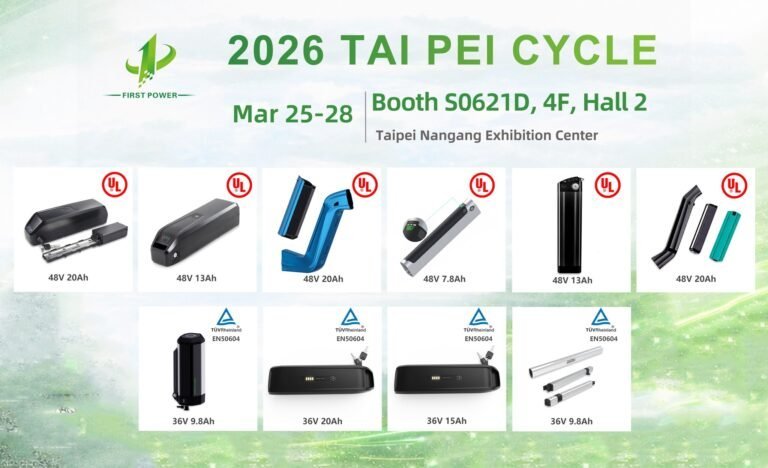
EN50604, UL, CE et autres certifications internationales
Plus de 10 ans d'expérience dans la R&D et la fabrication de piles au lithium
Capacités de personnalisation (OEM/ODM)
Personnalisation de la tension, de la capacité et de l'apparence
Label privé et emballage
Conseil technique et solutions complètes d'adaptation des véhicules
Système de contrôle de la qualité
Criblage des cellules, assemblage du PACK, tests en usine
Essais de durée de vie, essais de vieillissement
Débogage intelligent du système de gestion des bâtiments
Stabilité de la chaîne d'approvisionnement
Capacité de production à grande échelle
Délais de livraison et gestion de la logistique
Service après-vente et assistance technique
Partie 4 : Proposition de processus d'approvisionnement de l'entreprise
Clarifier les exigences en matière de conception de véhicules complets : tension, capacité, autonomie, apparence
Essais sur échantillon : Vérifier les performances, la portée et les fonctions du BMS
Signer les contrats et les conditions de garantie : Clarifier le MOQ, le prix, les méthodes de paiement et la période de garantie.
Contrôle de la production et de la qualité : Inspection aléatoire, inspection de l'usine par un tiers
Logistique et transport : Les piles au lithium sont des marchandises dangereuses et nécessitent le numéro UN38.3, des documents MSDS et des étiquettes.
Partie 5 : Comparaison de cas : L'impact des différents choix de batteries sur les entreprises
| Paramètres | Batterie standard 36V 10Ah | Batterie haute capacité 36V 15Ah | Batterie personnalisée 48V 12Ah |
| Gamme | 40-50km | 60-70km | 50-60km (puissance renforcée) |
| Capacité d'escalade | Moyen | Moyenne à forte | Fort |
| Poids | Environ 3,5 kg | 4,5 kg | 4kg |
| Protection du BMS | Standard | Avancé | Avancé |
| Modèles applicables | Vélos de banlieue | Longue distance/travail lourd | Haute performance/haute puissance |
Conclusion : L'adaptation de la capacité et de la tension à la conception du véhicule est essentielle pour améliorer l'expérience du client et la compétitivité de la marque.
FAQ (Foire aux questions)
Q1 : Peut-on mélanger des piles de marques différentes ?
Réponse : Même si les spécifications sont identiques, les batteries de différentes marques peuvent avoir des éléments, un BMS et des normes de sécurité différents. Il n'est pas recommandé de les mélanger.
Q2 : Comment déterminer la durée de vie de la batterie et les temps de cycle ?
Réponse : Reportez-vous aux spécifications du fabricant de la cellule et au rapport de test de durée de vie fourni par le fabricant. Les batteries de Yizhan Electronics ont une durée de vie de plus de 1000 cycles et des performances stables.
Q3 : Quels sont les services inclus dans la personnalisation OEM/ODM ?
Réponse : Tension, capacité, type de cellule, conception du boîtier, étiquetage de la marque, emballage et assistance technique pour l'intégration dans le véhicule.
Q4 : Les batteries à basse tension peuvent-elles améliorer les performances globales des véhicules ?
Réponse : Les batteries à basse tension ne peuvent pas améliorer les performances globales du véhicule ; au contraire, elles peuvent réduire la puissance et l'autonomie, et même déclencher la protection du BMS.
Q5 : Comment garantir la sécurité et la fiabilité des piles achetées ?
Réponse : Choisissez des fournisseurs qualifiés, confirmez la protection intelligente du BMS et les certifications internationales, demandez des échantillons pour les tester et signez les conditions de garantie.
Le choix de la bonne batterie de vélo électrique est un élément essentiel pour améliorer les performances globales du véhicule, l'expérience du client et la compétitivité de la marque. Lors de l'achat, les entreprises doivent tenir compte de la tension, de la capacité, du type de cellule, des fonctions BMS et des qualifications du fournisseur.
Avec plus de dix ans d'expérience dans l'industrie, un système de production et de test complet, des capacités de personnalisation étendues et des certifications internationales, Dongguan Yizhan Electronics Technology Co. est un partenaire fiable pour l'approvisionnement en batteries B2B et l'intégration des véhicules. Grâce à une sélection professionnelle et à des solutions personnalisées, votre entreprise de vélos électriques bénéficiera d'une puissance stable et d'un avantage concurrentiel durable.
 English
  Chinese
  Japanese
  German
  French
  Korean
